
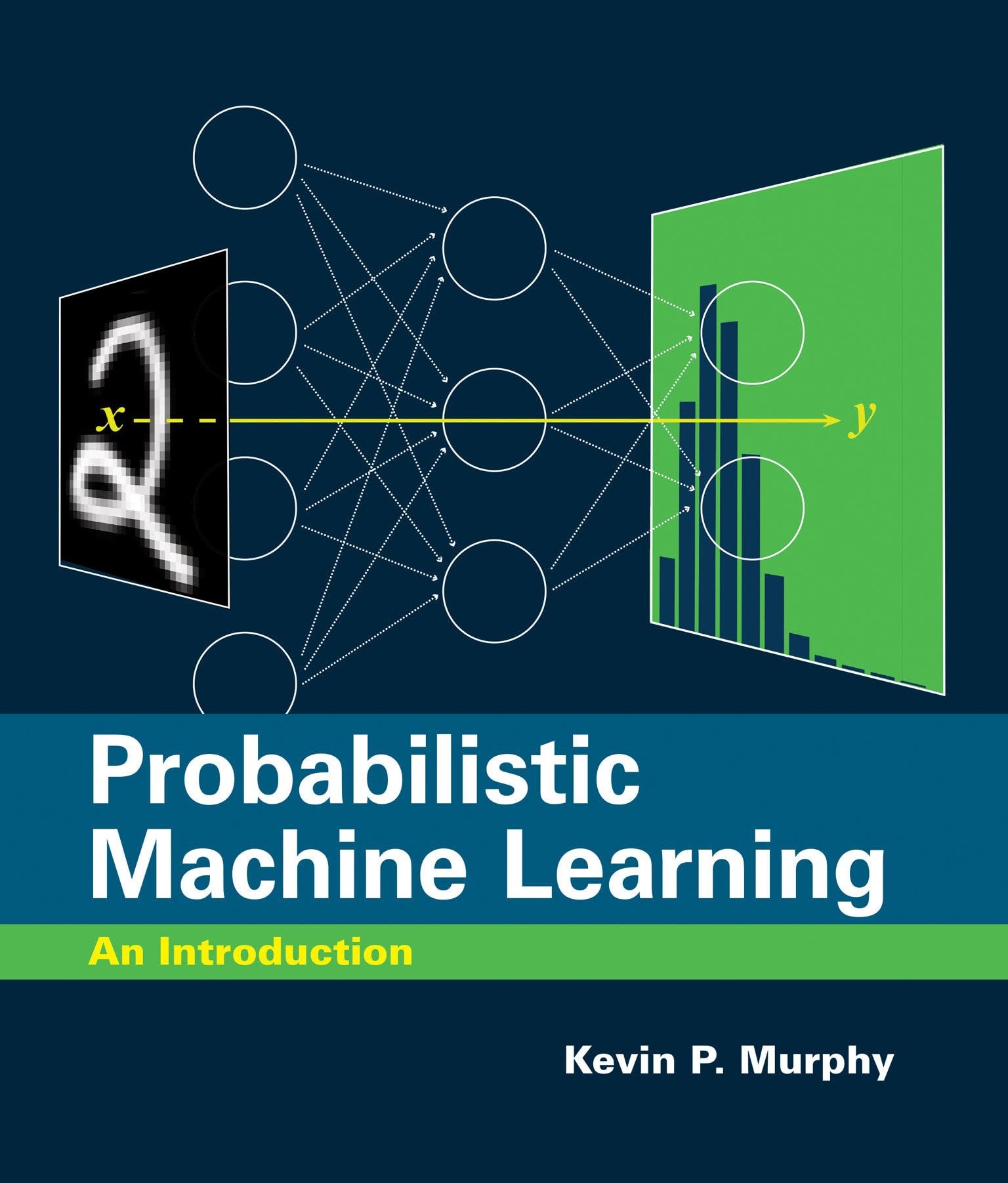
Probabilistic Machine Learning: An Introduction by Kevin P. Murphy – A Unifying Bayesian Framework for Machine Learning
Inclusive of all applicable taxes. FREE shipping on all orders.
Available Offers
- 🚚Free Delivery — Free shipping on all orders
- 💵Cash on Delivery — Pay when your order arrives
- ↩️15-Day Easy Returns — Hassle-free return policy
- 🔒Cash on Delivery — Pay safely when your order arrives
Check Delivery
Product Description
Introduction
In the rapidly evolving landscape of artificial intelligence and machine learning, few textbooks manage to capture both the foundational principles and the cutting-edge advancements with the clarity and depth that Kevin P. Murphy brings to the table. 'Probabilistic Machine Learning: An Introduction' is not just another addition to the AI library; it is a definitive guide that redefines how machine learning is taught and understood. Published by the prestigious MIT Press, this hardcover volume is meticulously crafted for students, researchers, and professionals who seek a rigorous yet accessible entry point into the world of probabilistic modeling and Bayesian decision theory. For Indian readers, where the demand for AI expertise is soaring across tech hubs like Bengaluru, Hyderabad, and Pune, this book serves as an indispensable resource for mastering the theoretical backbone of modern machine learning.
Book Overview
This book is a comprehensive, up-to-date introduction to machine learning, presented through the unifying lens of probabilistic modeling and Bayesian decision theory. Unlike traditional texts that treat algorithms in isolation, Murphy weaves a coherent narrative that connects linear algebra, optimization, supervised learning, deep neural networks, and advanced topics like transfer and unsupervised learning into a single, powerful framework. The book is designed to bridge the gap between theory and practice, offering end-of-chapter exercises that challenge readers to apply concepts to real-world problems. It is a completely new work that builds upon the author's earlier classic, 'Machine Learning: A Probabilistic Perspective,' but reflects the dramatic developments of the past decade, especially in deep learning. This is a physical, hardcover edition meant for serious study and reference.
Key Highlights
- Unified Probabilistic Approach: Every algorithm is explained through the lens of probability and Bayesian inference, providing a consistent and intuitive understanding.
- Comprehensive Coverage: From basic linear regression to advanced deep learning architectures, the book covers the entire spectrum of machine learning.
- Rigorous Mathematical Foundation: Includes detailed appendices on linear algebra, optimization, and probability to ensure readers have the necessary prerequisites.
- Practical Exercises: End-of-chapter problems and coding exercises help solidify learning and build hands-on skills.
- Modern Focus: Reflects the latest developments in deep learning, including convolutional networks, transformers, and generative models.
Inside the Book
The book is structured to gradually build your understanding. It begins with the mathematical background required for machine learning, including linear algebra, calculus, and optimization. It then moves into basic supervised learning methods, such as linear and logistic regression, before diving into the architecture and training of deep neural networks. Advanced chapters cover unsupervised learning (clustering, dimensionality reduction), transfer learning, and Bayesian nonparametrics. Each chapter is filled with clear notation, illustrative diagrams, and code snippets that bring concepts to life. The appendix also provides a handy notation guide, making it easy to follow complex derivations.
Key Topics
- Probabilistic Modeling: Bayesian inference, maximum likelihood, and posterior computation.
- Supervised Learning: Linear regression, logistic regression, support vector machines, and tree-based methods.
- Deep Learning: Neural networks, backpropagation, convolutional networks, recurrent networks, and transformers.
- Unsupervised Learning: Mixture models, clustering, PCA, and autoencoders.
- Advanced Topics: Transfer learning, meta-learning, Bayesian deep learning, and probabilistic programming.
Reader Benefits
By studying this book, readers will gain a profound understanding of why probabilistic thinking is central to machine learning. You will learn to design and evaluate models that not only make accurate predictions but also quantify uncertainty—a skill crucial for fields like healthcare, finance, and autonomous systems. The book's logical progression ensures that even complex concepts become manageable. Indian students preparing for competitive exams or research roles will find the mathematical rigor particularly beneficial. Professionals looking to transition into AI roles will appreciate the clear exposition of both theory and practical implementation.
Learning Outcomes
- Master the principles of Bayesian decision theory and probabilistic inference.
- Implement and tune a wide range of supervised and unsupervised learning algorithms.
- Understand the inner workings of deep neural networks and their training dynamics.
- Apply probabilistic models to real-world datasets with confidence.
- Develop the ability to read and contribute to cutting-edge machine learning research.
Who Should Read
This book is ideal for graduate and advanced undergraduate students in computer science, electrical engineering, statistics, or related fields. It is also an excellent resource for data scientists, machine learning engineers, and AI researchers who want a solid theoretical grounding. Professionals in India's booming tech industry—whether in startups or multinational corporations—will find this book invaluable for staying ahead in the competitive AI landscape. Even self-taught practitioners with a strong mathematical background will benefit from its structured approach.
About the Author
Kevin P. Murphy is a leading researcher and educator in machine learning. He is known for his work on probabilistic graphical models, Bayesian inference, and deep learning. He previously authored the seminal textbook 'Machine Learning: A Probabilistic Perspective,' which has been widely adopted in universities worldwide. Murphy's ability to distill complex ideas into accessible explanations has made him a trusted voice in the field. He holds a PhD from the University of California, Berkeley, and has worked at Google Research and other top institutions.
About the Publisher
MIT Press is one of the world's most respected academic publishers, known for its high-quality books in science, technology, and engineering. With a legacy spanning over a century, MIT Press has been at the forefront of publishing foundational texts that shape entire disciplines. This hardcover edition reflects MIT Press's commitment to producing durable, well-designed books that are meant to last—perfect for a reference that you will revisit for years to come.
Conclusion
'Probabilistic Machine Learning: An Introduction' by Kevin P. Murphy is more than a textbook; it is an investment in your future as an AI professional. Whether you are a student in an Indian university, a researcher pushing the boundaries of the field, or a practitioner building the next generation of intelligent systems, this book will equip you with the knowledge and skills to succeed. Its rigorous yet accessible treatment, combined with a focus on modern deep learning, makes it an essential addition to any serious learner's library. Order your hardcover copy from Bookshops.in today and embark on a transformative journey into the heart of machine learning.
Quick Summary
Probabilistic Machine Learning: An Introduction by Kevin P. Murphy is a modern, rigorous textbook that presents machine learning through the unifying lens of probabilistic modeling and Bayesian decision theory. Published by MIT Press in 2022, this hardcover edition covers everything from mathematical foundations—linear algebra, optimization, probability—to core supervised learning methods like linear and logistic regression, and extends into advanced deep neural networks, transfer learning, and unsupervised learning. The book is designed for graduate students, researchers, and practitioners who want a deep theoretical understanding of ML alongside practical insights. Each chapter includes exercises to reinforce learning, and the appendix provides a handy notation reference. Unlike many textbooks, it seamlessly integrates Bayesian thinking throughout, making it ideal for those who want to grasp not just how algorithms work, but why they work from a probabilistic perspective. For Indian readers, this book serves as an excellent resource for university courses, competitive exams, and self-study in AI and data science. Buying from Bookshops.in ensures you receive a genuine, high-quality hardcover copy with fast delivery across India, backed by our commitment to academic excellence.
Book Highlights
Book Specifications
| ISBN-13 | 9780262046824 |
| ISBN-10 | 0262046822 |
| Publisher | The MIT Press |
| Language | English |
| Dimensions | 21.3 x 3.3 x 23.5 cm |
| Weight | 1 kg 500 g |
| Category | Computer Science › Artificial Intelligence |
| Genre | Non-fiction |
| Original Language | English |
Frequently Asked Questions
What is Probabilistic Machine Learning: An Introduction about?
Who is the author of this book?
Is this book suitable for beginners?
Does the book cover deep learning?
What topics are covered in the book?
Are there exercises in the book?
Is this book available in hardcover?
What is the difference between this book and Murphy's earlier book?
Can I use this book for self-study?
Does the book include code examples?
Is this book recommended for Indian university courses?
What is the price of the book?
Does the book cover Bayesian neural networks?
Readers Also Search For
Customers Also Bought
Computer Science
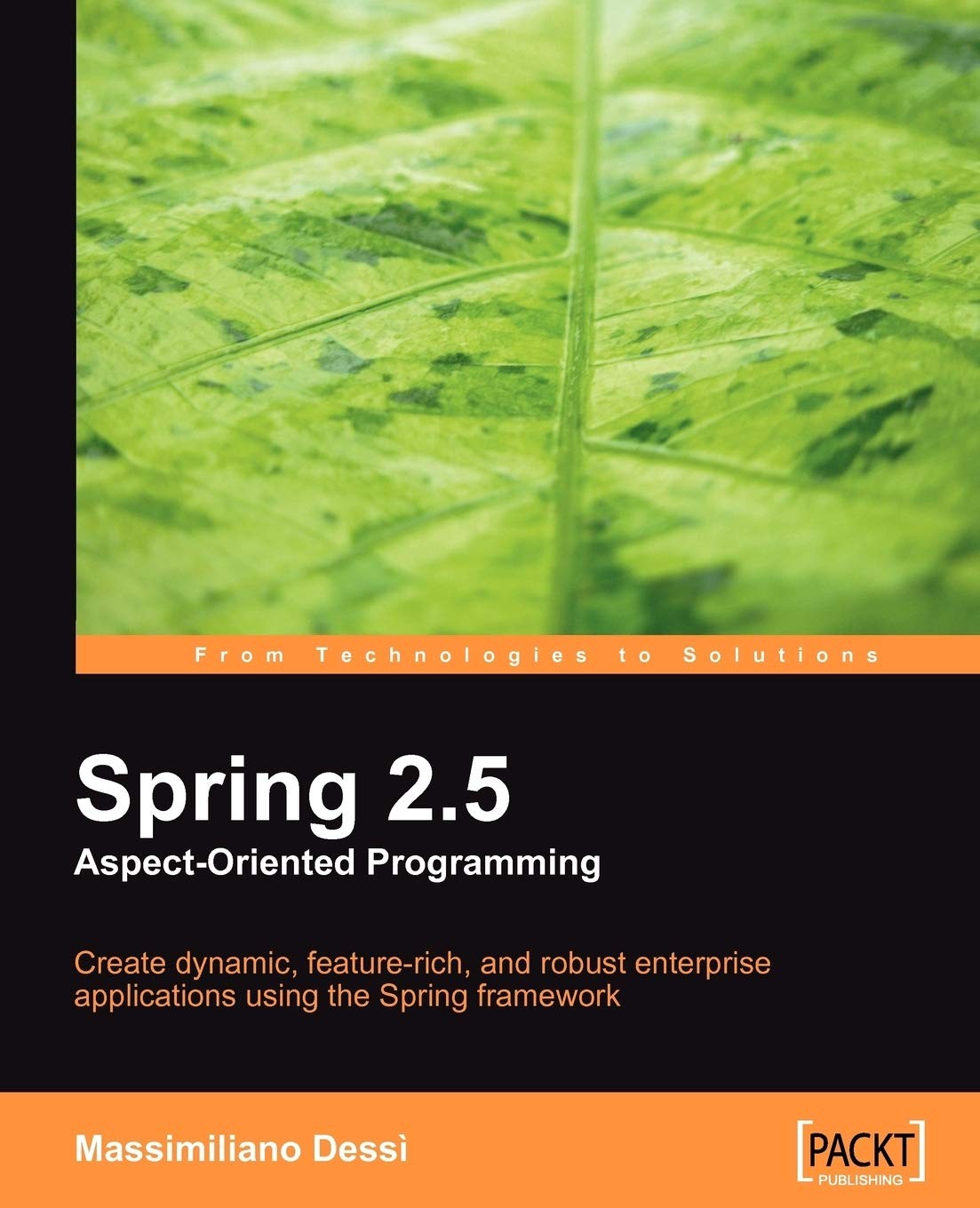
Spring 2.5 Aspect Oriented Programming (English, Massimiliano Dess� | Massimiliano Dessi)

Computer Science
Asterisk 1.4 - the Professional's Guide (English, Colman Carpenter | David Duffett | Nik Middleton)

Computer Science
Advances In Natural Language Processing: 4th International Conference, Estal 2004, Alicante, Spain, October 20-22, 2004. Proceedings: 3230 (Lecture Notes in Computer Science)

Computer Science
Multimedia, Communication and Computing Application: Proceedings of the 2014 International Conference on Multimedia, Communication and Computing ... 2014), Xiamen, China, October 16-17, 2014

Computer Science
Cases on Database Technologies and Applications (Cases on Information Technology Series)

Computer Science
ASP.Net 3.5 Social Networking (English, Andrew Siemer)
Related Products
View AllComputer Science
Spring 2.5 Aspect Oriented Programming (English, Massimiliano Dess� | Massimiliano Dessi)
Computer Science
Asterisk 1.4 - the Professional's Guide (English, Colman Carpenter | David Duffett | Nik Middleton)
Computer Science
Advances In Natural Language Processing: 4th International Conference, Estal 2004, Alicante, Spain, October 20-22, 2004. Proceedings: 3230 (Lecture Notes in Computer Science)
Computer Science
Multimedia, Communication and Computing Application: Proceedings of the 2014 International Conference on Multimedia, Communication and Computing ... 2014), Xiamen, China, October 16-17, 2014
Computer Science
Cases on Database Technologies and Applications (Cases on Information Technology Series)
Computer Science