
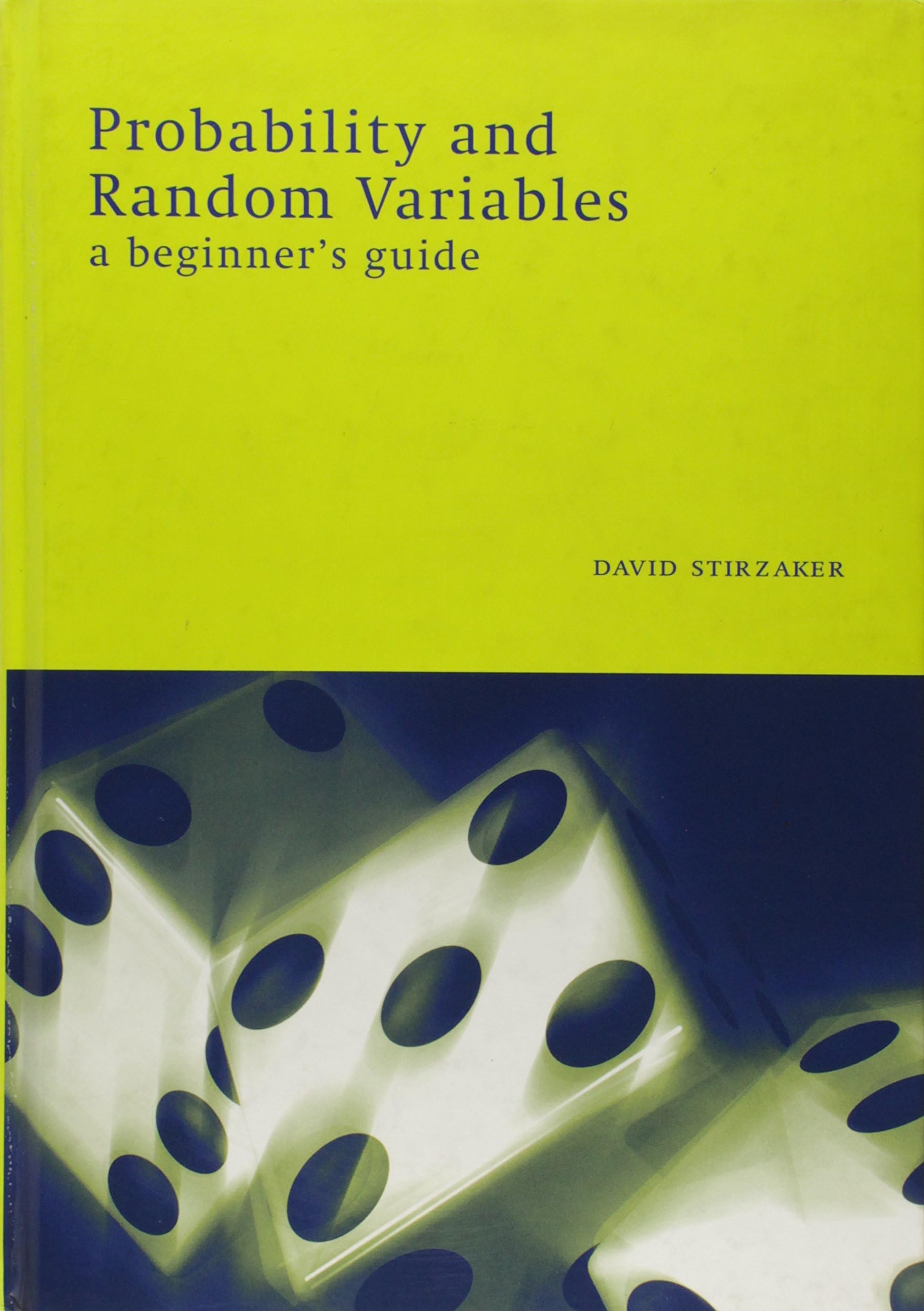
Probability and Random Variables: A Beginner's Guide by David Stirzaker – A Simple Introduction to Probability Theory fo
Inclusive of all applicable taxes. FREE shipping on all orders.
Available Offers
- 🚚Free Delivery — Free shipping on all orders
- 💵Cash on Delivery — Pay when your order arrives
- ↩️15-Day Easy Returns — Hassle-free return policy
- 🔒Cash on Delivery — Pay safely when your order arrives
Check Delivery
Product Description
Introduction
Probability and randomness are woven into the fabric of our daily lives—from the weather forecast to cricket matches, from medical diagnoses to financial markets. For Indian students and professionals seeking a clear, intuitive entry point into this fascinating field, Probability and Random Variables: A Beginner's Guide by David Stirzaker offers an accessible yet rigorous foundation. Published by Cambridge University Press, this hardbound edition is designed to demystify the core concepts of probability theory without overwhelming the reader. Whether you are a science undergraduate, a competitive exam aspirant, or simply a curious mind, this book promises to turn uncertainty into understanding.
Book Overview
This volume is a self-contained, tutorial-style introduction to probability theory. It begins with elementary discussions of chance and gradually builds up to the central rules and ideas of probability, including independence and conditioning. The author uses real-life examples from science, medicine, gaming, and everyday scenarios to illustrate how probability is motivated and applied. The text is richly supplemented with demonstrations, exercises, and worked examples that encourage active learning. By the end of the book, readers will have a solid grounding for more advanced studies in probability and statistics, as well as a practical working knowledge of the subject.
Key Highlights
- Informal tutorial style: Written in a conversational tone that makes complex ideas approachable.
- Self-contained and accessible: No prior knowledge of probability is assumed; concepts are developed as needed.
- Real-world applications: Examples from science, medicine, gambling, and other fields show probability in action.
- Abundant exercises and demonstrations: Each chapter reinforces learning with practice problems and illustrative examples.
- Solid foundation: Prepares students for advanced courses in probability and statistics.
Inside the Book
The book opens with a gentle introduction to the idea of chance and randomness, using everyday situations to build intuition. It then systematically covers the essential rules of probability, including the addition and multiplication rules, before diving into conditional probability and independence. Later chapters explore random variables, distributions, expectation, and limit theorems. Throughout, the author weaves in historical anecdotes and practical problems—such as the probability of winning a lottery, the reliability of medical tests, or the odds in a game of cards—to keep the material engaging and relevant. Each chapter ends with a set of exercises that test understanding and encourage further exploration.
Key Topics
- Elementary probability and counting principles
- Conditional probability and Bayes' theorem
- Independence and dependence of events
- Discrete and continuous random variables
- Probability distributions (binomial, Poisson, normal, etc.)
- Expectation, variance, and moments
- Law of large numbers and central limit theorem
- Applications in science, medicine, and gaming
Reader Benefits
- Builds strong conceptual clarity: The tutorial approach ensures you truly understand, not just memorize.
- Enhances problem-solving skills: Numerous exercises help you apply theory to practical problems.
- Prepares for exams and careers: Ideal for JEE, GATE, ISI, and other competitive exams that test probability.
- Saves time with self-study: The self-contained design means you can learn independently without needing a teacher.
- Encourages logical thinking: Probability trains the mind to reason under uncertainty—a valuable life skill.
Learning Outcomes
By the end of this book, readers will be able to: calculate probabilities for simple and compound events using fundamental rules; apply conditional probability and Bayes' theorem to real-world scenarios; work with discrete and continuous random variables and their distributions; compute expectations, variances, and other summary measures; understand the law of large numbers and the central limit theorem; and critically evaluate probabilistic arguments in news, research, and everyday life. These skills form the bedrock for further study in statistics, data science, machine learning, and many quantitative disciplines.
Who Should Read
- Undergraduate students in mathematics, physics, engineering, economics, or computer science taking an introductory probability course.
- Competitive exam aspirants preparing for JEE Advanced, GATE, ISI entrance, or other exams with a probability component.
- Self-learners and hobbyists who want to understand the mathematics behind games of chance, weather uncertainty, or risk.
- Teachers and tutors looking for a clear, example-rich resource to supplement their lessons.
- Professionals in analytics, finance, or research who need a refresher on probability fundamentals.
About the Author
David Stirzaker is a renowned mathematician and educator with decades of experience teaching probability and stochastic processes. He is the author of several acclaimed textbooks, including Probability and Random Variables and Stochastic Processes and Models. His writing is known for its clarity, wit, and ability to make abstract concepts tangible. Stirzaker’s deep understanding of both theory and pedagogy ensures that every page is crafted to maximize learning and enjoyment.
About the Publisher
Cambridge University Press is one of the world’s oldest and most respected academic publishers, with a history dating back to 1534. Known for its rigorous editorial standards and commitment to excellence, Cambridge publishes authoritative texts across all disciplines. This edition of Probability and Random Variables upholds that tradition, offering Indian readers a high-quality, durable hardcover volume that will serve as a lasting reference.
Conclusion
Probability and Random Variables: A Beginner's Guide is more than just a textbook—it is a friendly companion on your journey into the world of chance and uncertainty. With its engaging style, practical examples, and solid academic foundation, it is the perfect starting point for anyone who wants to master probability. Whether you are studying for an exam, preparing for a career in data science, or simply satisfying your curiosity, this book will equip you with the tools to think probabilistically and make better decisions in an uncertain world. Add it to your library today and take the first step toward probabilistic mastery.
Quick Summary
Probability and Random Variables: A Beginner's Guide by David Stirzaker is a clear, self-contained introduction to probability theory written in an informal tutorial style. The book begins with an elementary discussion of chance and gradually develops essential concepts such as independence and conditioning. It uses numerous examples, demonstrations, and exercises drawn from real-life problems in science, medicine, gaming, and other fields to show how probability is motivated and applied. This book is ideal for Indian students taking introductory probability courses, as well as self-learners who want a solid foundation for more advanced studies in probability and statistics. The author, David Stirzaker, is a respected mathematician, and the book is published by Cambridge University Press, ensuring academic rigour. By buying from Bookshops.in, you get a genuine physical copy delivered to your doorstep, supporting your learning journey with a trusted Indian bookstore.
Book Highlights
Book Specifications
| ISBN-13 | 9780521644457 |
| ISBN-10 | 0521644453 |
| Publisher | Cambridge University Press |
| Language | English |
| Dimensions | 16.99 x 2.21 x 24.41 cm |
| Weight | 755 g |
| Country | India |
| Category | Mathematics › Statistics |
| Genre | Non-fiction |
| Original Language | English |
Frequently Asked Questions
Is this book suitable for absolute beginners in probability?
Does the book cover random variables in detail?
What kind of applications are included?
Is this book used in Indian university courses?
Does it include practice problems?
What is the writing style like?
Who is the author?
Is this book part of a series?
Is the book available in hardcover?
Can I use this book for self-study?
Does it prepare for advanced statistics?
What is the price in India?
Where can I buy this book?
Readers Also Search For
Customers Also Bought
Mathematics
Stereotype Spaces and Algebras: 73 (De Gruyter Expositions in Mathematics, 73)
Mathematics
Semigroups in Algebra, Geometry and Analysis: 20 (De Gruyter Expositions in Mathematics, 20)
Mathematics
Geometry from the Pacific Rim: Proceedings of the Pacific Rim Geometry Conference held at National University of Singapore, Republic of Singapore, ... 1994 (De Gruyter Proceedings in Mathematics)
Mathematics
First International Tainan-Moscow Algebra Workshop: Proceedings of the International Conference held at National Cheng Kung University Tainan, Taiwan, ... 1994 (De Gruyter Proceedings in Mathematics)
Mathematics
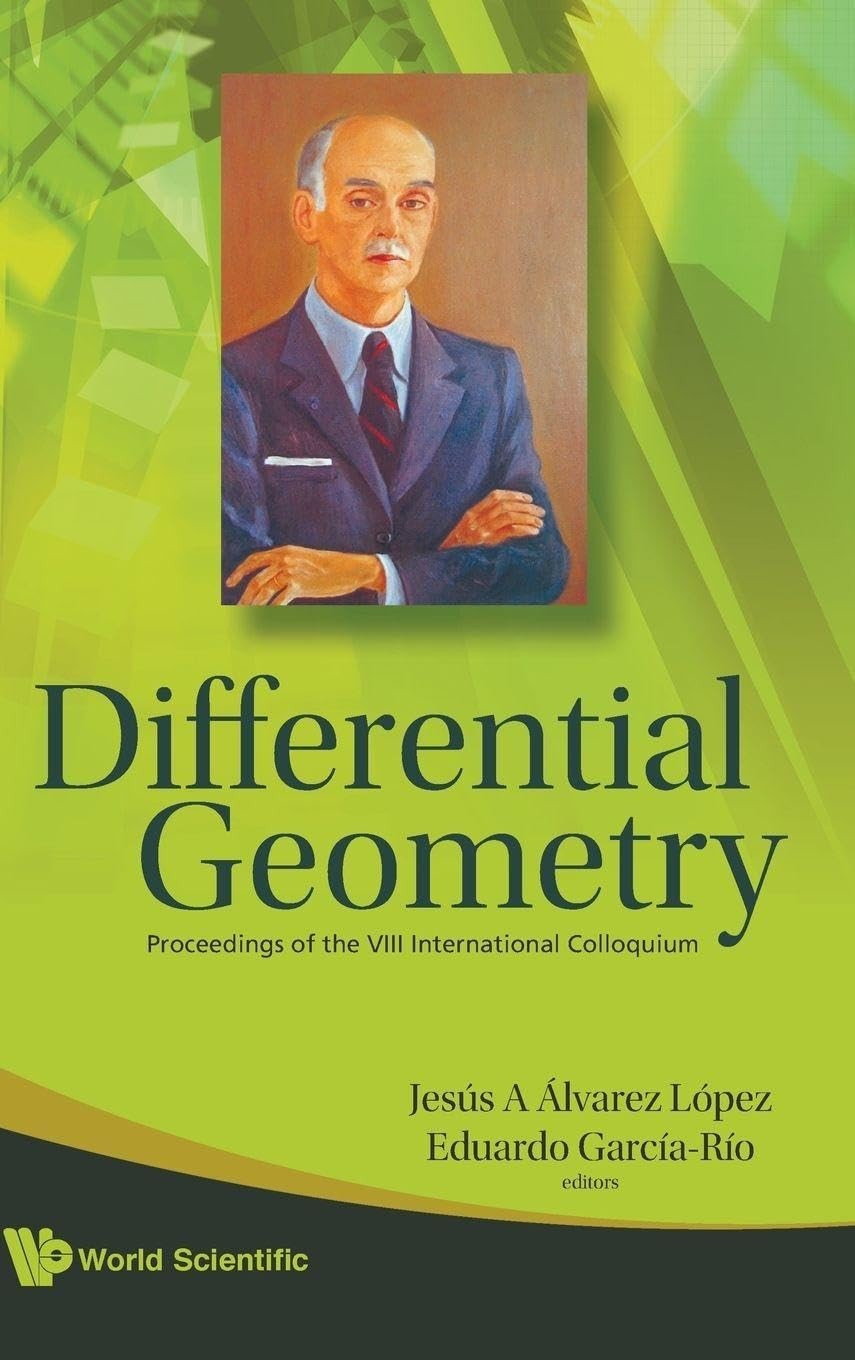
Differential Geometry - Proceedings of the VIII International Colloquium (English, Jesus A. Alvarez Lopez | Eduardo Garcia-Rio)
Mathematics
Mathematical Theory of Optimal Processes (Classics of Soviet Mathematics)
Related Products
View All
Statistics
Asymptotics in Statistics and Probability: Papers in Honor of George Gregory Roussas
Statistics
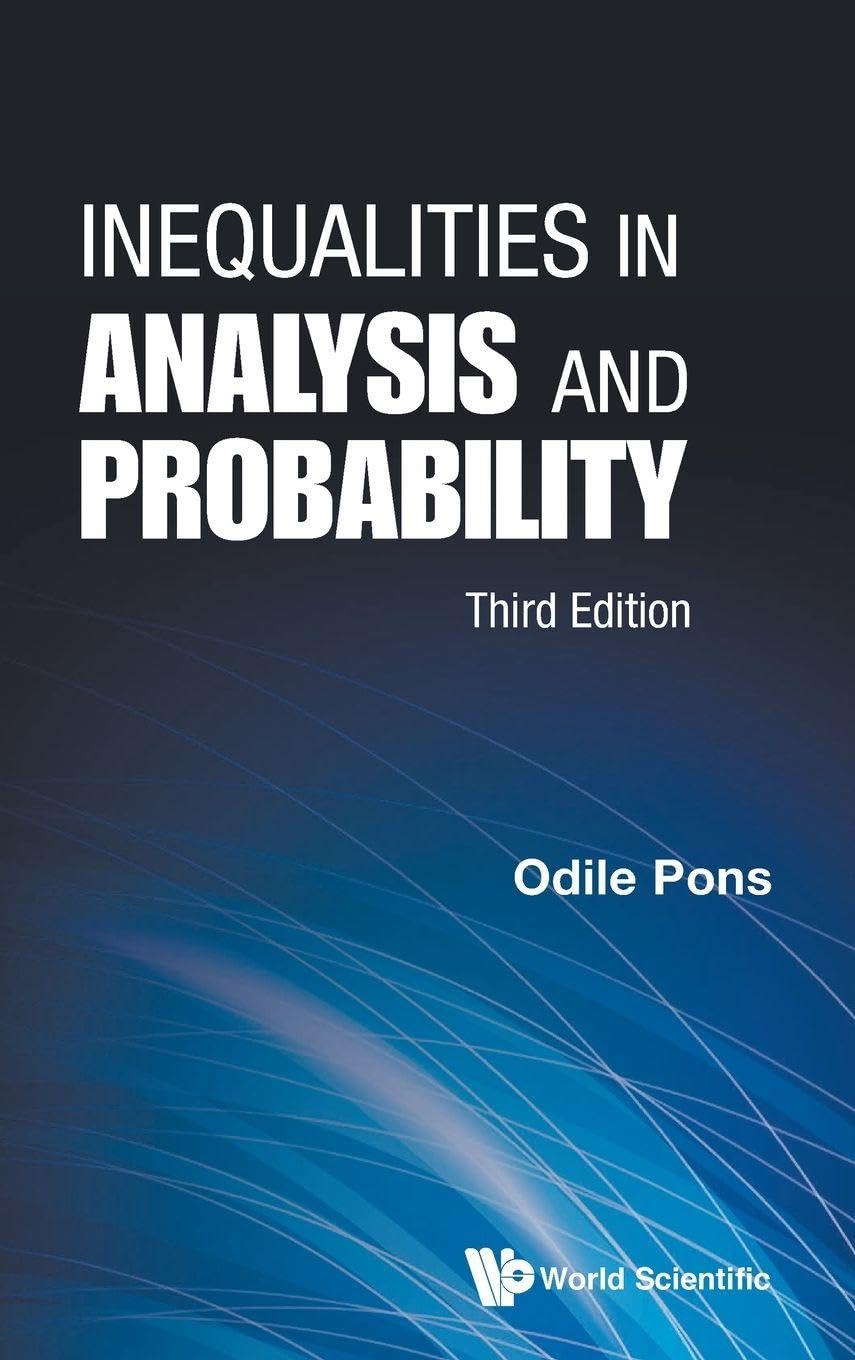
Inequalities in Analysis and Probability: 3rd Edition
Statistics
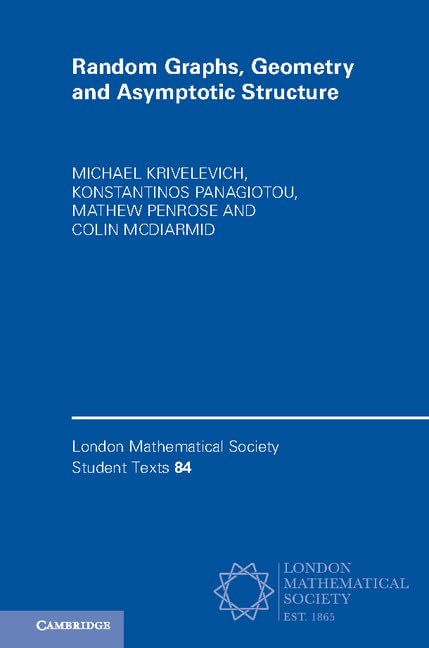
Random Graphs, Geometry and Asymptotic Structure
Statistics
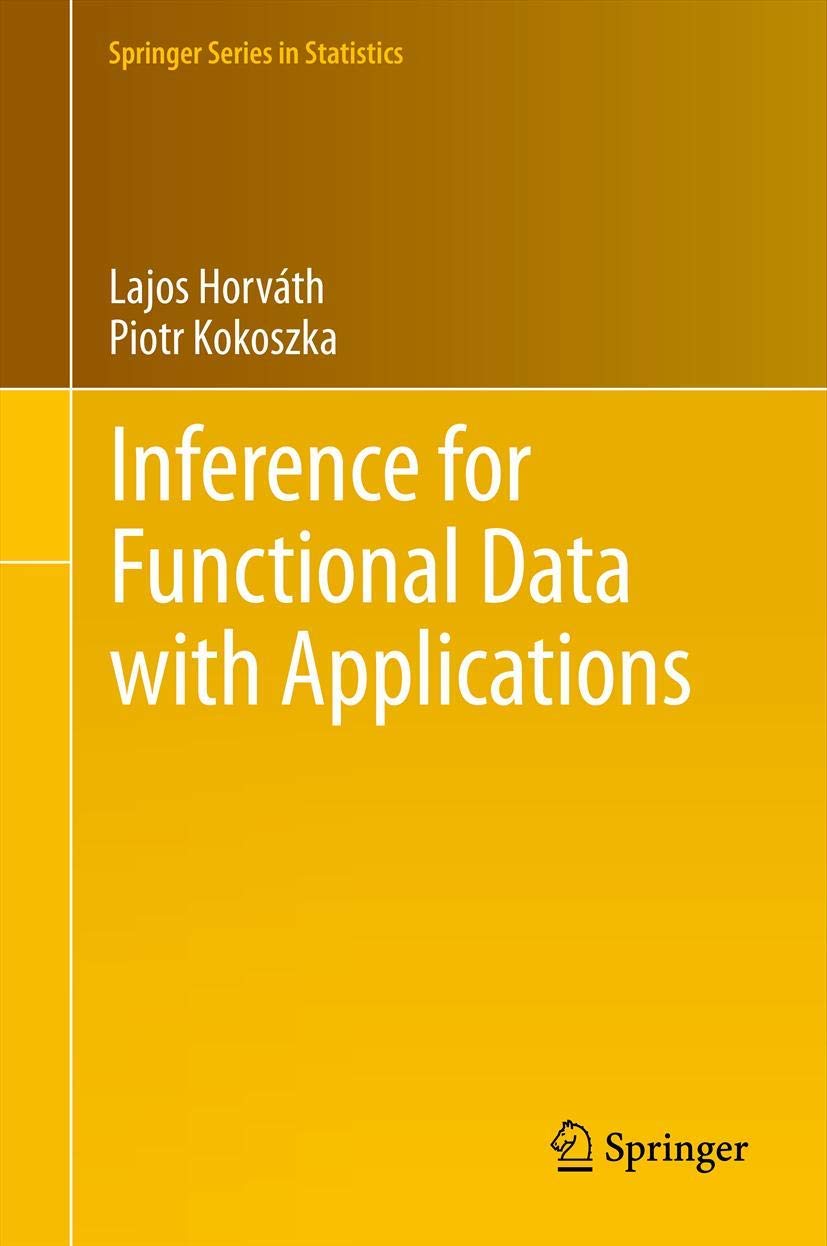
Inference for Functional Data With Applications: 200 (Springer Series in Statistics, 692)
Statistics
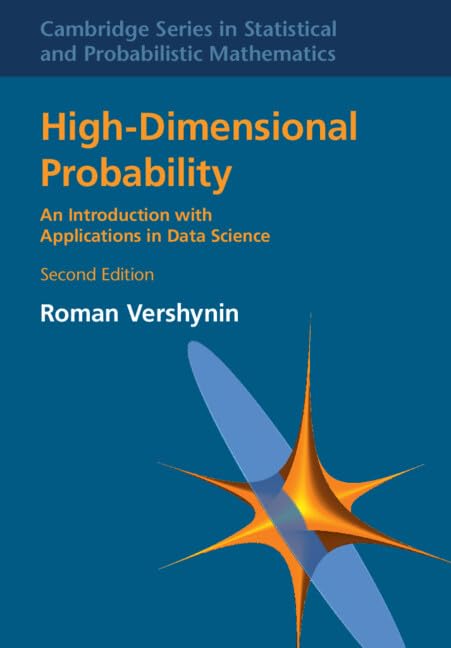
High-Dimensional Probability: An Introduction with Applications in Data Science (Cambridge Series in Statistical and Probabilistic Mathematics)
Statistics