
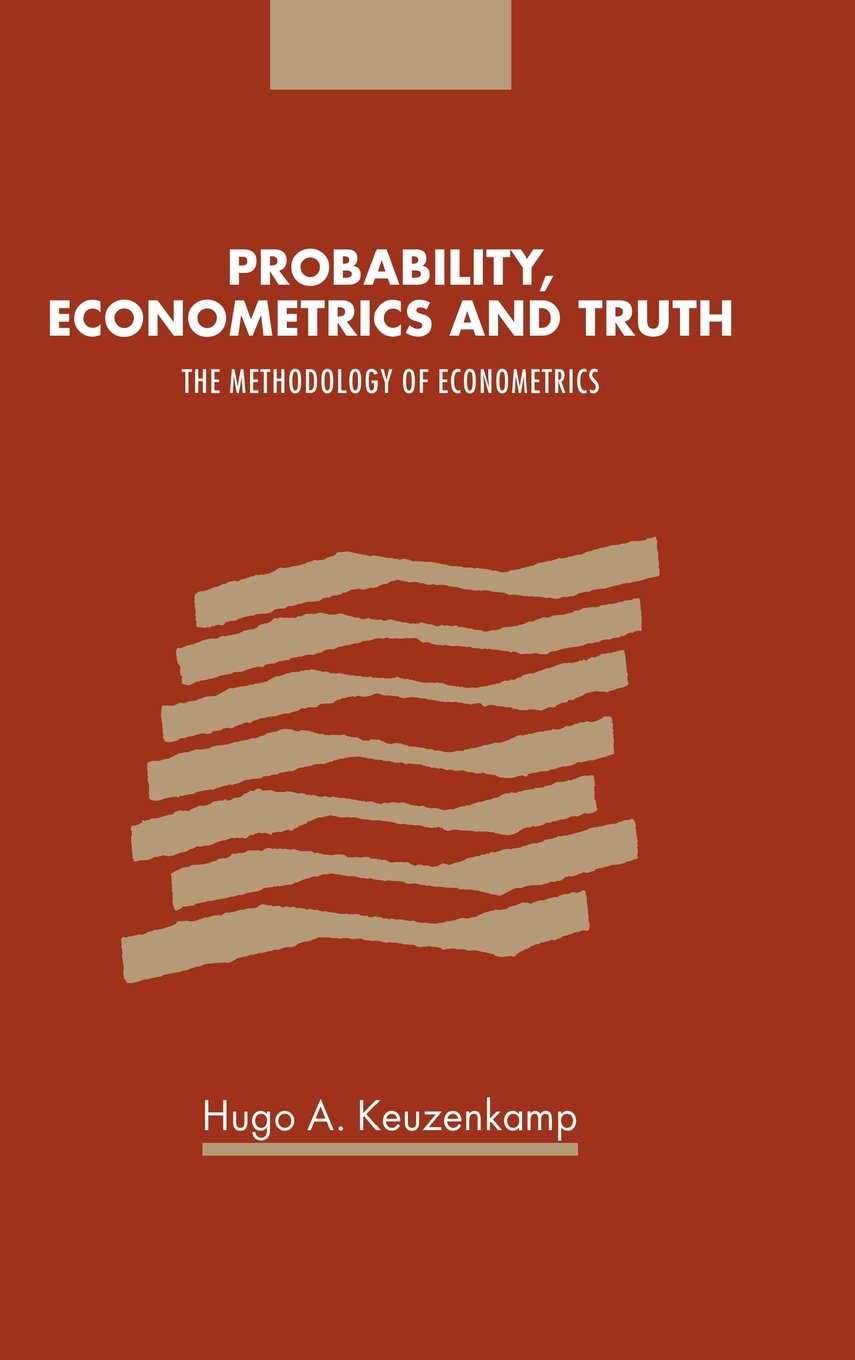
Probability, Econometrics and Truth: The Methodology of Econometrics by Hugo A. Keuzenkamp – A Critical Examination of E
Inclusive of all applicable taxes. FREE shipping on all orders.
Available Offers
- 🚚Free Delivery — Free shipping on all orders
- 💵Cash on Delivery — Pay when your order arrives
- ↩️15-Day Easy Returns — Hassle-free return policy
- 🔒Cash on Delivery — Pay safely when your order arrives
Check Delivery
Product Description
Introduction
In the world of economic theory and quantitative analysis, few debates have been as enduring as the one surrounding the legitimacy of econometric methods. Probability, Econometrics and Truth: The Methodology of Econometrics by Hugo A. Keuzenkamp offers a profound and critical examination of the philosophical and statistical foundations that underpin modern econometrics. For Indian students, researchers, and professionals navigating the complex terrain of economic data and inference, this book provides an indispensable guide to understanding what econometric claims truly mean—and what they cannot prove.
Book Overview
Published by Cambridge University Press in a sturdy hardcover edition, this scholarly work traces the evolution of econometrics from its early days, when John Maynard Keynes famously dismissed it as 'black magic and alchemy', to its current status as a cornerstone of empirical economics. Keuzenkamp systematically unpacks the various interpretations of probability theory that have shaped econometric practice, arguing that the probabilistic foundations of the discipline are far weaker than commonly assumed. The book challenges the notion that econometric methods can definitively falsify or verify economic theories, suggesting instead that methodological falsificationism is an illusion. Keuzenkamp makes a compelling case for repositioning econometrics within the tradition of positivism, where inference yields interesting but provisional knowledge.
Key Highlights
- Critical assessment of the philosophical underpinnings of econometric methodology
- Historical perspective linking early criticisms by Keynes to contemporary debates
- Rigorous analysis of probability theory interpretations—frequentist, Bayesian, and logical
- Original argument that econometrics cannot deliver falsification or verification of theories
- Proposal for a positivist reconstruction of econometric inference
Inside the Book
The volume delves deeply into the relationship between probability, truth, and empirical research in economics. Keuzenkamp examines the work of pioneers like Tinbergen, Haavelmo, and Koopmans, and contrasts their approaches with later developments. The book discusses the limitations of hypothesis testing, the role of subjective probability, and the challenges of model selection. It also addresses the tension between theoretical elegance and empirical relevance, offering a nuanced perspective that will resonate with anyone who has struggled to reconcile statistical results with economic intuition.
Key Topics
- Foundations of probability in econometrics
- The Keynes-Tinbergen debate and its legacy
- Falsificationism and verificationism in economic methodology
- Positivism and its implications for empirical research
- Model uncertainty and the limits of inference
- The role of truth in econometric practice
Reader Benefits
This book equips readers with a critical lens to evaluate econometric studies—whether in academic journals, policy reports, or market analyses. It helps researchers avoid overclaiming what their models can prove, and encourages a more honest and rigorous approach to empirical work. For Indian students preparing for competitive exams or pursuing advanced degrees in economics, this text offers a deeper understanding that goes beyond textbook formulas. Professionals in data science, policy analysis, and financial modelling will also gain valuable insights into the philosophical traps that often accompany quantitative research.
Learning Outcomes
After reading this book, you will be able to: identify the probabilistic assumptions underlying common econometric techniques; critically assess claims of causal inference in economic studies; understand the historical and philosophical context of modern econometrics; articulate the limitations of hypothesis testing and model selection; and apply a positivist framework to your own research or analysis.
Who Should Read
This book is ideal for postgraduate students and researchers in economics, econometrics, and statistics; faculty members teaching methodology courses; philosophers of science with an interest in economics; and practicing economists who wish to reflect on the foundations of their craft. It is also highly relevant for Indian readers engaged in policy research, development economics, or any field where quantitative evidence is used to support arguments.
About the Author
Hugo A. Keuzenkamp is a distinguished scholar known for his work on the methodology of econometrics and the history of economic thought. His research bridges economics, statistics, and philosophy, making him uniquely qualified to address the deep questions raised in this book. Keuzenkamp’s writing is both accessible and intellectually rigorous, guiding the reader through complex ideas with clarity and purpose.
About the Publisher
Cambridge University Press is one of the world’s oldest and most respected academic publishers. With a legacy of excellence spanning centuries, Cambridge University Press is committed to advancing knowledge across disciplines. This hardcover edition reflects the high production standards that scholars and students in India have come to expect from this esteemed publisher.
Conclusion
Probability, Econometrics and Truth: The Methodology of Econometrics is not just a book about techniques—it is a meditation on what it means to seek truth through numbers. For anyone serious about understanding the power and limits of econometric reasoning, this volume is an essential addition to their library. Whether you are a student in Delhi, a researcher in Mumbai, or a policy analyst in Bengaluru, this book will change the way you think about economic evidence.
Quick Summary
Probability, Econometrics and Truth: The Methodology of Econometrics by Hugo A. Keuzenkamp is a rigorous philosophical examination of the foundations of econometric inference. The book revisits John Maynard Keynes' famous critique of Jan Tinbergen's early econometric work, which dismissed it as akin to black magic and alchemy. Keuzenkamp argues that despite decades of development, the probabilistic underpinnings of econometrics remain fragile, and that econometric methods cannot reliably falsify or verify economic theories. The book explores different interpretations of probability—frequentist, Bayesian, and logical—and shows how each shapes econometric practice differently. It calls for a reconstruction of econometric methodology based on a more coherent understanding of probability and inference. This book is ideal for graduate students, researchers, and academics in economics, statistics, and philosophy of science who want to critically engage with the methods they use. By purchasing from Bookshops.in, Indian readers receive an authentic Cambridge University Press hardcover edition with timely delivery and trusted service.
Book Highlights
Book Specifications
| ISBN-13 | 9780521553599 |
| ISBN-10 | 0521553598 |
| Publisher | Cambridge University Press |
| Language | English |
| Dimensions | 15.88 x 2.54 x 23.5 cm |
| Weight | 650 g |
| Country | India |
| Category | Mathematics › Statistics |
| Genre | Non-fiction |
| Reading Age | Adult |
| Original Language | English |
Frequently Asked Questions
Is this book suitable for beginners in econometrics?
Does the book cover practical econometric techniques?
What is the main argument of the book?
Who is Hugo A. Keuzenkamp?
Does the book discuss Keynes' criticism of econometrics?
Is this book used in Indian universities?
Does the book include empirical examples?
What is the reading level required?
Can this book help with my PhD research?
What is the ISBN of this book?
Is the book available in paperback?
How does this book relate to philosophy of science?
What are the dimensions of the book?
Why should I buy from Bookshops.in?
Readers Also Search For
Customers Also Bought
Mathematics
Stereotype Spaces and Algebras: 73 (De Gruyter Expositions in Mathematics, 73)
Mathematics
Semigroups in Algebra, Geometry and Analysis: 20 (De Gruyter Expositions in Mathematics, 20)
Mathematics
Geometry from the Pacific Rim: Proceedings of the Pacific Rim Geometry Conference held at National University of Singapore, Republic of Singapore, ... 1994 (De Gruyter Proceedings in Mathematics)
Mathematics
First International Tainan-Moscow Algebra Workshop: Proceedings of the International Conference held at National Cheng Kung University Tainan, Taiwan, ... 1994 (De Gruyter Proceedings in Mathematics)

Mathematics
Differential Geometry - Proceedings of the VIII International Colloquium (English, Jesus A. Alvarez Lopez | Eduardo Garcia-Rio)
Mathematics
Mathematical Theory of Optimal Processes (Classics of Soviet Mathematics)
Related Products
View All
Statistics
Asymptotics in Statistics and Probability: Papers in Honor of George Gregory Roussas
Statistics
Inequalities in Analysis and Probability: 3rd Edition
Statistics
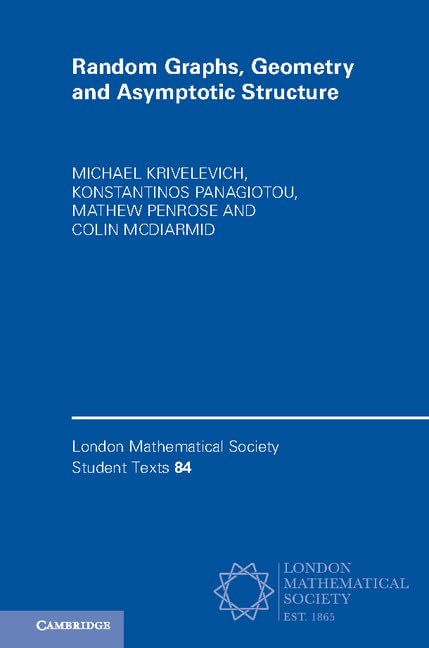
Random Graphs, Geometry and Asymptotic Structure
Statistics
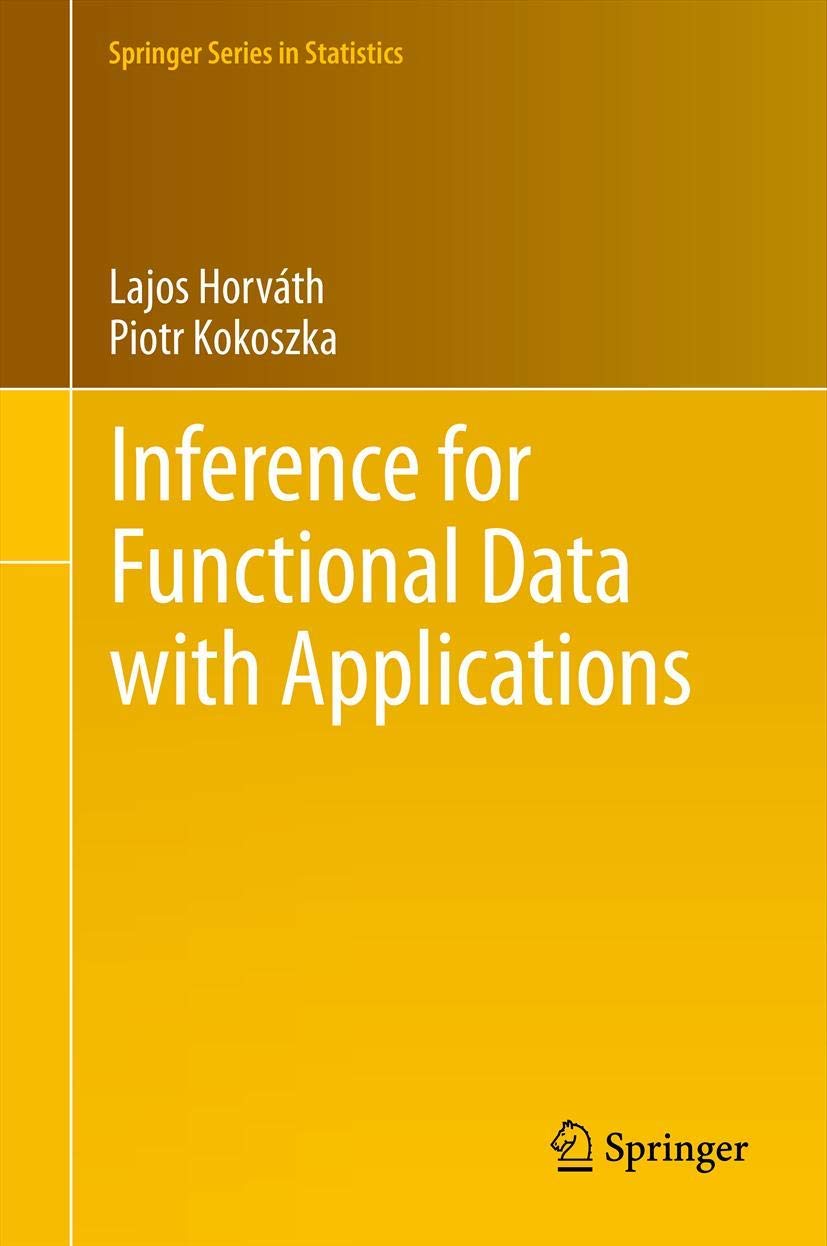
Inference for Functional Data With Applications: 200 (Springer Series in Statistics, 692)
Statistics
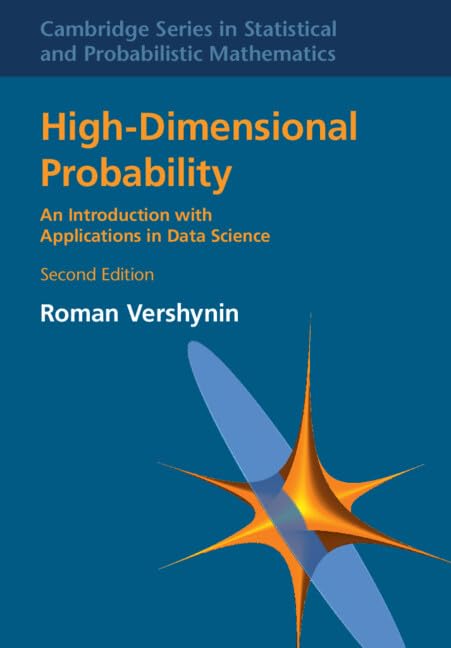
High-Dimensional Probability: An Introduction with Applications in Data Science (Cambridge Series in Statistical and Probabilistic Mathematics)
Statistics