
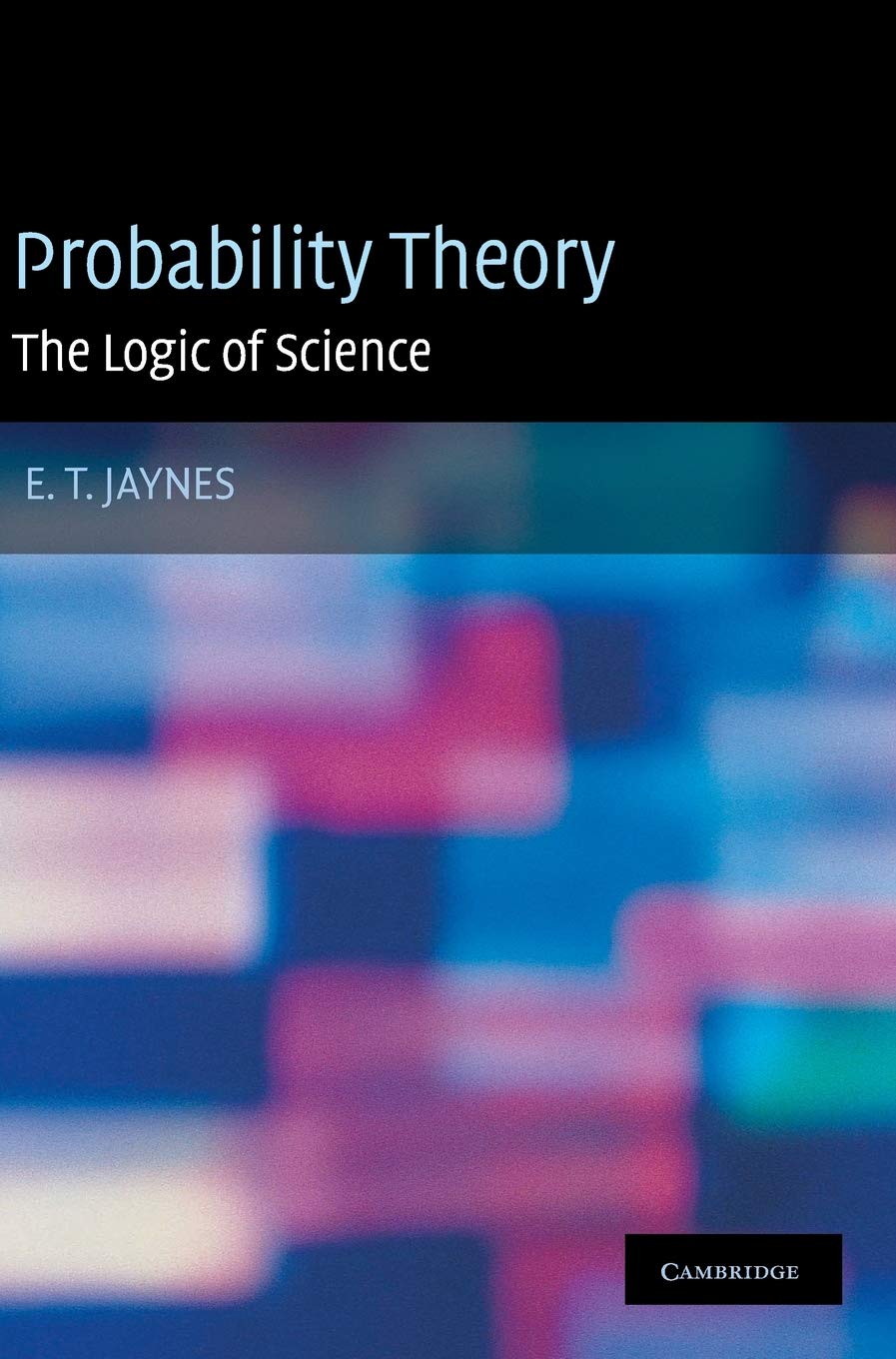
Probability Theory: The Logic of Science by E. T. Jaynes – A Foundational Textbook on Bayesian Probability and Statistic
Inclusive of all applicable taxes. FREE shipping on all orders.
Available Offers
- 🚚Free Delivery — Free shipping on all orders
- 💵Cash on Delivery — Pay when your order arrives
- ↩️15-Day Easy Returns — Hassle-free return policy
- 🔒Cash on Delivery — Pay safely when your order arrives
Check Delivery
Product Description
Introduction
Probability Theory: The Logic of Science by E. T. Jaynes is a landmark work that redefines how we understand probability and statistical reasoning. Published by Cambridge University Press, this hardcover edition presents a profound shift in perspective—treating probability not as a mere mathematical tool but as an extension of logic itself. For Indian students and researchers grappling with uncertainty in data, this book offers a rigorous yet accessible framework that bridges theory and real-world inference. Whether you are a physicist, economist, or biologist, Jaynes’s approach will transform how you think about evidence and decision-making.
Book Overview
This book is a comprehensive exploration of probability theory as a logical system for reasoning under uncertainty. Jaynes systematically dismantles the artificial divide between probability theory and statistical inference, revealing a unified discipline grounded in common sense and consistency. The text progresses from foundational principles to advanced applications, including Bayesian methods, maximum entropy, and hypothesis testing. With over 400 pages of dense yet lucid exposition, it serves both as a graduate-level textbook and a reference for practicing scientists. The hardcover binding ensures durability for years of intensive study.
Key Highlights
- Unified Framework: Integrates probability and statistics into a single logical system, eliminating confusion between inference and probability.
- Maximum Entropy Principle: Introduces a powerful method for assigning prior probabilities based on incomplete information.
- Real-World Applications: Covers physics, chemistry, biology, economics, and engineering with concrete examples.
- Rigorous Yet Intuitive: Balances mathematical depth with clear explanations, making advanced concepts accessible.
- Graduate-Level Resource: Includes numerous exercises and problems suitable for Indian university courses in data analysis.
Inside the Book
The book is structured into 12 chapters, each building on the previous. Early chapters lay the logical foundations of probability, while later chapters delve into Bayesian inference, decision theory, and maximum entropy. Jaynes uses historical context and philosophical insights to illuminate key ideas. Each chapter concludes with exercises that challenge readers to apply concepts to diverse problems—from quantum mechanics to economic forecasting. The writing is conversational yet precise, reflecting Jaynes’s passion for clarity.
Key Topics
- Probability as Extended Logic: The Cox theorems and the principle of consistency.
- Bayesian Inference: Priors, likelihoods, and posterior distributions in practice.
- Maximum Entropy Methods: Assigning probabilities when data is sparse.
- Hypothesis Testing: A logical approach to comparing models.
- Applications in Science: Signal processing, image reconstruction, and statistical mechanics.
Reader Benefits
- Deep Understanding: Moves beyond rote formulas to grasp the why behind probability.
- Technical Power: Gain tools to solve complex inference problems with confidence.
- Cross-Disciplinary Insight: See how probability logic applies across fields, from physics to economics.
- Problem-Solving Skills: Hundreds of exercises sharpen analytical thinking.
- Authoritative Reference: A trusted resource for researchers and educators in India.
Learning Outcomes
By studying this book, readers will be able to formulate and solve inference problems using Bayesian reasoning, apply the maximum entropy principle to real-world data, critically evaluate statistical methods, and design experiments with logical rigor. You will emerge with a unified perspective that makes statistical analysis intuitive and powerful.
Who Should Read
This book is ideal for graduate students in science, mathematics, and engineering; researchers in physics, biology, economics, and computer science; statisticians seeking a deeper foundation; and any professional who works with data and uncertainty. A background in advanced undergraduate mathematics is assumed, but the logical approach makes it accessible to motivated learners.
About the Author
E. T. Jaynes (1922–1998) was a distinguished physicist and professor at Washington University in St. Louis. He was a pioneer in statistical mechanics and probability theory, known for his passionate advocacy of Bayesian methods. His work continues to influence fields from quantum mechanics to artificial intelligence.
About the Publisher
Cambridge University Press is one of the world’s oldest and most respected academic publishers, known for producing authoritative texts in science and mathematics. This hardcover edition reflects their commitment to quality and durability.
Conclusion
Probability Theory: The Logic of Science is not just a book—it is a paradigm shift. For Indian students and researchers seeking clarity in a world of uncertainty, Jaynes’s logical approach offers both wisdom and practical tools. Add this essential volume to your library and discover the true power of probability.
Quick Summary
Probability Theory: The Logic of Science by E. T. Jaynes is a landmark work that reimagines probability as a logical framework for scientific reasoning. Unlike conventional textbooks, Jaynes dispels the artificial divide between probability theory and statistical inference, presenting a unified approach grounded in Bayesian principles. The book covers essential topics like maximum entropy, decision theory, and inductive reasoning, with applications spanning physics, biology, economics, and chemistry. It is designed for graduate-level readers who already have a background in applied probability and seek deeper conceptual understanding. Readers will learn to apply probability logic to complex problems, develop rigorous inference methods, and appreciate the philosophical underpinnings of statistics. This hardcover edition from Cambridge University Press is ideal for Indian students and researchers pursuing advanced studies in data science, statistics, or physics. Buying from Bookshops.in ensures you receive a genuine copy with prompt service across India.
Book Highlights
Book Specifications
| ISBN-13 | 9780521592710 |
| ISBN-10 | 0521592712 |
| Publisher | Cambridge University Press |
| Language | English |
| Dimensions | 18 x 3.9 x 25.6 cm |
| Weight | 1 kg 660 g |
| Category | Mathematics › Statistics |
| Genre | Science & Mathematics |
| Original Language | English |
Frequently Asked Questions
What is the main thesis of Probability Theory: The Logic of Science?
Who is E. T. Jaynes?
Is this book suitable for beginners in probability?
What topics does the book cover?
Does the book include exercises?
How is this book different from standard probability textbooks?
Can this book be used for self-study?
What is the price of this book in India?
Does the book cover Bayesian statistics?
What is the ISBN of this book?
Who should buy this book?
Is this book relevant for machine learning?
Why buy from Bookshops.in?
Readers Also Search For
Customers Also Bought
Mathematics
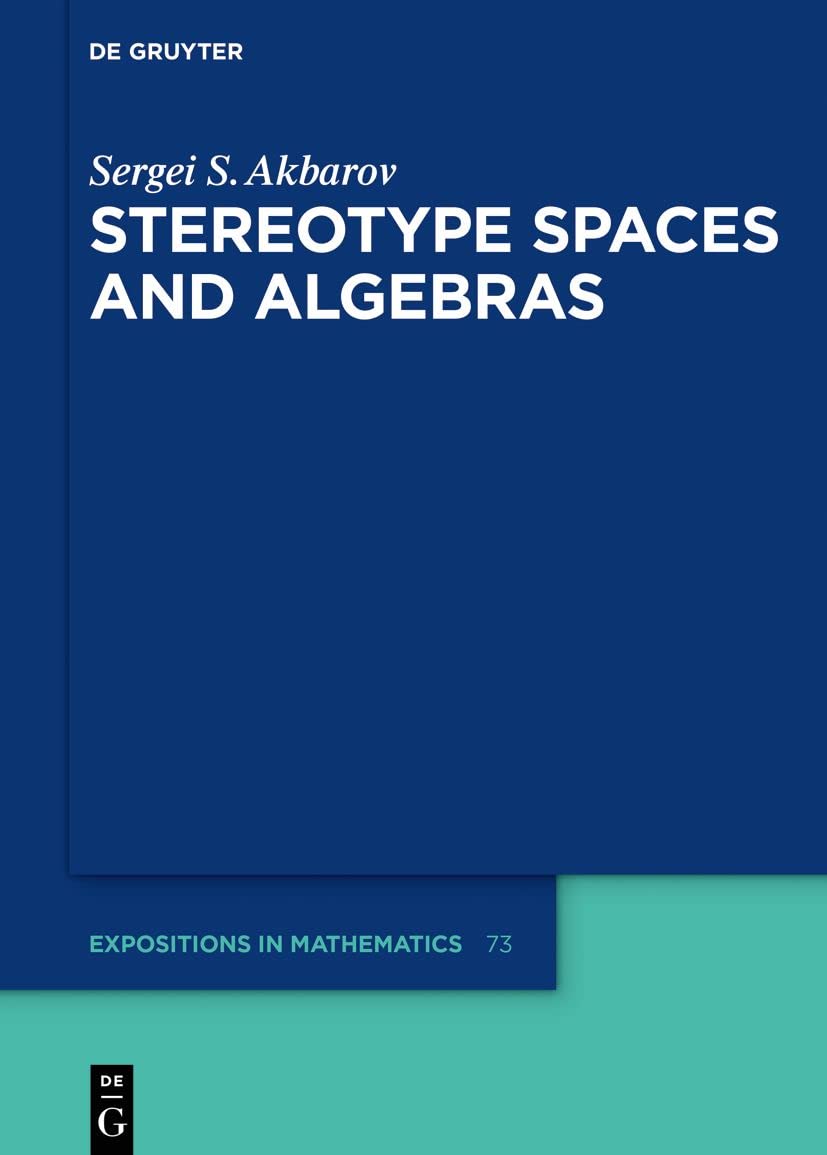
Stereotype Spaces and Algebras: 73 (De Gruyter Expositions in Mathematics, 73)
Mathematics
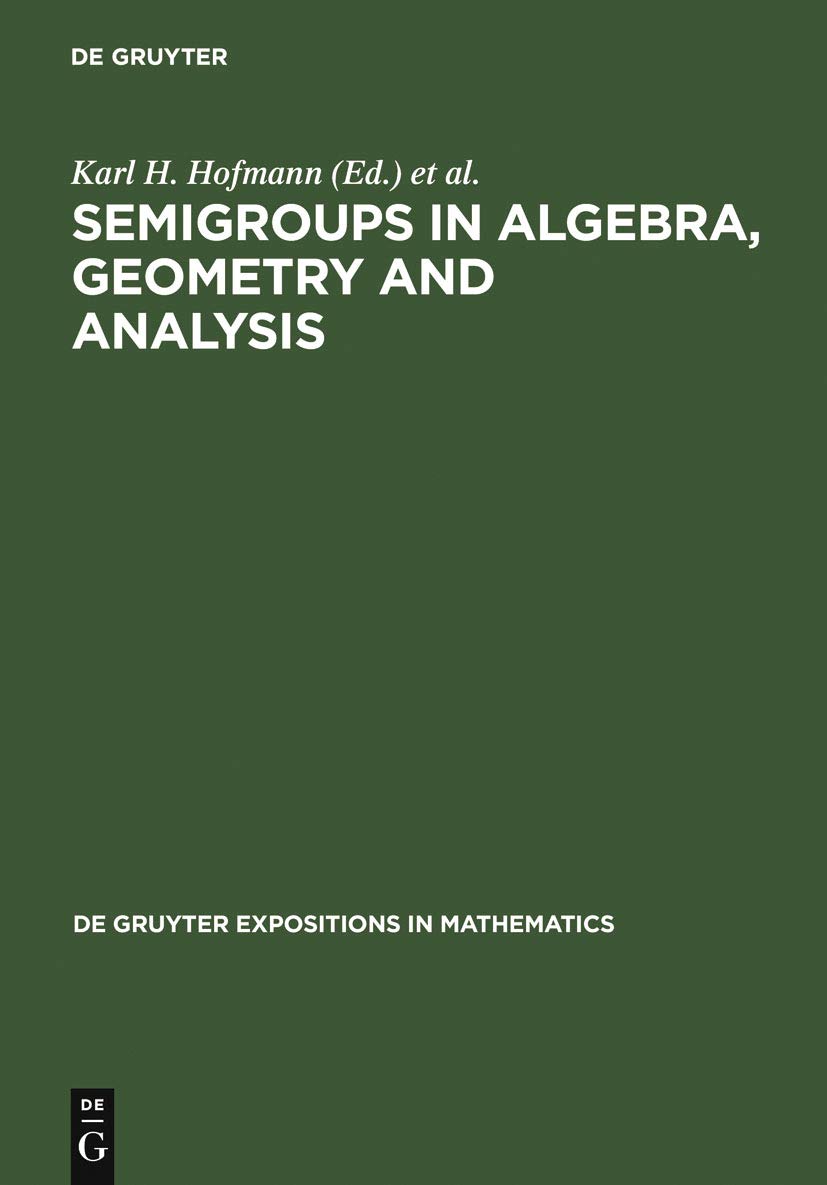
Semigroups in Algebra, Geometry and Analysis: 20 (De Gruyter Expositions in Mathematics, 20)
Mathematics
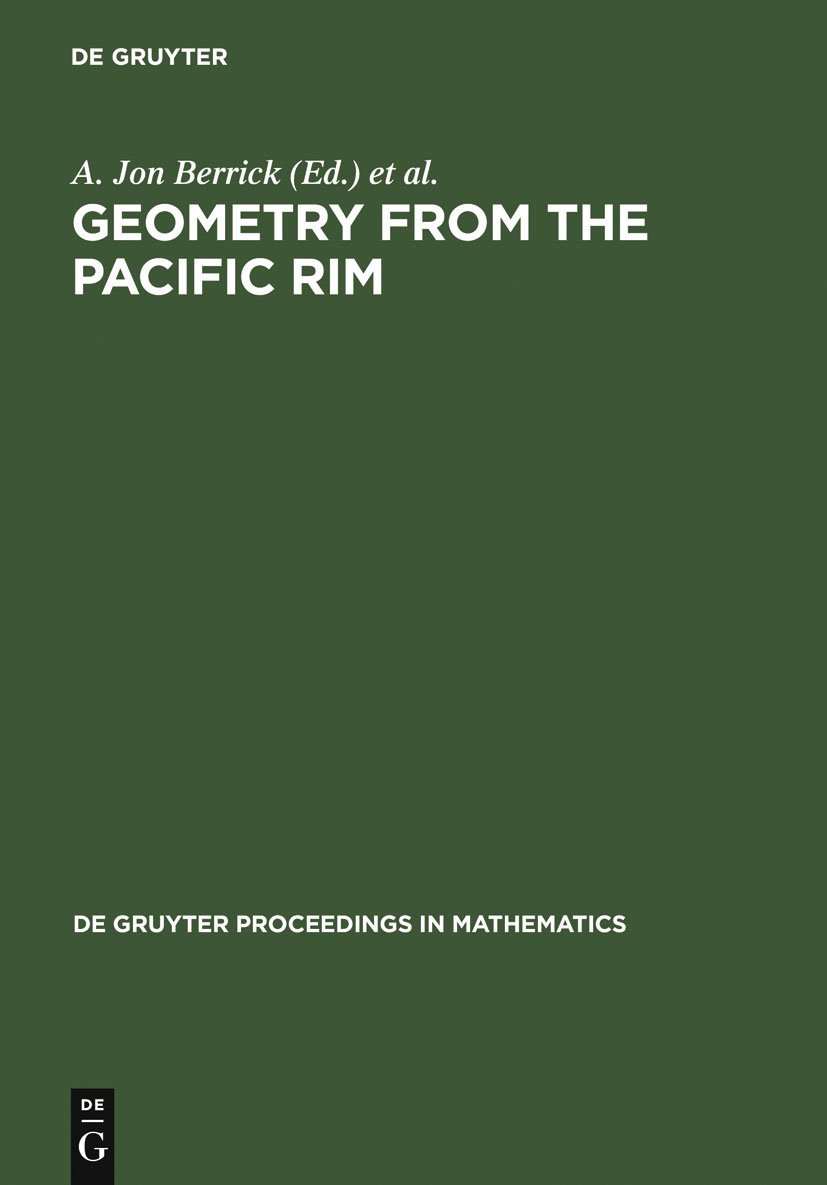
Geometry from the Pacific Rim: Proceedings of the Pacific Rim Geometry Conference held at National University of Singapore, Republic of Singapore, ... 1994 (De Gruyter Proceedings in Mathematics)
Mathematics
First International Tainan-Moscow Algebra Workshop: Proceedings of the International Conference held at National Cheng Kung University Tainan, Taiwan, ... 1994 (De Gruyter Proceedings in Mathematics)
Mathematics
Differential Geometry - Proceedings of the VIII International Colloquium (English, Jesus A. Alvarez Lopez | Eduardo Garcia-Rio)
Mathematics
Mathematical Theory of Optimal Processes (Classics of Soviet Mathematics)
Related Products
View All
Statistics
Asymptotics in Statistics and Probability: Papers in Honor of George Gregory Roussas
Statistics
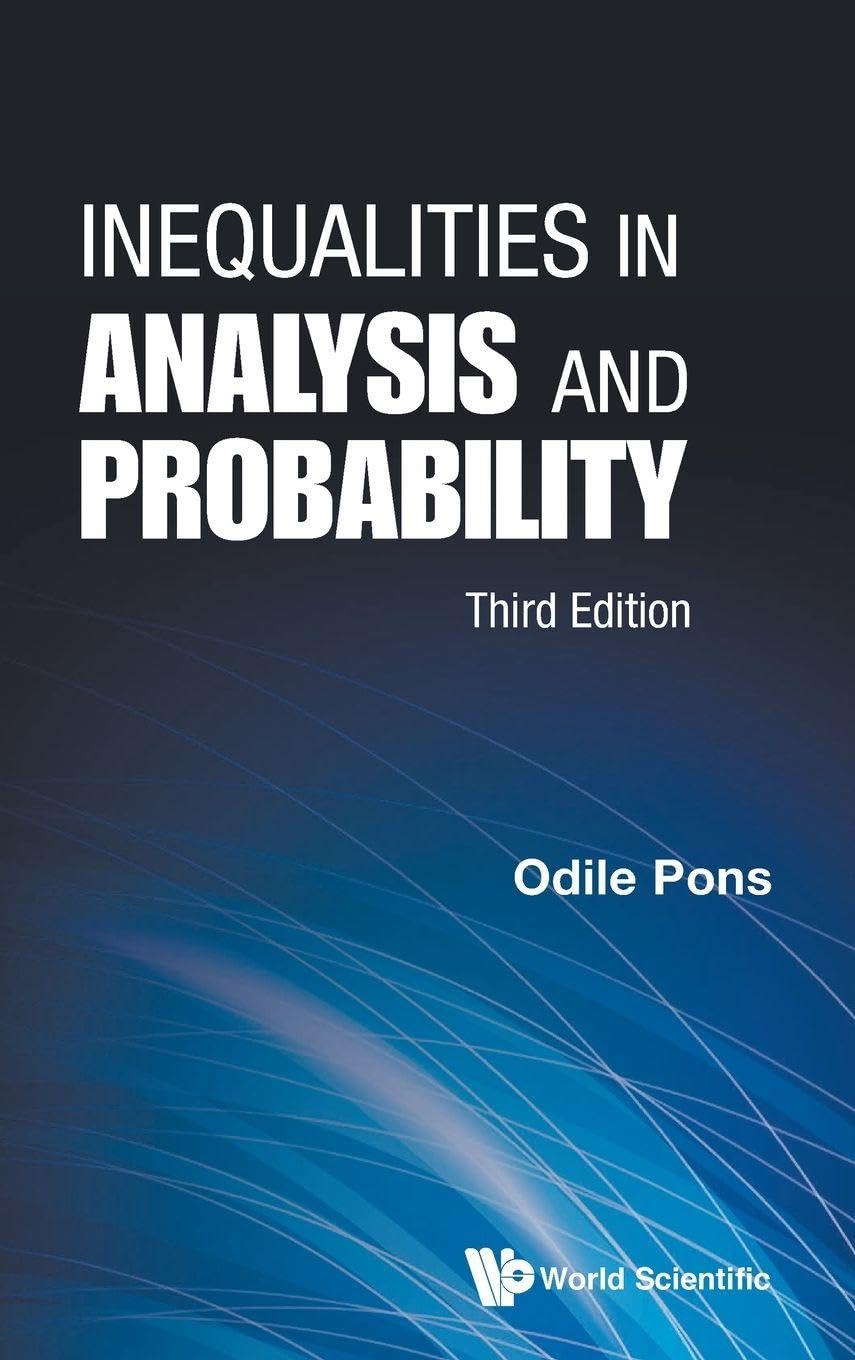
Inequalities in Analysis and Probability: 3rd Edition
Statistics
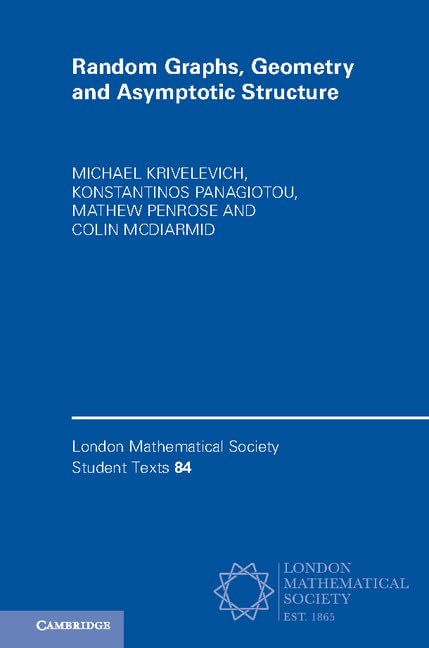
Random Graphs, Geometry and Asymptotic Structure
Statistics
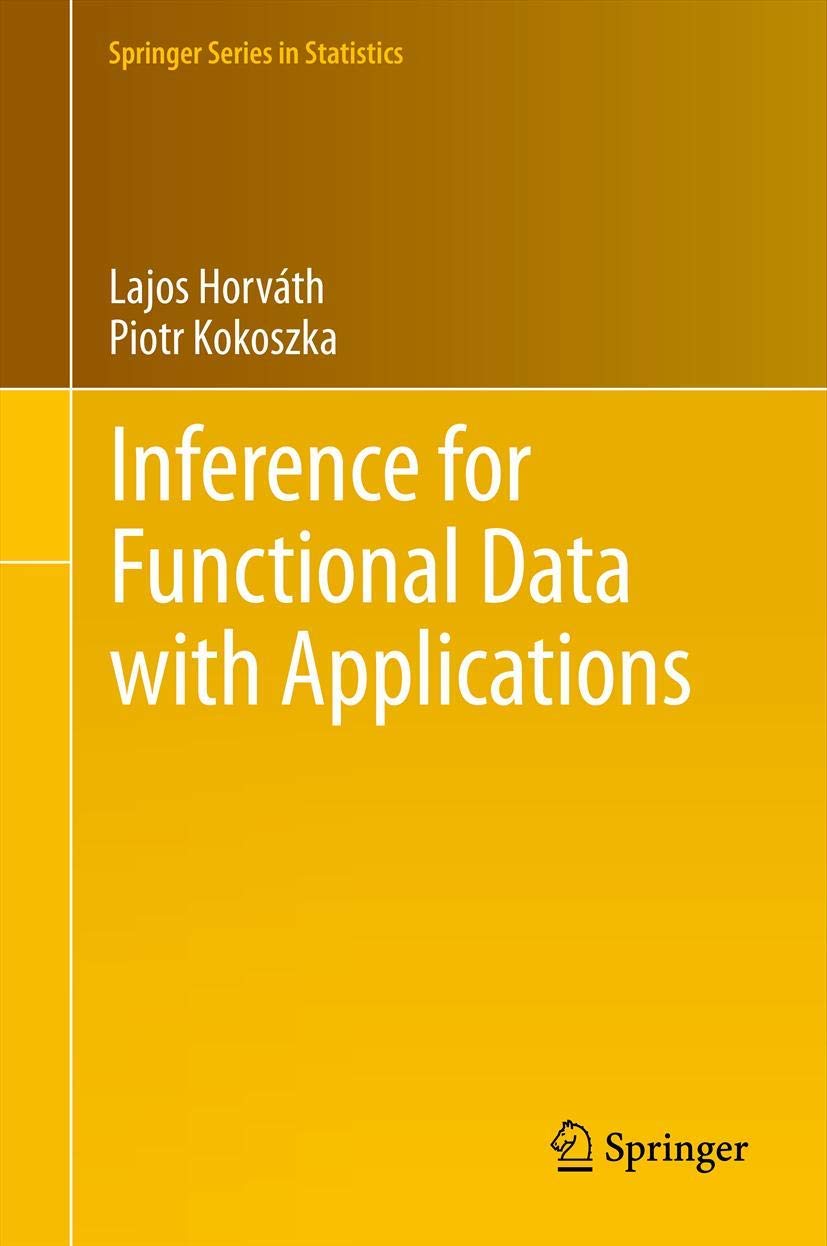
Inference for Functional Data With Applications: 200 (Springer Series in Statistics, 692)
Statistics
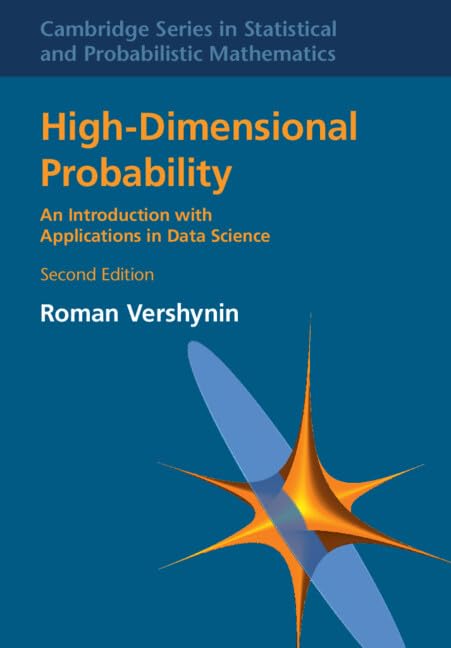
High-Dimensional Probability: An Introduction with Applications in Data Science (Cambridge Series in Statistical and Probabilistic Mathematics)
Statistics