
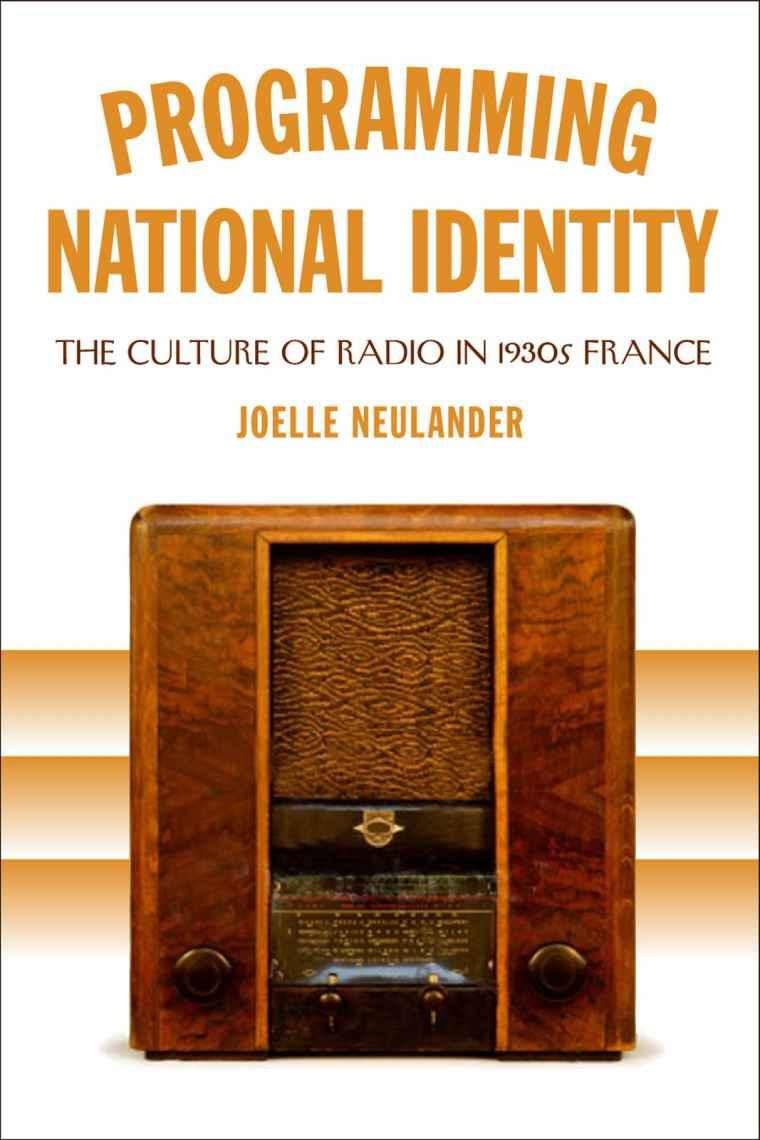
Programming National Identity: The Culture of Radio in 1930s France by Joelle Neulander – A Deep Dive into French Radio
Inclusive of all applicable taxes. FREE shipping on all orders.
Available Offers
- 🚚Free Delivery — Free shipping on all orders
- 💵Cash on Delivery — Pay when your order arrives
- ↩️15-Day Easy Returns — Hassle-free return policy
- 🔒Cash on Delivery — Pay safely when your order arrives
Check Delivery
Product Description
Introduction
In the quiet hum of a 1930s French living room, a Bakelite radio crackled to life, broadcasting not just music and news but an entire vision of what it meant to be French. Programming National Identity: The Culture of Radio in 1930s France by Joelle Neulander is a captivating historical study that explores how radio became a powerful tool for shaping national identity, gender roles, and consumer culture in interwar France. For students of media studies, cultural history, and French civilisation, this book offers a rich, original analysis of how a new medium helped define a nation.
Book Overview
This meticulously researched volume, published by LSU Press in a durable hardcover edition, examines the rise of radio as a principal form of mass culture in France during the 1930s. Neulander reveals that France was unique among Western nations—apart from Australia—in operating both private and public radio stations. Commercial station owners, she argues, built audiences by weaving traditional ideas about French identity, family, and community into their programming. The book shows how radio programmes, while entertaining and narrative in structure, were grounded in a politically and socially conservative ideal, reinforcing a sense of national belonging at a time of economic uncertainty and rising international tensions.
Key Highlights
- Dual System Analysis: Explores the fascinating coexistence of private and public radio stations, a rarity in 1930s Europe.
- Gender and Domesticity: Examines how radio programming targeted women and reinforced traditional gender roles within the home.
- Consumer Culture: Shows how commercial stations used radio to create new markets and audiences, linking listening habits to consumer behaviour.
- National Identity Formation: Demonstrates how radio broadcasts helped construct a unified French identity through language, music, and shared cultural references.
- Original Research: Based on archival sources, including station logs, listener letters, and government documents.
Inside the Book
The book takes readers inside the studios and living rooms of 1930s France, offering vivid descriptions of popular programmes—from variety shows and radio plays to news bulletins and educational talks. Neulander analyses the content of broadcasts, showing how they promoted ideals of domesticity, patriotism, and social order. She also discusses the technical and regulatory challenges faced by early broadcasters, as well as the role of radio in mediating the tensions between tradition and modernity. Each chapter builds a layered picture of a medium that was both a source of entertainment and a vehicle for cultural engineering.
Key Topics
- History of radio broadcasting in interwar France
- Private vs. public ownership of media
- Gender and the domestic sphere in early mass media
- Consumer culture and advertising on radio
- Nationalism and cultural identity in the 1930s
- The role of technology in shaping social life
- Media regulation and state intervention
Reader Benefits
By reading this book, you will gain a deeper understanding of how a seemingly simple medium—radio—can shape collective identity and social norms. The book provides a framework for analysing contemporary media landscapes, making it relevant for anyone interested in the power of broadcasting. You will also learn about a pivotal yet often overlooked period in French history, enriching your knowledge of European culture between the wars. The clear, engaging prose makes complex ideas accessible, while the detailed case studies offer concrete examples of radio's influence.
Learning Outcomes
After reading Programming National Identity, you will be able to: identify the key features of the French dual broadcasting system; explain how radio programming reinforced gender roles and consumer culture; analyse the relationship between media and national identity formation; evaluate the role of commercial vs. public interests in shaping content; and apply historical insights to understand contemporary media debates. The book is ideal for seminar discussions, research projects, or personal enrichment.
Who Should Read
This book is essential for students and scholars of media studies, cultural history, French studies, and European history. It will also appeal to readers interested in the history of technology, gender studies, and the sociology of communication. If you are curious about how a nation's identity can be broadcast into millions of homes, or how radio shaped the modern world, this book is for you. It is suitable for undergraduate and postgraduate courses, as well as for general readers with a passion for history and media.
About the Author
Joelle Neulander is a historian of modern France and media culture. Her research focuses on the intersection of technology, gender, and national identity in the early twentieth century. She has taught at several universities and published widely on French radio and consumer culture. Her work brings together archival rigour and narrative flair, making complex historical processes accessible and engaging.
About the Publisher
LSU Press, the publishing arm of Louisiana State University, is a respected academic publisher known for its strong lists in history, literature, and cultural studies. With a commitment to scholarly excellence, LSU Press produces works that are both intellectually rigorous and widely readable. This hardcover edition reflects the Press's dedication to quality production and lasting value.
Conclusion
Programming National Identity: The Culture of Radio in 1930s France is a compelling exploration of how a new medium helped shape a nation. Joelle Neulander's insightful analysis reveals the hidden power of radio to define who we are—and who we are told to be. Whether you are a student, a researcher, or a curious reader, this book will change the way you think about the media that surrounds you. Order your copy today from Bookshops.in and discover the untold story of radio's role in forging French identity.
Quick Summary
'Programming National Identity: The Culture of Radio in 1930s France' by Joelle Neulander is a scholarly exploration of how radio became a central force in shaping French mass culture during the interwar period. The book delves into the intricate relationship between radio programming, gender roles, and consumer culture, revealing how audio entertainment within the home reinforced conservative social ideals while also providing a new platform for national identity formation. Neulander examines both public and private radio stations, showing how their diverse programming—from music to news to dramas—captivated audiences and influenced daily life. This book is ideal for students and scholars of media studies, French history, gender studies, and cultural history. Readers will gain a nuanced understanding of how a seemingly simple medium like radio can shape societal norms and national consciousness. By purchasing from Bookshops.in, you get a high-quality hardcover edition delivered to your doorstep across India, ensuring you have access to this important academic work.
Book Highlights
Book Specifications
| ISBN-13 | 9780807134948 |
| ISBN-10 | 0807134945 |
| Publisher | Louisiana State University Press |
| Language | English |
| Dimensions | 15.24 x 1.78 x 22.86 cm |
| Weight | 544 g |
| Country | India |
| Category | Region & Countries › Europe |
| Genre | History |
| Original Language | English |
Frequently Asked Questions
What is the main theme of 'Programming National Identity'?
Who is the author of this book?
Is this book suitable for Indian readers?
What time period does the book cover?
Does the book discuss both public and private radio?
What is the binding of this book?
What is the ISBN of this book?
What language is the book written in?
Is this book part of a series?
Can I use this book for academic research?
Does the book include illustrations?
What makes this book unique?
Where can I buy this book in India?
Readers Also Search For
Related Products
View All
History
The Information Revolution: Transforming the World Through Technology (World History)
History
Human Nature and the French Revolution: From the Enlightenment to the Napoleonic Code: 3 (Polygons: Cultural Diversities and Intersections, 3)
History
The Unmaking of Home in Contemporary Art (Cultural Spaces)

History
Handbook to Life in Medieval and Early Modern Japan | by William E. Deal | Oxford University Press | by William E. Deal | Oxford University Press | by William E. Deal | Oxford University Press | by William E. Deal | Oxford University Press | by William E. Deal | Oxford University Press | by William E. Deal | Oxford University Press | by William E. Deal | Oxford University Press | by William E. Deal | Oxford University Press | by William E. Deal | Oxford University Press | by William E. Deal | Ox

History
The Narrators of Barbarian History (A.D. 550-800) | by Walter Goffart | University of Notre Dame Press | by Walter Goffart | University of Notre Dame Press | by Walter Goffart | University of Notre Dame Press | by Walter Goffart | University of Notre Dame Press | by Walter Goffart | University of Notre Dame Press | by Walter Goffart | University of Notre Dame Press | by Walter Goffart | University of Notre Dame Press | by Walter Goffart | University of Notre Dame Press | by Walter Goffart | Univ

History