
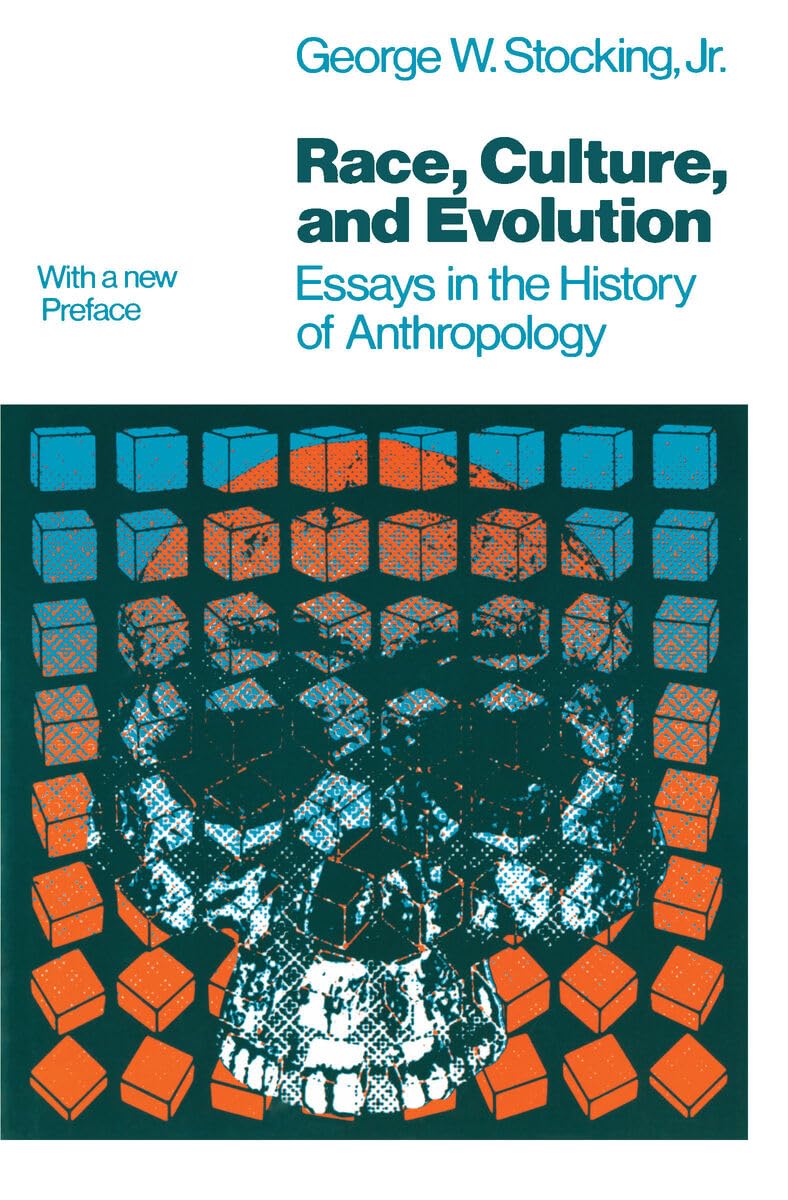
Race, Culture, and Evolution: Essays in the History of Anthropology by George W. Stocking Jr – A Foundational Work on Ra
Inclusive of all applicable taxes. FREE shipping on all orders.
Available Offers
- 🚚Free Delivery — Free shipping on all orders
- 💵Cash on Delivery — Pay when your order arrives
- ↩️15-Day Easy Returns — Hassle-free return policy
- 🔒Cash on Delivery — Pay safely when your order arrives
Check Delivery
Product Description
Introduction
Race, Culture, and Evolution: Essays in the History of Anthropology by George W. Stocking Jr. is a seminal work that traces the intellectual currents shaping anthropological thought from the nineteenth century to the mid-twentieth. Published by the University of Chicago Press, this hardcover edition offers Indian students, researchers, and academics a profound exploration of how race, culture, and evolutionary theory have been intertwined in the development of anthropology as a discipline. Stocking’s essays critically examine the origins of racialist ideas, the rise of cultural relativism, and the complex legacy of scientific racism—themes that remain deeply relevant in today’s global conversations about identity, heritage, and human diversity.
Book Overview
This collection brings together some of Stocking’s most influential essays, each meticulously researched and elegantly argued. The book does not merely recount historical facts; it interrogates the assumptions, biases, and institutional frameworks that shaped anthropological inquiry. From the debates surrounding polygenism and monogenism to the emergence of Franz Boas’s cultural paradigm, Stocking provides a nuanced account of how scientists, philosophers, and policymakers constructed—and deconstructed—concepts of race and culture. The essays are unified by a commitment to contextualizing ideas within broader social, political, and scientific currents, making this work essential for anyone seeking to understand the discipline’s fraught but transformative history.
Key Highlights
- Critical Archival Research: Stocking draws extensively from unpublished letters, institutional records, and rare manuscripts to reconstruct the intellectual journeys of key figures.
- Interdisciplinary Approach: The essays connect anthropology with biology, psychology, sociology, and colonial history, offering a holistic view of knowledge production.
- Race and Evolution in Focus: A central thread is the shifting scientific and popular discourse on race, from typological thinking to population-based models.
- Methodological Sophistication: Stocking demonstrates how historical analysis can illuminate contemporary debates about identity, difference, and human nature.
- Global Relevance: While focused on Western anthropology, the themes resonate powerfully with Indian contexts of caste, tribe, and colonial anthropology.
Inside the Book
The volume is organized into thematic essays rather than chronological chapters, allowing readers to dive into specific debates. Early essays tackle the reception of Darwinian evolution in anthropology and the persistence of racial hierarchies in scientific thought. Later pieces explore the professionalization of anthropology in the United States and Britain, the role of museums and exhibitions, and the political uses of anthropological knowledge. Stocking’s writing is dense but lucid, weaving together biographical sketches of figures like E. B. Tylor, Lewis Henry Morgan, and Franz Boas with broader institutional histories. Each essay stands alone, yet together they build a comprehensive argument about the contingent, often contested nature of scientific authority.
Key Topics
- The history of racial classification and its scientific justifications
- Evolutionary theory’s impact on early anthropology
- The shift from racial determinism to cultural relativism
- Anthropology’s relationship with colonialism and nationalism
- The influence of German idealist thought on American anthropology
- Boasian anthropology and the critique of scientific racism
- The role of academic institutions in shaping disciplinary boundaries
Reader Benefits
- Deepen Historical Understanding: Gain a clear grasp of how concepts of race and culture evolved from the Enlightenment through the twentieth century.
- Enhance Critical Thinking: Learn to question foundational assumptions in the social sciences by tracing their origins and transformations.
- Strengthen Research Skills: Stocking’s meticulous methodology offers a model for conducting archival and historiographic research.
- Bridge Past and Present: Connect historical debates to contemporary issues such as caste discrimination, ethnic conflict, and multiculturalism in India.
- Build Academic Foundation: Ideal for students preparing for competitive exams or advanced studies in anthropology, sociology, or history.
Learning Outcomes
By engaging with this book, readers will be able to: identify the key intellectual figures and schools that shaped modern anthropology; analyze the interplay between scientific evidence and social ideology in the construction of racial theories; evaluate the ethical and political implications of anthropological knowledge; and apply historical perspectives to current discussions about diversity, equity, and representation. Students will emerge with a robust framework for understanding how disciplines evolve and how ideas travel across cultures and time.
Who Should Read
This book is indispensable for postgraduate and doctoral students in anthropology, history of science, and sociology. It is equally valuable for faculty members designing courses on race, colonialism, or the philosophy of social science. Indian readers interested in the intellectual roots of caste studies, tribal anthropology, or postcolonial theory will find Stocking’s insights directly applicable. Additionally, general readers with a passion for intellectual history and the politics of knowledge will appreciate the clarity and depth of these essays.
About the Author
George W. Stocking Jr. (1928–2013) was a pioneering historian of anthropology, widely regarded as the founder of the modern historiography of the discipline. He taught at the University of Chicago and the University of California, Berkeley, and served as editor of the journal History of Anthropology. His work set new standards for archival rigor and contextual analysis, influencing generations of scholars across the humanities and social sciences. Stocking’s ability to blend narrative flair with scholarly precision makes his writing both accessible and authoritative.
About the Publisher
The University of Chicago Press is one of the most respected academic publishers in the world, known for its rigorous editorial standards and contributions to scholarship since 1890. Its catalog includes landmark works in anthropology, history, philosophy, and the natural sciences. This edition of Race, Culture, and Evolution upholds the Press’s tradition of producing durable, beautifully bound hardcovers that are built to last—perfect for libraries, research institutions, and personal collections.
Conclusion
In an era when debates about race and identity are more urgent than ever, Race, Culture, and Evolution: Essays in the History of Anthropology offers a timely and essential perspective. George W. Stocking Jr. does not provide easy answers, but he equips readers with the historical literacy needed to ask better questions. Whether you are a student, teacher, or lifelong learner, this book will transform how you understand the origins of anthropological thought and its enduring impact on how we see ourselves and others. Add this classic to your library and join the ongoing conversation about what it means to be human.
Quick Summary
Race, Culture, and Evolution: Essays in the History of Anthropology by George W. Stocking Jr is a seminal collection that delves into the intellectual history of anthropology, with a sharp focus on the concepts of race and evolution. Stocking, a distinguished historian, employs meticulous archival research to unravel how 19th and early 20th century scientists constructed racial categories and applied evolutionary theories often to justify hierarchies. The book is not merely a history; it is a critical analysis that exposes the social and cultural currents that shaped anthropological thought. Ideal for Indian scholars, researchers, and advanced students in anthropology, sociology, and history, this work equips readers with a deep understanding of the roots of racialism and its lingering effects. Readers will learn to critically engage with historical texts, recognize the influence of figures like Franz Boas, and appreciate the methodological evolution of the discipline. By purchasing from Bookshops.in, you get a carefully sourced hardcover edition from a trusted Indian bookstore, ensuring quality and timely delivery.
Book Highlights
Book Specifications
| ISBN-13 | 9780226774947 |
| ISBN-10 | 0226774945 |
| Publisher | Univ of Chicago Pr |
| Language | English |
| Dimensions | 13.34 x 2.59 x 20.32 cm |
| Weight | 408 g |
| Country | India |
| Category | Society & Social Sciences › Anthropology |
| Genre | Non-fiction |
| Original Language | English |
Frequently Asked Questions
What is Race, Culture, and Evolution about?
Who is the author of this book?
Is this book suitable for Indian students?
What is the ISBN of this book?
Is this book available in paperback?
What topics does the book cover?
Can I use this book for my PhD research?
Is the book written in technical language?
Does the book discuss colonialism?
Why is this book important today?
How does this book differ from other anthropology histories?
Is there a digital edition available?
Where can I buy this book in India?
Readers Also Search For
Customers Also Bought
Sociology
Imagination Beyond Nation: Latin American Popular Culture: 349 (Pitt Latin American Series)

Sociology
Boomer Volunteer Engagement: Facilitator's Tool Kit

Sociology
Making a Success of Marriage: Planning for Happily Ever After

Sociology
Causal Mediation Analysis (Analytical Methods for Social Research)
Sociology
Marriage and the Moral Imagination (New Departures in Anthropology)

Sociology
Social Change, Resistance and Social Practices: 19 (Studies in Critical Social Sciences, 19)
Related Products
View All
Anthropology
Governing How We Care: Contesting Community and Defining Difference in U.S. Public Health Programs
Anthropology
What Gifts Engender (English, Rena Lederman)

Anthropology
Epistemology and Practice (English, Anne Warfield Rawls | Rawls Anne Warfield)
Anthropology
The Expression of Emotion: Philosophical, Psychological and Legal Perspectives (Studies in Emotion and Social Interaction)
Anthropology
Dramas of Nationhood: The Politics of Television in Egypt by Lila Abu-Lughod
Anthropology