
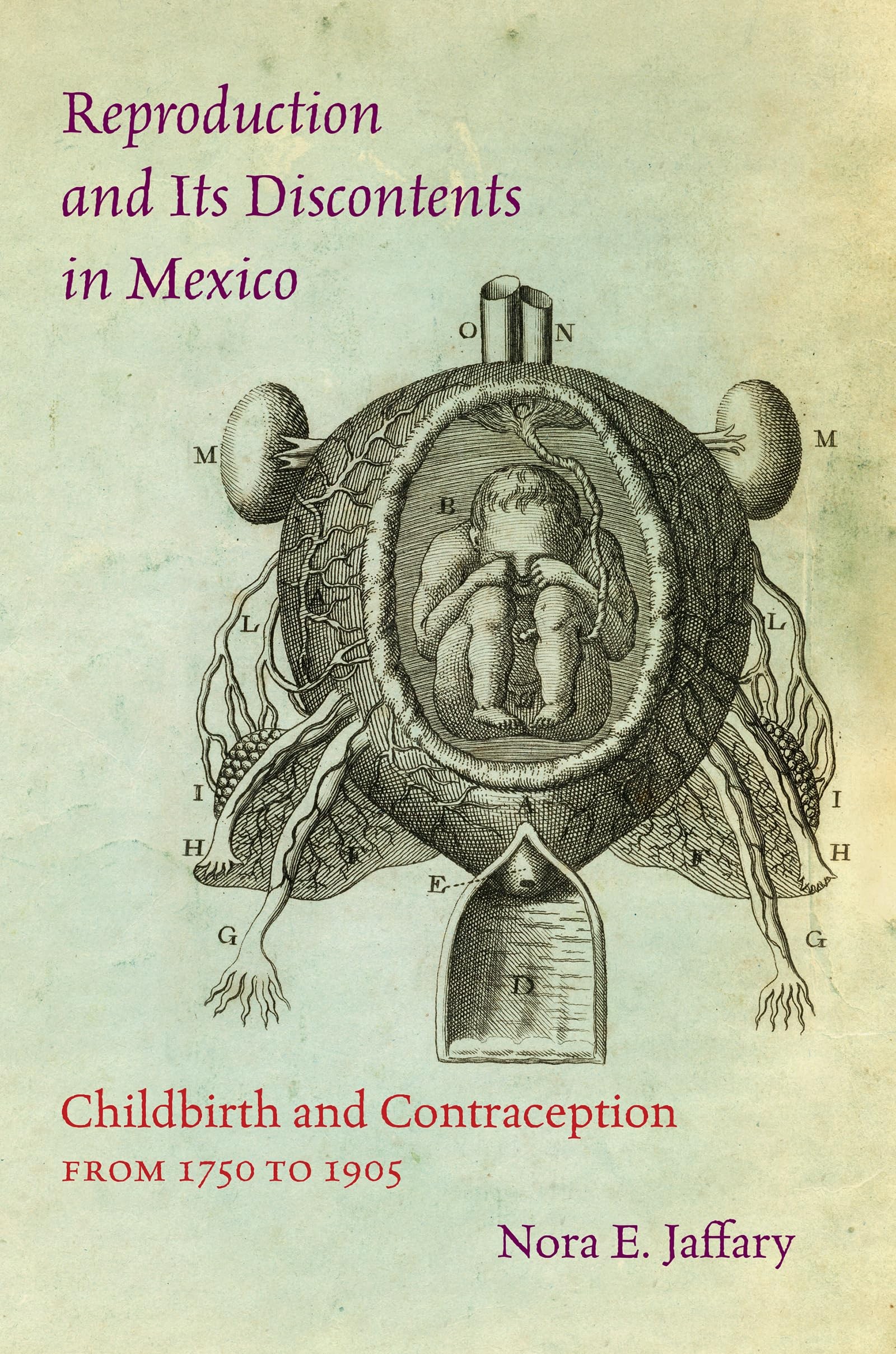
Reproduction and Its Discontents in Mexico: Childbirth and Contraception from 1750 to 1905 by Nora E. Jaffary – A Deep D
Inclusive of all applicable taxes. FREE shipping on all orders.
Available Offers
- 🚚Free Delivery — Free shipping on all orders
- 💵Cash on Delivery — Pay when your order arrives
- ↩️15-Day Easy Returns — Hassle-free return policy
- 🔒Cash on Delivery — Pay safely when your order arrives
Check Delivery
Product Description
Introduction
Reproduction and Its Discontents in Mexico: Childbirth and Contraception from 1750 to 1905 offers a groundbreaking exploration of how childbirth, contraception, and reproductive practices shaped Mexican society from the colonial era through the nineteenth century. Written by historian Nora E. Jaffary, this hardcover volume from the University of North Carolina Press illuminates the complex interplay between medicine, gender, and state-building in Latin America. For Indian readers and students interested in comparative histories of reproduction, this book provides a rich, cross-cultural perspective that deepens our understanding of how societies manage and control the most intimate aspects of human life.
Book Overview
This meticulously researched work traces Mexico's transition from a Spanish colony to an independent nation, revealing how reproductive beliefs and practices were central to ideas about female virtue, modernity, and national identity. Jaffary examines a wide range of sources, including medical texts, legal records, and personal accounts, to reconstruct the experiences of mothers, midwives, physicians, and state authorities. The narrative moves from the eighteenth century, when indigenous and European traditions coexisted, through the nineteenth century, when modern obstetrics and contraception began to emerge. The book challenges conventional narratives by showing that expectations of idealized womanhood and female sexual virtue actually intensified during the nineteenth century, rather than diminishing.
Key Highlights
- Original research: Draws on archival documents from Mexico, Spain, and the United States to provide a fresh perspective on reproduction in Latin America.
- Interdisciplinary approach: Blends history, gender studies, and medical anthropology to create a comprehensive analysis.
- Focus on marginalized voices: Gives attention to midwives, indigenous women, and lower-class mothers whose experiences are often overlooked.
- Comparative insights: Offers valuable parallels for understanding reproductive politics in other postcolonial societies, including India.
- Timely themes: Explores contraception, abortion, and infanticide, topics that remain deeply relevant today.
Inside the Book
The book is divided into nine chapters, each addressing a specific aspect of reproduction. Early chapters examine conceptions of virginity and fertility, showing how colonial authorities and the Catholic Church regulated female bodies. Middle chapters explore contraception and abortion, revealing a surprising range of methods used by women across social classes. Later chapters focus on childbirth practices, including the role of midwives and the gradual medicalization of birth. A particularly striking section analyzes so-called monstrous births—infants with congenital anomalies—and how they were interpreted as omens or divine messages. The final chapters trace the rise of modern obstetrical medicine and the professionalization of male physicians at the expense of female midwives.
Key Topics
- Virginity, honor, and female virtue in colonial and nineteenth-century Mexico
- Contraceptive methods and knowledge among indigenous, mestiza, and elite women
- Abortion practices and legal responses
- Infanticide and its social and economic contexts
- Monstrous births and their cultural meanings
- The transition from midwifery to obstetrical medicine
- State regulation of reproduction and its role in nation-building
- Gender, race, and class in reproductive health
Reader Benefits
This book enriches readers with a nuanced understanding of how reproduction is never merely a biological event but a deeply social and political one. Indian students of history, gender studies, and public health will find valuable comparative material for understanding their own country's reproductive past and present. The clear, engaging prose makes complex theoretical ideas accessible, while the detailed case studies bring historical figures to life. By examining a non-Western context, the book challenges Eurocentric assumptions about the history of medicine and sexuality. Additionally, the focus on ordinary women's experiences provides a powerful counterpoint to top-down histories of medical progress.
Learning Outcomes
After reading this book, you will be able to: analyze the historical roots of contemporary reproductive debates in Latin America; understand how colonialism shaped ideas about female bodies and sexuality; evaluate the role of the state and church in regulating reproduction; compare different cultural approaches to childbirth and contraception; and critically assess narratives of medical modernization. The book also equips readers with methodological tools for conducting historical research on intimate subjects using archival sources.
Who Should Read
This book is ideal for undergraduate and postgraduate students of Latin American history, gender studies, medical anthropology, and public health. Scholars working on comparative colonialism, reproductive justice, and the history of medicine will find it an essential resource. General readers with an interest in women's history, Mexican culture, or the social dimensions of childbirth will also be captivated. Indian readers, in particular, will appreciate the parallels between Mexico's colonial legacy and India's own complex history of reproductive regulation under British rule and after independence.
About the Author
Nora E. Jaffary is a professor of history at Concordia University in Montreal, Canada. She specializes in colonial and nineteenth-century Latin America, with a particular focus on gender, medicine, and the body. Her previous books include Gender, Race, and Religion in the Colonization of the Americas and The History of Motherhood in Mexico. Jaffary's work is known for its meticulous archival research and its commitment to recovering the voices of women and other marginalized groups. She has received numerous grants and fellowships for her scholarship, including support from the Social Sciences and Humanities Research Council of Canada.
About the Publisher
The University of North Carolina Press is a prestigious academic publisher based in Chapel Hill, North Carolina. Founded in 1922, it is known for publishing groundbreaking works in history, Latin American studies, and gender studies. The press has a strong commitment to scholarly excellence and has published many award-winning books that have shaped academic discourse. This volume is part of their Latin American History and Culture series, which features innovative research on the region's past and present.
Conclusion
Reproduction and Its Discontents in Mexico is a vital contribution to the history of childbirth and contraception, offering a compelling narrative that spans more than a century of change. Nora E. Jaffary's careful scholarship and engaging storytelling make this book a must-read for anyone interested in how societies manage reproduction. For Indian readers, it provides a valuable lens through which to view their own history of reproductive politics, while also offering lessons for contemporary debates about women's health and autonomy. Order your copy today from Bookshops.in and delve into this fascinating, eye-opening study.
Quick Summary
'Reproduction and Its Discontents in Mexico' by Nora E. Jaffary is a scholarly work that delves into the history of childbirth and contraception in Mexico from 1750 to 1905. The book examines how colonial and nineteenth-century beliefs about conception, pregnancy, and birth shaped female sexuality, virtue, and the development of modern Mexico. Jaffary draws on a wide range of sources, including state records, medical texts, and personal accounts, to highlight the roles of mothers, midwives, husbands, lovers, employers, and neighbors. Key topics include virginity, contraception, abortion, infanticide, monstrous births, and the rise of obstetrical medicine. This book is ideal for students and scholars of Latin American history, gender studies, and the history of medicine. Readers will gain a nuanced understanding of how reproduction intersected with power, religion, and nation-building in Mexico. By purchasing from Bookshops.in, you support a trusted Indian bookstore that offers authentic academic titles with reliable delivery.
Book Highlights
Book Specifications
| ISBN-13 | 9781469629391 |
| ISBN-10 | 1469629399 |
| Publisher | Univ of North Carolina Pr |
| Language | English |
| Dimensions | 15.54 x 1.83 x 23.5 cm |
| Weight | 617 g |
| Country | India |
| Category | Region & Countries › Americas |
| Genre | History |
| Original Language | English |
Frequently Asked Questions
What is the main focus of 'Reproduction and Its Discontents in Mexico'?
Who is the author of this book?
Which time period does the book cover?
What topics are discussed in the book?
Is this book suitable for Indian readers?
What kind of sources does the author use?
Does the book discuss midwifery?
How does the book connect reproduction to nation-building?
What is the binding of this book?
What is the ISBN-13 of this book?
What language is the book written in?
What is the price of the book in India?
Where can I buy this book in India?
Readers Also Search For
Related Products
View All
History
The Information Revolution: Transforming the World Through Technology (World History)

History
Human Nature and the French Revolution: From the Enlightenment to the Napoleonic Code: 3 (Polygons: Cultural Diversities and Intersections, 3)

History
The Unmaking of Home in Contemporary Art (Cultural Spaces)

History
Handbook to Life in Medieval and Early Modern Japan | by William E. Deal | Oxford University Press | by William E. Deal | Oxford University Press | by William E. Deal | Oxford University Press | by William E. Deal | Oxford University Press | by William E. Deal | Oxford University Press | by William E. Deal | Oxford University Press | by William E. Deal | Oxford University Press | by William E. Deal | Oxford University Press | by William E. Deal | Oxford University Press | by William E. Deal | Ox

History
The Narrators of Barbarian History (A.D. 550-800) | by Walter Goffart | University of Notre Dame Press | by Walter Goffart | University of Notre Dame Press | by Walter Goffart | University of Notre Dame Press | by Walter Goffart | University of Notre Dame Press | by Walter Goffart | University of Notre Dame Press | by Walter Goffart | University of Notre Dame Press | by Walter Goffart | University of Notre Dame Press | by Walter Goffart | University of Notre Dame Press | by Walter Goffart | Univ

History