
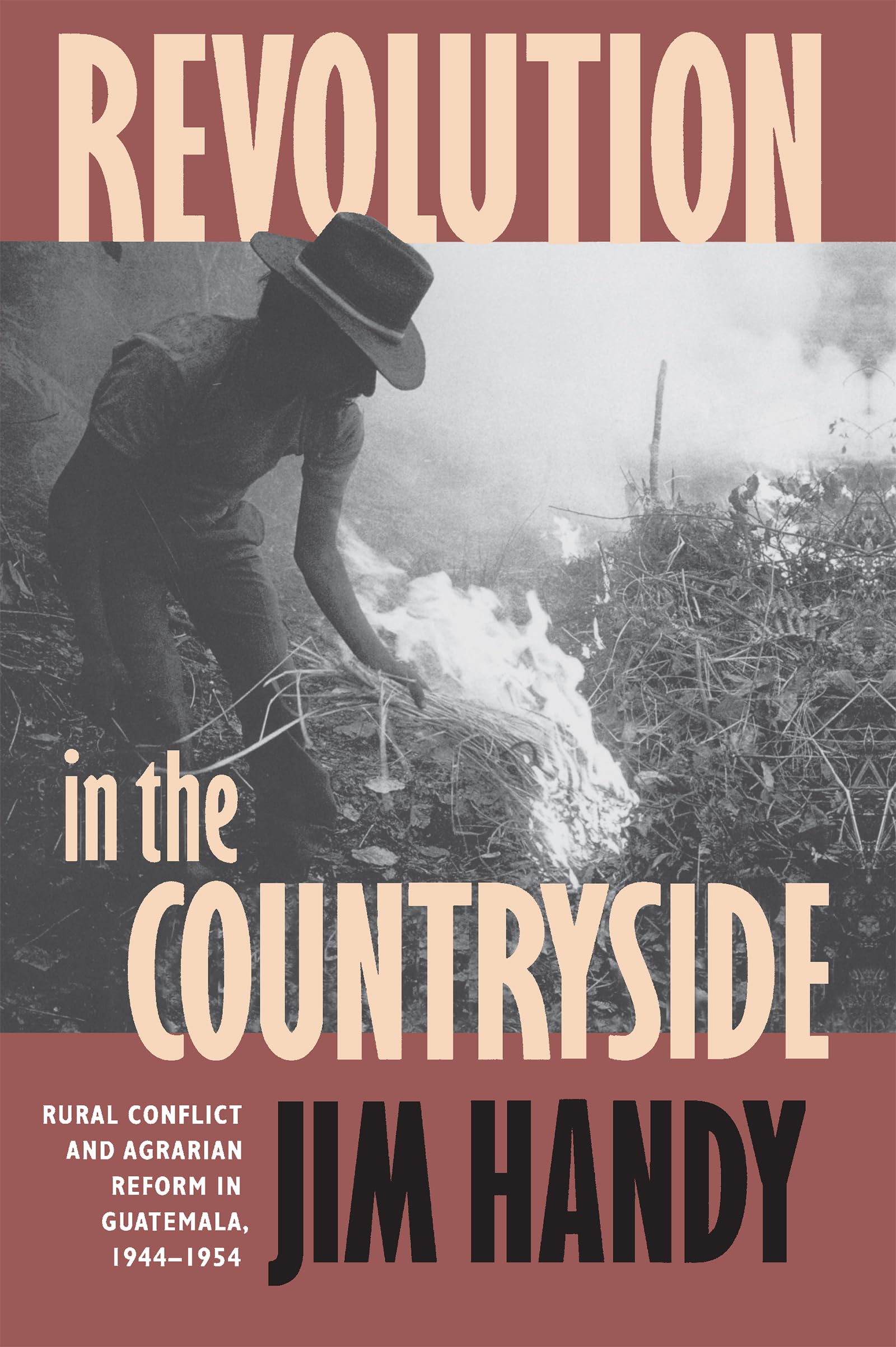
Revolution in the Countryside: Rural Conflict and Agrarian Reform in Guatemala, 1944-1954 by Jim Handy – A Comprehensive
Inclusive of all applicable taxes. FREE shipping on all orders.
Available Offers
- 🚚Free Delivery — Free shipping on all orders
- 💵Cash on Delivery — Pay when your order arrives
- ↩️15-Day Easy Returns — Hassle-free return policy
- 🔒Cash on Delivery — Pay safely when your order arrives
Check Delivery
Product Description
Introduction
In the annals of Latin American history, few episodes are as transformative and contested as Guatemala’s decade of revolutionary change between 1944 and 1954. Jim Handy’s Revolution in the Countryside: Rural Conflict and Agrarian Reform in Guatemala, 1944-1954 offers a deeply researched and compelling account that shifts the focus from high politics in the capital to the struggles, hopes, and agency of rural communities. For students of history, political science, and development studies in India, this book provides a powerful lens through which to understand land-based conflicts, peasant movements, and the complexities of agrarian reform in a deeply unequal society.
Book Overview
Published by the University of North Carolina Press, this hardcover edition presents a nuanced examination of Guatemala’s revolutionary period, challenging conventional narratives that centre solely on Cold War geopolitics or elite manoeuvring. Handy meticulously reconstructs the experiences of Maya and Ladino peasants, showing how ethnic and class identities intersected to shape both government policy and grassroots resistance. The book’s core argument is that rural actors were not passive recipients of reform but active participants who pushed the boundaries of agrarian transformation, often beyond what the state intended. Through detailed case studies and archival research, Handy reveals how land reform became a battlefield where competing visions of justice, development, and sovereignty clashed.
Key Highlights
- Peasant Agency: Foregrounds the role of indigenous and ladino rural communities as drivers of change, not mere victims.
- Ethnic and Class Dynamics: Explores how ethnicity complicated class-based alliances and state responses.
- Agrarian Reform in Practice: Offers the most detailed analysis to date of the implementation and impact of Guatemala’s land redistribution law.
- Counterrevolutionary Coercion: Documents the brutal repression that followed the 1954 coup, reversing many gains.
- Comparative Insights: Provides lessons relevant to land struggles in other developing nations, including India.
Inside the Book
The book is structured to guide readers from the origins of rural discontent through the peak of reform and into the violent backlash. Early chapters set the stage with a portrait of pre-revolutionary Guatemala, where vast estates coexisted with landless peasants and oppressive labour relations. Handy then traces the rise of President Jacobo Arbenz and the passage of Decree 900, the agrarian reform law intended to break up large holdings. A significant portion of the book is devoted to the messy, contested process of implementation: how peasant unions occupied land, how officials struggled to control the pace of change, and how landowners and foreign interests mobilised to resist. The final chapters detail the coup engineered by the United States and the ensuing crackdown, which dismantled rural organisations and reversed land distribution. Throughout, Handy weaves together national policy documents, local archives, and oral histories to create a vivid, ground-level narrative.
Key Topics
- Land tenure systems and rural inequality in mid-20th century Guatemala
- The political economy of agrarian reform under President Arbenz
- Ethnicity: Maya identity, Ladino dominance, and rural hierarchies
- Peasant mobilisation, unions, and grassroots organisations
- The role of US foreign policy in destabilising reformist governments
- Counterrevolution and state violence against rural communities
- Comparative agrarian movements in the Global South
Reader Benefits
This book equips readers with a deeper understanding of how rural societies respond to state-led development and reform. It challenges simplistic narratives of peasant passivity and highlights the complexity of social change in multi-ethnic contexts. For Indian readers, the parallels with land reform debates in post-independence India—where caste, class, and region intersected—are striking and instructive. Handy’s work also sharpens critical thinking about the limits of reform from above and the resilience of grassroots movements. Scholars and activists alike will find the detailed empirical evidence invaluable for comparative research on agrarian conflict.
Learning Outcomes
- Analyse the interplay of ethnicity, class, and state power in rural settings
- Evaluate the successes and failures of Guatemala’s agrarian reform program
- Understand the mechanisms of US intervention in Latin America during the Cold War
- Identify patterns of peasant resistance and state repression
- Draw connections between historical land struggles and contemporary agrarian issues
Who Should Read
This book is essential for undergraduate and postgraduate students of Latin American history, political science, sociology, and development economics. It will also appeal to researchers specialising in agrarian studies, peasant movements, ethnic relations, and Cold War history. Activists and policymakers working on land rights, rural development, and indigenous issues will find the case studies highly relevant. Moreover, any reader interested in understanding how ordinary people shape—and are shaped by—revolutionary change will be captivated by Handy’s narrative.
About the Author
Jim Handy is a distinguished historian and professor at the University of Saskatchewan, Canada. His research focuses on Central American rural history, agrarian reform, and indigenous communities. He has written extensively on Guatemala, including the acclaimed Gift of the Devil: A History of Guatemala. Handy’s work is known for its rigorous archival research, empathetic portrayal of subaltern voices, and commitment to situating local struggles within global contexts.
About the Publisher
The University of North Carolina Press is a leading academic publisher with a strong reputation in Latin American studies, history, and social sciences. Founded in 1922, it publishes works that advance scholarship and inform public debate. This hardcover edition reflects the Press’s dedication to producing high-quality, durable books for libraries, scholars, and serious readers.
Conclusion
Revolution in the Countryside is a landmark study that reorients our understanding of Guatemala’s revolutionary decade. By placing rural communities at the centre of the story, Jim Handy offers a rich, textured account that resonates far beyond Central America. For anyone seeking to grasp the enduring challenges of land inequality, ethnic conflict, and state violence, this book is an indispensable resource. Add this hardcover edition to your library and engage with a history that continues to shape the present.
Quick Summary
Jim Handy's 'Revolution in the Countryside: Rural Conflict and Agrarian Reform in Guatemala, 1944-1954' is a seminal historical work that reframes Guatemala's revolutionary decade from the ground up. Rather than focusing solely on political leaders or international pressures, Handy centers the experiences of Maya and Ladino peasants who actively shaped agrarian reform and rural conflict. The book provides the most detailed analysis available of the 1952 agrarian reform law and its implementation, showing how peasant organizations often pushed the reform beyond what officials intended. Readers will learn how ethnicity and class intersected to create both cooperation and tension among rural communities, and how these dynamics influenced the eventual unraveling of the revolution. This book is essential for students and scholars of Latin American history, agrarian studies, and ethnic conflict. By purchasing from Bookshops.in, Indian readers gain access to a hardcover academic classic that is rarely available locally, with fast and reliable shipping across the country.
Book Highlights
Book Specifications
| ISBN-13 | 9780807844380 |
| ISBN-10 | 0807844381 |
| Publisher | The University of North Carolina Press |
| Language | English |
| Dimensions | 15.6 x 1.8 x 23.39 cm |
| Weight | 454 g |
| Country | India |
| Category | Region & Countries › Americas |
| Genre | History |
| Reading Age | Adult |
| Original Language | English |
Frequently Asked Questions
What is the main focus of this book?
Who is the author Jim Handy?
Is this book suitable for undergraduate students?
Does the book cover the role of the United Fruit Company?
How does the author treat ethnicity?
What primary sources does the author use?
Is the book only about agrarian reform?
Does the book include maps?
How does this book differ from other works on Guatemala?
Is this book relevant to current Guatemalan issues?
Can I use this book for a research paper?
What is the reading level?
Does the book discuss the 1954 coup?
Where can I buy this book in India?
Readers Also Search For
Related Products
View All
History
The Information Revolution: Transforming the World Through Technology (World History)
History
Human Nature and the French Revolution: From the Enlightenment to the Napoleonic Code: 3 (Polygons: Cultural Diversities and Intersections, 3)

History
The Unmaking of Home in Contemporary Art (Cultural Spaces)

History
Handbook to Life in Medieval and Early Modern Japan | by William E. Deal | Oxford University Press | by William E. Deal | Oxford University Press | by William E. Deal | Oxford University Press | by William E. Deal | Oxford University Press | by William E. Deal | Oxford University Press | by William E. Deal | Oxford University Press | by William E. Deal | Oxford University Press | by William E. Deal | Oxford University Press | by William E. Deal | Oxford University Press | by William E. Deal | Ox

History
The Narrators of Barbarian History (A.D. 550-800) | by Walter Goffart | University of Notre Dame Press | by Walter Goffart | University of Notre Dame Press | by Walter Goffart | University of Notre Dame Press | by Walter Goffart | University of Notre Dame Press | by Walter Goffart | University of Notre Dame Press | by Walter Goffart | University of Notre Dame Press | by Walter Goffart | University of Notre Dame Press | by Walter Goffart | University of Notre Dame Press | by Walter Goffart | Univ

History