
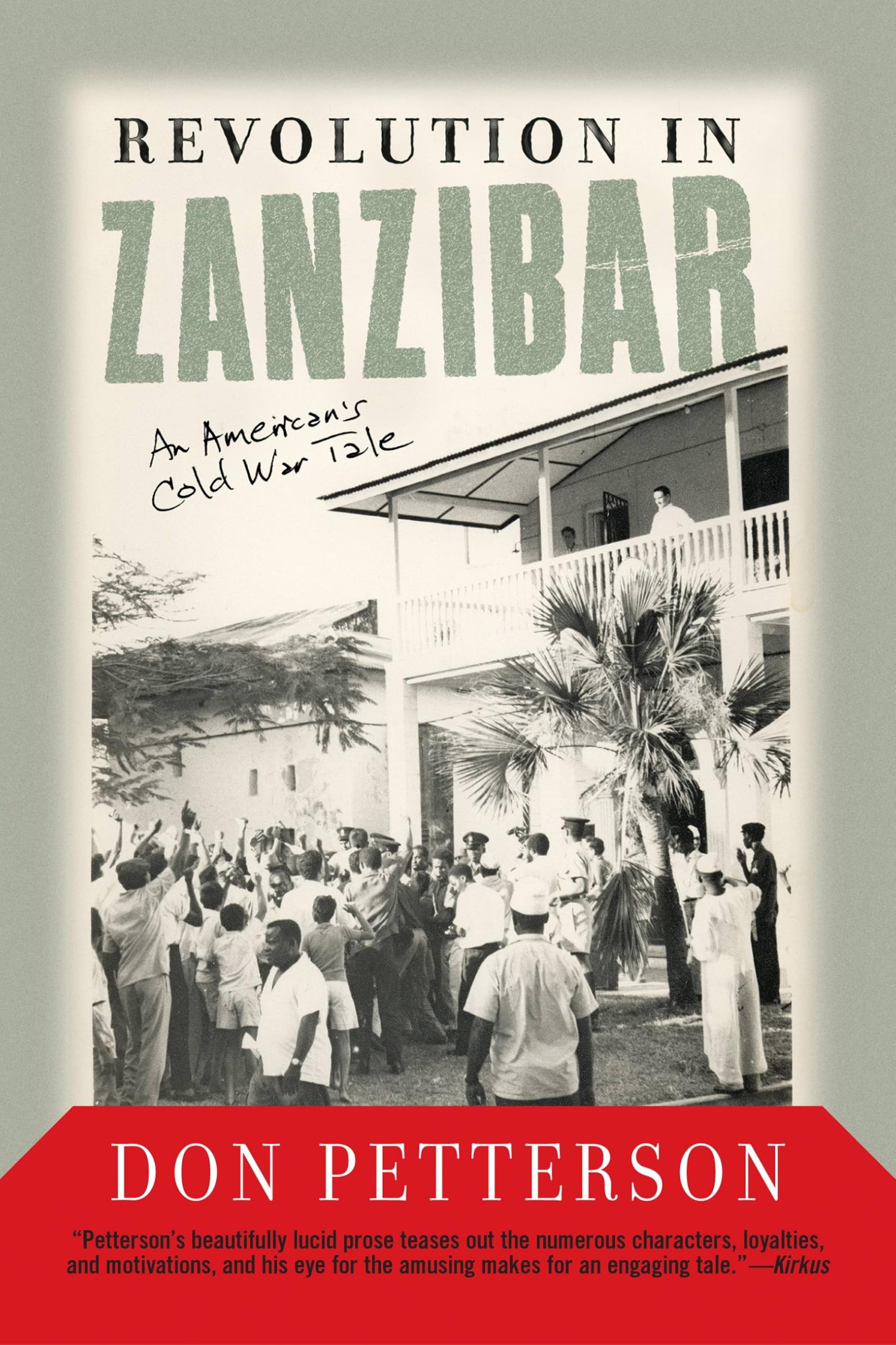
Revolution in Zanzibar: An Eyewitness Account of Cold War Intrigue and African Revolution by Donald Petterson
Inclusive of all applicable taxes. FREE shipping on all orders.
Available Offers
- 🚚Free Delivery — Free shipping on all orders
- 💵Cash on Delivery — Pay when your order arrives
- ↩️15-Day Easy Returns — Hassle-free return policy
- 🔒Cash on Delivery — Pay safely when your order arrives
Check Delivery
Product Description
Introduction
Step into the heart of a forgotten Cold War flashpoint with Donald Petterson's gripping account of the 1964 Zanzibar Revolution. This hardcover edition from Basic Books offers Indian readers a rare, firsthand look at how a small spice island became a crucible of geopolitical intrigue, racial violence, and revolutionary upheaval. Written by the only American diplomat present throughout the events, this book is an essential read for students of history, political science, and international relations.
Book Overview
Revolution in Zanzibar is a meticulously researched yet deeply personal narrative that transports readers to the exotic island of Zanzibar—a fabled land of cloves, ancient trade routes, and haunting slave-trade history. In January 1964, African rebels launched a brutal uprising against the Arab ruling class, killing thousands in a matter of days. What followed was a power vacuum that drew in Cold War superpowers, Cuban-trained militias, and a messianic Ugandan leader. Petterson, who served as the U.S. vice consul in Zanzibar at the time, chronicles these events with the immediacy of an eyewitness and the analytical depth of a seasoned diplomat. The book reveals how the revolution reshaped East African politics and left a legacy that still echoes in Zanzibar's current struggles.
Key Highlights
- Eyewitness Authority: Petterson is the only American who remained in Zanzibar throughout the revolution, offering unique access to diplomatic cables, secret meetings, and on-the-ground observations.
- Cold War Lens: The book frames the revolution as a proxy conflict between the United States and the Soviet Union, with Cuba training rebel factions and Washington fearing a communist beachhead in Africa.
- Human Drama: Beyond politics, the narrative captures the terror, courage, and chaos experienced by ordinary Zanzibaris and expatriates during the bloody uprising.
- Historical Context: The author connects Zanzibar's past as a slave-trading hub and spice emporium to its 20th-century transformation, providing a rich backdrop to the revolution.
Inside the Book
Readers will find a vivid, almost cinematic retelling of the revolution's key moments: the midnight attacks on Arab neighborhoods, the frantic efforts of diplomats to evacuate foreigners, the rise of the Afro-Shirazi Party, and the eventual union with Tanganyika to form Tanzania. Petterson weaves together personal diaries, declassified State Department documents, and interviews with survivors to create a narrative that is both scholarly and accessible. The book also explores the role of the Ugandan revolutionary John Okello, whose fiery speeches and mystical persona galvanized the rebels, and the subsequent marginalization of Zanzibar within the new union.
Key Topics
- The 1964 Zanzibar Revolution and its racial underpinnings
- Cold War geopolitics in the Indian Ocean and East Africa
- U.S. foreign policy and diplomatic challenges in post-colonial Africa
- The legacy of the Arab slave trade in Zanzibar
- Revolutionary movements, guerrilla warfare, and Cuban involvement
- The formation of Tanzania and Zanzibar's semi-autonomous status
Reader Benefits
This book offers Indian readers a window into a little-known chapter of world history that holds surprising parallels to contemporary issues of ethnic conflict, great-power rivalry, and small-state sovereignty. History students will gain a nuanced understanding of how Cold War dynamics played out in non-aligned nations. Political science enthusiasts will appreciate the on-the-ground perspective on revolution and diplomacy. For anyone interested in African studies, international relations, or narrative non-fiction, this book delivers both intellectual depth and gripping storytelling.
Learning Outcomes
- Understand the causes and consequences of the Zanzibar Revolution within the broader Cold War context
- Analyze the role of race, class, and colonial legacy in post-independence African conflicts
- Evaluate U.S. and Soviet strategies in the Indian Ocean region during the 1960s
- Gain insight into the complexities of nation-building and political union in East Africa
- Develop critical thinking about how historical narratives are shaped by eyewitness accounts and diplomatic records
Who Should Read
This book is ideal for undergraduate and postgraduate students of history, political science, and international relations. It is also highly recommended for journalists, diplomats, and general readers who enjoy well-researched historical non-fiction. Libraries, academic institutions, and book clubs focusing on African history or Cold War studies will find this a valuable addition. Indian readers with an interest in global affairs, especially those studying the parallels between Zanzibar's revolution and other post-colonial upheavals, will find this book enlightening.
About the Author
Donald Petterson is a former U.S. Foreign Service officer who served in Zanzibar, Kenya, and other diplomatic posts across Africa. After retiring from the State Department, he turned to writing and historical research. His firsthand experience as the only American diplomat stationed in Zanzibar during the revolution gives his account an unmatched authenticity. Petterson's work has been praised for its clarity, narrative drive, and balanced perspective on a deeply polarizing event.
About the Publisher
Basic Books is a distinguished American publishing house known for producing serious non-fiction that shapes public discourse. With a legacy spanning over six decades, Basic Books has published works by leading scholars, journalists, and thinkers across history, politics, science, and the humanities. This hardcover edition reflects their commitment to high-quality, enduring works that educate and inspire readers worldwide.
Conclusion
Revolution in Zanzibar is more than a history book—it is a time capsule that transports readers to one of the most volatile moments of the 20th century. Donald Petterson's authoritative voice and gripping narrative make this an unforgettable read for anyone seeking to understand the tangled roots of modern African politics and the enduring shadow of the Cold War. Whether you are a student, a scholar, or a curious reader, this book will leave you with a deeper appreciation for the forces that shape our world.
Quick Summary
Revolution in Zanzibar by Donald Petterson is a harrowing first-hand account of the 1964 uprising that turned the idyllic spice island into a Cold War battleground. Petterson, the only American in Zanzibar throughout the crisis, narrates how Cuban-trained African rebels, led by a messianic Ugandan, slaughtered one in ten Arabs, triggering panic in Washington about communist subversion in Africa. The book weaves together the island's history as a slave-trade hub, the ethnic tensions between Arabs and Africans, and the geopolitical chess game between the US and Cuba. It is written in the vivid, narrative style of classic war journalism, reminiscent of The Bang Bang Club. Ideal for students of African history, Cold War politics, and decolonisation, this hardcover edition from Basic Books offers a rare primary-source perspective. Readers will learn how local conflicts can escalate into international crises and how superpower fears shape foreign policy. By purchasing from Bookshops.in, Indian readers get an authentic physical copy delivered quickly, supporting a local bookstore that curates premium nonfiction.
Book Highlights
Book Specifications
| ISBN-13 | 9780813342689 |
| ISBN-10 | 0813342686 |
| Publisher | Basic Books |
| Language | English |
| Dimensions | 15.24 x 1.83 x 22.86 cm |
| Weight | 474 g |
| Country | India |
| Category | World › Revolutionary |
| Genre | Science & Mathematics |
| Original Language | English |
Frequently Asked Questions
What is Revolution in Zanzibar about?
Who wrote Revolution in Zanzibar?
Is this book suitable for academic research?
Does the book cover the role of Cuba?
What is the ISBN of this book?
Is the book written in English?
Who is the publisher?
What genre does this book belong to?
Can I buy this book from Bookshops.in?
What is the price of this book?
Does the book include photographs or maps?
Is this book part of a series?
What makes this book different from other Cold War histories?
Readers Also Search For
Related Products
View All
History
The Information Revolution: Transforming the World Through Technology (World History)
History
Human Nature and the French Revolution: From the Enlightenment to the Napoleonic Code: 3 (Polygons: Cultural Diversities and Intersections, 3)
History
The Unmaking of Home in Contemporary Art (Cultural Spaces)

History
Handbook to Life in Medieval and Early Modern Japan | by William E. Deal | Oxford University Press | by William E. Deal | Oxford University Press | by William E. Deal | Oxford University Press | by William E. Deal | Oxford University Press | by William E. Deal | Oxford University Press | by William E. Deal | Oxford University Press | by William E. Deal | Oxford University Press | by William E. Deal | Oxford University Press | by William E. Deal | Oxford University Press | by William E. Deal | Ox

History
The Narrators of Barbarian History (A.D. 550-800) | by Walter Goffart | University of Notre Dame Press | by Walter Goffart | University of Notre Dame Press | by Walter Goffart | University of Notre Dame Press | by Walter Goffart | University of Notre Dame Press | by Walter Goffart | University of Notre Dame Press | by Walter Goffart | University of Notre Dame Press | by Walter Goffart | University of Notre Dame Press | by Walter Goffart | University of Notre Dame Press | by Walter Goffart | Univ

History