
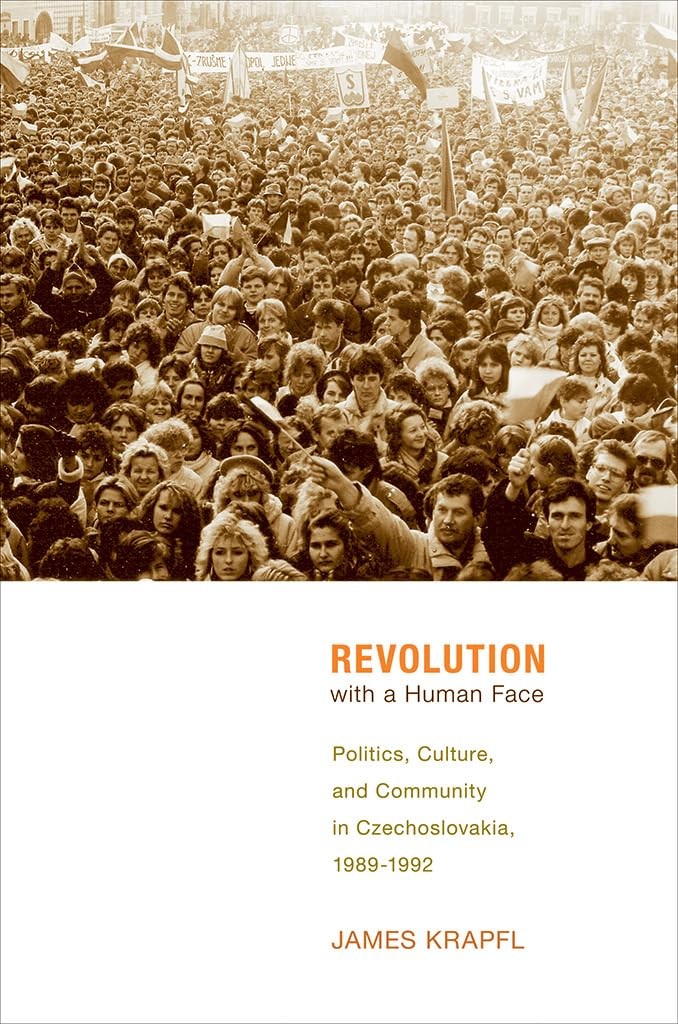
Revolution with a Human Face (English, James Krapfl)
Inclusive of all applicable taxes. FREE shipping on all orders.
Available Offers
- 🚚Free Delivery — Free shipping on all orders
- 💵Cash on Delivery — Pay when your order arrives
- ↩️15-Day Easy Returns — Hassle-free return policy
- 🔒Cash on Delivery — Pay safely when your order arrives
Check Delivery
Product Description
In this social and cultural history of Czechoslovakia's "gentle revolution," James Krapfl shifts the focus away from elites to ordinary citizens who endeavored—from the outbreak of revolution in 1989 to the demise of the Czechoslovak federation in 1992—to establish a new, democratic political culture. Unique in its balanced coverage of developments in both Czech and Slovak lands, including the Hungarian minority of southern Slovakia, this book looks beyond Prague and Bratislava to collective action in small towns, provincial factories, and collective farms. Through his broad and deep analysis of workers' declarations, student bulletins, newspapers, film footage, and the proceedings of local administrative bodies, Krapfl contends that Czechoslovaks rejected Communism not because it was socialist, but because it was arbitrarily bureaucratic and inhumane. The restoration of a basic "humanness"—in politics and in daily relations among citizens—was the central goal of the revolution. In the strikes and demonstrations that began in the last weeks of 1989, Krapfl argues, citizens forged new symbols and a new symbolic system to reflect the humane, democratic, and nonviolent community they sought to create. Tracing the course of the revolution from early, idealistic euphoria through turns to radicalism and ultimately subversive reaction, Revolution with a Human Face finds in Czechoslovakia's experiences lessons of both inspiration and caution for people in other countries striving to democratize their governments.In this social and cultural history of Czechoslovakia's "gentle revolution," James Krapfl shifts the focus away from elites to ordinary citizens who endeavored—from the outbreak of revolution in 1989 to the demise of the Czechoslovak federation in 1992—to establish a new, democratic political culture. Unique in its balanced coverage of developments in both Czech and Slovak lands, including the Hungarian minority of southern Slovakia, this book looks beyond Prague and Bratislava to collective action in small towns, provincial factories, and collective farms.Through his broad and deep analysis of workers' declarations, student bulletins, newspapers, film footage, and the proceedings of local administrative bodies, Krapfl contends that Czechoslovaks rejected Communism not because it was socialist, but because it was arbitrarily bureaucratic and inhumane. The restoration of a basic "humanness"—in politics and in daily relations among citizens—was the central goal of the revolution. In the strikes and demonstrations that began in the last weeks of 1989, Krapfl argues, citizens forged new symbols and a new symbolic system to reflect the humane, democratic, and nonviolent community they sought to create. Tracing the course of the revolution from early, idealistic euphoria through turns to radicalism and ultimately subversive reaction, Revolution with a Human Face finds in Czechoslovakia’s experiences lessons of both inspiration and caution for people in other countries striving to democratize their governments.
Book Specifications
| ISBN-13 | 9780801452055 |
| ISBN-10 | 0801452058 |
| Publisher | Cornell Univ Pr |
| Language | English |
| Dimensions | 15.54 x 2.39 x 23.5 cm |
| Weight | 590 g |
| Country | India |
| Category | Social Sciences › Sociology |
Frequently Asked Questions
What is the price of Revolution with a Human Face?
Does BookShops.in offer free delivery for Revolution with a Human Face?
Is Cash on Delivery available for Revolution with a Human Face?
What is the return policy for Revolution with a Human Face?
Is Revolution with a Human Face authentic?
Customers Also Bought
Sociology
Imagination Beyond Nation: Latin American Popular Culture: 349 (Pitt Latin American Series)

Sociology
Boomer Volunteer Engagement: Facilitator's Tool Kit

Sociology
Making a Success of Marriage: Planning for Happily Ever After

Sociology
Causal Mediation Analysis (Analytical Methods for Social Research)

Sociology
Marriage and the Moral Imagination (New Departures in Anthropology)

Sociology
Social Change, Resistance and Social Practices: 19 (Studies in Critical Social Sciences, 19)
Related Products
View AllSociology
Imagination Beyond Nation: Latin American Popular Culture: 349 (Pitt Latin American Series)
Sociology
Boomer Volunteer Engagement: Facilitator's Tool Kit
Sociology
Making a Success of Marriage: Planning for Happily Ever After
Sociology
Causal Mediation Analysis (Analytical Methods for Social Research)
Sociology
Marriage and the Moral Imagination (New Departures in Anthropology)
Sociology