
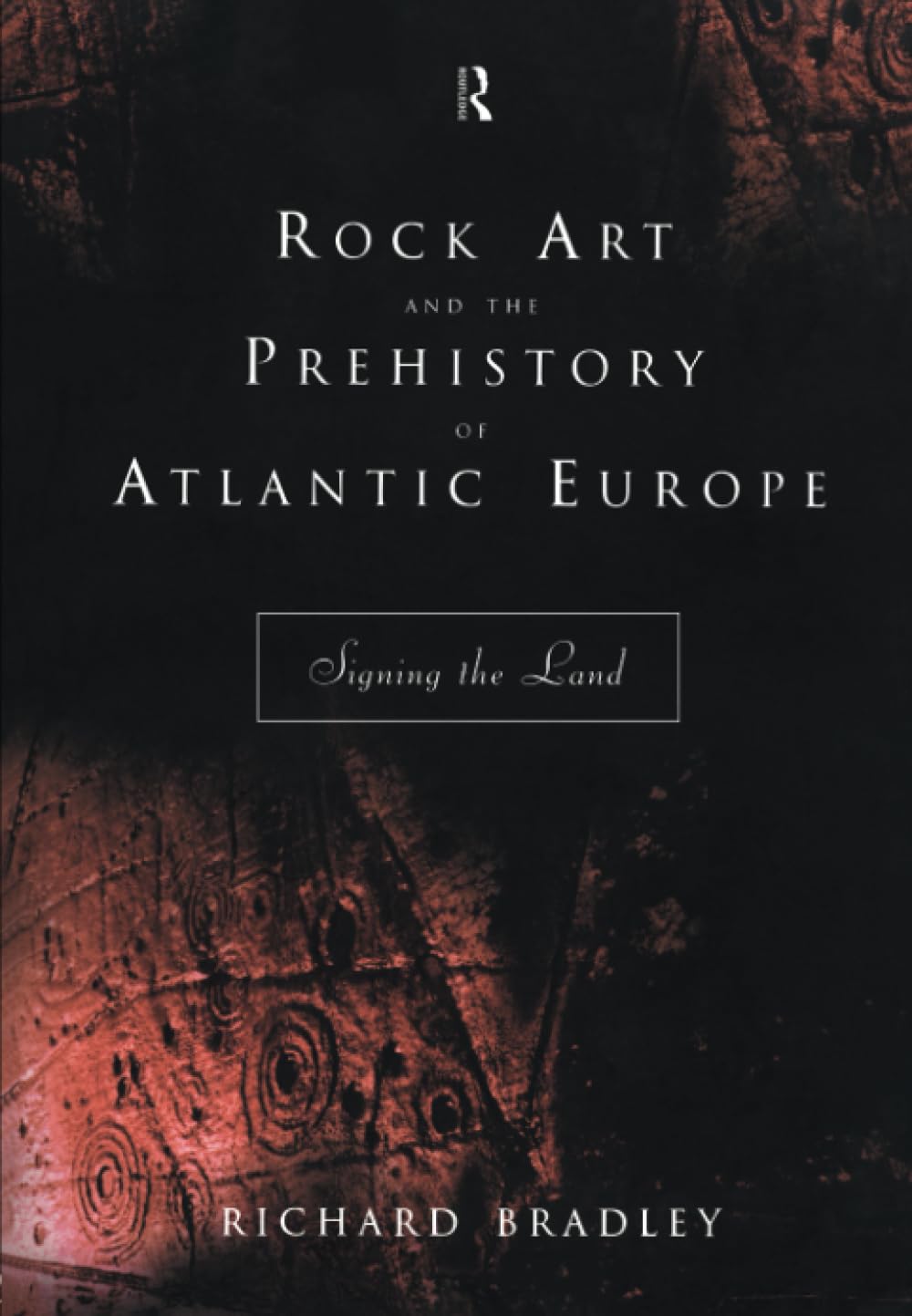
Rock Art and the Prehistory of Atlantic Europe: Signing the Land by Richard Bradley – A Deep Dive into Prehistoric Symbo
Inclusive of all applicable taxes. FREE shipping on all orders.
Available Offers
- 🚚Free Delivery — Free shipping on all orders
- 💵Cash on Delivery — Pay when your order arrives
- ↩️15-Day Easy Returns — Hassle-free return policy
- 🔒Cash on Delivery — Pay safely when your order arrives
Check Delivery
Product Description
Introduction
Along the windswept coasts of Atlantic Europe, from the rugged shores of Scotland to the sun-baked landscapes of Spain, ancient peoples carved mysterious symbols into living rock. These enigmatic markings, created four to five thousand years ago, have long puzzled archaeologists and historians. In Rock Art and the Prehistory of Atlantic Europe: Signing the Land, renowned archaeologist Richard Bradley offers the first comprehensive study of these prehistoric carvings, presenting a groundbreaking interpretation that connects them to the broader cultural and ritual landscapes of the time. This hardcover volume from Routledge is an essential resource for students, scholars, and anyone fascinated by Europe's deep past.
Book Overview
This book is not merely a catalogue of ancient carvings; it is a bold rethinking of how prehistoric communities used rock art to organize and sanctify their world. Drawing on extensive new fieldwork across Atlantic Europe, Bradley argues that these carvings functioned as a symbolic language—a system of signs shared between natural rock outcrops, monumental structures, and portable artefacts. By integrating the study of rock art with the analysis of ancient land use, ritual monuments, and burial practices, the author reveals a coherent prehistoric worldview in which the landscape itself was inscribed with meaning. The book bridges the gap between archaeology and art history, offering a fresh perspective on how our ancestors perceived and marked their territory.
Key Highlights
- First full-length treatment of Atlantic European rock art, based on original fieldwork from Scotland to Iberia.
- Interdisciplinary approach that links carvings to monuments, artefacts, and natural features in the landscape.
- Richly illustrated with photographs, diagrams, and maps that bring the ancient carvings to life.
- Contextual analysis connecting rock art to prehistoric land use, ritual, and burial practices.
- Accessible yet scholarly—written for both academic readers and informed general audiences.
Inside the Book
The book is structured to guide readers from the physical evidence of the carvings to their deeper cultural significance. Early chapters introduce the geographical and chronological framework of Atlantic European rock art, describing the distinct styles and motifs found in Scotland, Ireland, England, Brittany, Portugal, and Spain. Bradley then examines how these carvings relate to contemporary monuments such as passage tombs, stone circles, and standing stones. Later sections explore the role of rock art in marking territories, mediating between the living and the dead, and encoding cosmological beliefs. The final chapters synthesize these findings into a unified interpretation that positions rock art as a dynamic element of prehistoric social and ritual life.
Key Topics
- Chronology and distribution of Atlantic rock art traditions
- Symbolic motifs: cup-and-ring marks, spirals, and geometric patterns
- Relationship between carvings and megalithic monuments
- Landscape archaeology and the organization of prehistoric space
- Rock art as a medium for ritual and communication
- Comparative analysis across regions: Scotland, Ireland, Iberia, and France
- Methodological challenges in dating and interpreting ancient carvings
Reader Benefits
For students of archaeology and anthropology, this book offers a model of how to integrate disparate forms of evidence—carvings, monuments, and landscape features—into a coherent narrative. It challenges readers to think beyond traditional site-based studies and consider the entire landscape as an archaeological artefact. For general readers with an interest in prehistory, the book demystifies a little-known but visually stunning body of ancient art, explaining its cultural context in clear, engaging prose. The extensive illustrations and maps make complex ideas accessible, while the bibliography provides a gateway to further research.
Learning Outcomes
- Understand the major traditions of rock art in Atlantic Europe and their chronological framework.
- Analyse how prehistoric communities used carvings to encode social, ritual, and territorial information.
- Evaluate the relationship between rock art and other archaeological features such as tombs and stone circles.
- Develop skills in interpreting symbolic material culture within its landscape context.
- Appreciate the methodological innovations that have transformed the study of prehistoric art.
Who Should Read
This book is ideal for undergraduate and postgraduate students of European prehistory, archaeology, and anthropology. It will also appeal to professional archaeologists seeking a comprehensive synthesis of Atlantic rock art research. History enthusiasts, art historians interested in prehistoric symbolism, and travellers who have encountered these enigmatic carvings on the Atlantic coast will find the book equally rewarding. Indian readers with a passion for global prehistory will discover striking parallels between the rock art traditions of Europe and those of South Asia, enriching their understanding of humanity's shared symbolic heritage.
About the Author
Richard Bradley is one of the most distinguished archaeologists of prehistoric Europe. A professor at the University of Reading, he has spent decades researching the landscapes, monuments, and rock art of the Atlantic seaboard. His fieldwork has taken him from the Orkney Islands to the Algarve, and his publications have shaped the way scholars understand the relationship between ancient peoples and their environment. Bradley's writing is known for its clarity, intellectual rigour, and willingness to challenge established interpretations. In this book, he brings his vast experience to bear on one of prehistory's most intriguing puzzles.
About the Publisher
Routledge is a world-leading academic publisher in the humanities and social sciences, with a distinguished list in archaeology and ancient history. Known for publishing works that combine scholarly depth with readability, Routledge has made this important study available in a durable hardcover edition suitable for libraries, classrooms, and personal collections. The book's production quality—with clear type, high-quality illustrations, and sturdy binding—reflects the publisher's commitment to serving serious readers.
Conclusion
Rock Art and the Prehistory of Atlantic Europe: Signing the Land is more than a study of ancient carvings; it is a window into the minds of prehistoric peoples who transformed the natural world into a canvas for their beliefs. Richard Bradley's masterful synthesis of fieldwork, theory, and interpretation makes this book an indispensable addition to any archaeology library. Whether you are a student preparing for exams, a scholar seeking fresh insights, or a curious reader drawn to the mysteries of the past, this volume will deepen your appreciation of how our ancestors signed the land. Order your copy today from Bookshops.in and embark on a journey through the prehistoric landscapes of Atlantic Europe.
Quick Summary
Rock Art and the Prehistory of Atlantic Europe: Signing the Land by Richard Bradley is a groundbreaking archaeological study that examines the enigmatic rock carvings scattered along the Atlantic coast from Scotland to Spain. Created four to five thousand years ago, these carvings have long puzzled researchers. Bradley argues that they were not mere decoration but formed a complex symbolic system tied to ancient land use, ritual monuments, and burial practices. Based largely on new fieldwork, the book shows how carvings acted as territorial markers and sacred signs, linking natural places with human-made structures. Readers will learn how to interpret prehistoric art within its landscape context, gaining insights into Neolithic and Bronze Age societies. This book is ideal for archaeology students, historians, and anyone fascinated by ancient symbolism. By purchasing from Bookshops.in, Indian readers get a quality hardcover edition at a fair price, with trusted service.
Book Highlights
Book Specifications
| ISBN-13 | 9780415165365 |
| ISBN-10 | 0415165369 |
| Publisher | Routledge |
| Language | English |
| Dimensions | 16.99 x 1.7 x 24.51 cm |
| Weight | 522 g |
| Country | India |
| Category | Arts, Film & Photography › Theory & Criticism |
| Genre | Non-fiction |
| Original Language | English |
Frequently Asked Questions
What is the main subject of this book?
Who is the author Richard Bradley?
Which regions does the book cover?
Is this book suitable for beginners in archaeology?
Does the book include illustrations?
What time period does the book focus on?
How does this book differ from other rock art studies?
Can Indian readers relate to this content?
What is the binding of this book?
Is the book based on original research?
Does the book discuss megalithic monuments?
What language is the book in?
Why should I buy this book from Bookshops.in?
Readers Also Search For
Customers Also Bought
Art History
The Italian Renaissance in Art

Art History
Photovoltaic Design & Installation For Dummies | by Mayfield | ForDummies | by Mayfield | ForDummies | by Mayfield | ForDummies | by Mayfield | ForDummies | by Mayfield | ForDummies | by Mayfield | ForDummies | by Mayfield | ForDummies | by Mayfield | ForDummies | by Mayfield | ForDummies | by Mayfield | ForDummies | by Mayfield | ForDummies | by Mayfield | ForDummies | by Mayfield | ForDummies | by Mayfield | ForDummies | by Mayfield | ForDummies | by Mayfield | ForDummies | by Mayfield | ForDu
Art History
Designing School Systems for All Students (English, Robert J. Manley | Richard J. Hawkins)

Art History
Routledge Library Editions: Art and Culture in the Nineteenth Century
Art History
An Errant Design (English, S. H. Long)

Art History
Distributed System Design | by Jie Wu | CRC Press | by Jie Wu | CRC Press | by Jie Wu | CRC Press | by Jie Wu | CRC Press | by Jie Wu | CRC Press | by Jie Wu | CRC Press | by Jie Wu | CRC Press | by Jie Wu | CRC Press | by Jie Wu | CRC Press | by Jie Wu | CRC Press | by Jie Wu | CRC Press | by Jie Wu | CRC Press | by Jie Wu | CRC Press | by Jie Wu | CRC Press | by Jie Wu | CRC Press | by Jie Wu | CRC Press | by Jie Wu | CRC Press | by Jie Wu | CRC Press | by Jie Wu | CRC Press | by Jie Wu | CRC
Related Products
View All
Arts, Film & Photography
Stars of '90s Dance Pop: 29 Hitmakers Discuss Their Careers by James Arena

Arts, Film & Photography
Edgar Heap of Birds by Bill Anthes – Native American Art Study

Arts, Film & Photography
Movement, Text, Performance (Elements in Contemporary Performance Texts)
Arts, Film & Photography
Analyzing Art, Culture, and Design in the Digital Age (English, Gianluca Mura)
Arts, Film & Photography
From The Inside: A Backdrop to the Music of My Life
Arts, Film & Photography