
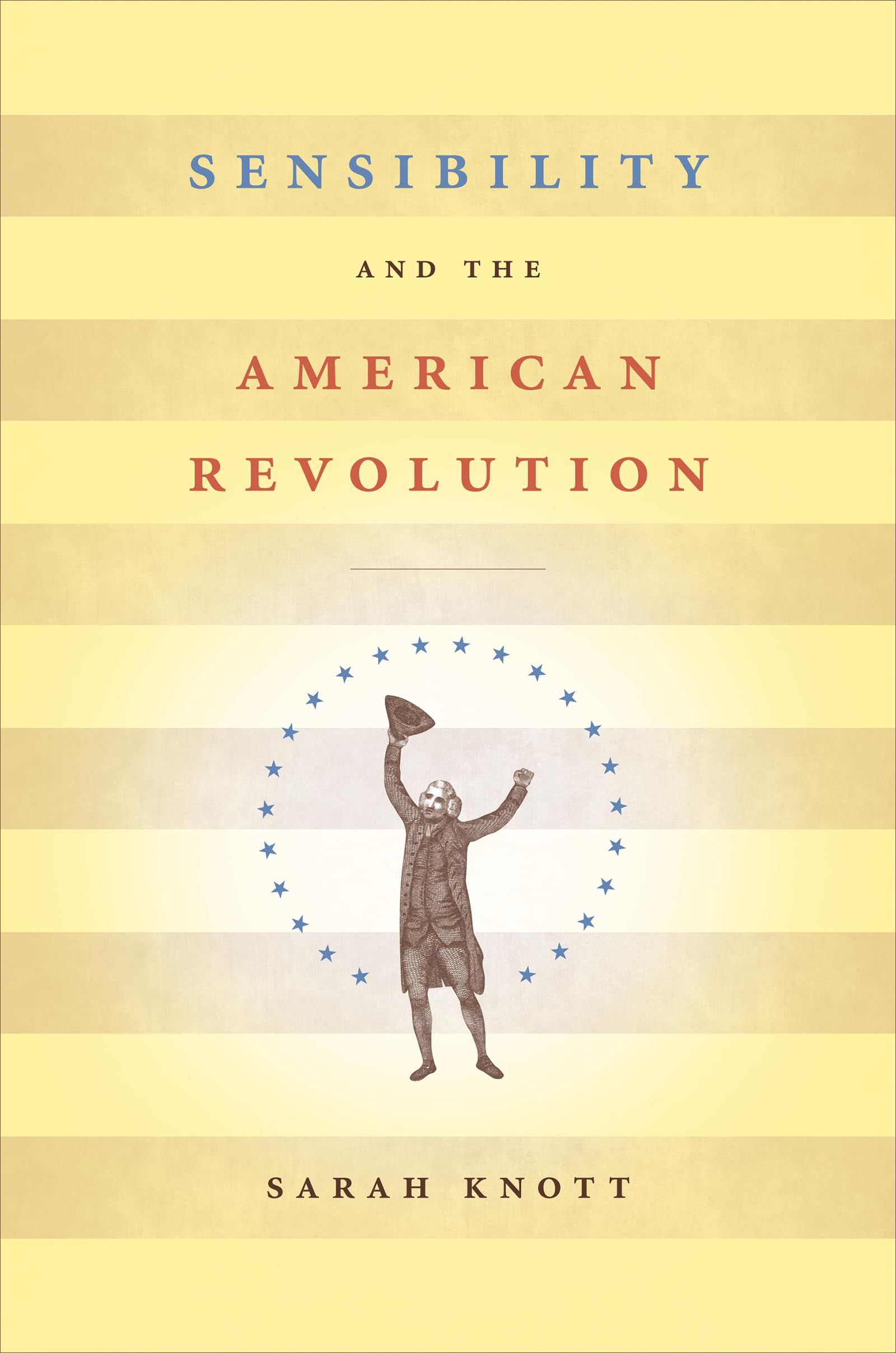
Sensibility and the American Revolution: The Sentimental Project and the Making of a New Republic by Sarah Knott
Inclusive of all applicable taxes. FREE shipping on all orders.
Available Offers
- 🚚Free Delivery — Free shipping on all orders
- 💵Cash on Delivery — Pay when your order arrives
- ↩️15-Day Easy Returns — Hassle-free return policy
- 🔒Cash on Delivery — Pay safely when your order arrives
Check Delivery
Product Description
Introduction
In the tumultuous years following the American Revolution, the fledgling United States faced a profound question: how to forge a cohesive nation from a collection of disparate colonies without the traditional anchors of monarchy, established religion, or a standing army. Sarah Knott's Sensibility and the American Revolution offers a groundbreaking exploration of this challenge, revealing how a cultural movement centered on human emotion and sympathy became a vital political tool. This meticulously researched hardcover volume, published by the Omohundro Institute and UNC Press, is an essential addition to the library of any serious student of history, political science, or cultural studies.
Book Overview
This book delves into the concept of 'sensibility'—a celebrated capacity for refined emotion, empathy, and sensitivity—and traces its transformation from a personal ideal into a cornerstone of American nation-building. Sarah Knott argues that the 'sentimental project' was not merely a cultural fad but a deliberate political strategy. By cultivating a shared emotional language, Americans sought to create social bonds that could replace the old hierarchies. The book masterfully connects the intimate experiences of individuals with the grand sweep of revolutionary politics, showing how personal transformation and national independence were deeply intertwined.
Key Highlights
- Original Interpretation: Moves beyond traditional narratives of republican ideology and economic unrest to place emotion and sympathy at the heart of the American founding.
- Transatlantic Perspective: Situates the American sentimental project within the broader currents of the Revolutionary Atlantic world, linking it to developments in Britain and Europe.
- Rigorous Scholarship: Draws on a wealth of primary sources, including personal letters, diaries, novels, and philosophical treatises, to reconstruct the emotional landscape of the era.
- Engaging Narrative: Combines academic depth with a compelling story of how a new kind of citizen—sensitive, sympathetic, and socially aware—helped create a new kind of government.
Inside the Book
Knott guides readers through the rise and fall of sensibility as a political force. The book examines how sentimentalism shaped discussions of education, family life, and social reform. It explores the role of women as crucial agents of sentimental culture and investigates how the ideal of the sympathetic citizen was tested by the realities of slavery, class division, and political factionalism. Readers will encounter vivid portraits of figures who embodied or challenged the sentimental ideal, from leading intellectuals to ordinary men and women navigating a revolutionary world.
Key Topics
- The cultural history of emotion in the eighteenth century
- The relationship between personal identity and political community
- The role of sympathy and sociability in republican governance
- Gender, race, and class in the early American republic
- The transatlantic exchange of ideas about sentiment and reform
- The decline of sensibility and its legacy in American culture
Reader Benefits
This book offers Indian readers a unique lens through which to understand the emotional and psychological foundations of modern democracy. It challenges the assumption that nations are built solely on laws and institutions, highlighting the importance of shared feelings and social bonds. For students, it provides a model of innovative historical analysis that connects cultural trends to political outcomes. For general readers, it offers a fascinating glimpse into the hopes, fears, and aspirations of a generation that dared to imagine a new world.
Learning Outcomes
By engaging with Sensibility and the American Revolution, readers will develop a deeper understanding of how emotions shape political movements and national identities. They will learn to critically assess the interplay between individual sentiment and collective action. The book equips readers with the tools to analyze primary sources from the period and to appreciate the complexity of the revolutionary era beyond simplistic narratives of liberty and independence. Ultimately, it fosters a more nuanced view of how societies cohere and change.
Who Should Read
- History Students: Essential for courses on the American Revolution, early American history, or Atlantic history.
- Political Science Scholars: Offers a fresh perspective on the cultural underpinnings of democratic governance.
- Cultural Studies Enthusiasts: A compelling case study in the history of emotions and identity formation.
- General Readers: Anyone interested in the human dimensions of historical transformation and the roots of modern American culture.
About the Author
Sarah Knott is a distinguished historian whose work focuses on the intersection of culture, emotion, and politics in the revolutionary era. Her scholarship is known for its innovative methodology and its ability to bring the past to life through careful attention to the experiences of ordinary people. Knott's research has reshaped our understanding of how the American nation was built not only through battles and treaties but through the cultivation of a shared inner life.
About the Publisher
The Omohundro Institute of Early American History and Culture, in partnership with the University of North Carolina Press, is a premier academic publisher dedicated to advancing the study of early America. The Institute is renowned for publishing works that set the standard for historical scholarship, combining rigorous research with accessible writing. This volume reflects their commitment to exploring new frontiers in historical understanding.
Conclusion
Sensibility and the American Revolution is a vital work that reimagines the founding of the United States. It reveals that the most profound revolutions are not just political but personal, reshaping how individuals feel, relate, and belong. For Indian readers seeking a deeper, more humanistic understanding of democracy's origins, this hardcover edition is an invaluable investment. It is a book that will change how you think about history, emotion, and the very fabric of national life.
Quick Summary
Sensibility and the American Revolution by Sarah Knott is a groundbreaking cultural history that reexamines the founding of the United States through the lens of emotion. Knott argues that after independence, Americans needed not only new political institutions but also a new understanding of the self. The cultural movement of sensibility—which celebrated human sympathy and sensitivity—provided a means for individuals to transform themselves and for the nation to cohere without a monarch, state religion, or standing army. This 'sentimental project' helped create a new kind of citizen and a new kind of government, linking national independence with social interdependence. The book traces the rise and fall of this political project, showing how emotions were harnessed to build a republic. Readers will learn how sympathy operated as a political force, how sentimental culture shaped everyday life, and why this emotional dimension is crucial to understanding the American Revolution. This book is ideal for history students, scholars of early America, and anyone interested in the intersection of feelings and politics. Buying from Bookshops.in ensures you receive a genuine hardcover edition with fast delivery across India.
Book Highlights
Book Specifications
| ISBN-13 | 9780807859186 |
| ISBN-10 | 0807859184 |
| Publisher | Omohundro Inst of Early Amer |
| Language | English |
| Dimensions | 15.57 x 2.24 x 23.5 cm |
| Weight | 508 g |
| Country | India |
| Category | Americas › United States |
| Genre | History |
| Reading Age | Adult |
| Original Language | English |
Frequently Asked Questions
What is the main argument of Sensibility and the American Revolution?
Is this book suitable for undergraduate students?
Does the book cover the entire American Revolution?
What primary sources does Knott use?
What makes this book different from other histories of the American Revolution?
Can I use this book for a research paper?
Does the book discuss gender or race?
Is the book available in hardcover?
What is the price on Bookshops.in?
Does Bookshops.in ship across India?
How is the book rated?
Readers Also Search For
Related Products
View All
History
Handbook to Life in Medieval and Early Modern Japan | by William E. Deal | Oxford University Press | by William E. Deal | Oxford University Press | by William E. Deal | Oxford University Press | by William E. Deal | Oxford University Press | by William E. Deal | Oxford University Press | by William E. Deal | Oxford University Press | by William E. Deal | Oxford University Press | by William E. Deal | Oxford University Press | by William E. Deal | Oxford University Press | by William E. Deal | Ox

History
The Narrators of Barbarian History (A.D. 550-800) | by Walter Goffart | University of Notre Dame Press | by Walter Goffart | University of Notre Dame Press | by Walter Goffart | University of Notre Dame Press | by Walter Goffart | University of Notre Dame Press | by Walter Goffart | University of Notre Dame Press | by Walter Goffart | University of Notre Dame Press | by Walter Goffart | University of Notre Dame Press | by Walter Goffart | University of Notre Dame Press | by Walter Goffart | Univ
History
The Collected Mathematical Papers of Arthur Cayley.Vol. 12

History
Revolution in History by Roy Porter – Historical Change
History
Chapters in the Formative History of Judaism, Eighth Series | by Jacob Neusner | University Press of America | by Jacob Neusner | University Press of America | by Jacob Neusner | University Press of America | by Jacob Neusner | University Press of America | by Jacob Neusner | University Press of America | by Jacob Neusner | University Press of America | by Jacob Neusner | University Press of America | by Jacob Neusner | University Press of America | by Jacob Neusner | University Press of America

History