
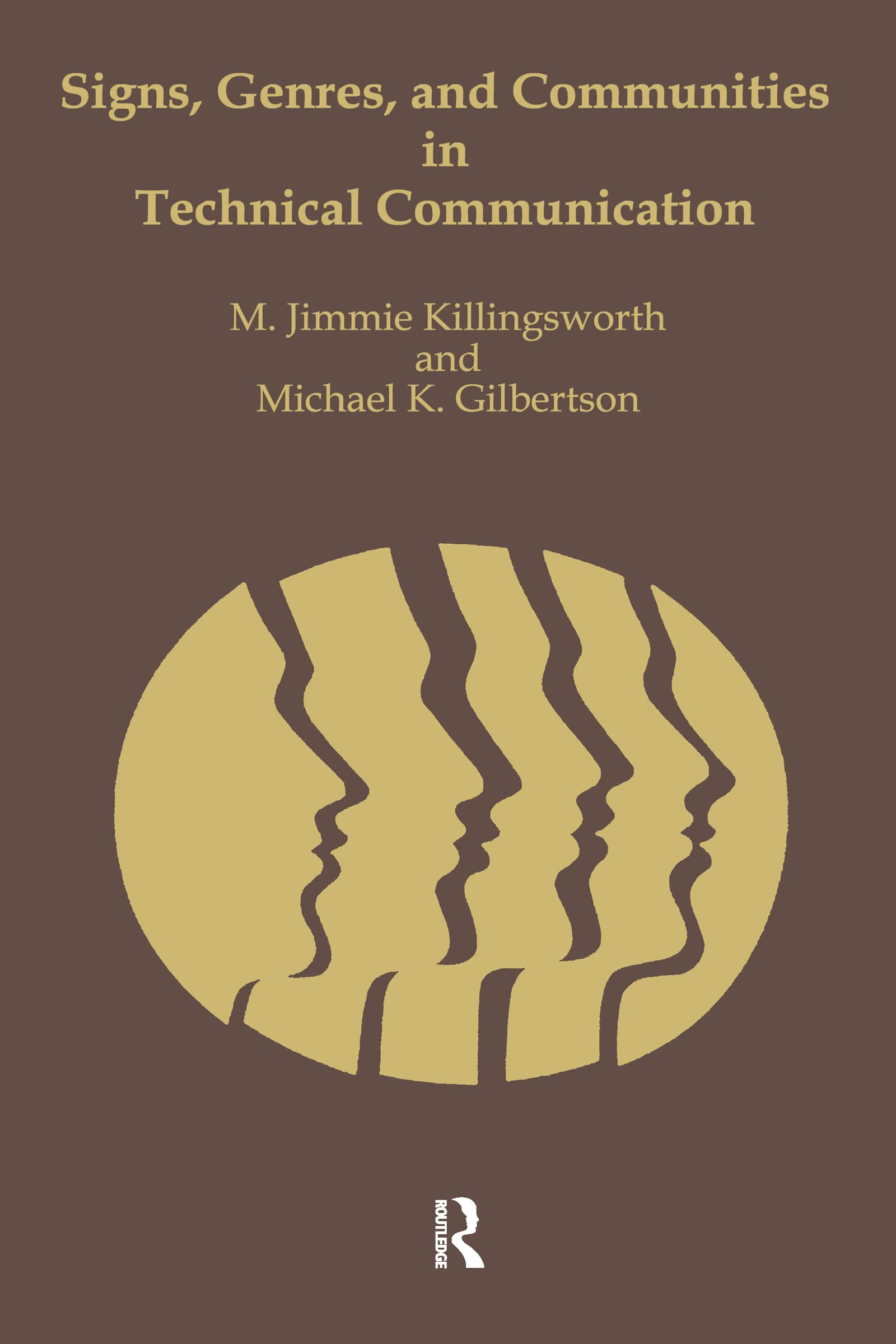
Signs, Genres, and Communities in Technical Communication by M. Jimmie Killingsworth – A Philosophical Inquiry into Tech
Inclusive of all applicable taxes. FREE shipping on all orders.
Available Offers
- 🚚Free Delivery — Free shipping on all orders
- 💵Cash on Delivery — Pay when your order arrives
- ↩️15-Day Easy Returns — Hassle-free return policy
- 🔒Cash on Delivery — Pay safely when your order arrives
Check Delivery
Product Description
Introduction
In a world increasingly driven by data, instructions, and digital documentation, technical communication has become the backbone of industry, governance, and research. Yet, how often do we pause to ask: what does it truly mean to communicate in a technical context? Signs, Genres, and Communities in Technical Communication by M. Jimmie Killingsworth offers a rare philosophical lens through which to examine the very tools—language, symbols, and graphics—that technical communicators use daily. This hardcover edition, published by Routledge, is an essential addition to the library of every serious student, educator, and professional in India who seeks to understand the deeper structures behind manuals, reports, and proposals.
Book Overview
This is not just another how-to guide. Instead, Killingsworth invites readers to step back from their busy professional lives and engage with the fundamental questions that underpin technical discourse. How do signs—words, icons, diagrams—relate to action? How do genres like the user manual or the feasibility report shape communities of practice? By blending semiotics, rhetoric, and genre theory, the book provides a fresh framework for analyzing and creating technical documents. Published under the prestigious Routledge imprint, this volume is a cornerstone for those who want to think critically about the communication that powers modern organizations.
Key Highlights
- Philosophical Depth: Moves beyond surface-level tips to explore the theoretical foundations of technical communication.
- Genre Analysis: Offers two novel ways of looking at familiar genres, helping readers see reports and manuals in a new light.
- Sign Systems: Examines how language and graphics function as tools for action in technological environments.
- Community Focus: Connects communication practices to the social and professional communities that produce and consume them.
- Routledge Quality: A premium hardcover edition from one of the world's most respected academic publishers.
Inside the Book
The book is structured to guide readers from foundational concepts to advanced applications. Early chapters introduce the idea of signs and their role in technical contexts, drawing on semiotic theory to explain how meaning is constructed. Later sections dive into specific genres—such as proposals, manuals, and research reports—and show how they are shaped by the communities that use them. Killingsworth also explores the ethical dimensions of technical communication, asking who benefits from the way information is presented. Case studies and real-world examples ground the theory, making it accessible to Indian students and professionals alike.
Key Topics
- Semiotics of technical communication: signs, symbols, and interpretation
- Genre theory and its application to technical documents
- The relationship between language, graphics, and action
- Community-based approaches to communication design
- Ethics and ideology in technical discourse
- Rhetorical strategies for manuals, reports, and proposals
Reader Benefits
By engaging with this book, readers will develop a critical awareness of the tools they use every day. You will learn to deconstruct technical documents, understand why they succeed or fail, and create more effective communication strategies. The philosophical approach fosters deeper thinking, which is invaluable for academic research, teaching, or advanced professional practice. Indian readers, especially those in IT, engineering, and management, will find the concepts directly applicable to the documentation-heavy environments they work in.
Learning Outcomes
- Understand the theoretical underpinnings of signs and genres in technical contexts
- Analyze technical documents using semiotic and rhetorical frameworks
- Identify how communities shape and are shaped by communication practices
- Apply genre theory to improve the design of manuals, reports, and proposals
- Critically evaluate the ethical implications of technical communication
Who Should Read
This book is ideal for postgraduate students of technical communication, rhetoric, and professional writing. It is also highly relevant for educators designing curricula in communication studies, as well as practicing technical writers, documentation specialists, and content strategists in Indian industries. Researchers exploring the intersection of language, technology, and society will find it an invaluable resource. Anyone who has ever wondered why a user manual is confusing or a proposal is persuasive will benefit from Killingsworth's insights.
About the Author
M. Jimmie Killingsworth is a distinguished scholar in the field of rhetoric and technical communication. With decades of teaching and research experience, he has contributed significantly to the theoretical understanding of how language functions in professional and technological settings. His work bridges the gap between abstract theory and practical application, making complex ideas accessible to students and practitioners. Killingsworth's expertise ensures that this book is both intellectually rigorous and practically useful.
About the Publisher
Routledge is a globally recognized academic publisher, known for its high-quality books in the humanities, social sciences, and professional fields. For over a century, Routledge has been a trusted name in scholarly publishing, offering works that combine theoretical depth with real-world relevance. This hardcover edition reflects the publisher's commitment to producing durable, authoritative texts that stand the test of time. Indian readers can rely on Routledge for rigorous, well-edited content that meets international academic standards.
Conclusion
Signs, Genres, and Communities in Technical Communication is more than a textbook—it is an invitation to think differently about the words and images that shape our technological world. Whether you are a student, teacher, or professional, this book will transform how you approach technical documents. By understanding the signs we use and the communities we belong to, we can become more thoughtful, effective communicators. Add this hardcover volume to your collection and embark on a journey into the philosophy of technical communication.
Quick Summary
Signs, Genres, and Communities in Technical Communication by M. Jimmie Killingsworth is a seminal work that takes a philosophical approach to the field of technical communication. Rather than focusing on practical tips, the book invites readers to ask fundamental questions about what it means to communicate through signs, language, and graphics in a technological world. It examines familiar genres—such as reports, manuals, and proposals—from a fresh theoretical perspective, linking them to the discourse communities that produce and consume them. This book is ideal for advanced students, researchers, and professionals in technical writing, rhetoric, and communication studies, especially those in Indian universities where theoretical depth is valued. Readers will gain a deeper understanding of how technical documents shape action and meaning in business, government, and research organizations. By purchasing from Bookshops.in, you receive an authentic hardcover edition delivered to your doorstep, making it a valuable addition to any academic library.
Book Highlights
Book Specifications
| ISBN-13 | 9780895030641 |
| ISBN-10 | 0895030640 |
| Publisher | Routledge |
| Language | English |
| Dimensions | 15.88 x 2.54 x 23.5 cm |
| Weight | 544 g |
| Category | Literature › Creative Writing & Composition |
| Genre | Technical Communication |
| Original Language | English |
Frequently Asked Questions
What is the main theme of this book?
Who is the author of Signs, Genres, and Communities in Technical Communication?
Is this book suitable for Indian students?
What is the ISBN of this book?
What format is this book available in?
Does the book cover practical technical writing?
What is the reading level of this book?
Can this book help me become a better technical writer?
Does the book include visual communication topics?
What is the price of this book?
Is this book part of a series?
What are discourse communities?
Why should I buy from Bookshops.in?
Readers Also Search For
Customers Also Bought

McFarland & Company
Playing with the Guys | by Marc A. Ouellette | Matthew Wilhelm Kapell | McFarland & Company | by Marc A. Ouellette | Matthew Wilhelm Kapell | McFarland & Company | by Marc A. Ouellette | Matthew Wilhelm Kapell | McFarland & Company | by Marc A. Ouellette | Matthew Wilhelm Kapell | McFarland & Company | by Marc A. Ouellette | Matthew Wilhelm Kapell | McFarland & Company | by Marc A. Ouellette | Matthew Wilhelm Kapell | McFarland & Company | by Marc A. Ouellette | Matthew W

Rowman & Littlefield Publishers
Joss Whedon's Dollhouse: Confounding Purpose, Confusing Identity (Science Fiction Television)

State University of New York Press
Mexico Unmanned: The Cultural Politics of Masculinity in Mexican Cinema (SUNY series in Latin American Cinema)

McFarland & Company
Valley Forge to Monmouth | by Jim Stempel | McFarland & Company | by Jim Stempel | McFarland & Company | by Jim Stempel | McFarland & Company | by Jim Stempel | McFarland & Company | by Jim Stempel | McFarland & Company | by Jim Stempel | McFarland & Company | by Jim Stempel | McFarland & Company | by Jim Stempel | McFarland & Company | by Jim Stempel | McFarland & Company | by Jim Stempel | McFarland & Company | by Jim Stempel | McFarland & Company |

University of Toronto Press
Structures of Feeling in Seventeenth-Century Cultural Expression (UCLA Center Clark Library)

McFarland & Company
Welcome to Arkham Asylum | by Sharon Packer | Daniel R. Fredrick | McFarland & Company | by Sharon Packer | Daniel R. Fredrick | McFarland & Company | by Sharon Packer | Daniel R. Fredrick | McFarland & Company | by Sharon Packer | Daniel R. Fredrick | McFarland & Company | by Sharon Packer | Daniel R. Fredrick | McFarland & Company | by Sharon Packer | Daniel R. Fredrick | McFarland & Company | by Sharon Packer | Daniel R. Fredrick | McFarland & Company | by Sharon P
Related Products
View All
Routledge
Federalism and European Union | by Michael Burgess | Routledge | by Michael Burgess | Routledge | by Michael Burgess | Routledge | by Michael Burgess | Routledge | by Michael Burgess | Routledge | by Michael Burgess | Routledge | by Michael Burgess | Routledge | by Michael Burgess | Routledge | by Michael Burgess | Routledge | by Michael Burgess | Routledge | by Michael Burgess | Routledge | by Michael Burgess | Routledge | by Michael Burgess | Routledge | by Michael Burgess | Routledge | by Mic

Routledge
Power on Display (English, Leonard Tennenhouse)

Routledge
Performance Practice (English, Roland Jackson)

Routledge
The Shorter Logical Investigations (English, Husserl Edmund | Dermot Moran | J. N. Findlay)

Routledge
Ben Jonson and Theatre (English, Richard Cave | Elizabeth Schafer | Brian Woolland)

Routledge