
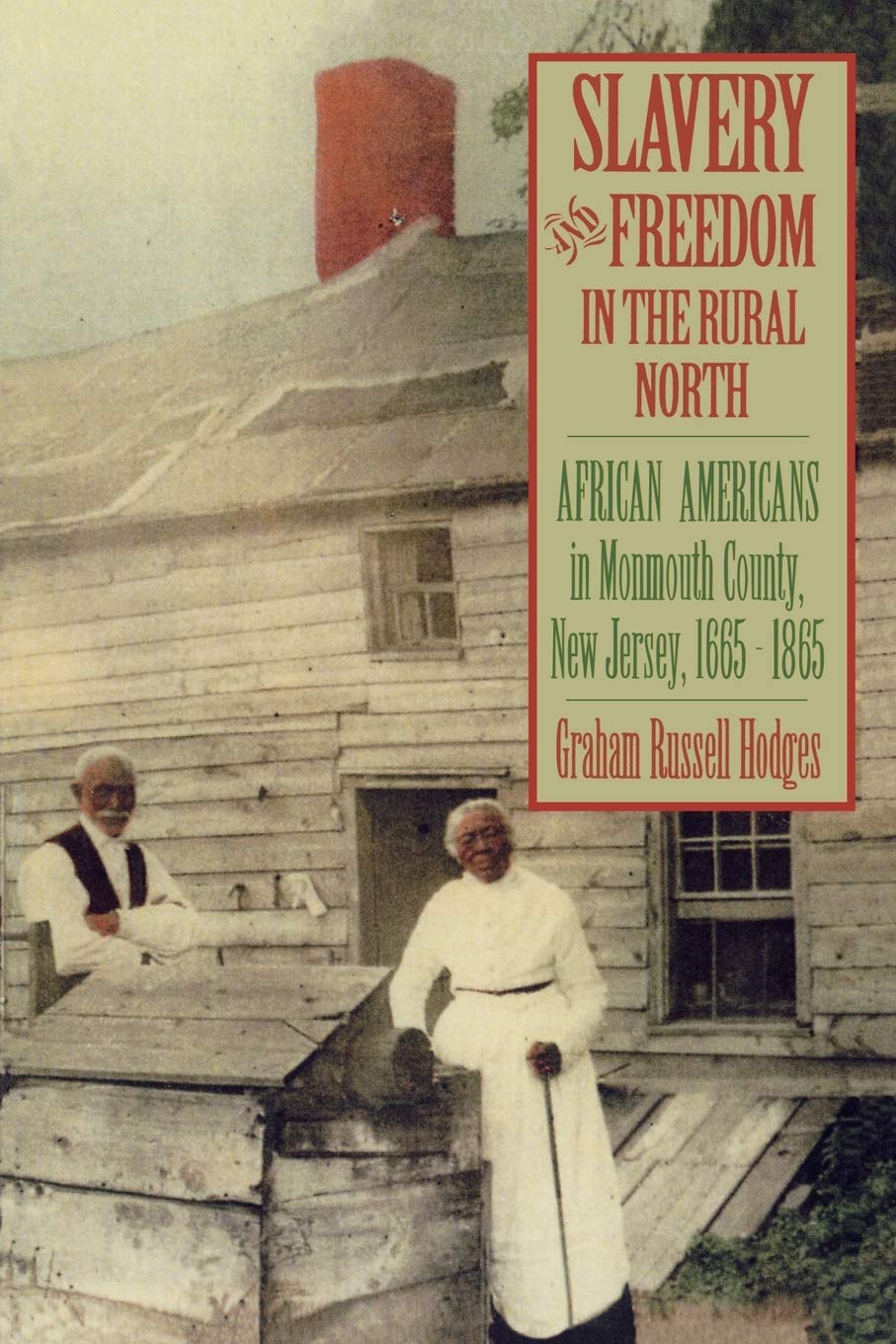
Slavery and Freedom in the Rural North: African Americans in Monmouth County, New Jersey, 1665-1865 by Graham Russell Ho
Inclusive of all applicable taxes. FREE shipping on all orders.
Available Offers
- 🚚Free Delivery — Free shipping on all orders
- 💵Cash on Delivery — Pay when your order arrives
- ↩️15-Day Easy Returns — Hassle-free return policy
- 🔒Cash on Delivery — Pay safely when your order arrives
Check Delivery
Product Description
Introduction
Slavery and Freedom in the Rural North: African Americans in Monmouth County, New Jersey, 1665-1865 by Graham Russell Hodges is a landmark historical study that re-examines the often-overlooked narrative of slavery and emancipation in the northern United States. Focusing on a single rural community in eastern New Jersey, this meticulously researched hardcover volume challenges long-held assumptions about the nature of bondage and freedom outside the plantation South. For Indian readers, students, and scholars of global history, this book offers a compelling lens through which to understand the complexities of race, labour, and liberty in early America.
Book Overview
This unique social history delves into the lives of African Americans in Monmouth County over two centuries, from the colonial era through the end of the Civil War. Hodges reveals how slavery persisted in the rural North far longer than commonly believed, and how African Americans navigated a landscape of gradual emancipation, economic marginalisation, and community building. The book draws on rich archival sources—including court records, wills, church documents, and personal narratives—to reconstruct the daily realities of enslaved and free Black people. It is an essential corrective to histories that focus solely on the urban North or the plantation South.
Key Highlights
- Pioneering local history: A deep dive into Monmouth County as a microcosm of northern slavery and freedom.
- Challenges national narratives: Demonstrates that rural northern slavery was integral to the region’s economy and society.
- Focus on agency: Highlights the resilience, resistance, and cultural survival of African American families.
- Rich primary sources: Uses rare documents to give voice to the enslaved and free Black community.
- Scholarly yet accessible: Written for both academic audiences and general readers interested in American history.
Inside the Book
The book is structured chronologically and thematically, covering the arrival of enslaved Africans in the 17th century, the Revolutionary era’s impact on slavery, the slow process of gradual abolition in New Jersey, and the post-emancipation struggles for land, work, and civil rights. Readers will encounter vivid portraits of individuals and families, including those who petitioned for freedom, built churches and schools, and forged networks of mutual aid. Hodges also examines the role of Quaker abolitionists, the legal system, and the economic forces that shaped Black life in the rural North.
Key Topics
- Colonial slavery in the North: Origins and organisation of slave labour in agriculture and domestic work.
- Gradual emancipation laws: New Jersey’s unique path to abolition and its limitations.
- Free Black communities: Formation of churches, schools, and family structures after emancipation.
- Race and labour: The transition from enslaved to free labour and persistent economic discrimination.
- Resistance and activism: Petitions, court cases, and everyday acts of defiance.
- Memory and legacy: How the history of northern slavery has been remembered or forgotten.
Reader Benefits
- Deepen your understanding of American history: Gain a nuanced view of slavery beyond the Mason-Dixon line.
- Enhance academic research: Ideal for essays, dissertations, and projects on race, labour, or colonial America.
- Develop critical thinking: Analyse how local histories reshape national narratives.
- Appreciate comparative perspectives: Draw parallels with caste, indentured labour, and freedom struggles in the Indian context.
Learning Outcomes
By reading this book, you will be able to: explain the distinct characteristics of northern slavery; evaluate the impact of gradual emancipation on African American communities; analyse primary sources related to race and labour in early America; and discuss the long-term consequences of rural slavery for contemporary race relations. The book also equips readers with the tools to assess how local histories contribute to broader historical understanding.
Who Should Read
- Students of history: Undergraduate and postgraduate scholars of American, Atlantic, or African diaspora history.
- Researchers and academics: Those working on slavery, emancipation, or rural social history.
- General readers: Anyone interested in untold stories of struggle and resilience.
- Indian readers: Those curious about comparative histories of oppression and liberation.
About the Author
Graham Russell Hodges is a distinguished historian and professor emeritus at Colgate University. He has authored numerous books on early American and African American history, including Root and Branch: African Americans in New York and East Jersey, 1613-1863. His work is known for its rigorous archival research and its commitment to recovering the lives of ordinary people. Hodges’ scholarship has reshaped how historians understand slavery and freedom in the northern colonies.
About the Publisher
Rowman & Littlefield Publishers is a leading independent academic publisher based in the United States, known for producing high-quality scholarly works in history, philosophy, and the social sciences. With a commitment to intellectual rigour and accessibility, Rowman & Littlefield brings important research to a global audience. This hardcover edition reflects the publisher’s dedication to enduring scholarship and fine production standards.
Conclusion
Slavery and Freedom in the Rural North is an indispensable resource for anyone seeking a fuller, more honest understanding of American history. By focusing on Monmouth County, Graham Russell Hodges illuminates a world that has long been hidden in plain sight—a world where slavery and freedom coexisted in complex ways. For Indian readers, this book offers not only a window into a distant past but also a mirror for reflecting on universal themes of power, resistance, and the ongoing struggle for justice. Add this hardcover volume to your library and discover a history that challenges, informs, and inspires.
Quick Summary
Slavery and Freedom in the Rural North by Graham Russell Hodges is a groundbreaking social history that shifts the focus from the plantation South to the overlooked reality of slavery in the Northern countryside. Focusing on Monmouth County, New Jersey, the book traces the lives of African Americans from the colonial period through the Civil War. Hodges uses a wealth of primary sources—court records, wills, church documents, and family papers—to reveal how enslaved people built families, maintained cultural traditions, and resisted their bondage. The book also examines the gradual and often incomplete emancipation process in New Jersey, where slavery persisted well into the nineteenth century. This work is essential for Indian students and scholars of American history, comparative slavery studies, and African American studies. It challenges the myth of a 'free North' and provides a nuanced understanding of race, labor, and freedom in rural America. By purchasing from Bookshops.in, Indian readers gain access to a premium hardcover edition at a fair price, delivered to their doorstep.
Book Highlights
Book Specifications
| ISBN-13 | 9780945612513 |
| ISBN-10 | 0945612516 |
| Publisher | Madison House Pub |
| Language | English |
| Dimensions | 15.24 x 1.47 x 22.86 cm |
| Weight | 386 g |
| Category | Americas › United States |
| Genre | History |
| Original Language | English |
Frequently Asked Questions
What is this book about?
Who is the author?
Is this book only about Southern slavery?
What time period does the book cover?
Is this book suitable for Indian students?
Does the book include primary sources?
How is this book different from other slavery histories?
What will I learn about emancipation?
Does the book discuss African American agency?
What is the ISBN?
Can I use this book for my research paper?
Does the book cover the Civil War?
Are there illustrations or maps?
Why should I buy from Bookshops.in?
Readers Also Search For
Related Products
View All
History
The Information Revolution: Transforming the World Through Technology (World History)
History
Human Nature and the French Revolution: From the Enlightenment to the Napoleonic Code: 3 (Polygons: Cultural Diversities and Intersections, 3)
History
The Unmaking of Home in Contemporary Art (Cultural Spaces)

History
Handbook to Life in Medieval and Early Modern Japan | by William E. Deal | Oxford University Press | by William E. Deal | Oxford University Press | by William E. Deal | Oxford University Press | by William E. Deal | Oxford University Press | by William E. Deal | Oxford University Press | by William E. Deal | Oxford University Press | by William E. Deal | Oxford University Press | by William E. Deal | Oxford University Press | by William E. Deal | Oxford University Press | by William E. Deal | Ox

History
The Narrators of Barbarian History (A.D. 550-800) | by Walter Goffart | University of Notre Dame Press | by Walter Goffart | University of Notre Dame Press | by Walter Goffart | University of Notre Dame Press | by Walter Goffart | University of Notre Dame Press | by Walter Goffart | University of Notre Dame Press | by Walter Goffart | University of Notre Dame Press | by Walter Goffart | University of Notre Dame Press | by Walter Goffart | University of Notre Dame Press | by Walter Goffart | Univ
History