
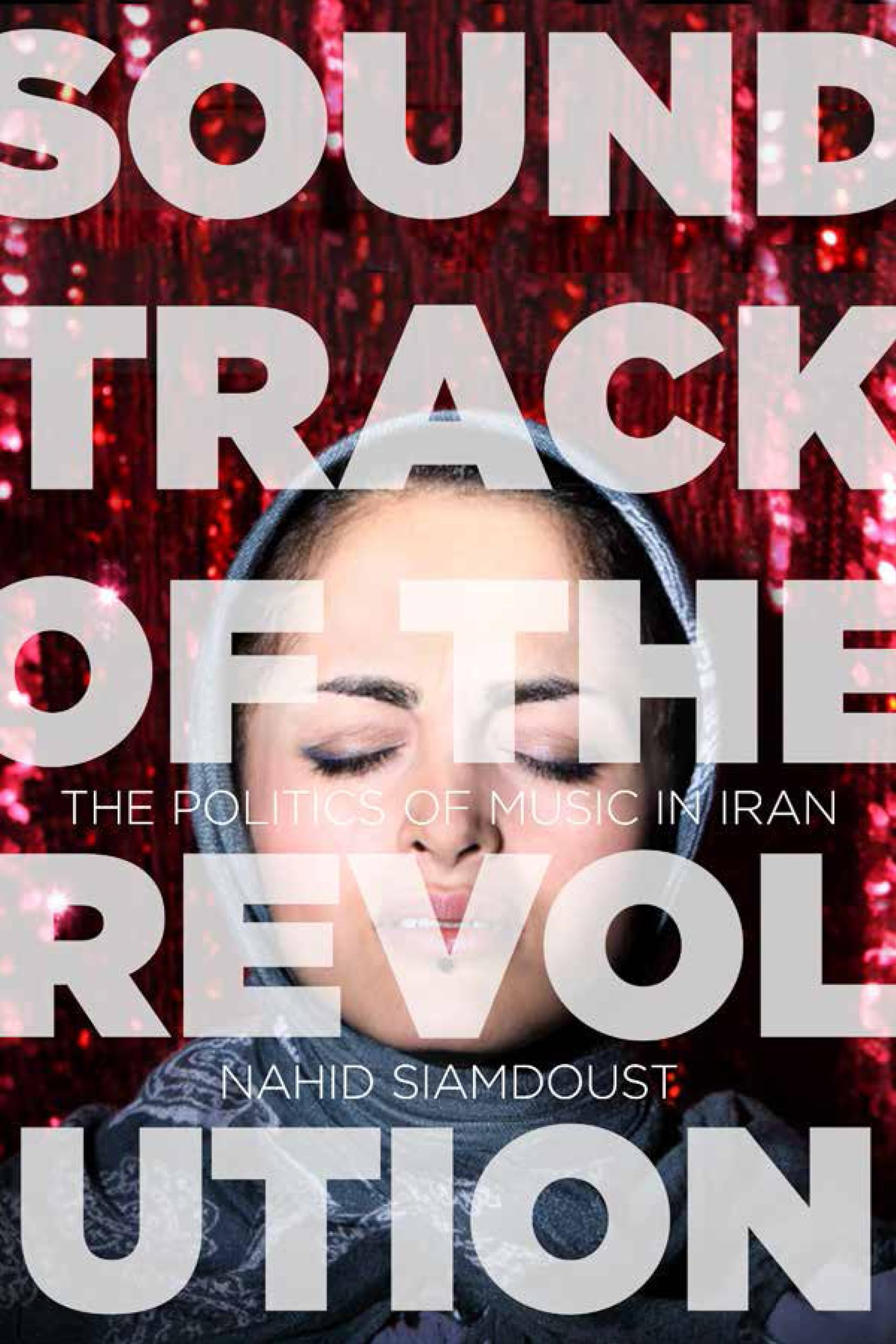
Soundtrack of the Revolution: The Politics of Music in Iran by Nahid Siamdoust – A Deep Dive into Iranian Cultural Resis
Inclusive of all applicable taxes. FREE shipping on all orders.
Available Offers
- 🚚Free Delivery — Free shipping on all orders
- 💵Cash on Delivery — Pay when your order arrives
- ↩️15-Day Easy Returns — Hassle-free return policy
- 🔒Cash on Delivery — Pay safely when your order arrives
Check Delivery
Product Description
Introduction
In the tumultuous landscape of post-revolutionary Iran, music became both a battlefield and a sanctuary. Nahid Siamdoust’s Soundtrack of the Revolution: The Politics of Music in Iran offers a rare, deeply researched account of how sound, rhythm, and melody shaped—and were shaped by—the political currents of the Islamic Republic. For Indian readers interested in the intersection of culture, politics, and resistance, this book is an eye-opening exploration of art’s power to survive and speak truth to authority.
Book Overview
Published by Stanford University Press, this hardcover volume traces the journey of Iranian music from the 1979 Revolution to the present day. Siamdoust shows how the state initially banned music, then weaponised it for war propaganda, and eventually watched it evolve into a space for social debate. Through five years of fieldwork, including during the 2009 Green Movement protests, the author reveals a hidden history of creativity, censorship, and defiance. This is not just a music book—it is a political and cultural history of modern Iran told through its sonic struggles.
Key Highlights
- Original research: Based on interviews with musicians, state officials, and audiences, plus access to underground performances and licensing offices.
- Four case studies: Follows the careers of four key musicians—a classical master, a pop rebel, a rock innovator, and a hip-hop activist—who represent different eras and genres.
- Political context: Connects musical shifts to major events: the revolution, the Iran–Iraq war, the reformist movement, and the 2009 protests.
- Censorship exposed: Details how the Ministry of Culture and Islamic Guidance controls lyrics, performances, and recordings.
- Global relevance: Offers parallels for Indian readers studying state–artist relations in other authoritarian or semi-authoritarian contexts.
Inside the Book
Each chapter delves into a specific musician’s world. You will meet a giant of Persian classical music who navigated the ban by composing for state-approved ceremonies. You will discover how pop singers smuggled cassette tapes across borders, how rock bands rehearsed in hidden basements, and how rappers used Farsi rhymes to critique unemployment and corruption. Siamdoust also takes you inside government offices where bureaucrats debate whether a beat is too Western or a lyric too political. The narrative is vivid, personal, and never dry.
Key Topics
- The 1979 ban on music and its immediate aftermath
- State-sponsored music during the Iran–Iraq war
- Underground music scenes in Tehran and other cities
- Gender and music: women’s voices and solo performances
- The role of technology: cassettes, CDs, and mobile phones
- Music as a tool for protest and political expression
- The evolution of Iranian hip-hop and rock
- Censorship mechanisms and artist strategies
Reader Benefits
This book will deepen your understanding of how art functions under political pressure. It offers a nuanced view of Iran beyond headlines, showing a society that is creative, resilient, and constantly negotiating with authority. For students of political science, sociology, or musicology, it provides a rich case study of cultural resistance. For general readers, it is a gripping human story of passion, risk, and survival.
Learning Outcomes
- Understand the evolution of music policy in post-revolutionary Iran
- Analyse the relationship between state power and artistic freedom
- Identify key musicians and movements that shaped Iranian popular culture
- Compare Iranian censorship with similar phenomena in India and elsewhere
- Grasp the role of music in social movements and political change
Who Should Read
This book is ideal for university students studying Middle Eastern politics, cultural studies, or ethnomusicology. It will also appeal to journalists, activists, and anyone curious about how societies express dissent through art. Indian readers who enjoy political biographies or histories of music will find it especially engaging. If you have ever wondered why a song can be more powerful than a speech, this is for you.
About the Author
Nahid Siamdoust is an Iranian-American scholar and journalist. She holds a doctorate from the University of Oxford and has written for The New York Times, The Guardian, and other international outlets. Her research focuses on the politics of culture in Iran, and she has conducted extensive fieldwork in the country. Soundtrack of the Revolution is her first book and has been praised for its depth and originality.
About the Publisher
Stanford University Press is a leading academic publisher based in California, USA. Known for rigorous scholarship in the humanities and social sciences, it has a strong list in Middle Eastern studies, political science, and cultural history. This book reflects the press’s commitment to bringing critical, well-researched works to a global audience.
Conclusion
Soundtrack of the Revolution is more than a music history—it is a testament to the human spirit’s refusal to be silenced. Through the stories of musicians who risked everything to create, Siamdoust shows that even under the strictest regimes, art finds a way. For Indian readers, the parallels with our own struggles for free expression make this book both enlightening and inspiring. Order your hardcover copy today from Bookshops.in and listen to the revolution.
Quick Summary
Soundtrack of the Revolution: The Politics of Music in Iran by Nahid Siamdoust is a groundbreaking exploration of how music became a powerful political force in Iran after the 1979 revolution. Based on five years of fieldwork, including during the tumultuous 2009 protests, the book traces music's journey from outright ban to a vibrant underground scene and eventual state co-optation. Siamdoust introduces readers to a diverse cast of musicians, from classical masters to pop stars, who turned their art into a platform for social and political commentary. The book reveals how music provided a crucial space for Iranians to debate identity, freedom, and change under an authoritarian regime. Ideal for students of Iranian studies, political science, and cultural history, this work offers an alternative narrative of the Islamic Republic. By purchasing from Bookshops.in, Indian readers gain access to an authentic, high-quality hardcover edition with reliable delivery and customer support.
Book Highlights
Book Specifications
| ISBN-13 | 9780804792899 |
| ISBN-10 | 0804792895 |
| Publisher | Stanford Univ Pr |
| Language | English |
| Dimensions | 15.24 x 2.54 x 22.86 cm |
| Weight | 626 g |
| Category | Religious Groups Studies › Islamic |
| Genre | Non-fiction |
| Original Language | English |
Frequently Asked Questions
What is Soundtrack of the Revolution about?
Who is the author Nahid Siamdoust?
Is this book only about classical Iranian music?
Does the book discuss the ban on music after the revolution?
What time period does the book cover?
Is this book suitable for academic study?
Does the book include interviews with musicians?
How is this book different from other books on Iran?
What is the political significance of music in Iran?
Does the book cover the Iran-Iraq war?
Is the book accessible to non-academic readers?
What makes this book a good purchase from Bookshops.in?
Does the book discuss the role of women in Iranian music?
Can I use this book for a research paper?
Readers Also Search For
Customers Also Bought

Sociology
Imagination Beyond Nation: Latin American Popular Culture: 349 (Pitt Latin American Series)

Sociology
Boomer Volunteer Engagement: Facilitator's Tool Kit

Sociology
Making a Success of Marriage: Planning for Happily Ever After

Sociology
Causal Mediation Analysis (Analytical Methods for Social Research)

Sociology
Marriage and the Moral Imagination (New Departures in Anthropology)

Sociology
Social Change, Resistance and Social Practices: 19 (Studies in Critical Social Sciences, 19)
Related Products
View All
Society & Social Sciences
Oxford Studies in Epistemology, Volume 3 | by Tamar Szabo Gendler | John Hawthorne | OUP UK | by Tamar Szabo Gendler | John Hawthorne | OUP UK | by Tamar Szabo Gendler | John Hawthorne | OUP UK | by Tamar Szabo Gendler | John Hawthorne | OUP UK | by Tamar Szabo Gendler | John Hawthorne | OUP UK | by Tamar Szabo Gendler | John Hawthorne | OUP UK | by Tamar Szabo Gendler | John Hawthorne | OUP UK | by Tamar Szabo Gendler | John Hawthorne | OUP UK | by Tamar Szabo Gendler | John Hawthorne | OUP UK

Society & Social Sciences
Sidgwick's Ethics and Victorian Moral Philosophy | by J. B. Schneewind | Jerome B. Schneewind | OUP Oxford | by J. B. Schneewind | Jerome B. Schneewind | OUP Oxford | by J. B. Schneewind | Jerome B. Schneewind | OUP Oxford | by J. B. Schneewind | Jerome B. Schneewind | OUP Oxford | by J. B. Schneewind | Jerome B. Schneewind | OUP Oxford | by J. B. Schneewind | Jerome B. Schneewind | OUP Oxford | by J. B. Schneewind | Jerome B. Schneewind | OUP Oxford | by J. B. Schneewind | Jerome B. Schneewind

Society & Social Sciences
Cognitive Phenomenology | by Tim Bayne | Michelle Montague | OUP UK | by Tim Bayne | Michelle Montague | OUP UK | by Tim Bayne | Michelle Montague | OUP UK | by Tim Bayne | Michelle Montague | OUP UK | by Tim Bayne | Michelle Montague | OUP UK | by Tim Bayne | Michelle Montague | OUP UK | by Tim Bayne | Michelle Montague | OUP UK | by Tim Bayne | Michelle Montague | OUP UK | by Tim Bayne | Michelle Montague | OUP UK | by Tim Bayne | Michelle Montague | OUP UK | by Tim Bayne | Michelle Montague |

Society & Social Sciences
Alasdair MacIntyre on Practical Philosophy | by Kelvin Knight | Peter Wicks | University of Notre Dame Press | by Kelvin Knight | Peter Wicks | University of Notre Dame Press | by Kelvin Knight | Peter Wicks | University of Notre Dame Press | by Kelvin Knight | Peter Wicks | University of Notre Dame Press | by Kelvin Knight | Peter Wicks | University of Notre Dame Press | by Kelvin Knight | Peter Wicks | University of Notre Dame Press | by Kelvin Knight | Peter Wicks | University of Notre Dame P

Society & Social Sciences
Philosophical Historicism and the Betrayal of First Philosophy | by Carl Page | Penn State University Press | by Carl Page | Penn State University Press | by Carl Page | Penn State University Press | by Carl Page | Penn State University Press | by Carl Page | Penn State University Press | by Carl Page | Penn State University Press | by Carl Page | Penn State University Press | by Carl Page | Penn State University Press | by Carl Page | Penn State University Press | by Carl Page | Penn State Univ

Society & Social Sciences