
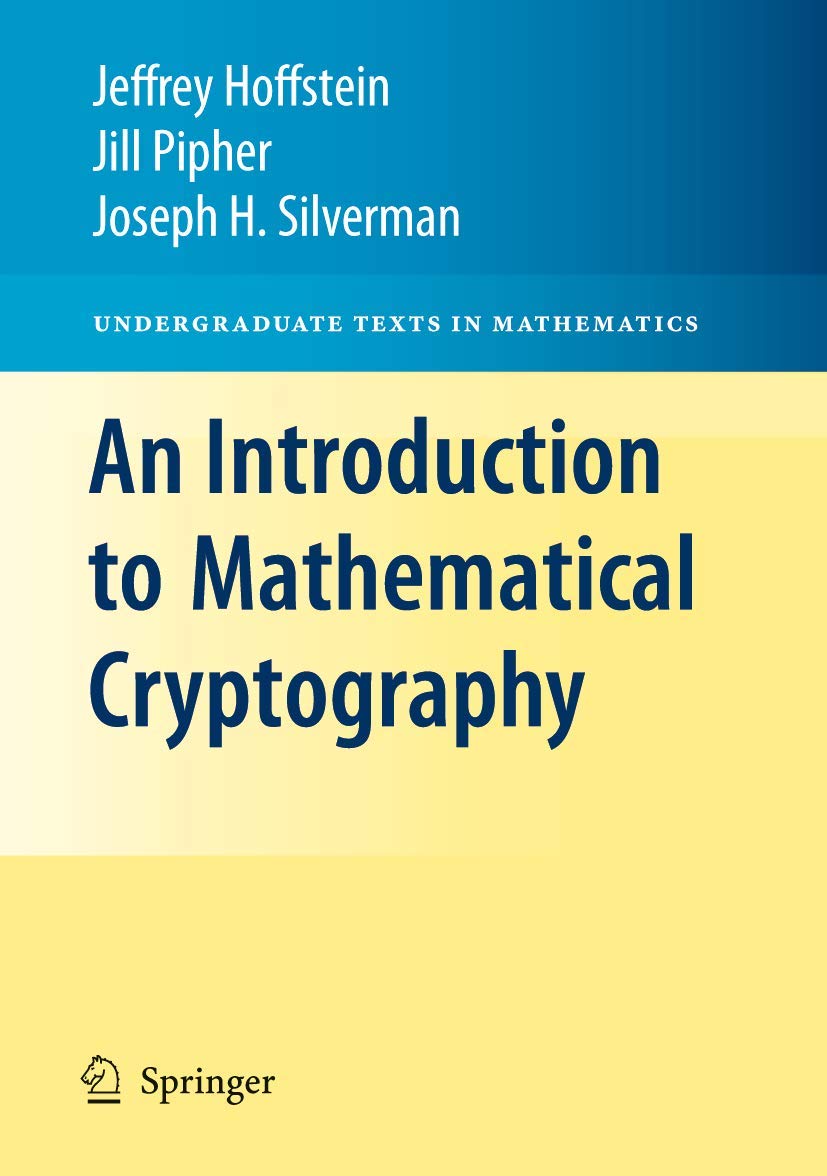
An Introduction to Mathematical Cryptography by Jeffrey Hoffstein – A Self-Contained Course on Number Theory and Public
Inclusive of all applicable taxes. FREE shipping on all orders.
Available Offers
- 🚚Free Delivery — Free shipping on all orders
- 💵Cash on Delivery — Pay when your order arrives
- ↩️15-Day Easy Returns — Hassle-free return policy
- 🔒Cash on Delivery — Pay safely when your order arrives
Check Delivery
Product Description
Introduction
In an era where digital security is paramount, understanding the mathematical foundations of cryptography has never been more critical. An Introduction to Mathematical Cryptography by Jeffrey Hoffstein, published by Springer, offers a rigorous yet accessible exploration of the principles that safeguard modern communications. This hardcover edition is an essential resource for Indian students, researchers, and cybersecurity professionals seeking a deep grasp of public key cryptography and its underlying mathematics.
Book Overview
This book bridges the gap between pure mathematics and practical cryptographic applications. Starting with the landmark invention of public key cryptography by Diffie and Hellman in 1976, and the subsequent RSA cryptosystem, the text systematically builds a self-contained course. It covers number theory, abstract algebra, probability, and information theory, all tailored to cryptographic contexts. The only prerequisite is a first course in linear algebra, making it ideal for both undergraduate and postgraduate students in India.
Key Highlights
- Self-contained approach: All necessary mathematical concepts are introduced and developed in sufficient detail, requiring no prior cryptographic knowledge.
- Focus on public key cryptography: In-depth coverage of RSA, Diffie-Hellman, elliptic curve cryptography, and lattice-based methods.
- Rigorous yet accessible: Clear explanations with numerous examples and exercises suitable for Indian university curricula.
- Hardcover durability: A premium Springer edition built for frequent reference in libraries and personal collections.
Inside the Book
The content is organized into logical chapters that progress from elementary number theory to advanced topics. Readers will explore congruences, finite fields, discrete logarithms, primality testing, and digital signatures. Each chapter includes problem sets that reinforce learning and encourage independent thinking. The book also introduces modern topics such as post-quantum cryptography, preparing students for future challenges in cybersecurity.
Key Topics
- Public key cryptography and digital signatures
- Number theory: prime numbers, modular arithmetic, and Euler's theorem
- Abstract algebra: groups, rings, and fields
- Elliptic curve cryptography
- Lattice-based cryptography and cryptanalysis
- Information theory and probability in cryptography
Reader Benefits
Indian students will find this book particularly valuable for its step-by-step pedagogical style. It demystifies complex mathematical concepts and shows their direct application in real-world security protocols. Professionals preparing for cybersecurity certifications or research work will gain a solid theoretical foundation. The hardcover format ensures longevity, making it a worthy investment for academic and professional growth.
Learning Outcomes
By the end of this book, readers will be able to understand and implement core cryptographic algorithms, analyze their security strengths and weaknesses, and appreciate the mathematical reasoning behind modern encryption. They will be equipped to pursue advanced studies in cryptography, cybersecurity, or related fields in mathematics and computer science.
Who Should Read
- Undergraduate and postgraduate students in mathematics, computer science, and information security
- Cybersecurity professionals seeking deeper theoretical knowledge
- Researchers and academics working on cryptographic algorithms and protocols
- Self-learners with a background in linear algebra and a passion for codebreaking and security
About the Author
Jeffrey Hoffstein is a renowned mathematician and cryptographer, known for his contributions to number theory and lattice-based cryptography. He has held academic positions at prestigious institutions and co-invented the NTRU cryptosystem, a widely studied post-quantum cryptographic scheme. His expertise ensures that the book is both authoritative and engaging.
About the Publisher
Springer is a global leader in scientific and technical publishing, known for its high-quality textbooks and research monographs. With a legacy spanning over 180 years, Springer delivers reliable, peer-reviewed content that meets the highest academic standards. This hardcover edition reflects Springer's commitment to excellence in education.
Conclusion
An Introduction to Mathematical Cryptography is more than a textbook—it is a gateway to understanding the mathematical backbone of digital security. Whether you are a student in an Indian university, a cybersecurity enthusiast, or a researcher, this book will equip you with the knowledge to navigate the complex world of cryptography. Order your hardcover copy from Bookshops.in today and unlock the secrets of secure communication.
Quick Summary
An Introduction to Mathematical Cryptography by Jeffrey Hoffstein is a definitive textbook that bridges pure mathematics and modern cybersecurity. Written for students and professionals, it provides a self-contained exploration of public key cryptography, starting from fundamental number theory and abstract algebra to advanced topics like elliptic curve cryptography and lattice-based systems. The book is designed for Indian readers pursuing degrees in mathematics, computer science, or cybersecurity, and is equally valuable for self-learners. Readers will gain a deep understanding of how RSA, Diffie-Hellman, and digital signatures work mathematically, along with practical problem-solving skills through extensive exercises. This Springer hardcover edition is a durable reference for anyone serious about cryptography. Buying from Bookshops.in ensures you receive a genuine imported copy with reliable service across India.
Book Highlights
Book Specifications
| ISBN-13 | 9781441926746 |
| ISBN-10 | 1441926747 |
| Publisher | Springer-Verlag New York Inc. |
| Language | English |
| Dimensions | 15.49 x 3.1 x 23.5 cm |
| Weight | 726 g |
| Country | India |
| Category | Mathematics › Algebra & Trigonometry |
| Genre | Non-Fiction |
| Original Language | English |
Frequently Asked Questions
What is the main focus of this book?
Who is the author of An Introduction to Mathematical Cryptography?
Is this book suitable for beginners?
What topics are covered in the book?
Does the book include exercises?
What is the ISBN-13 of this book?
Is this book used in Indian universities?
What is the price of this book on Bookshops.in?
What is the binding type?
Does the book cover modern cryptography?
Can I use this book for self-study?
What is the rating of this book?
Why should I buy from Bookshops.in?
Readers Also Search For
Customers Also Bought
Mathematics
Stereotype Spaces and Algebras: 73 (De Gruyter Expositions in Mathematics, 73)

Mathematics
Semigroups in Algebra, Geometry and Analysis: 20 (De Gruyter Expositions in Mathematics, 20)
Mathematics
Geometry from the Pacific Rim: Proceedings of the Pacific Rim Geometry Conference held at National University of Singapore, Republic of Singapore, ... 1994 (De Gruyter Proceedings in Mathematics)
Mathematics
First International Tainan-Moscow Algebra Workshop: Proceedings of the International Conference held at National Cheng Kung University Tainan, Taiwan, ... 1994 (De Gruyter Proceedings in Mathematics)

Mathematics
Differential Geometry - Proceedings of the VIII International Colloquium (English, Jesus A. Alvarez Lopez | Eduardo Garcia-Rio)
Mathematics
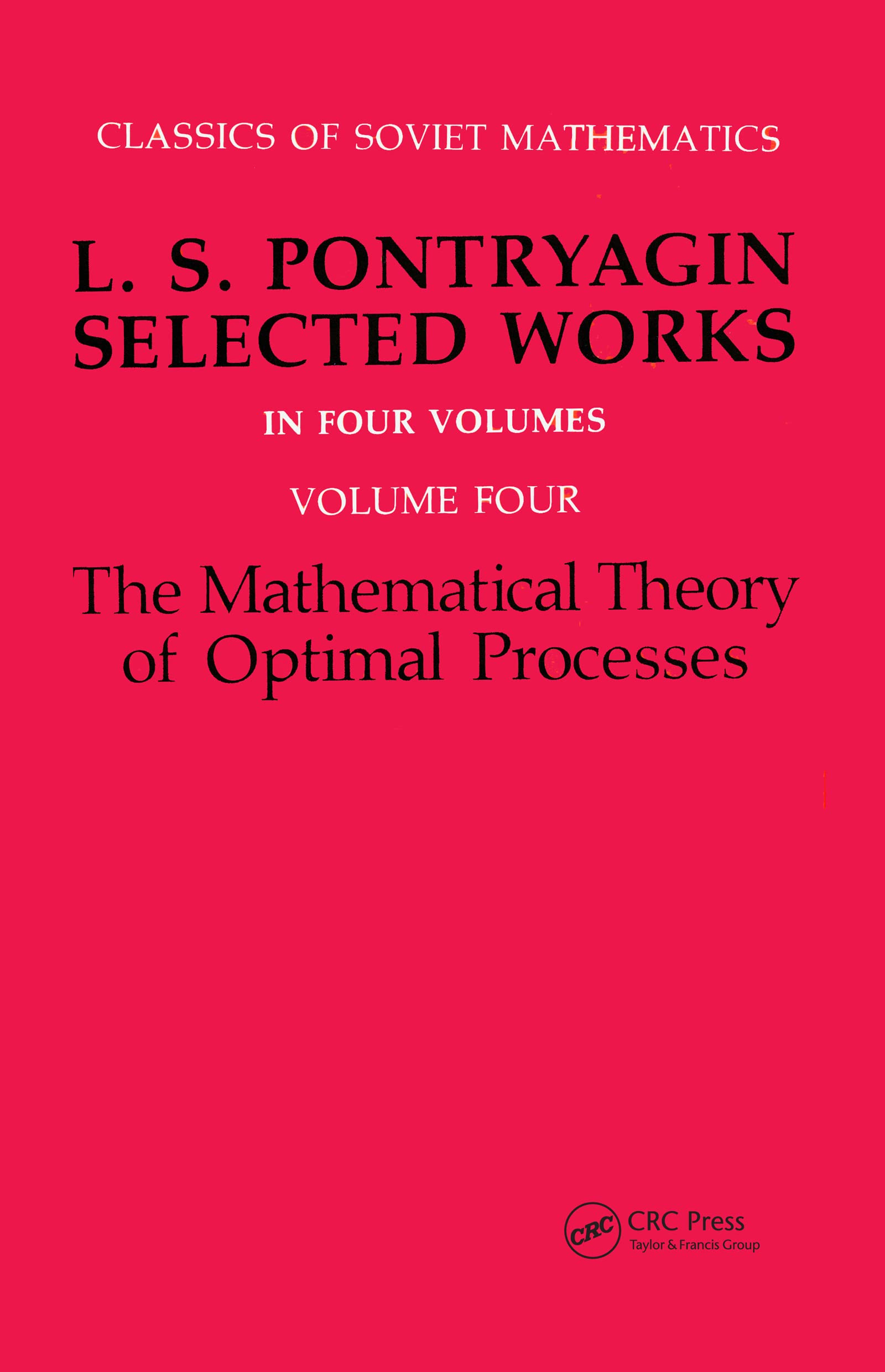
Mathematical Theory of Optimal Processes (Classics of Soviet Mathematics)
Related Products
View AllMathematics
Mathematical Theory of Optimal Processes (Classics of Soviet Mathematics)
Mathematics
Stereotype Spaces and Algebras: 73 (De Gruyter Expositions in Mathematics, 73)
Mathematics
Semigroups in Algebra, Geometry and Analysis: 20 (De Gruyter Expositions in Mathematics, 20)
Mathematics
Geometry from the Pacific Rim: Proceedings of the Pacific Rim Geometry Conference held at National University of Singapore, Republic of Singapore, ... 1994 (De Gruyter Proceedings in Mathematics)
Mathematics
First International Tainan-Moscow Algebra Workshop: Proceedings of the International Conference held at National Cheng Kung University Tainan, Taiwan, ... 1994 (De Gruyter Proceedings in Mathematics)
Mathematics