
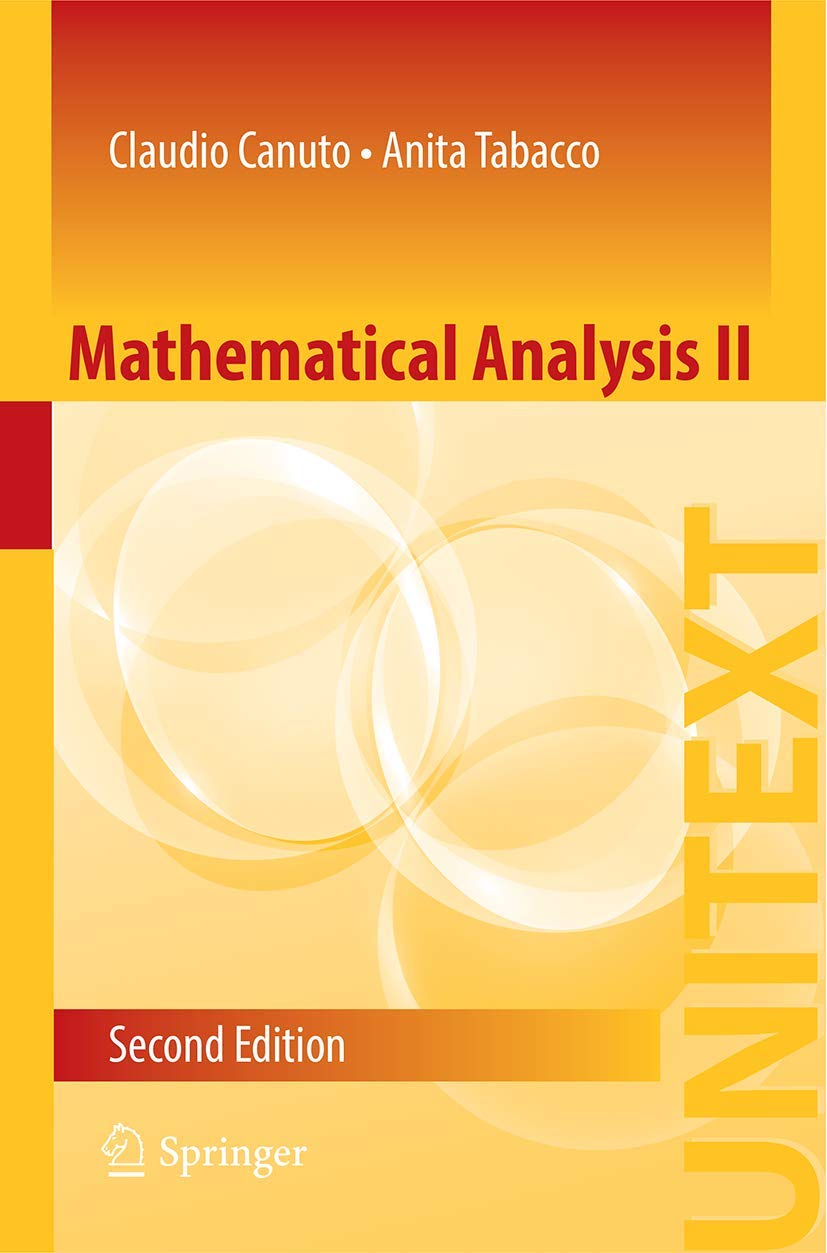
Mathematical Analysis II: A Comprehensive Textbook for Engineering, Computer Science and Physics Students by Claudio Can
Inclusive of all applicable taxes. FREE shipping on all orders.
Available Offers
- 🚚Free Delivery — Free shipping on all orders
- 💵Cash on Delivery — Pay when your order arrives
- ↩️15-Day Easy Returns — Hassle-free return policy
- 🔒Cash on Delivery — Pay safely when your order arrives
Check Delivery
Product Description
Introduction
Mathematical Analysis II by Claudio Canuto is a rigorous and well-structured textbook designed for students progressing beyond the fundamentals of calculus. Published by Springer, this hardcover edition serves as an essential companion for second-year courses in engineering, computer science, and physics. The book bridges the gap between theoretical concepts and practical applications, offering a clear pathway through multivariable calculus, series of functions, and ordinary differential equations. For Indian students pursuing STEM disciplines, this volume provides the depth and clarity needed to excel in advanced mathematics.
Book Overview
This volume continues the journey begun in Mathematical Analysis I, focusing on integral and differential calculus for functions of several variables, infinite series, and differential equations. The content is carefully organized to support a modular lecture structure, allowing instructors to tailor the sequence of topics. The book emphasizes critical thinking and hands-on problem-solving, making it suitable for both classroom learning and self-study. Each chapter builds logically on previous concepts, ensuring a smooth transition from single-variable to multivariable analysis.
Key Highlights
- Modular Design: The chapters are structured to allow flexible course planning, enabling instructors to rearrange topics as needed.
- Dual-Level Approach: Material is presented at two levels—core theory and advanced insights—to accommodate varying student abilities.
- Application-Oriented: Concrete examples from engineering, physics, and computer science illustrate theoretical concepts.
- Clear Exposition: The writing style prioritizes readability and linear progression, making complex ideas accessible.
- Companion Volume: Seamlessly continues from Mathematical Analysis I, maintaining consistent notation and pedagogy.
Inside the Book
The book opens with a review of key concepts from single-variable analysis before diving into multivariable functions. Topics include partial derivatives, multiple integrals, line and surface integrals, and the theorems of Green, Stokes, and Gauss. The second half covers sequences and series of functions, power series, Fourier series, and an introduction to ordinary differential equations. Each section includes worked examples, exercises, and summaries to reinforce learning. The modular nature allows readers to focus on specific areas without losing context.
Key Topics
- Multivariable Differential Calculus: Limits, continuity, partial derivatives, gradients, and Taylor expansions.
- Multivariable Integral Calculus: Double and triple integrals, change of variables, and applications to area and volume.
- Vector Calculus: Line integrals, surface integrals, and the fundamental theorems of vector analysis.
- Series of Functions: Pointwise and uniform convergence, power series, and Fourier series.
- Ordinary Differential Equations: First-order and second-order linear ODEs, systems, and stability.
Reader Benefits
- Conceptual Clarity: The logical flow and detailed explanations help demystify advanced topics.
- Problem-Solving Skills: Numerous exercises and examples develop analytical thinking and computational proficiency.
- Exam Preparation: The structured format aids revision and mastery of core material for university exams.
- Real-World Relevance: Applications in mechanics, electromagnetism, and data science show the practical utility of analysis.
- Self-Study Friendly: The modular design and clear headings make it easy to revisit specific topics independently.
Learning Outcomes
By studying this book, readers will be able to compute and interpret partial derivatives and multiple integrals, apply vector calculus theorems to physical problems, analyze the convergence of series of functions, and solve ordinary differential equations using standard methods. They will also develop the ability to reason rigorously about limits, continuity, and differentiability in higher dimensions, laying a strong foundation for further studies in mathematics and its applications.
Who Should Read
- Engineering Students: Those pursuing B.Tech or BE degrees who need a solid grounding in multivariable calculus and ODEs.
- Computer Science Students: Learners interested in mathematical foundations for machine learning, graphics, and algorithms.
- Physics Students: Undergraduates requiring rigorous analysis for classical mechanics, electromagnetism, and quantum theory.
- Mathematics Enthusiasts: Anyone seeking a deeper understanding of analysis beyond introductory calculus.
- Instructors: Teachers looking for a well-organized textbook for second-year courses.
About the Author
Claudio Canuto is a distinguished mathematician and professor with extensive experience in numerical analysis and applied mathematics. He has authored several highly regarded textbooks and research papers, known for their clarity and pedagogical effectiveness. His work reflects a deep commitment to making advanced mathematics accessible to students across scientific disciplines.
About the Publisher
Springer is a globally recognized academic publisher, renowned for its high-quality scientific, technical, and medical literature. With a legacy spanning over 180 years, Springer publishes authoritative textbooks and research monographs that set benchmarks in education and scholarship. This hardcover edition reflects Springer’s commitment to durable binding and clear typography, ensuring long-lasting utility for students.
Conclusion
Mathematical Analysis II is an indispensable resource for anyone serious about mastering advanced calculus and differential equations. Its careful exposition, modular structure, and focus on applications make it a standout choice for Indian students and professionals. Whether you are preparing for semester exams, competitive tests, or pursuing self-directed learning, this book provides the tools and confidence to succeed. Order your copy from Bookshops.in today and take a decisive step toward mathematical proficiency.
Quick Summary
Mathematical Analysis II by Claudio Canuto is a rigorous yet practical textbook designed for second-level university courses in mathematical analysis. Published by Springer, it focuses on multivariable differential and integral calculus, series of functions (including power and Fourier series), and ordinary differential equations. The book is specifically tailored for students of engineering, computer science, and physics, bridging theoretical depth with real-world applications. Its modular structure allows instructors to customize lecture sequences, while clear explanations and abundant exercises support self-study. Readers will gain a solid command of advanced calculus tools, enabling them to tackle complex problems in their respective fields. Indian students will find the content aligned with standard B.Tech, B.Sc., and M.Sc. curricula, making it an invaluable resource for both classroom learning and exam preparation. By purchasing from Bookshops.in, you receive a genuine Springer hardcover edition at a competitive price, with reliable delivery across India. Whether you are preparing for competitive exams or advancing your technical knowledge, this book provides the mathematical foundation needed for success.
Book Highlights
Book Specifications
| ISBN-13 | 9783319127569 |
| ISBN-10 | 331912756X |
| Publisher | Springer Nature |
| Language | English |
| Dimensions | 15.49 x 2.29 x 23.11 cm |
| Weight | 975 g |
| Country | India |
| Category | Mathematics › Calculus |
| Genre | Non-fiction |
| Original Language | English |
Frequently Asked Questions
What is Mathematical Analysis II about?
Who is the author of this book?
Is this book suitable for Indian engineering students?
What topics are covered in this book?
Do I need to read Mathematical Analysis I first?
What is the language of the book?
Is this book available in hardcover?
What is the ISBN of this book?
Can I use this book for self-study?
What makes this book different from other analysis textbooks?
Does the book include exercises?
Who is the publisher?
How is this book relevant to computer science?
Readers Also Search For
Customers Also Bought
Mathematics
Stereotype Spaces and Algebras: 73 (De Gruyter Expositions in Mathematics, 73)
Mathematics
Semigroups in Algebra, Geometry and Analysis: 20 (De Gruyter Expositions in Mathematics, 20)
Mathematics
Geometry from the Pacific Rim: Proceedings of the Pacific Rim Geometry Conference held at National University of Singapore, Republic of Singapore, ... 1994 (De Gruyter Proceedings in Mathematics)
Mathematics
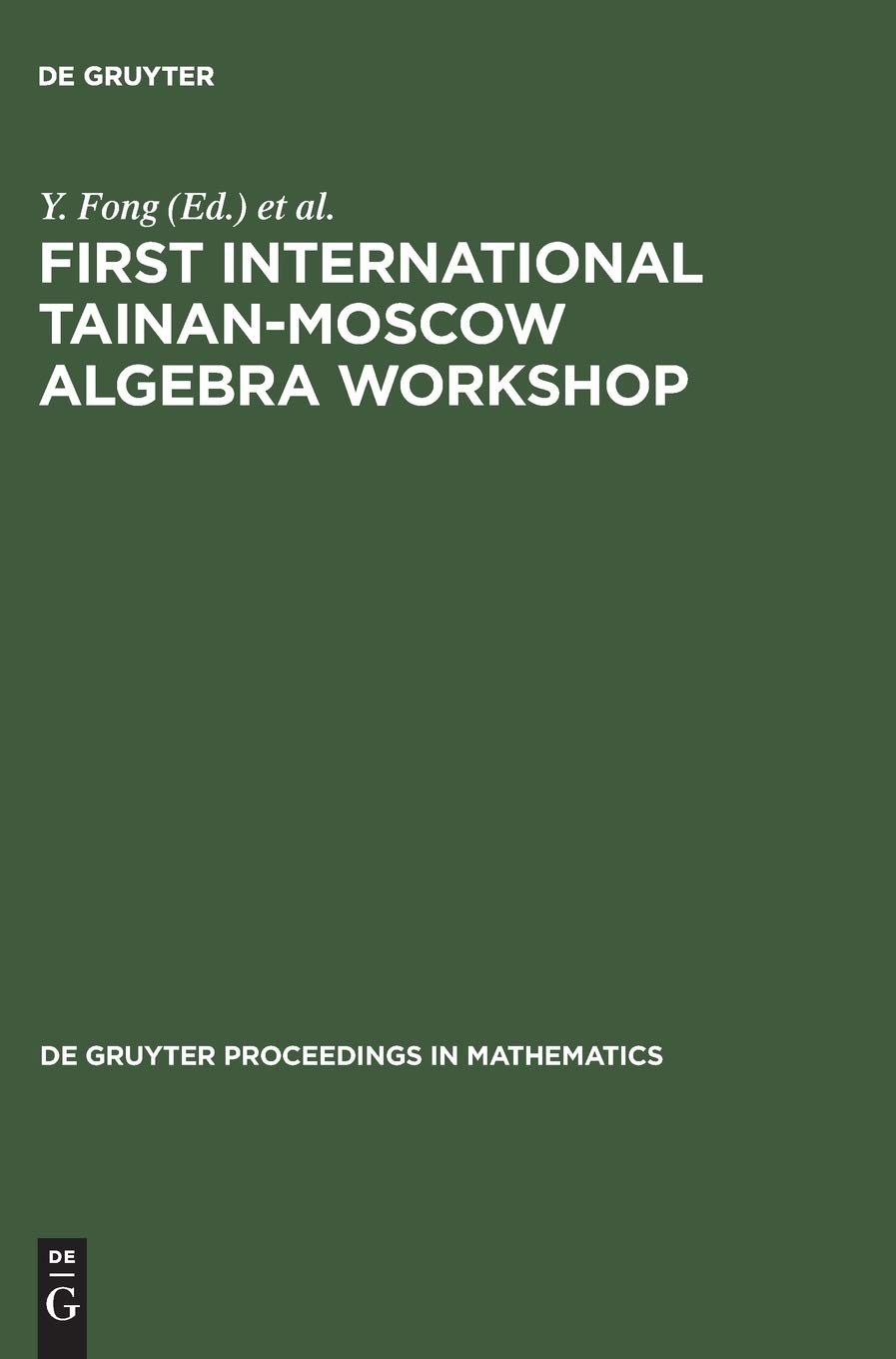
First International Tainan-Moscow Algebra Workshop: Proceedings of the International Conference held at National Cheng Kung University Tainan, Taiwan, ... 1994 (De Gruyter Proceedings in Mathematics)
Mathematics
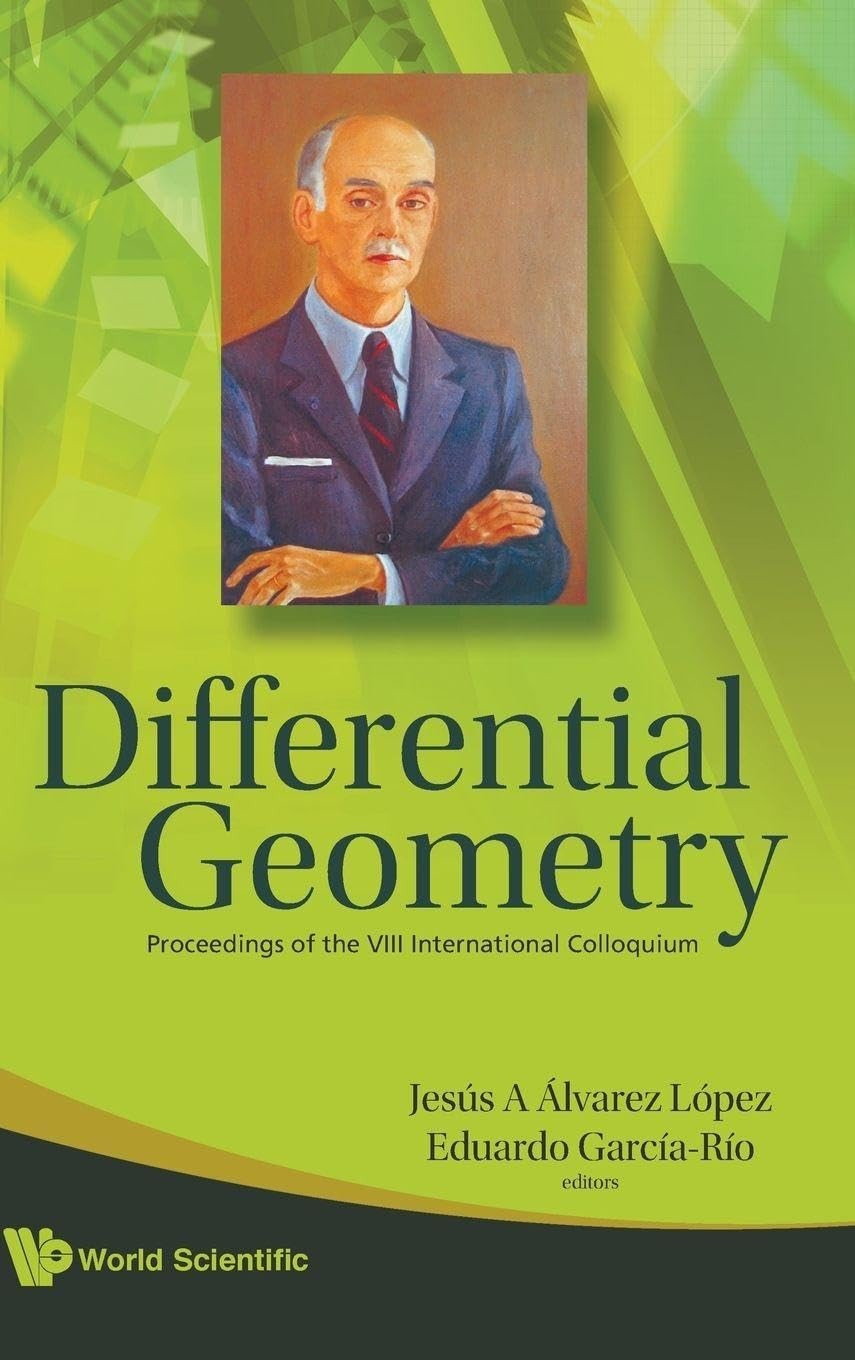
Differential Geometry - Proceedings of the VIII International Colloquium (English, Jesus A. Alvarez Lopez | Eduardo Garcia-Rio)
Mathematics
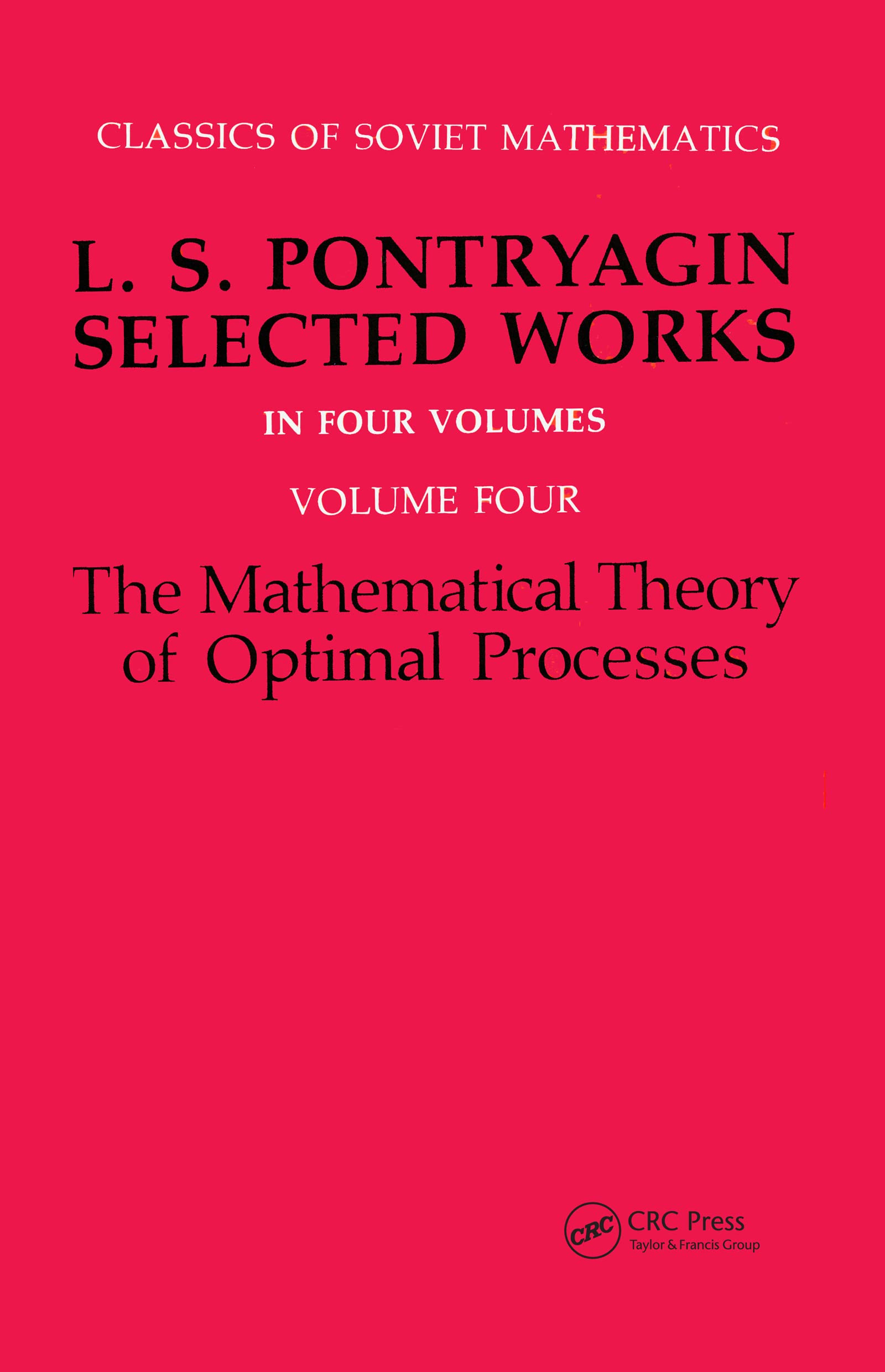
Mathematical Theory of Optimal Processes (Classics of Soviet Mathematics)
Related Products
View AllMathematics
Mathematical Theory of Optimal Processes (Classics of Soviet Mathematics)
Mathematics
Stereotype Spaces and Algebras: 73 (De Gruyter Expositions in Mathematics, 73)
Mathematics
Semigroups in Algebra, Geometry and Analysis: 20 (De Gruyter Expositions in Mathematics, 20)
Mathematics
Geometry from the Pacific Rim: Proceedings of the Pacific Rim Geometry Conference held at National University of Singapore, Republic of Singapore, ... 1994 (De Gruyter Proceedings in Mathematics)
Mathematics
First International Tainan-Moscow Algebra Workshop: Proceedings of the International Conference held at National Cheng Kung University Tainan, Taiwan, ... 1994 (De Gruyter Proceedings in Mathematics)
Mathematics