
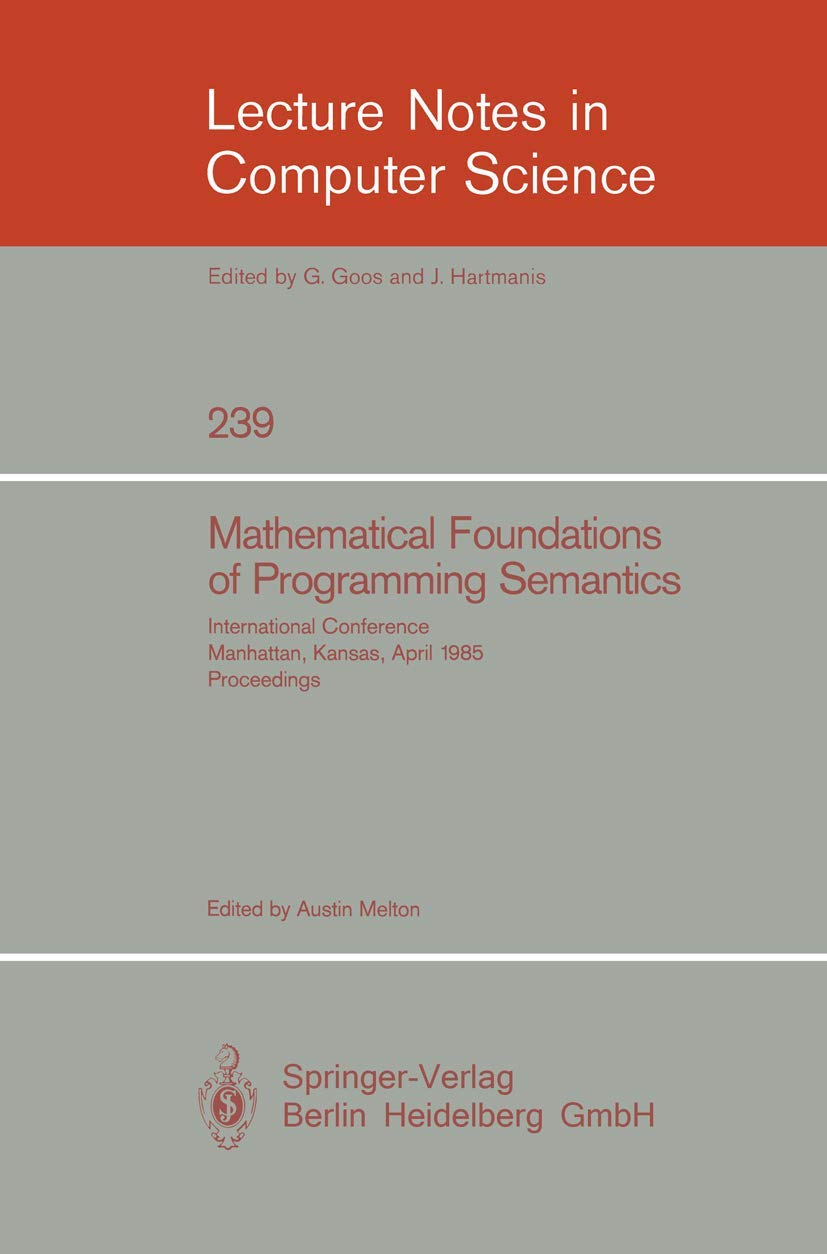
Mathematical Foundation of Programming Semantics: International Conference Proceedings
Inclusive of all applicable taxes. FREE shipping on all orders.
Available Offers
- 🚚Free Delivery — Free shipping on all orders
- 💵Cash on Delivery — Pay when your order arrives
- ↩️15-Day Easy Returns — Hassle-free return policy
- 🔒Cash on Delivery — Pay safely when your order arrives
Check Delivery
Product Description
Introduction
In the ever-evolving landscape of computer science, the theoretical underpinnings of programming languages remain a cornerstone of innovation and understanding. Mathematical Foundation of Programming Semantics captures the essence of a pivotal international conference held in Manhattan, Kansas, in April 1985. This hardcover volume, edited by Austin Melton and published by Springer, offers a deep dive into the formal structures that define how programs are interpreted and executed. For Indian students, researchers, and professionals seeking to strengthen their grasp of theoretical computer science, this book serves as a timeless reference, bridging abstract mathematics with practical programming concepts.
Book Overview
This collection of proceedings brings together groundbreaking papers presented at the 1985 conference, focusing on the mathematical models that underpin programming language semantics. The book explores topics such as denotational semantics, domain theory, and algebraic approaches to program specification. It is not a beginner’s guide but rather an advanced resource for those already familiar with programming and discrete mathematics. The hardcover edition ensures durability, making it a valuable addition to any academic library or personal collection. Published in English, this volume is accessible to Indian readers who are comfortable with technical English and mathematical notation.
Key Highlights
- Original Conference Papers: Contains peer-reviewed research from leading international scholars in programming semantics.
- Hardcover Format: A robust physical book designed for long-term use in academic and research settings.
- Historical Significance: Captures the state of the art in 1985, offering insights into foundational theories that still influence modern programming languages.
- Comprehensive Coverage: Addresses both theoretical frameworks and their applications in program verification and analysis.
Inside the Book
The book is structured as a series of research papers, each presenting a unique perspective on mathematical semantics. Readers will encounter detailed discussions on continuous lattices, fixed-point theorems, and categorical models of computation. The content is mathematically rigorous, with proofs and formal definitions that challenge the reader to think deeply about the nature of programming. The volume also includes discussions on the relationship between semantics and program correctness, making it relevant for those interested in formal methods and software reliability.
Key Topics
- Denotational semantics and domain theory
- Algebraic specification of abstract data types
- Fixed-point semantics and recursion
- Category theory in computer science
- Program verification and logical frameworks
- Semantic models for concurrent and distributed systems
Reader Benefits
By engaging with this book, readers will develop a deeper appreciation for the mathematical elegance behind programming languages. It helps in understanding why certain language constructs work the way they do and how formal semantics can be used to prove program properties. For Indian students pursuing advanced degrees in computer science, this book provides a solid foundation for research in programming languages, compilers, and formal verification. It also serves as a reference for educators designing courses on semantics or theory of computation.
Learning Outcomes
- Gain proficiency in key mathematical concepts used in programming semantics, such as domains and fixed points.
- Understand how to apply denotational semantics to model programming constructs.
- Learn to read and critique original research papers in theoretical computer science.
- Develop skills to reason about program correctness using formal methods.
- Appreciate the historical development of semantic theories and their impact on modern languages.
Who Should Read
This book is ideal for postgraduate students in computer science, particularly those specializing in programming languages, theory of computation, or software engineering. Researchers and academics working on formal methods, program verification, or mathematical logic will find it a valuable resource. It is also suitable for advanced undergraduates with a strong background in discrete mathematics and programming. Professionals in the Indian tech industry who wish to deepen their theoretical knowledge will benefit from the rigorous content, though it is not intended for casual reading.
About the Author
Austin Melton is a respected academic in the field of computer science, known for his contributions to programming semantics and formal methods. His editorial work on this proceedings volume reflects a commitment to advancing the theoretical foundations of computing. Melton’s expertise ensures that the selected papers represent high-quality research, making this book a trusted reference for scholars worldwide.
About the Publisher
Springer is a renowned international publisher of scientific and technical literature, with a long history of producing authoritative books in mathematics, computer science, and engineering. Their commitment to rigorous peer review and high editorial standards ensures that every publication, including this one, meets the needs of the global research community. For Indian readers, Springer books are often found in university libraries and are considered essential for advanced study.
Conclusion
Mathematical Foundation of Programming Semantics is more than a historical artifact; it is a living document that continues to inspire new generations of computer scientists. Whether you are a student in Bangalore, a researcher in Delhi, or a professor in Mumbai, this book offers a window into the intellectual rigor that shapes modern computing. Add this hardcover volume to your library and explore the mathematical beauty that underlies every program you write.
Quick Summary
Mathematical Foundation of Programming Semantics is a collection of proceedings from the 1985 International Conference held in Manhattan, Kansas, edited by Austin Melton and published by Springer. This hardcover volume brings together pioneering research on the mathematical underpinnings of programming language semantics, including denotational, operational, and algebraic approaches. Readers will explore domain theory, fixed point semantics, lambda calculus, type theory, and program verification techniques. The book is intended for computer science researchers, graduate students, and academics focused on theoretical computer science and formal methods. It provides a deep dive into the logical and mathematical structures that define how programs are interpreted and verified. By purchasing from Bookshops.in, Indian readers gain access to a durable, imported academic reference that supports advanced study and research. This volume is a timeless resource for anyone seeking to understand the formal foundations of computation and programming languages.
Book Highlights
Book Specifications
| ISBN-13 | 9783540168164 |
| ISBN-10 | 3540168168 |
| Publisher | Springer-Verlag Berlin and Heidelberg GmbH & Co. K |
| Language | English |
| Dimensions | 15.49 x 2.34 x 23.5 cm |
| Weight | 567 g |
| Country | India |
| Category | Programming & Software Development › Introduction to Programming |
| Genre | Nonfiction |
| Original Language | English |
Frequently Asked Questions
What is this book about?
Who edited this book?
What topics are covered?
Is this book suitable for beginners?
What year was the conference held?
Is this a textbook or a research volume?
What is the ISBN of this book?
What language is the book in?
What is the price in India?
Is this book available in paperback?
Can I use this book for my PhD research?
Does it include recent developments?
Where can I buy this in India?
Readers Also Search For
Customers Also Bought

Programming
Algorithmische Sprache Und Programmentwicklung | by H. Partsch | F. L. Bauer | P. Pepper | Springer | by H. Partsch | F. L. Bauer | P. Pepper | Springer | by H. Partsch | F. L. Bauer | P. Pepper | Springer | by H. Partsch | F. L. Bauer | P. Pepper | Springer | by H. Partsch | F. L. Bauer | P. Pepper | Springer | by H. Partsch | F. L. Bauer | P. Pepper | Springer | by H. Partsch | F. L. Bauer | P. Pepper | Springer | by H. Partsch | F. L. Bauer | P. Pepper | Springer | by H. Partsch | F. L. Bauer
Programming
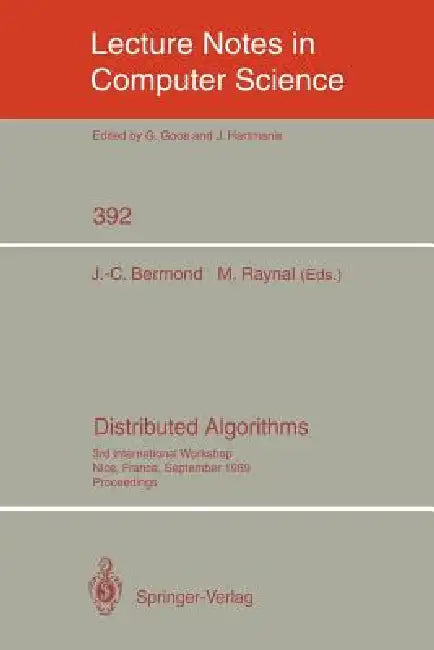
Distributed Algorithms | by Jean-Claude Bermond | Michel Raynal | Springer | by Jean-Claude Bermond | Michel Raynal | Springer | by Jean-Claude Bermond | Michel Raynal | Springer | by Jean-Claude Bermond | Michel Raynal | Springer | by Jean-Claude Bermond | Michel Raynal | Springer | by Jean-Claude Bermond | Michel Raynal | Springer | by Jean-Claude Bermond | Michel Raynal | Springer | by Jean-Claude Bermond | Michel Raynal | Springer | by Jean-Claude Bermond | Michel Raynal | Springer | by Jean
Programming
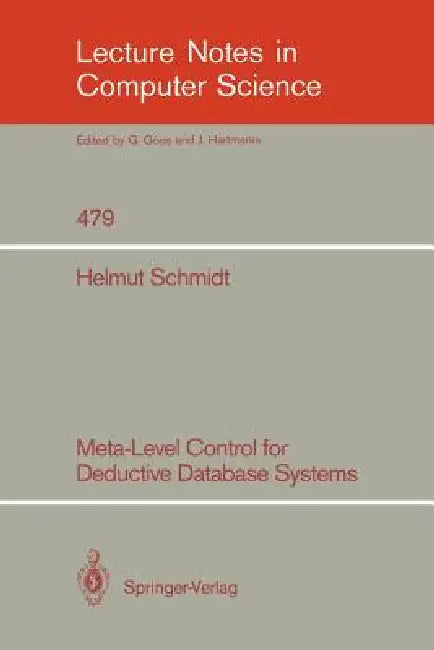
Meta-Level Control for Deductive Database Systems | by Helmut Schmidt | Springer | by Helmut Schmidt | Springer | by Helmut Schmidt | Springer | by Helmut Schmidt | Springer | by Helmut Schmidt | Springer | by Helmut Schmidt | Springer | by Helmut Schmidt | Springer | by Helmut Schmidt | Springer | by Helmut Schmidt | Springer | by Helmut Schmidt | Springer | by Helmut Schmidt | Springer | by Helmut Schmidt | Springer | by Helmut Schmidt | Springer | by Helmut Schmidt | Springer | by Helmut Schm
Programming
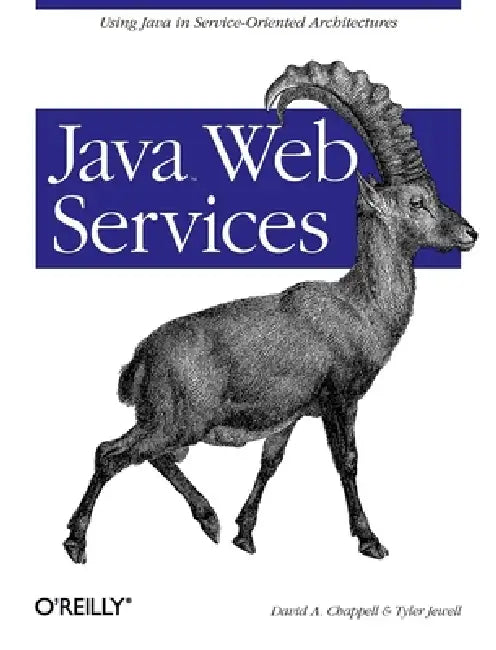
Java Web Services | by David A. Chappell | Tyler Jewell | O'Reilly Media | by David A. Chappell | Tyler Jewell | O'Reilly Media | by David A. Chappell | Tyler Jewell | O'Reilly Media | by David A. Chappell | Tyler Jewell | O'Reilly Media | by David A. Chappell | Tyler Jewell | O'Reilly Media | by David A. Chappell | Tyler Jewell | O'Reilly Media | by David A. Chappell | Tyler Jewell | O'Reilly Media | by David A. Chappell | Tyler Jewell | O'Reilly Media | by David A. Chappell | Tyler Jewell | O'
Programming
Database in Depth | by Chris J. Date | O'Reilly Media | by Chris J. Date | O'Reilly Media | by Chris J. Date | O'Reilly Media | by Chris J. Date | O'Reilly Media | by Chris J. Date | O'Reilly Media | by Chris J. Date | O'Reilly Media | by Chris J. Date | O'Reilly Media | by Chris J. Date | O'Reilly Media | by Chris J. Date | O'Reilly Media | by Chris J. Date | O'Reilly Media | by Chris J. Date | O'Reilly Media | by Chris J. Date | O'Reilly Media | by Chris J. Date | O'Reilly Media | by Chris J.

Programming
Integration of AI and OR Techniques in Constraint Programming for Combinatorial Optimization Problem | by Nicolas Beldiceanu | Narendra Jussien | Eric Pinson | Springer | by Nicolas Beldiceanu | Narendra Jussien | Eric Pinson | Springer | by Nicolas Beldiceanu | Narendra Jussien | Eric Pinson | Springer | by Nicolas Beldiceanu | Narendra Jussien | Eric Pinson | Springer | by Nicolas Beldiceanu | Narendra Jussien | Eric Pinson | Springer | by Nicolas Beldiceanu | Narendra Jussien | Eric Pinson |
Related Products
View All
Computers & Internet
Modern Full-Stack React Projects by Daniel Bugl
Computers & Internet
Mootools 1.2 Beginner's Guide (English, Jacob Gube)
Computers & Internet
Contemporary Methods for Speech Parameterization (Springerbriefs in Electrical and Computer Engineering / Springerbriefs in Speech Technology)

Computers & Internet
Information Technology and Lawyers | by Arno R. Lodder | Anja Oskamp | Springer | by Arno R. Lodder | Anja Oskamp | Springer | by Arno R. Lodder | Anja Oskamp | Springer | by Arno R. Lodder | Anja Oskamp | Springer | by Arno R. Lodder | Anja Oskamp | Springer | by Arno R. Lodder | Anja Oskamp | Springer | by Arno R. Lodder | Anja Oskamp | Springer | by Arno R. Lodder | Anja Oskamp | Springer | by Arno R. Lodder | Anja Oskamp | Springer | by Arno R. Lodder | Anja Oskamp | Springer | by Arno R. Lo

Computers & Internet
Digital Analysis of Remotely Sensed Imagery | by Jay Gao | McGraw-Hill Companies | by Jay Gao | McGraw-Hill Companies | by Jay Gao | McGraw-Hill Companies | by Jay Gao | McGraw-Hill Companies | by Jay Gao | McGraw-Hill Companies | by Jay Gao | McGraw-Hill Companies | by Jay Gao | McGraw-Hill Companies | by Jay Gao | McGraw-Hill Companies | by Jay Gao | McGraw-Hill Companies | by Jay Gao | McGraw-Hill Companies | by Jay Gao | McGraw-Hill Companies | by Jay Gao | McGraw-Hill Companies | by Jay Gao
Computers & Internet