
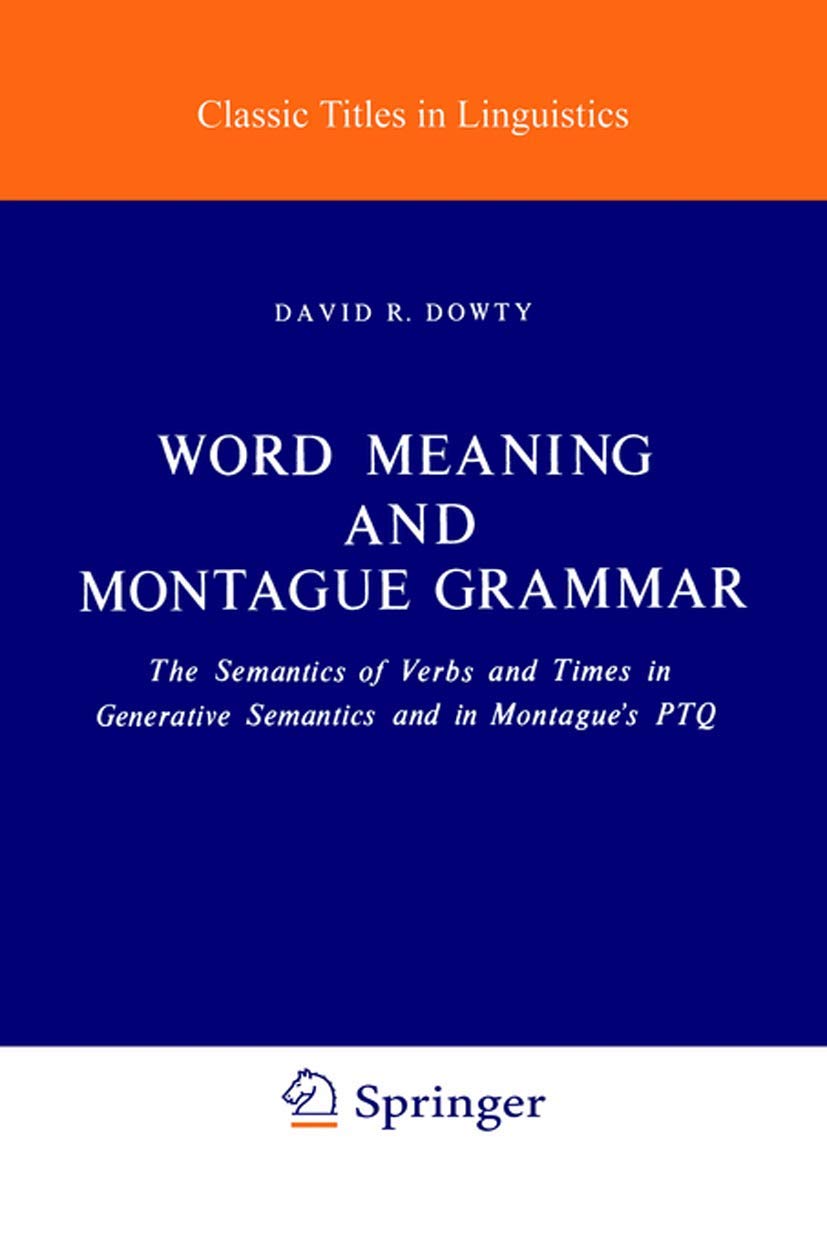
Word Meaning and Montague Grammar: The Semantics of Verbs and Times in Generative Semantics and Montague's PTQ by D. R.
Inclusive of all applicable taxes. FREE shipping on all orders.
Available Offers
- 🚚Free Delivery — Free shipping on all orders
- 💵Cash on Delivery — Pay when your order arrives
- ↩️15-Day Easy Returns — Hassle-free return policy
- 🔒Cash on Delivery — Pay safely when your order arrives
Check Delivery
Product Description
Introduction
In the ever-evolving landscape of linguistic theory, few works have managed to bridge the gap between generative semantics and formal logic as elegantly as D. R. Dowty's Word Meaning and Montague Grammar: The Semantics of Verbs and Times in Generative Semantics and in Montague's PTQ. Published by Springer, this hardcover volume is an essential resource for linguists, philosophers, and advanced students who seek a deep, rigorous understanding of how word meanings, particularly verbs and temporal expressions, can be analyzed within a model-theoretic framework. For Indian readers and scholars engaged in the study of language, syntax, and semantics, this book offers a unique synthesis that enriches both theoretical and applied linguistic research.
Book Overview
This book presents a pioneering program of research that combines the decompositional insights of generative semantics with the formal precision of Montague grammar. Dowty argues that while generative semantics successfully identifies primitive components of word meaning, it lacks a complete account of what meanings truly are. By integrating Montague's truth-conditional semantics, the author provides a robust model-theoretic foundation that not only completes these analyses but also opens new avenues for understanding the semantics of verbs, tense, and aspect. The work is a landmark in lexical semantics and remains highly relevant for contemporary studies in natural language processing and cognitive science.
Key Highlights
- Pioneering Synthesis: Bridges the gap between generative semantics and Montague's PTQ (Proper Treatment of Quantification) framework.
- Focus on Verbs and Times: Offers an in-depth analysis of verb semantics, including tense, aspect, and temporal reference.
- Model-Theoretic Approach: Employs formal models to define truth and denotation, making semantic analysis complete and rigorous.
- Original Research: Presents novel insights into the decomposition of word meanings into primitive semantic elements.
Inside the Book
The volume systematically explores how word meanings can be represented using formal logic and set theory. Dowty begins by critiquing the limitations of generative semantics, then introduces Montague's intensional logic and its application to natural language. The core chapters delve into the semantics of verbs, examining aspectual classes, temporal adverbials, and the interaction between tense and quantification. Each chapter is accompanied by formal definitions, proofs, and illustrative examples that make complex concepts accessible to dedicated readers. The book also includes extensive appendices and a comprehensive bibliography for further study.
Key Topics
- Generative Semantics vs. Montague Grammar: A critical comparison of methodologies.
- Decomposition of Verb Meanings: Analysis of state, activity, accomplishment, and achievement verbs.
- Temporal Semantics: Treatment of tense, aspect, and time adverbials.
- Model-Theoretic Semantics: Truth conditions and denotation in formal models.
- Quantification and Scope: Interaction of quantifiers with temporal expressions.
Reader Benefits
Readers will gain a profound appreciation for the formal underpinnings of meaning in natural language. The book equips linguists with the tools to analyze semantic data with mathematical precision, while philosophers will find a clear exposition of how model theory applies to everyday language. For researchers in computational linguistics, the formalisms presented are directly applicable to developing semantically aware algorithms. The synthesis of two major schools of thought also provides a balanced perspective that encourages critical thinking about semantic theory.
Learning Outcomes
- Understand the core principles of generative semantics and Montague grammar.
- Learn to decompose verb meanings into primitive semantic components.
- Apply model-theoretic methods to analyze tense and aspect.
- Evaluate the strengths and limitations of different semantic frameworks.
- Develop skills in formal semantic analysis using intensional logic.
Who Should Read
This book is ideal for postgraduate students and researchers in linguistics, particularly those specializing in semantics, syntax, and formal linguistics. It is also highly relevant for philosophers of language, cognitive scientists, and anyone engaged in natural language processing or computational semantics. Indian students pursuing advanced degrees in linguistics or philosophy will find this work a valuable addition to their academic library, offering a rigorous yet accessible entry into formal semantics.
About the Author
D. R. Dowty is a distinguished linguist known for his contributions to formal semantics and lexical semantics. His work has been instrumental in shaping modern approaches to verb meaning and temporal logic. With a career spanning decades, Dowty has taught at leading universities and published extensively on the intersection of syntax, semantics, and logic. His ability to synthesize complex theories into coherent frameworks has made him a respected figure in the field.
About the Publisher
Springer is a globally renowned academic publisher with a strong reputation for producing high-quality scholarly books in the sciences, humanities, and social sciences. Their linguistics catalogue includes seminal works that have shaped the discipline. This hardcover edition reflects Springer's commitment to durable, well-produced volumes that serve as lasting resources for students and researchers alike.
Conclusion
Word Meaning and Montague Grammar remains a cornerstone text for anyone serious about understanding the formal semantics of natural language. Dowty's synthesis of generative semantics and Montague's PTQ is not only historically significant but also practically valuable for contemporary linguistic research. Whether you are a student in India or a seasoned scholar, this book will deepen your grasp of how words—especially verbs—carry meaning through time and context. Order your copy from Bookshops.in today and add this essential work to your collection.
Quick Summary
Word Meaning and Montague Grammar by D. R. Dowty is a seminal work that bridges two influential traditions in linguistic semantics: generative semantics and Montague's formal framework (PTQ). The book focuses on the semantics of verbs and temporal expressions, showing how word meanings can be decomposed into primitive elements while maintaining rigorous truth-conditional semantics. Written for advanced students and researchers, it provides a detailed synthesis that is both theoretically rich and methodologically precise. Readers will gain a deep understanding of how to formalize natural language meaning using model-theoretic tools. This Springer hardcover edition is ideal for Indian linguistics departments and philosophy of language courses. By purchasing from Bookshops.in, you get a genuine imported copy with trusted service.
Book Highlights
Book Specifications
| ISBN-13 | 9789027710086 |
| ISBN-10 | 9027710082 |
| Publisher | Kluwer Academic Pub |
| Language | English |
| Dimensions | 15.6 x 2.54 x 23.39 cm |
| Weight | 794 g |
| Country | India |
| Category | Literature › Literary Theory |
| Genre | Academic |
| Reading Age | Adult |
| Original Language | English |
Frequently Asked Questions
What is Word Meaning and Montague Grammar about?
Who is the author of this book?
Is this book suitable for beginners in linguistics?
What is Montague grammar?
Does this book cover tense and aspect?
Is this a textbook or a research monograph?
What is the ISBN of this edition?
What language is the book in?
Is this book available in hardcover?
Can I use this book for a PhD seminar?
Does the book include exercises?
How does this book relate to generative semantics?
Why should I buy from Bookshops.in?
Readers Also Search For
Customers Also Bought

Journalism
Rock Critic Law (English, Michael Azerrad)
Journalism
What Is Sustainable Journalism?: Integrating the Environmental, Social, and Economic Challenges of Journalism

Journalism
The Power of Sports: Media and Spectacle in American Culture: 23 (Postmillennial Pop)
Journalism
Research Guide to People's Daily Editorials, 1949-1975
Vocabulary
Prince Edward Island Sayings (Heritage)
Vocabulary
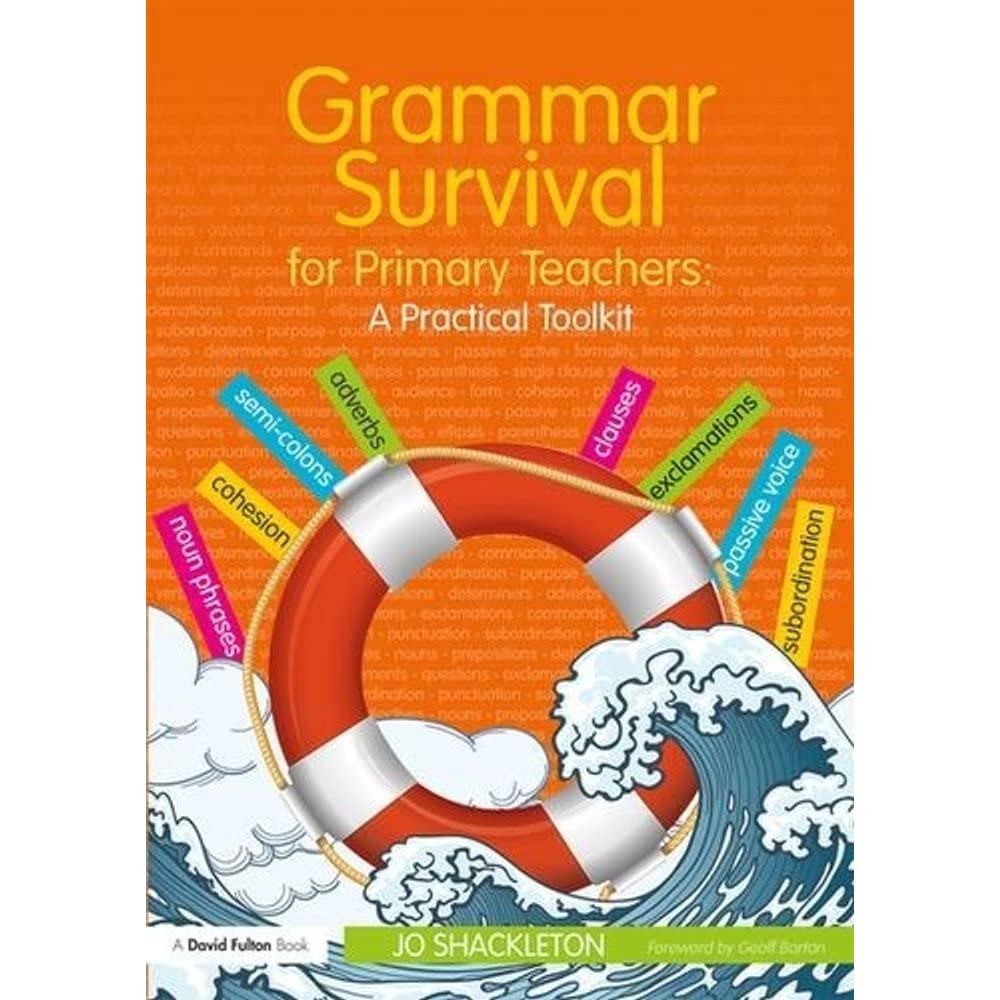
Grammar Survival for Primary Teachers: A Practical Toolkit by Jo Shackleton
Related Products
View All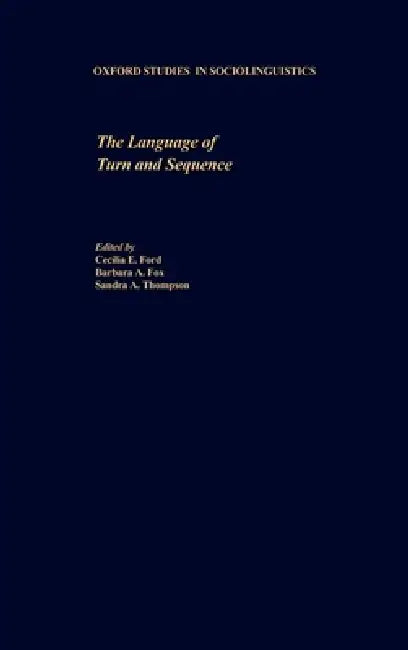
Language, Linguistics & Writing
The Language of Turn and Sequence | by Cecilia E. Ford | Barbara A. Fox | Sandra A. Thompson | Oxford University Press | by Cecilia E. Ford | Barbara A. Fox | Sandra A. Thompson | Oxford University Press | by Cecilia E. Ford | Barbara A. Fox | Sandra A. Thompson | Oxford University Press | by Cecilia E. Ford | Barbara A. Fox | Sandra A. Thompson | Oxford University Press | by Cecilia E. Ford | Barbara A. Fox | Sandra A. Thompson | Oxford University Press | by Cecilia E. Ford | Barbara A. Fox | S

Language, Linguistics & Writing
Handbook of Color Psychology by Andrew J. Elliot
Language, Linguistics & Writing
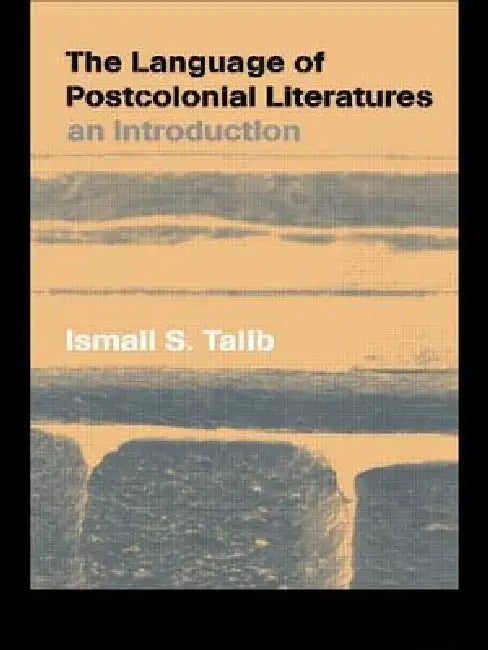
The Language of Postcolonial Literatures (English, Ismail S. Talib)
Language, Linguistics & Writing
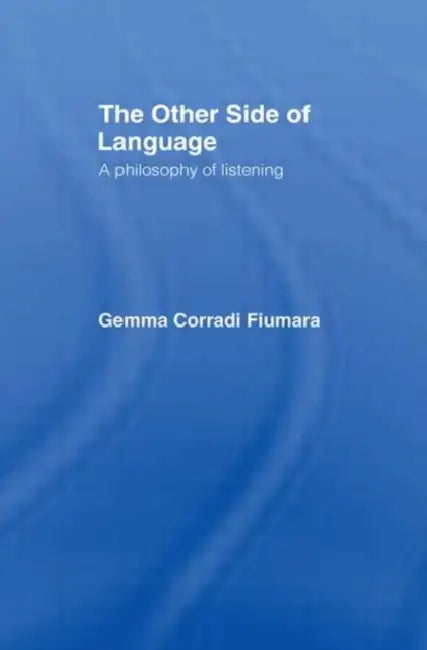
The Other Side of Language | by Gemma Corradi Fiumara | Routledge | by Gemma Corradi Fiumara | Routledge | by Gemma Corradi Fiumara | Routledge | by Gemma Corradi Fiumara | Routledge | by Gemma Corradi Fiumara | Routledge | by Gemma Corradi Fiumara | Routledge | by Gemma Corradi Fiumara | Routledge | by Gemma Corradi Fiumara | Routledge | by Gemma Corradi Fiumara | Routledge | by Gemma Corradi Fiumara | Routledge | by Gemma Corradi Fiumara | Routledge | by Gemma Corradi Fiumara | Routledge | by
Language, Linguistics & Writing
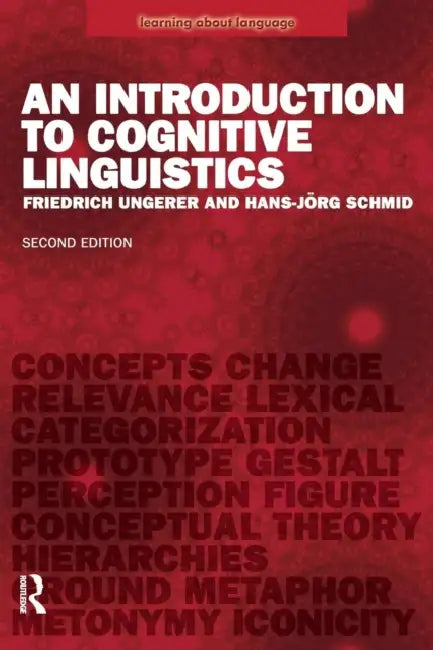
An Introduction to Cognitive Linguistics | by Friedrich Ungerer | Hans-Jorg Schmid | Routledge | by Friedrich Ungerer | Hans-Jorg Schmid | Routledge | by Friedrich Ungerer | Hans-Jorg Schmid | Routledge | by Friedrich Ungerer | Hans-Jorg Schmid | Routledge | by Friedrich Ungerer | Hans-Jorg Schmid | Routledge | by Friedrich Ungerer | Hans-Jorg Schmid | Routledge | by Friedrich Ungerer | Hans-Jorg Schmid | Routledge | by Friedrich Ungerer | Hans-Jorg Schmid | Routledge | by Friedrich Ungerer | Ha
Language, Linguistics & Writing