
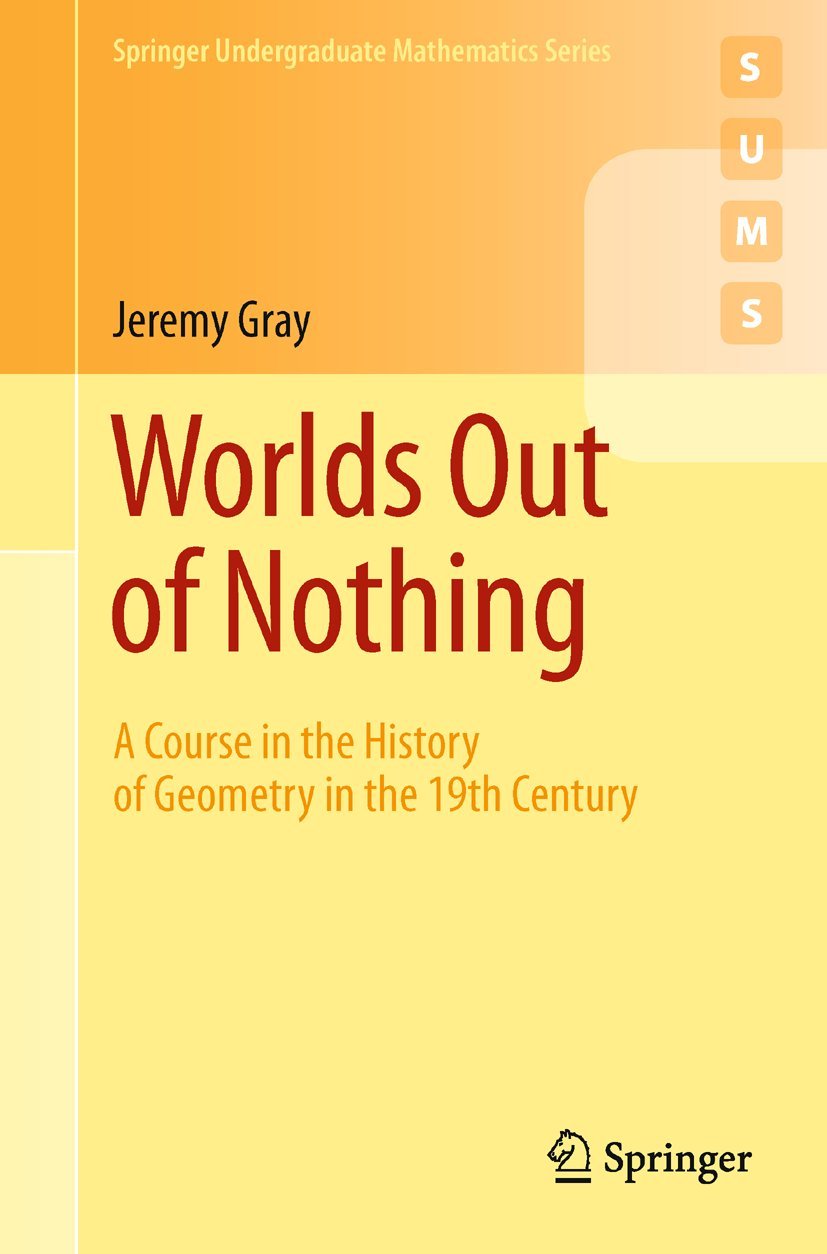
Worlds Out of Nothing: A Course in the History of Geometry in the 19th Century by Jeremy Gray – A Comprehensive Study of
Inclusive of all applicable taxes. FREE shipping on all orders.
Available Offers
- 🚚Free Delivery — Free shipping on all orders
- 💵Cash on Delivery — Pay when your order arrives
- ↩️15-Day Easy Returns — Hassle-free return policy
- 🔒Cash on Delivery — Pay safely when your order arrives
Check Delivery
Product Description
Introduction
Geometry is not merely a collection of shapes and theorems; it is a living, evolving narrative of human thought. In Worlds Out of Nothing: A Course in the History of Geometry in the 19th Century, Jeremy Gray invites readers on an intellectual journey through one of the most transformative periods in mathematical history. This hardcover volume, published by Springer, offers a rigorous yet accessible exploration of how geometry expanded beyond Euclidean boundaries to create entirely new mathematical worlds. For Indian students, researchers, and educators, this book serves as a definitive guide to understanding the conceptual revolutions that shaped modern mathematics.
Book Overview
Structured as a comprehensive course, this book delves into the dramatic evolution of geometry during the 19th century. It begins with projective geometry and the fascinating concept of duality, moves through the emergence of non-Euclidean geometries, and culminates in the profound insights of Riemann and Poincaré. Jeremy Gray masterfully weaves historical context with mathematical exposition, making complex ideas accessible without sacrificing depth. The book also includes practical guidance on writing and evaluating historical mathematical work, making it an invaluable resource for both self-study and classroom use.
Key Highlights
- First of its kind: The only course-based text focusing exclusively on 19th-century geometry history.
- Rigorous yet readable: Balances historical narrative with mathematical precision.
- Practical pedagogy: Includes sample questions, essay-writing advice, and instructor comments.
- Comprehensive coverage: From projective geometry to non-Euclidean geometry and differential geometry.
- Authoritative source: Based on the latest historical research, ensuring accuracy and relevance.
Inside the Book
The book is divided into three main parts. The first part covers projective geometry, emphasizing the principle of duality and its implications. The second part examines non-Euclidean geometry, tracing its development from early skepticism to rigorous acceptance, with a special focus on Beltrami's contributions. The final part explores the rise of projective geometry as a dominant field and Poincaré's philosophical insights into non-Euclidean geometry. Three dedicated chapters teach students how to write and assess historical mathematical work, complete with sample questions and evaluation criteria.
Key Topics
- Projective geometry and the concept of duality
- Non-Euclidean geometry: hyperbolic and elliptic models
- Plücker's equations and singular points of algebraic curves
- Riemann's revolutionary work on differential geometry
- Beltrami's proof of the consistency of non-Euclidean geometry
- Poincaré's geometric interpretations and their philosophical significance
- Writing and evaluating essays in the history of mathematics
Reader Benefits
This book empowers readers to see geometry not as a static subject but as a dynamic field shaped by human creativity and logical rigor. By understanding the historical struggles and breakthroughs, students gain deeper insight into modern mathematical concepts. The practical chapters on writing and assessment are particularly beneficial for Indian students preparing for competitive examinations or pursuing research in mathematics. The clear structure and engaging prose make it suitable for both independent learners and classroom settings.
Learning Outcomes
- Understand the historical development of projective and non-Euclidean geometries.
- Analyze the role of duality and singular points in algebraic geometry.
- Explain Riemann's contributions to differential geometry and their impact.
- Critically evaluate the philosophical implications of non-Euclidean geometry.
- Develop skills in writing and assessing historical mathematical arguments.
- Connect 19th-century geometric innovations to modern mathematical thought.
Who Should Read
This book is ideal for undergraduate and postgraduate students of mathematics, especially those interested in the history of science. It is equally valuable for mathematics educators seeking fresh perspectives, researchers in geometry or history of mathematics, and curious readers who want to understand how geometry evolved from Euclid to Einstein. Indian students preparing for NET, GATE, or other competitive exams will find the historical context and problem-solving insights particularly useful.
About the Author
Jeremy Gray is a renowned historian of mathematics and a professor at the Open University, UK. He has authored numerous influential works on the history of geometry and mathematics, and his research focuses on the 19th and 20th centuries. His ability to combine technical mathematical expertise with engaging historical narrative makes him a trusted guide through the complex landscape of geometric evolution.
About the Publisher
Springer is a globally respected academic publisher known for its high-quality scientific, technical, and mathematical literature. With a legacy of excellence spanning over 180 years, Springer ensures that each volume meets rigorous scholarly standards. This hardcover edition is built to last, featuring clear typesetting and durable binding, making it a worthy addition to any personal or institutional library.
Conclusion
Worlds Out of Nothing is more than a history book; it is an invitation to witness the birth of new mathematical universes. Jeremy Gray's masterful storytelling and scholarly precision make this volume an essential companion for anyone serious about understanding geometry's golden age. Whether you are a student, teacher, or enthusiast, this book will transform the way you see shapes, spaces, and the very fabric of mathematical reality. Order your copy today from Bookshops.in and embark on a journey through the geometry that reshaped our world.
Quick Summary
Worlds Out of Nothing: A Course in the History of Geometry in the 19th Century by Jeremy Gray is a meticulously researched academic work that traces the dramatic transformation of geometry during the 1800s. The book is structured as a course, making it ideal for mathematics students, historians of science, and self-learners. It begins with projective geometry and the principle of duality, then moves into non-Euclidean geometry, covering the contributions of Riemann, Beltrami, and Poincaré. Readers will learn about Plücker's equations for algebraic curves and how they resolved paradoxes in duality theory. The final sections explore the rise of projective geometry and the philosophical implications of non-Euclidean spaces. Written in an accessible yet rigorous style, this book bridges history and mathematics. By purchasing from Bookshops.in, Indian readers receive a genuine hardcover edition with reliable service and fast delivery across India.
Book Highlights
Book Specifications
| ISBN-13 | 9780857290595 |
| ISBN-10 | 0857290592 |
| Publisher | Springer |
| Language | English |
| Dimensions | 15.49 x 2.36 x 23.5 cm |
| Weight | 590 g |
| Country | India |
| Category | Mathematics › Geometry |
| Genre | Non-fiction |
| Original Language | English |
Frequently Asked Questions
What is the main focus of Worlds Out of Nothing?
Who is the author of this book?
Is this book suitable for Indian students?
Does this book require prior knowledge of geometry?
What topics are covered in the first part of the book?
Does the book include Riemann's work?
What is the role of Beltrami in the book?
Are there any diagrams or illustrations?
Is this a textbook or a narrative history?
Who is the publisher?
Can I use this book for a university course?
Does the book discuss Poincaré's philosophy?
Why should I buy from Bookshops.in?
Readers Also Search For
Customers Also Bought
Mathematics
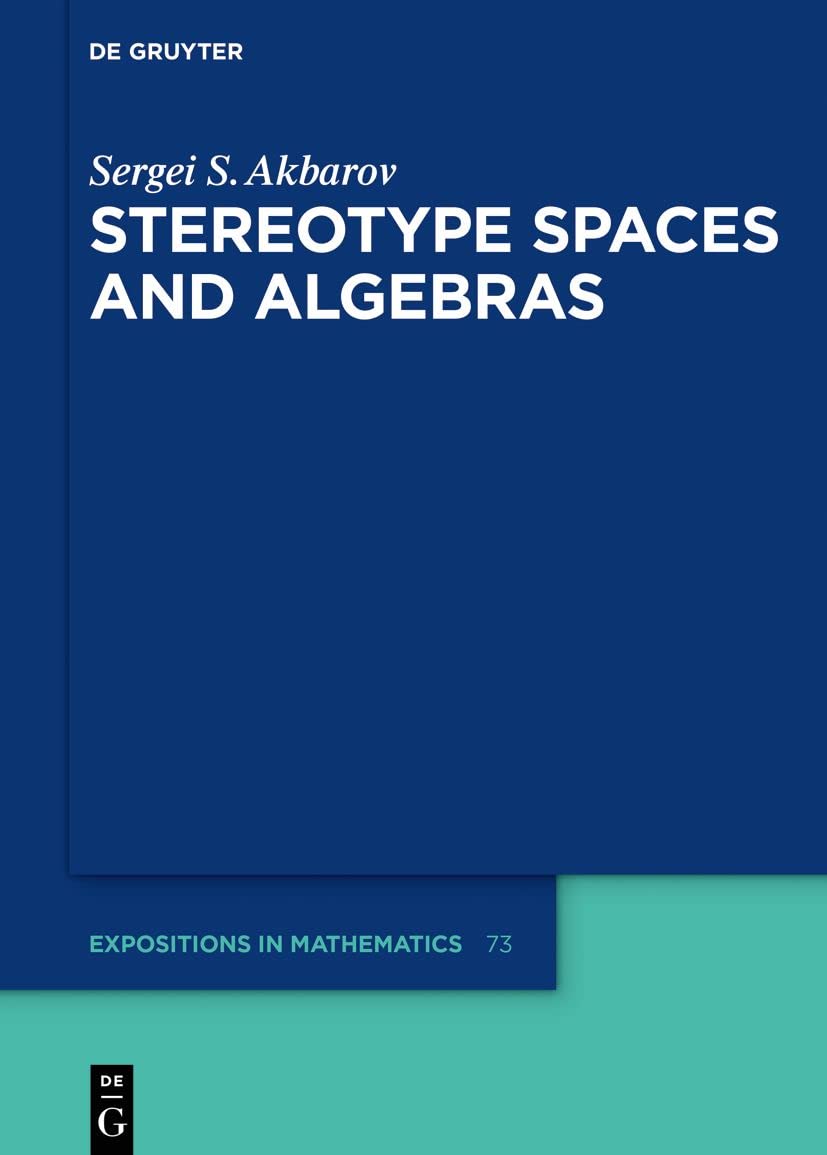
Stereotype Spaces and Algebras: 73 (De Gruyter Expositions in Mathematics, 73)
Mathematics
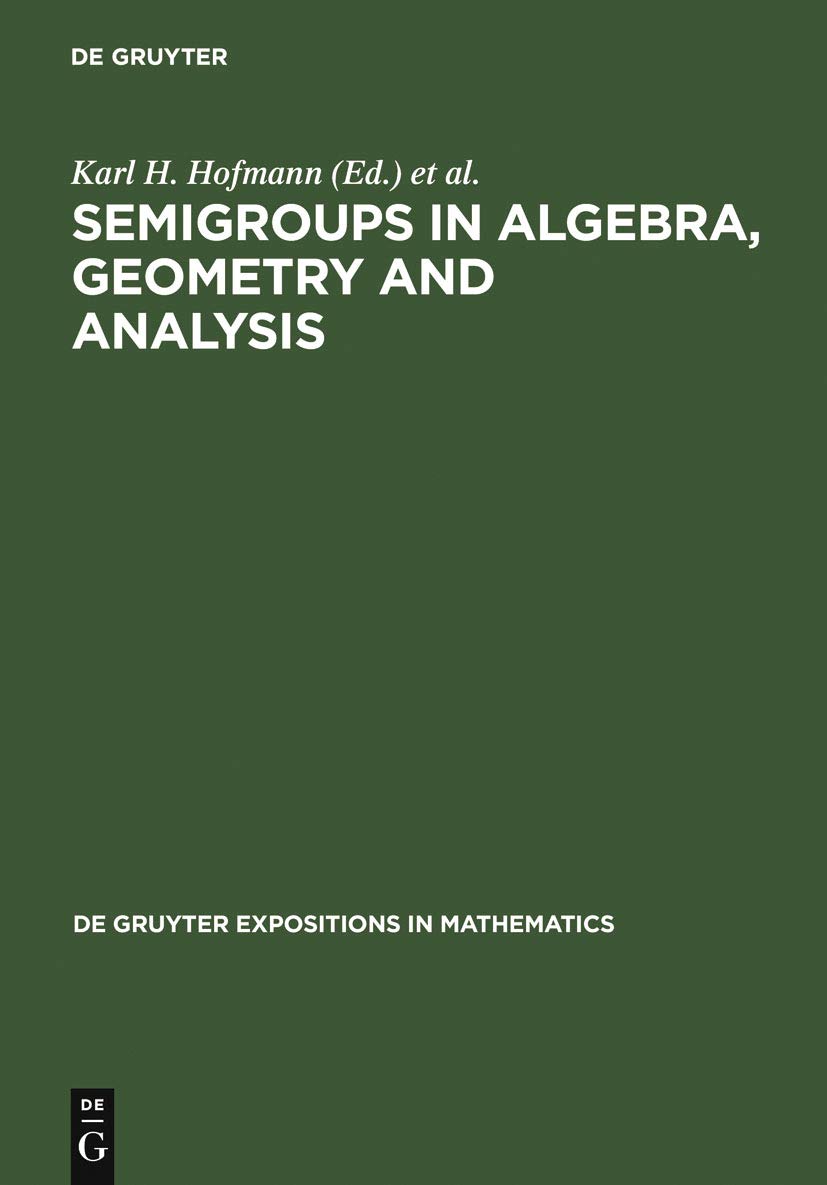
Semigroups in Algebra, Geometry and Analysis: 20 (De Gruyter Expositions in Mathematics, 20)
Mathematics
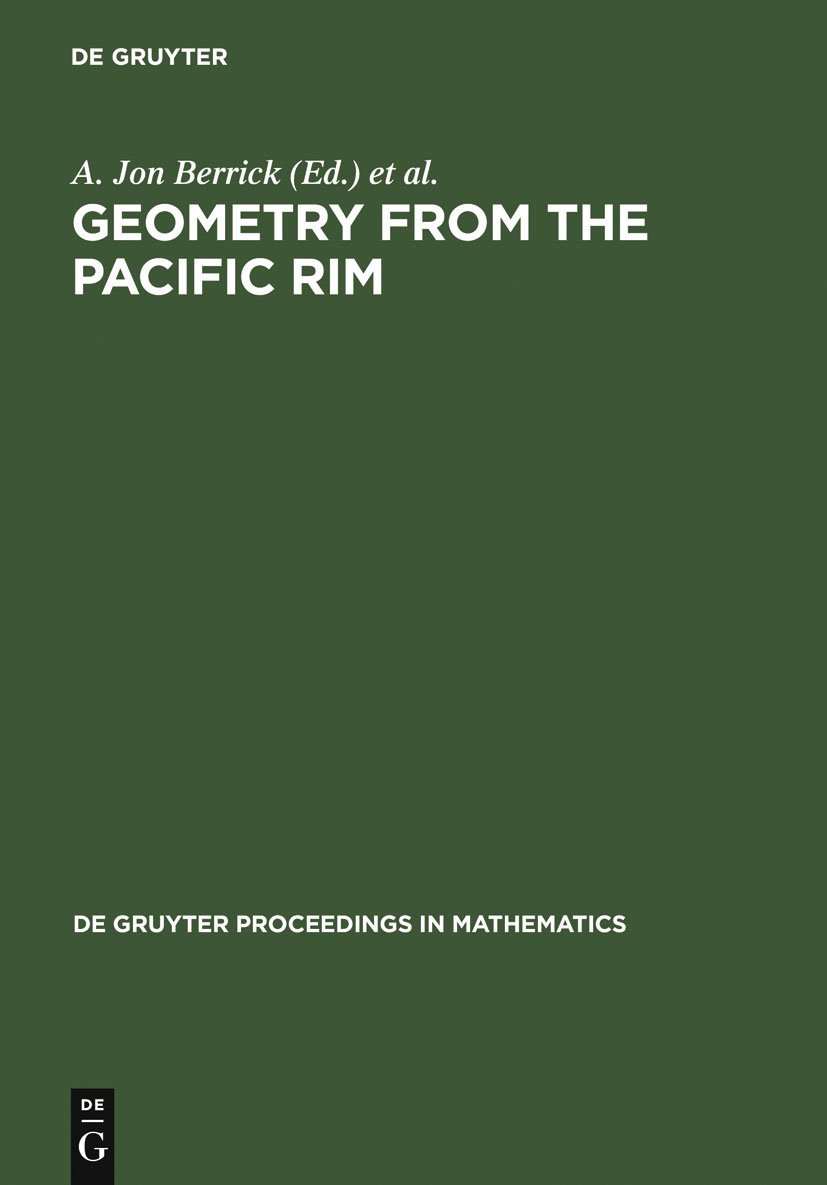
Geometry from the Pacific Rim: Proceedings of the Pacific Rim Geometry Conference held at National University of Singapore, Republic of Singapore, ... 1994 (De Gruyter Proceedings in Mathematics)
Mathematics
First International Tainan-Moscow Algebra Workshop: Proceedings of the International Conference held at National Cheng Kung University Tainan, Taiwan, ... 1994 (De Gruyter Proceedings in Mathematics)
Mathematics
Differential Geometry - Proceedings of the VIII International Colloquium (English, Jesus A. Alvarez Lopez | Eduardo Garcia-Rio)
Mathematics
Mathematical Theory of Optimal Processes (Classics of Soviet Mathematics)
Related Products
View AllMathematics
Mathematical Theory of Optimal Processes (Classics of Soviet Mathematics)
Mathematics
Stereotype Spaces and Algebras: 73 (De Gruyter Expositions in Mathematics, 73)
Mathematics
Semigroups in Algebra, Geometry and Analysis: 20 (De Gruyter Expositions in Mathematics, 20)
Mathematics
Geometry from the Pacific Rim: Proceedings of the Pacific Rim Geometry Conference held at National University of Singapore, Republic of Singapore, ... 1994 (De Gruyter Proceedings in Mathematics)
Mathematics
First International Tainan-Moscow Algebra Workshop: Proceedings of the International Conference held at National Cheng Kung University Tainan, Taiwan, ... 1994 (De Gruyter Proceedings in Mathematics)
Mathematics