
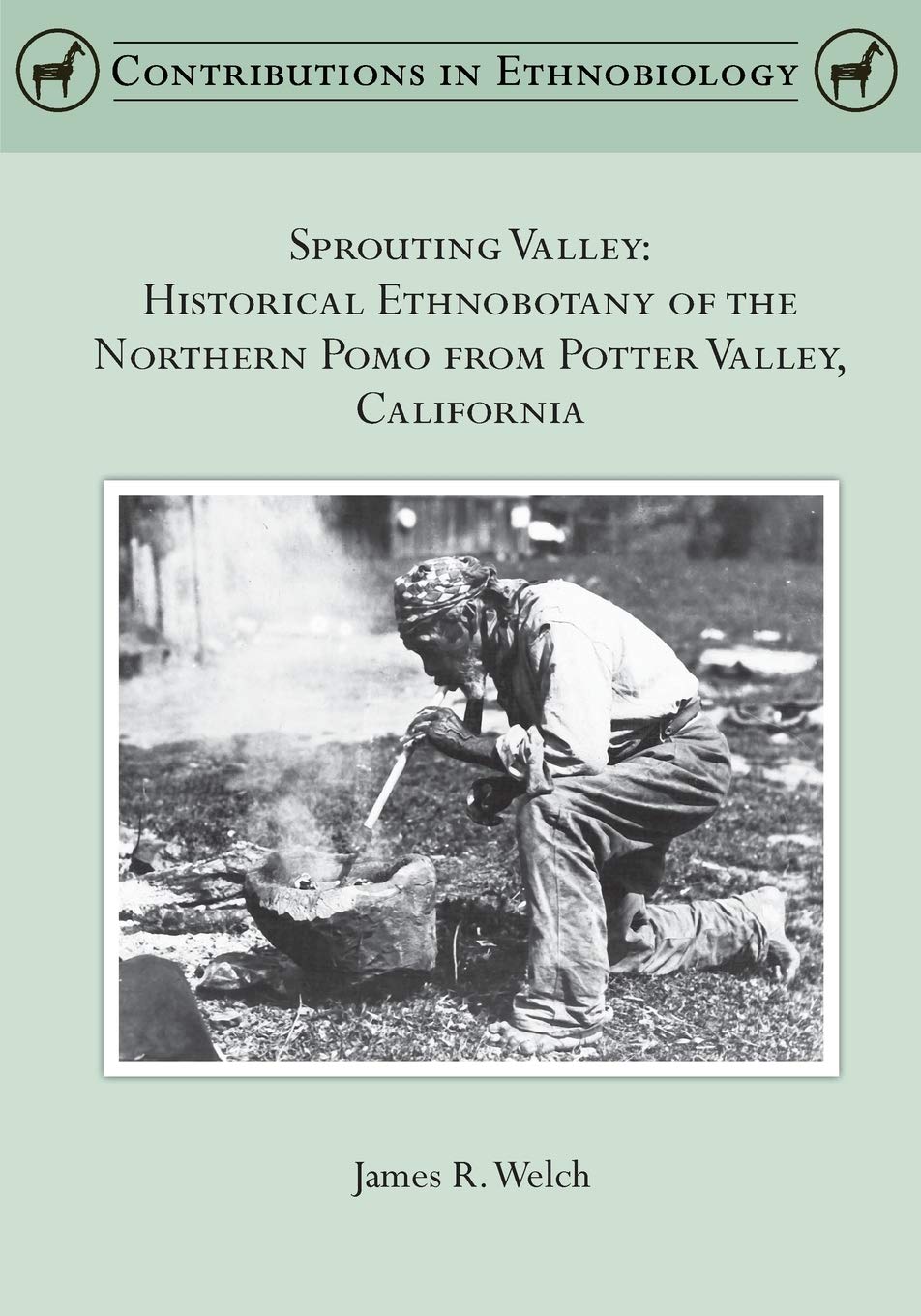
Sprouting Valley: Historical Ethnobotany of the Northern Pomo from Potter Valley, California by James R. Welch – A Deep
Inclusive of all applicable taxes. FREE shipping on all orders.
Available Offers
- 🚚Free Delivery — Free shipping on all orders
- 💵Cash on Delivery — Pay when your order arrives
- ↩️15-Day Easy Returns — Hassle-free return policy
- 🔒Cash on Delivery — Pay safely when your order arrives
Check Delivery
Product Description
Introduction
Sprouting Valley: Historical Ethnobotany of the Northern Pomo from Potter Valley, California offers a rare and deeply researched window into the relationship between the Potter Valley Pomo people and the rich botanical world of Northern California. Written by James R. Welch and published by the Society of Ethnobiology, this hardcover volume reconstructs a nearly lost body of knowledge through the unpublished fieldnotes of John W. Hudson, a homeopathic doctor and amateur anthropologist who documented the community’s plant use in the late nineteenth and early twentieth centuries. For Indian readers, students, and scholars of indigenous studies, ethnobotany, and anthropology, this book presents a compelling case study of how traditional ecological knowledge can be recovered, interpreted, and honoured across generations.
Book Overview
In the mid-nineteenth century, the Potter Valley Pomo lived in large sedentary villages in Potter Valley, California, and travelled seasonally across a vast territory in what are now Mendocino and Lake Counties. After the arrival of non-indigenous settlers, the community faced dislocation and dispersal. Beginning in 1890, John W. Hudson spent nearly half a century conducting ethnographic research among the Potter Valley Pomo. Though his work was never published in his lifetime, his fieldnotes contain an unparalleled dataset on plant use by a single local indigenous community. Sprouting Valley brings this material to light for the first time, presenting and interpreting the historical ethnobotanical information to offer new insights into Potter Valley Pomo society and its deep connection to the Northern California landscape.
Key Highlights
- Original research: Based on previously unpublished fieldnotes from John W. Hudson, offering a unique primary source for ethnobotany.
- Richly illustrated: Includes photographs, maps, and botanical drawings that bring the text to life.
- Cultural preservation: Documents the traditional knowledge of a community that faced displacement, making this a work of historical and cultural importance.
- Interdisciplinary approach: Blends anthropology, botany, history, and ecology into a cohesive narrative.
- Focus on a single community: Provides an in-depth look at the Northern Pomo’s relationship with their environment, rather than a broad survey.
Inside the Book
The book is structured to guide readers through Hudson’s original observations, contextualised with modern scholarship. It begins with an introduction to the Potter Valley Pomo, their territory, and the historical forces that shaped their lives. Subsequent chapters explore specific plant species and their uses—food, medicine, tools, ceremonial items, and more. Each entry includes the plant’s common and scientific names, the Pomo name (where known), detailed descriptions of how it was gathered, prepared, and used, and reflections on its cultural significance. The volume also includes appendices with plant lists, a glossary of terms, and a bibliography for further reading.
Key Topics
- Historical ethnobotany of the Northern Pomo
- Indigenous plant knowledge and traditional ecological knowledge
- Cultural displacement and resilience
- Ethnographic methods and fieldnotes as historical sources
- California native flora and its uses
- Food plants, medicinal plants, and material culture
- Seasonal rounds and land management practices
- Colonial impacts on indigenous communities
Reader Benefits
This book offers Indian readers and students a powerful example of how indigenous knowledge systems can be documented, analysed, and revived. It demonstrates the value of ethnographic fieldnotes as a resource for reconstructing lost or fragmented traditions. Readers will gain a deeper appreciation for the complexity of indigenous plant use and the ways in which communities adapt to environmental and social change. The book also serves as a model for researchers working with archival materials and indigenous communities, highlighting ethical considerations and collaborative approaches.
Learning Outcomes
- Understand the principles and methods of historical ethnobotany.
- Analyse how indigenous communities classify and use plants for diverse purposes.
- Evaluate the role of ethnographic fieldwork in preserving cultural heritage.
- Compare the Potter Valley Pomo’s relationship with plants to indigenous practices in India and elsewhere.
- Critically assess the impact of colonialism on traditional ecological knowledge.
- Develop skills in interpreting primary sources such as fieldnotes and archival records.
Who Should Read
Sprouting Valley is ideal for students and scholars of anthropology, ethnobotany, indigenous studies, environmental history, and Native American studies. It will also appeal to botanists, ecologists, and anyone interested in traditional plant knowledge and cultural resilience. Indian readers—especially those engaged with tribal studies, Ayurveda, or local ecological knowledge—will find valuable comparative insights. The book is accessible to advanced undergraduates, graduate students, and professionals alike.
About the Author
James R. Welch is a researcher and author specialising in ethnobiology and indigenous knowledge systems. His work focuses on the documentation and interpretation of traditional ecological knowledge, with an emphasis on archival sources and community engagement. He has published extensively on the ethnobotany of California Native American groups and is committed to making historical data available to contemporary audiences in a respectful and accurate manner.
About the Publisher
The Society of Ethnobiology is a professional organisation dedicated to the interdisciplinary study of the relationships between human societies and the natural world. Through publications, conferences, and educational initiatives, the Society promotes the understanding of traditional ecological knowledge, ethnobotany, and cultural ecology. Sprouting Valley exemplifies the Society’s commitment to publishing rigorous, accessible, and culturally sensitive works that advance the field of ethnobiology.
Conclusion
Sprouting Valley: Historical Ethnobotany of the Northern Pomo from Potter Valley, California is a landmark contribution to the study of indigenous plant knowledge. By recovering and interpreting John W. Hudson’s extraordinary fieldnotes, James R. Welch offers readers an intimate portrait of a community’s relationship with its environment—a relationship that was disrupted but never entirely lost. For Indian readers and students, this book provides a thought-provoking parallel to the rich botanical traditions of India’s own tribal communities. It is a must-have for libraries, classrooms, and anyone committed to understanding the depth and resilience of indigenous knowledge.
Quick Summary
Sprouting Valley: Historical Ethnobotany of the Northern Pomo from Potter Valley, California by James R. Welch is a landmark scholarly work that brings to light the extensive plant knowledge of the Potter Valley Pomo, an indigenous community in Northern California. Drawing from the unpublished fieldnotes of amateur anthropologist John W. Hudson, who worked with the Pomo from 1890 for nearly half a century, the book reconstructs how this community used over 150 plant species for food, medicine, basketry, and daily life before and after colonial disruption. Richly illustrated with historical photographs and botanical drawings, the monograph places the Pomo's ecological wisdom within a broader context of cultural resilience and loss. This book is ideal for students and researchers in ethnobotany, anthropology, Native American studies, and environmental history. Indian readers will find parallels with traditional plant knowledge systems in India. By purchasing from Bookshops.in, you support a premium Indian bookstore that curates specialized academic titles with reliable delivery.
Book Highlights
Book Specifications
| ISBN-13 | 9780988733022 |
| ISBN-10 | 0988733021 |
| Publisher | Society of Ethnobiology |
| Language | English |
| Dimensions | 17.78 x 1.3 x 25.4 cm |
| Weight | 395 g |
| Category | Society & Social Sciences › Anthropology |
| Genre | Nonfiction |
| Original Language | English |
Frequently Asked Questions
What is 'Sprouting Valley' about?
Who is the author James R. Welch?
What kind of plants are covered in the book?
Is this book suitable for Indian readers?
Does the book include illustrations?
Is this a digital or print edition?
Which publisher released this book?
What is the ISBN-13?
Can I use this book for academic research?
Does the book include Pomo language plant names?
What is the historical context of the research?
Is this book part of a series?
Where can I buy this book in India?
Readers Also Search For
Customers Also Bought

Sociology
Imagination Beyond Nation: Latin American Popular Culture: 349 (Pitt Latin American Series)

Sociology
Boomer Volunteer Engagement: Facilitator's Tool Kit

Sociology
Making a Success of Marriage: Planning for Happily Ever After

Sociology
Causal Mediation Analysis (Analytical Methods for Social Research)

Sociology
Marriage and the Moral Imagination (New Departures in Anthropology)

Sociology
Social Change, Resistance and Social Practices: 19 (Studies in Critical Social Sciences, 19)
Related Products
View All
Anthropology
Governing How We Care: Contesting Community and Defining Difference in U.S. Public Health Programs

Anthropology
What Gifts Engender (English, Rena Lederman)

Anthropology
Epistemology and Practice (English, Anne Warfield Rawls | Rawls Anne Warfield)

Anthropology
The Expression of Emotion: Philosophical, Psychological and Legal Perspectives (Studies in Emotion and Social Interaction)

Anthropology
Dramas of Nationhood: The Politics of Television in Egypt by Lila Abu-Lughod
Anthropology