
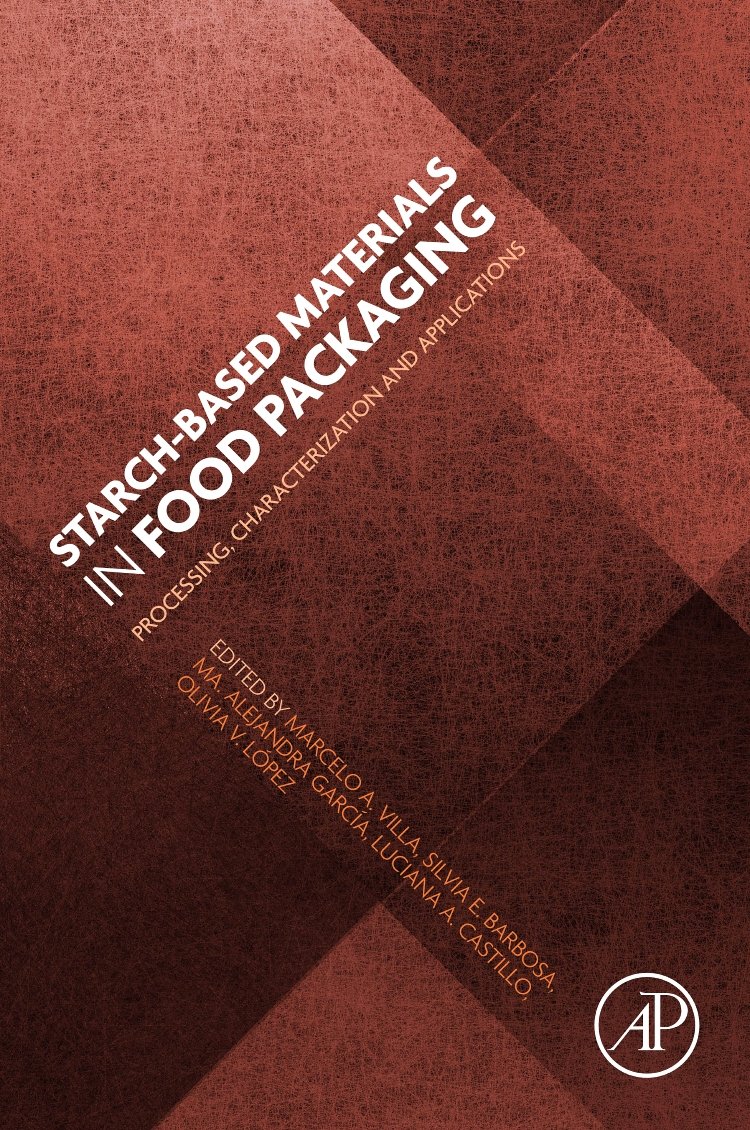
Starch-Based Materials in Food Packaging: Processing, Characterization and Applications
Inclusive of all applicable taxes. FREE shipping on all orders.
Available Offers
- 🚚Free Delivery — Free shipping on all orders
- 💵Cash on Delivery — Pay when your order arrives
- ↩️15-Day Easy Returns — Hassle-free return policy
- 🔒Cash on Delivery — Pay safely when your order arrives
Check Delivery
Product Description
"Starch-based materials in food packaging processing, characterization and applications" by Barbosa, Silvia Elena; Castillo, Luciana; García, Maria Alejandra; Lopez, Olívia Valeria; Vilar, Marcelo, published by Academic Press, an imprint of Elsevier. Front Cover -- Starch-Based Materials in Food Packaging -- Copyright Page -- Contents -- List of Contributors -- Preface -- 1 Starch -- 1.1 General Aspects -- 1.2 Structural Characteristics of Starch Granules -- 1.3 Production of Starch From Different Botanical Sources -- 1.4 Physicochemical and Functional Properties of Starches -- 1.5 Synthesis of Starch Derivatives by Chemical and Physical Modifications -- 1.6 Conclusions -- References -- Further Reading -- 2 Bio-Based Materials from Traditional and Nonconventional Native and Modified Starches -- 2.1 Biomaterials Development from Traditional Native Starches -- 2.2 Use of Nonconventional Native Starches as Feedstock for Biodegradable Materials -- 2.3 Final Properties Enhancement of Starch-Based Materials by Using Chemically and Physically Modified Starches -- References -- Further Reading -- 3 Disadvantages of Starch-Based Materials, Feasible Alternatives in Order to Overcome These Limitations -- 3.1 Disadvantages and Limitations of Starch-Based Materials -- 3.1.1 Starch-Based Materials General Properties -- 3.1.2 Hydrophilic Nature of Starch-Based Materials -- 3.1.3 Mechanical Properties of Starch-Based Materials -- 3.1.4 Processability of Starch-Based Materials -- 3.2 Alternatives to Improve Final Properties of Starch-Based Materials -- 3.2.1 Starch Modification Methods -- 3.2.2 Plasticizer -- 3.2.3 Composites -- 3.2.3.1 Fillers -- 3.2.3.2 Blends -- 3.3 Case Studies about the Enhancement of Starch Materials Performance -- 3.3.1 Enhancement of Mechanical Properties -- 3.3.2 Enhancement of Water Stability -- 3.3.3 Enhancement of Processability -- 3.4 Summary and Perspectives -- References -- Further Reading -- 4 Development of Biodegradable Products from Modified Starches -- 4.1 Introduction -- 4.2 Starch-Based Materials by Using Chemically, Physically, and Biologically Modified Starches 4.2.1 Chemical Modifications -- 4.2.1.1 Derivatization -- 4.2.1.1.1 Etherification Reaction Type -- 4.2.1.1.2 Carboxymethyl Starch or Negative Starch -- 4.2.1.1.3 Carbonic Starches or Positive Starch -- 4.2.1.1.4 Esterification Reaction Type -- 4.2.1.1.5 Cross-linking Type Reaction -- 4.2.1.2 Converted Starch -- 4.2.1.2.1 Acid Conversion or Acid-Modified Starch -- 4.2.1.2.2 Oxidized Hypochlorite-Modified Starch -- 4.2.1.2.3 Pyroconversion or Pyrodextrins -- 4.2.1.2.4 Enzyme Conversion of Starch -- 4.2.1.3 Combination Starches -- 4.2.1.3.1 Hydroxypropylated with Cross-Linked Starches -- 4.2.1.3.2 Cross-Linked with Oxidized Starches -- 4.2.2 Physically Modified Starch -- 4.2.2.1 Pregelatinized Starch -- 4.2.2.2 Granular Cold-Water Soluble Starch -- 4.2.2.3 Annealing Starch -- 4.2.2.4 Heat Moisture Treatment of Starches -- 4.2.2.5 Mechanical Milling Starch -- 4.2.2.6 Blends with Other Polymers -- 4.2.3 Biologically Modified Starch -- 4.3 Processing Methods: Description and Evaluation of the Scaling Up at Industrial Level of Modified Starches -- 4.4 Influence of the Use of Modified Starches on Materials Properties -- 4.4.1 Chemically Treated Starches -- 4.4.1.1 Acetylation/Esterification -- 4.4.1.2 Surface Modification -- 4.4.1.3 Hydroxypropylated Starches -- 4.4.1.4 Cross-linking -- 4.4.1.5 Graft Copolymerization -- 4.4.1.6 Oxidation -- 4.4.1.7 Acid Hydrolysis -- 4.4.1.8 Enzymatic Hydrolysis -- 4.4.2 Physically Treated Starches -- 4.4.3 Dual-Modified Starches -- 4.5 Concerns about the Use of Modified Starches as Food Packaging Material -- 4.5.1 Advantages as Materials for Packaging Applications -- 4.5.2 Toxic Concerns -- 4.5.3 Biodegradation -- 4.6 Conclusions and Final Remarks -- References -- Further Reading -- 5 Composites and Nanocomposites Based on Starches. Effect of Mineral and Organic Fillers on Processing, Structure, and Fin 5.1 Introduction -- 5.2 Composites Formulations, Processing, Structure, and Final Properties -- 5.3 Starch-Mineral Particles Composites -- 5.4 Starch-Organic Fillers Composites -- Conclusions -- References -- 6 Thermoplastic Starch-Based Blends: Processing, Structural, and Final Properties -- 6.1 Introduction -- 6.2 Blends of Thermoplastic Starch and Synthetic Polymers -- 6.3 Blends of Thermoplastic Starch and Biodegradable Polymers -- 6.3.1 Blends of TPS and PVA -- 6.3.2 Blends of TPS and PLA -- 6.3.3 Blends of TPS and PHB -- 6.3.4 Blends of TPS and PBAT -- 6.4 Effect of Compatibilizers on the Properties of Blends Based on TPS -- References -- 7 Starch Thermal Processing: Technologies at Laboratory and Semi-Industrial Scales -- 7.1 Introduction -- 7.2 Structures of Native Starch -- 7.3 From Native Starch to Plasticized Starch -- 7.3.1 Phase Transition of Starch -- 7.3.2 Characterization of Starch Phase Transition Under Shearless Condition -- 7.3.3 Characterization of Starch Phase Transition Under Shear Condition -- 7.4 Rheology of Plasticized Starch Melts -- 7.4.1 Viscous Properties of Plasticized Starch Melts -- 7.4.2 Elastic Properties of Plasticized Starch Melts -- 7.5 Starch Processing at Laboratory Scale -- 7.6 Semi-Industrial Technologies Adapted for Starch Processing -- 7.6.1 Extrusion -- 7.6.1.1 Extruders and Extrusion Process -- 7.6.1.2 Extrusion Strategies and Issues -- 7.6.1.2.1 Effect of Plasticizer and Additives -- 7.6.1.2.2 Starch Type and Chemical Modification -- 7.6.1.2.3 Extrusion Blending -- 7.6.1.2.4 Molecular Degradation of Starch During Extrusion -- 7.6.1.3 Extrusion Techniques -- 7.6.1.3.1 Extrusion Film Casting -- 7.6.1.3.2 Extrusion Film Blowing -- 7.6.1.3.3 Extrusion Foaming -- 7.6.1.3.4 Reactive Extrusion (REX) -- 7.6.2 Compression Molding -- 7.6.3 Injection Molding -- 7.7 Summary and Future Perspectives -- References 8 Use of Starch in Food Packaging -- 8.1 Topics Related to Food Packages -- 8.2 General Knowledge about Active and Intelligent Packaging -- 8.3 Development of Food Packaging from Starch-Based Materials -- 8.4 Advantages and Disadvantages of Starch as Food Packaging Materials -- 8.5 Experimental Case Studies for Vegetables Packaging Using Thermoplastic Starch Materials -- References -- 9 Future of Starch-Based Materials in Food Packaging -- Abbreviations -- 9.1 Introduction -- 9.1.1 Methods for Obtaining Starch-Based Materials. Influence on Their Properties -- 9.1.2 Compression Molding -- 9.1.3 Extrusion Process -- 9.1.4 Reactive Extrusion -- 9.1.5 Coextrusion -- 9.1.6 Injection Molding -- 9.1.7 Film Blowing -- 9.2 Effect of Processing Method on the Physical Properties of Starch-Based Films -- 9.3 Strategies to Improve Functional Properties of Starch-Based Materials -- 9.3.1 Starch Modification -- 9.3.2 Organic and Inorganic Fillers -- 9.3.3 Blends with Biodegradable and Compostable Plastics -- 9.3.3.1 Blends with Natural Biopolymers -- 9.3.3.2 Blends with Synthetic Biodegradable Polymers -- 9.3.3.3 Blends with Nonbiodegradable Plastics -- 9.3.4 Compatibilizers, Plasticizers, and Other Additives in Food Packaging -- 9.4 Commercial Applications and Future Challenges -- 9.5 Final Remarks -- Acknowledgments -- Appendix A -- References -- Index -- Back Cover Read more... Abstract: Front Cover -- Starch-Based Materials in Food Packaging -- Copyright Page -- Contents -- List of Contributors -- Preface -- 1 Starch -- 1.1 General Aspects -- 1.2 Structural Characteristics of Starch Granules -- 1.3 Production of Starch From Different Botanical Sources -- 1.4 Physicochemical and Functional Properties of Starches -- 1.5 Synthesis of Starch Derivatives by Chemical and Physical Modifications -- 1.6 Conclusions -- References -- Further Reading -- 2 Bio-Based Materials from Traditional and Nonconventional Native and Modified Starches -- 2.1 Biomaterials Development from Traditional Native Starches -- 2.2 Use of Nonconventional Native Starches as Feedstock for Biodegradable Materials -- 2.3 Final Properties Enhancement of Starch-Based Materials by Using Chemically and Physically Modified Starches -- References -- Further Reading -- 3 Disadvantages of Starch-Based Materials, Feasible Alternatives in Order to Overcome These Limitations -- 3.1 Disadvantages and Limitations of Starch-Based Materials -- 3.1.1 Starch-Based Materials General Properties -- 3.1.2 Hydrophilic Nature of Starch-Based Materials -- 3.1.3 Mechanical Properties of Starch-Based Materials -- 3.1.4 Processability of Starch-Based Materials -- 3.2 Alternatives to Improve Final Properties of Starch-Based Materials -- 3.2.1 Starch Modification Methods -- 3.2.2 Plasticizer -- 3.2.3 Composites -- 3.2.3.1 Fillers -- 3.2.3.2 Blends -- 3.3 Case Studies about the Enhancement of Starch Materials Performance -- 3.3.1 Enhancement of Mechanical Properties -- 3.3.2 Enhancement of Water Stability -- 3.3.3 Enhancement of Processability -- 3.4 Summary and Perspectives -- References -- Further Reading -- 4 Development of Biodegradable Products from Modified Starches -- 4.1 Introduction -- 4.2 Starch-Based Materials by Using Chemically, Physically, and Biologically Modified Starches 4.2.1 Chemical Modifications -- 4.2.1.1 Derivatization -- 4.2.1.1.1 Etherification Reaction Type -- 4.2.1.1.2 Carboxymethyl Starch or Negative Starch -- 4.2.1.1.3 Carbonic Starches or Positive Starch -- 4.2.1.1.4 Esterification Reaction Type -- 4.2.1.1.5 Cross-linking Type Reaction -- 4.2.1.2 Converted Starch -- 4.2.1.2.1 Acid Conversion or Acid-Modified Starch -- 4.2.1.2.2 Oxidized Hypochlorite-Modified Starch -- 4.2.1.2.3 Pyroconversion or Pyrodextrins -- 4.2.1.2.4 Enzyme Conversion of Starch -- 4.2.1.3 Combination Starches -- 4.2.1.3.1 Hydroxypropylated with Cross-Linked Starches -- 4.2.1.3.2 Cross-Linked with Oxidized Starches -- 4.2.2 Physically Modified Starch -- 4.2.2.1 Pregelatinized Starch -- 4.2.2.2 Granular Cold-Water Soluble Starch -- 4.2.2.3 Annealing Starch -- 4.2.2.4 Heat Moisture Treatment of Starches -- 4.2.2.5 Mechanical Milling Starch -- 4.2.2.6 Blends with Other Polymers -- 4.2.3 Biologically Modified Starch -- 4.3 Processing Methods: Description and Evaluation of the Scaling Up at Industrial Level of Modified Starches -- 4.4 Influence of the Use of Modified Starches on Materials Properties -- 4.4.1 Chemically Treated Starches -- 4.4.1.1 Acetylation/Esterification -- 4.4.1.2 Surface Modification -- 4.4.1.3 Hydroxypropylated Starches -- 4.4.1.4 Cross-linking -- 4.4.1.5 Graft Copolymerization -- 4.4.1.6 Oxidation -- 4.4.1.7 Acid Hydrolysis -- 4.4.1.8 Enzymatic Hydrolysis -- 4.4.2 Physically Treated Starches -- 4.4.3 Dual-Modified Starches -- 4.5 Concerns about the Use of Modified Starches as Food Packaging Material -- 4.5.1 Advantages as Materials for Packaging Applications -- 4.5.2 Toxic Concerns -- 4.5.3 Biodegradation -- 4.6 Conclusions and Final Remarks -- References -- Further Reading -- 5 Composites and Nanocomposites Based on Starches. Effect of Mineral and Organic Fillers on Processing, Structure, and Fin 5.1 Introduction -- 5.2 Composites Formulations, Processing, Structure, and Final Properties -- 5.3 Starch-Mineral Particles Composites -- 5.4 Starch-Organic Fillers Composites -- Conclusions -- References -- 6 Thermoplastic Starch-Based Blends: Processing, Structural, and Final Properties -- 6.1 Introduction -- 6.2 Blends of Thermoplastic Starch and Synthetic Polymers -- 6.3 Blends of Thermoplastic Starch and Biodegradable Polymers -- 6.3.1 Blends of TPS and PVA -- 6.3.2 Blends of TPS and PLA -- 6.3.3 Blends of TPS and PHB -- 6.3.4 Blends of TPS and PBAT -- 6.4 Effect of Compatibilizers on the Properties of Blends Based on TPS -- References -- 7 Starch Thermal Processing: Technologies at Laboratory and Semi-Industrial Scales -- 7.1 Introduction -- 7.2 Structures of Native Starch -- 7.3 From Native Starch to Plasticized Starch -- 7.3.1 Phase Transition of Starch -- 7.3.2 Characterization of Starch Phase Transition Under Shearless Condition -- 7.3.3 Characterization of Starch Phase Transition Under Shear Condition -- 7.4 Rheology of Plasticized Starch Melts -- 7.4.1 Viscous Properties of Plasticized Starch Melts -- 7.4.2 Elastic Properties of Plasticized Starch Melts -- 7.5 Starch Processing at Laboratory Scale -- 7.6 Semi-Industrial Technologies Adapted for Starch Processing -- 7.6.1 Extrusion -- 7.6.1.1 Extruders and Extrusion Process -- 7.6.1.2 Extrusion Strategies and Issues -- 7.6.1.2.1 Effect of Plasticizer and Additives -- 7.6.1.2.2 Starch Type and Chemical Modification -- 7.6.1.2.3 Extrusion Blending -- 7.6.1.2.4 Molecular Degradation of Starch During Extrusion -- 7.6.1.3 Extrusion Techniques -- 7.6.1.3.1 Extrusion Film Casting -- 7.6.1.3.2 Extrusion Film Blowing -- 7.6.1.3.3 Extrusion Foaming -- 7.6.1.3.4 Reactive Extrusion (REX) -- 7.6.2 Compression Molding -- 7.6.3 Injection Molding -- 7.7 Summary and Future Perspectives -- References 8 Use of Starch in Food Packaging -- 8.1 Topics Related to Food Packages -- 8.2 General Knowledge about Active and Intelligent Packaging -- 8.3 Development of Food Packaging from Starch-Based Materials -- 8.4 Advantages and Disadvantages of Starch as Food Packaging Materials -- 8.5 Experimental Case Studies for Vegetables Packaging Using Thermoplastic Starch Materials -- References -- 9 Future of Starch-Based Materials in Food Packaging -- Abbreviations -- 9.1 Introduction -- 9.1.1 Methods for Obtaining Starch-Based Materials. Influence on Their Properties -- 9.1.2 Compression Molding -- 9.1.3 Extrusion Process -- 9.1.4 Reactive Extrusion -- 9.1.5 Coextrusion -- 9.1.6 Injection Molding -- 9.1.7 Film Blowing -- 9.2 Effect of Processing Method on the Physical Properties of Starch-Based Films -- 9.3 Strategies to Improve Functional Properties of Starch-Based Materials -- 9.3.1 Starch Modification -- 9.3.2 Organic and Inorganic Fillers -- 9.3.3 Blends with Biodegradable and Compostable Plastics -- 9.3.3.1 Blends with Natural Biopolymers -- 9.3.3.2 Blends with Synthetic Biodegradable Polymers -- 9.3.3.3 Blends with Nonbiodegradable Plastics -- 9.3.4 Compatibilizers, Plasticizers, and Other Additives in Food Packaging -- 9.4 Commercial Applications and Future Challenges -- 9.5 Final Remarks -- Acknowledgments -- Appendix A -- References -- Index -- Back Cover Book details: 337 pages, published 2018. Order now on BookShops.in with fast, reliable delivery across India.
Book Specifications
| ISBN-13 | 9780128094396 |
| ISBN-10 | 0128094397 |
| Publisher | Academic Press Inc |
| Language | english |
| Print Length | 336 pages |
| Category | Sciences, Technology & Medicine |
Frequently Asked Questions
What is the price of Starch-Based Materials in Food Packaging: Processing, Characterization and Applications?
Does BookShops.in offer free delivery for Starch-Based Materials in Food Packaging: Processing, Characterization and Applications?
Is Cash on Delivery available for Starch-Based Materials in Food Packaging: Processing, Characterization and Applications?
What is the return policy for Starch-Based Materials in Food Packaging: Processing, Characterization and Applications?
Is Starch-Based Materials in Food Packaging: Processing, Characterization and Applications authentic?
Customers Also Bought

Related Products
View All
Sciences, Technology & Medicine
The Self and the Quintessence: A Jungian Perspective

Sciences, Technology & Medicine
Clinical Studies in Neuro-psychoanalysis | by Karen Kaplan-Solms | Mark Solms | Routledge | by Karen Kaplan-Solms | Mark Solms | Routledge | by Karen Kaplan-Solms | Mark Solms | Routledge | by Karen Kaplan-Solms | Mark Solms | Routledge | by Karen Kaplan-Solms | Mark Solms | Routledge | by Karen Kaplan-Solms | Mark Solms | Routledge | by Karen Kaplan-Solms | Mark Solms | Routledge | by Karen Kaplan-Solms | Mark Solms | Routledge | by Karen Kaplan-Solms | Mark Solms | Routledge | by Karen Kaplan-

Sciences, Technology & Medicine
Vehicle Stability (Mechanical Engineering)

Sciences, Technology & Medicine
Macfarquhar: The Origins Of The Cultural Revolution Vol 1 (cloth)
Sciences, Technology & Medicine
Astrodynamics: v. 1: v. 2

Sciences, Technology & Medicine