
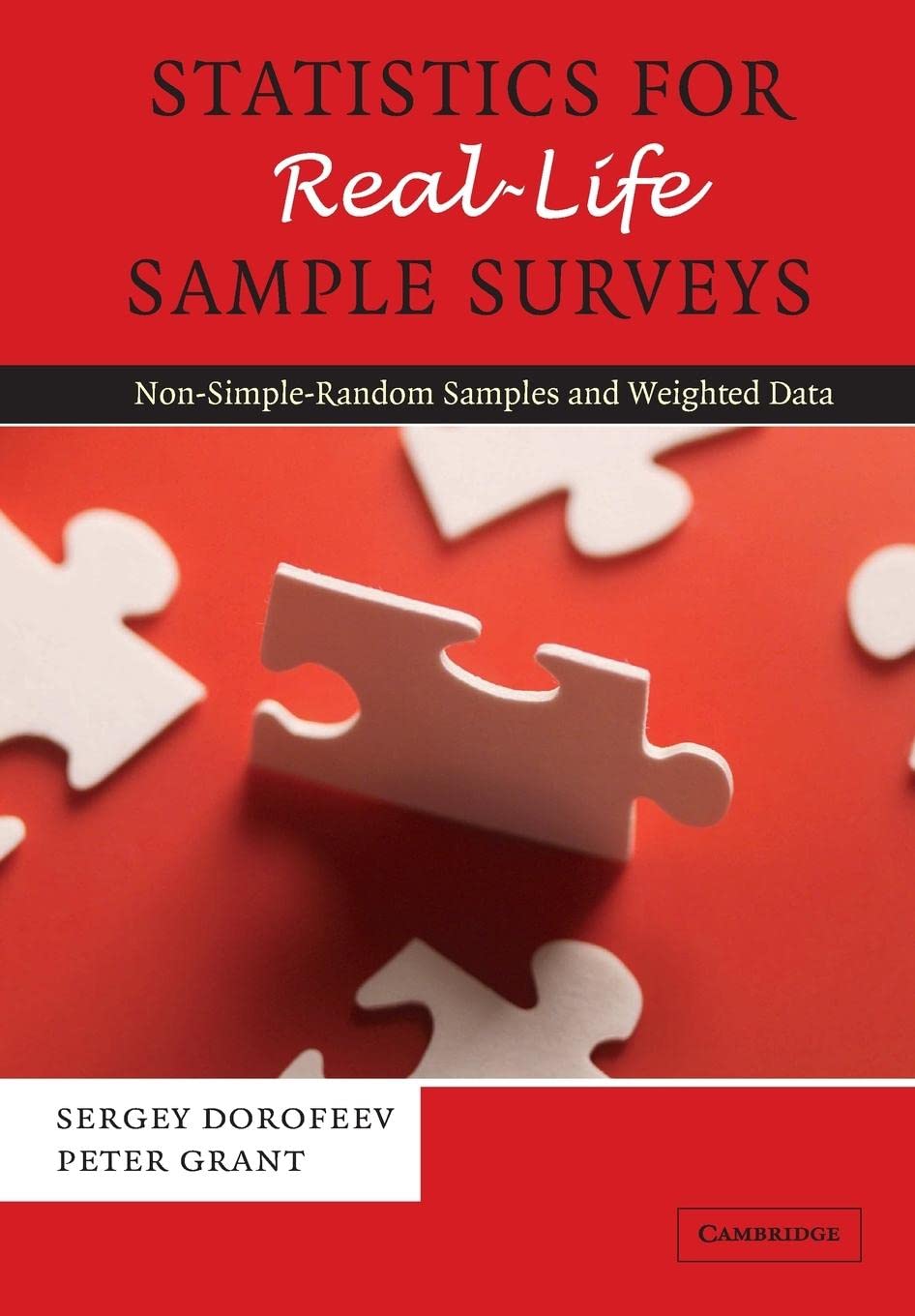
Statistics for Real-Life Sample Surveys: Non-Simple-Random Samples and Weighted Data by Sergey Dorofeev – A Cambridge Un
Inclusive of all applicable taxes. FREE shipping on all orders.
Available Offers
- 🚚Free Delivery — Free shipping on all orders
- 💵Cash on Delivery — Pay when your order arrives
- ↩️15-Day Easy Returns — Hassle-free return policy
- 🔒Cash on Delivery — Pay safely when your order arrives
Check Delivery
Product Description
Introduction
In the world of social research, market analysis, and public opinion polling, the ideal of a perfectly random sample is often just that—an ideal. Real-world surveys, especially those conducted across India's diverse population, frequently rely on samples that are far from simple random selections. Whether due to logistical constraints, cost considerations, or deliberate design choices, these 'non-simple-random samples' pose unique challenges. Statistics for Real-Life Sample Surveys: Non-Simple-Random Samples and Weighted Data by Sergey Dorofeev provides a practical and rigorous guide for navigating this complex terrain. Published by Cambridge University Press, this hardcover volume is an essential resource for researchers, data analysts, and students who need to work with imperfect but realistic survey data.
Book Overview
This book bridges the gap between textbook statistics and the messy reality of survey data. It begins by acknowledging that many samples used in social and commercial surveys are less random than assumed—sometimes by necessity, sometimes by design. Dorofeev systematically explains why this happens, how to measure the degree of non-randomness, and when and how to apply weighting to correct for biases. The book is not a theoretical treatise but a practical companion, filled with extended data examples that demonstrate techniques in action. It addresses the statistical adaptations needed to draw valid conclusions from such samples, making it a valuable tool for anyone who has ever grappled with survey data that does not conform to ideal assumptions.
Key Highlights
- Practical Focus: Emphasizes real-world applications over abstract theory, with numerous worked examples.
- Weighting Techniques: Detailed guidance on when and how to apply weighting to adjust for sample biases.
- Non-Randomness Assessment: Methods to evaluate the degree and impact of non-randomness in your sample.
- Statistical Adaptations: How to modify standard statistical procedures for use with non-simple-random samples.
- Extended Data Examples: Full case studies that illustrate the techniques in realistic contexts.
Inside the Book
The structure is designed for both reference and learning. Early chapters lay the groundwork by explaining why samples are often non-random and how to recognize different types of non-randomness. Subsequent chapters delve into the mechanics of weighting—including post-stratification, raking, and propensity score weighting—and the implications for variance estimation and hypothesis testing. The book also covers design effects, cluster sampling, and stratification, always with an eye on practical implementation. Each chapter concludes with summaries and references, making it easy to find specific methods when needed.
Key Topics
- Understanding non-simple-random samples in social and commercial surveys
- Assessing the degree of non-randomness and its impact on data quality
- Principles and methods of weighting: post-stratification, calibration, and propensity scores
- Variance estimation for weighted data
- Design effects and effective sample size
- Handling cluster sampling and stratified designs
- Practical solutions for common survey problems
Reader Benefits
Readers will gain the confidence to handle survey data that does not meet ideal assumptions. The book provides clear, step-by-step guidance for diagnosing sample issues and applying appropriate corrections. By working through the examples, researchers will learn to avoid common pitfalls and produce more reliable analyses. The emphasis on realistic solutions means that the methods can be immediately applied in fields such as market research, public health, education, and political polling. For Indian researchers dealing with complex survey designs—like those used by the National Sample Survey Office or in consumer panels—this book offers directly relevant tools.
Learning Outcomes
- Identify and classify different types of non-randomness in survey samples.
- Evaluate whether weighting is necessary and choose the appropriate method.
- Apply weighting techniques to adjust for selection bias and non-response.
- Compute correct standard errors and confidence intervals for weighted data.
- Interpret survey results accurately when dealing with complex samples.
- Design better surveys by understanding the implications of sampling choices.
Who Should Read
This book is written for practising researchers, data analysts, and statisticians who work with survey data in social sciences, marketing, public health, and government statistics. It is also suitable for advanced undergraduate and postgraduate students in statistics, economics, sociology, and business analytics who want to move beyond textbook examples. Professionals in market research firms, polling organizations, and data-driven companies will find it an indispensable desk reference. Indian readers involved in large-scale surveys—such as those conducted by the government, NGOs, or private sector—will benefit from the practical orientation.
About the Author
Sergey Dorofeev is a highly respected statistician with extensive experience in survey methodology and applied statistics. His work focuses on the practical challenges of analyzing real-world survey data, particularly when samples deviate from ideal random designs. Dorofeev's expertise bridges academic rigor and industry application, making his writing both authoritative and accessible. He has contributed to numerous research projects and publications, and his insights are valued by practitioners across multiple disciplines.
About the Publisher
Cambridge University Press is one of the world's oldest and most prestigious academic publishers, with a history dating back to 1534. Known for its rigorous editorial standards and commitment to scholarly excellence, Cambridge publishes works that advance knowledge in science, mathematics, social sciences, and humanities. This book reflects the Press's dedication to providing high-quality, practical resources for researchers and professionals globally.
Conclusion
Statistics for Real-Life Sample Surveys is more than a textbook—it is a survival guide for anyone who must make sense of imperfect survey data. In a country like India, where surveys often face logistical hurdles, cultural diversity, and resource constraints, the ability to handle non-random samples and weighted data is invaluable. Sergey Dorofeev's clear explanations, practical examples, and focus on realistic solutions make this hardcover volume a worthy addition to any researcher's library. Whether you are a student learning survey methods or a seasoned analyst facing complex data, this book will help you extract meaningful insights from the messy reality of real-life surveys.
Quick Summary
Statistics for Real-Life Sample Surveys: Non-Simple-Random Samples and Weighted Data by Sergey Dorofeev is an essential practical guide for anyone who works with survey data in the real world. Unlike theoretical textbooks that assume perfect random sampling, this book tackles the messy reality that most social and commercial surveys face: non-random samples that can distort conclusions if not handled correctly. Dorofeev explains why samples are often non-random, how to diagnose the extent of this non-randomness, and when and how to apply weighting techniques to correct for bias. The book also covers how standard statistical methods must be adapted for weighted data, with extended examples that bring the concepts to life. Written for practising researchers in fields like market research, social science, and public health, it bridges the gap between statistical theory and everyday practice. By buying this hardcover from Bookshops.in, Indian readers get a durable reference that will serve them for years, delivered with trusted service and competitive pricing.
Book Highlights
Book Specifications
| ISBN-13 | 9780521674652 |
| ISBN-10 | 0521674654 |
| Publisher | Cambridge University Press |
| Language | English |
| Dimensions | 16.99 x 1.6 x 24.41 cm |
| Weight | 562 g |
| Category | Mathematics › Statistics |
| Genre | Non-fiction |
| Reading Age | Adult |
| Original Language | English |
Frequently Asked Questions
What is this book about?
Who is the author?
Is this book suitable for beginners?
Does it include Indian examples?
What format is the book available in?
Can I use this book for academic research?
Is the language easy to understand?
Does the book cover software or coding?
What is weighting in surveys?
Why are samples non-random?
How is this book different from standard textbooks?
Can I return the book?
Is this book available in India?
Readers Also Search For
Customers Also Bought
Mathematics
Stereotype Spaces and Algebras: 73 (De Gruyter Expositions in Mathematics, 73)

Chemistry
Concise Encyclopedia of Biochemistry

Chemistry
Proceedings of the Third USSR - FRG Symposium, Makhachkala (USSR), October 2–6, 1980: 001

Physics
Quantum Theory at the Crossroads by Guido Bacciagaluppi – Quantum Mechanics History

Physics
The Quantum and Cosmic Codes of the Universe
Mathematics
Mathematical Theory of Optimal Processes (Classics of Soviet Mathematics)
Related Products
View All
Statistics
Asymptotics in Statistics and Probability: Papers in Honor of George Gregory Roussas

Statistics
Inequalities in Analysis and Probability: 3rd Edition
Statistics
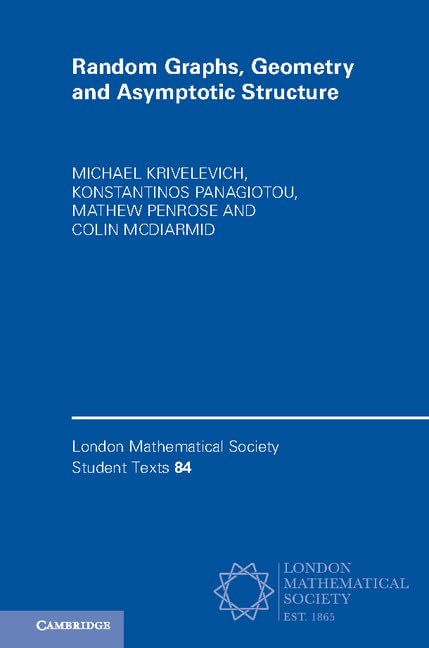
Random Graphs, Geometry and Asymptotic Structure
Statistics
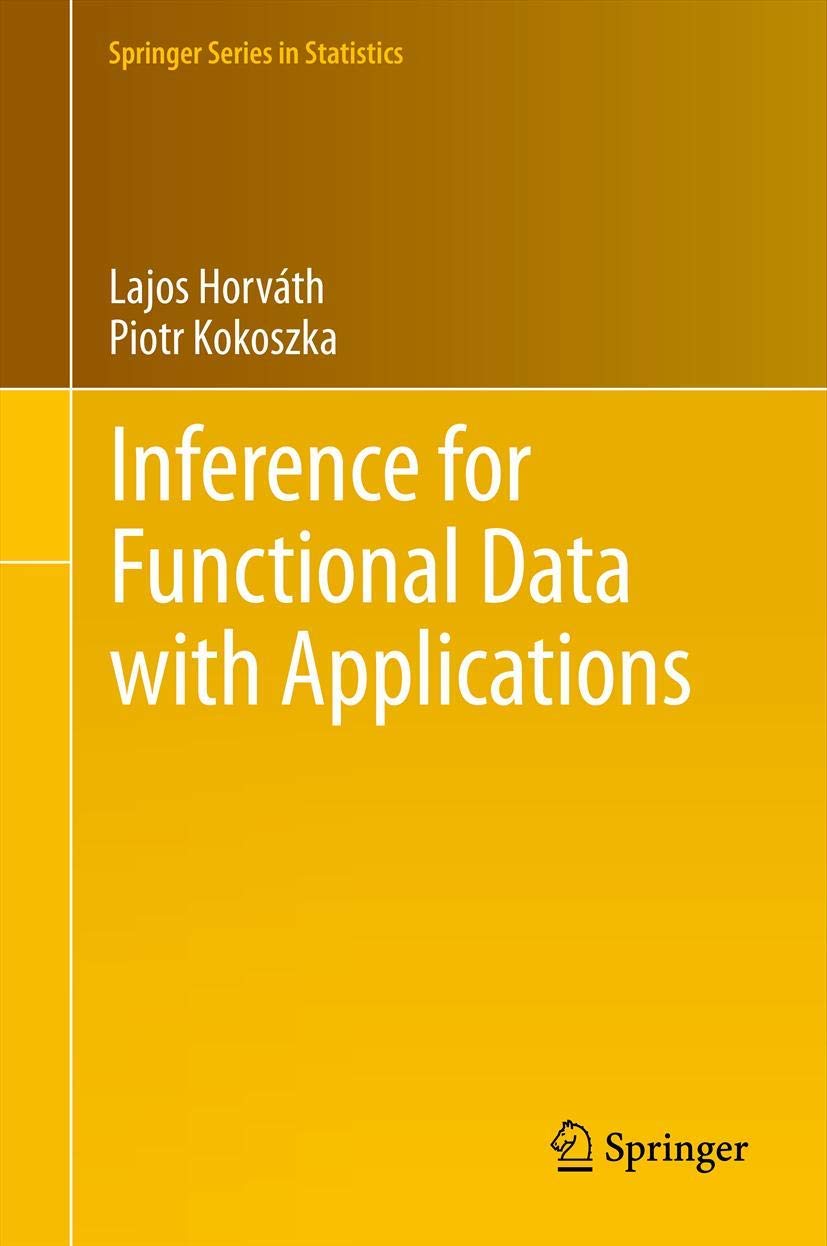
Inference for Functional Data With Applications: 200 (Springer Series in Statistics, 692)
Statistics
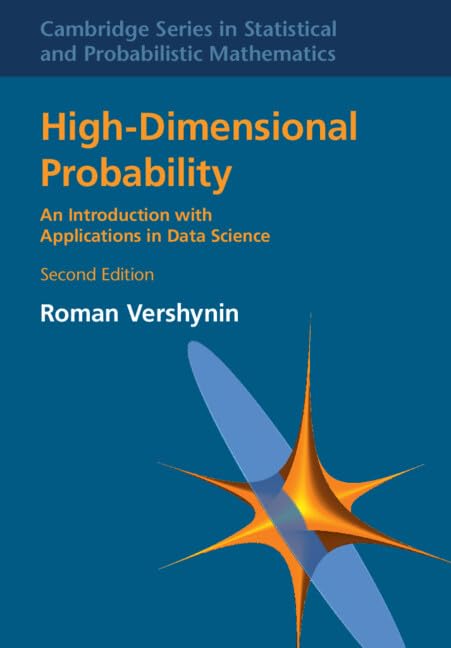
High-Dimensional Probability: An Introduction with Applications in Data Science (Cambridge Series in Statistical and Probabilistic Mathematics)
Statistics