
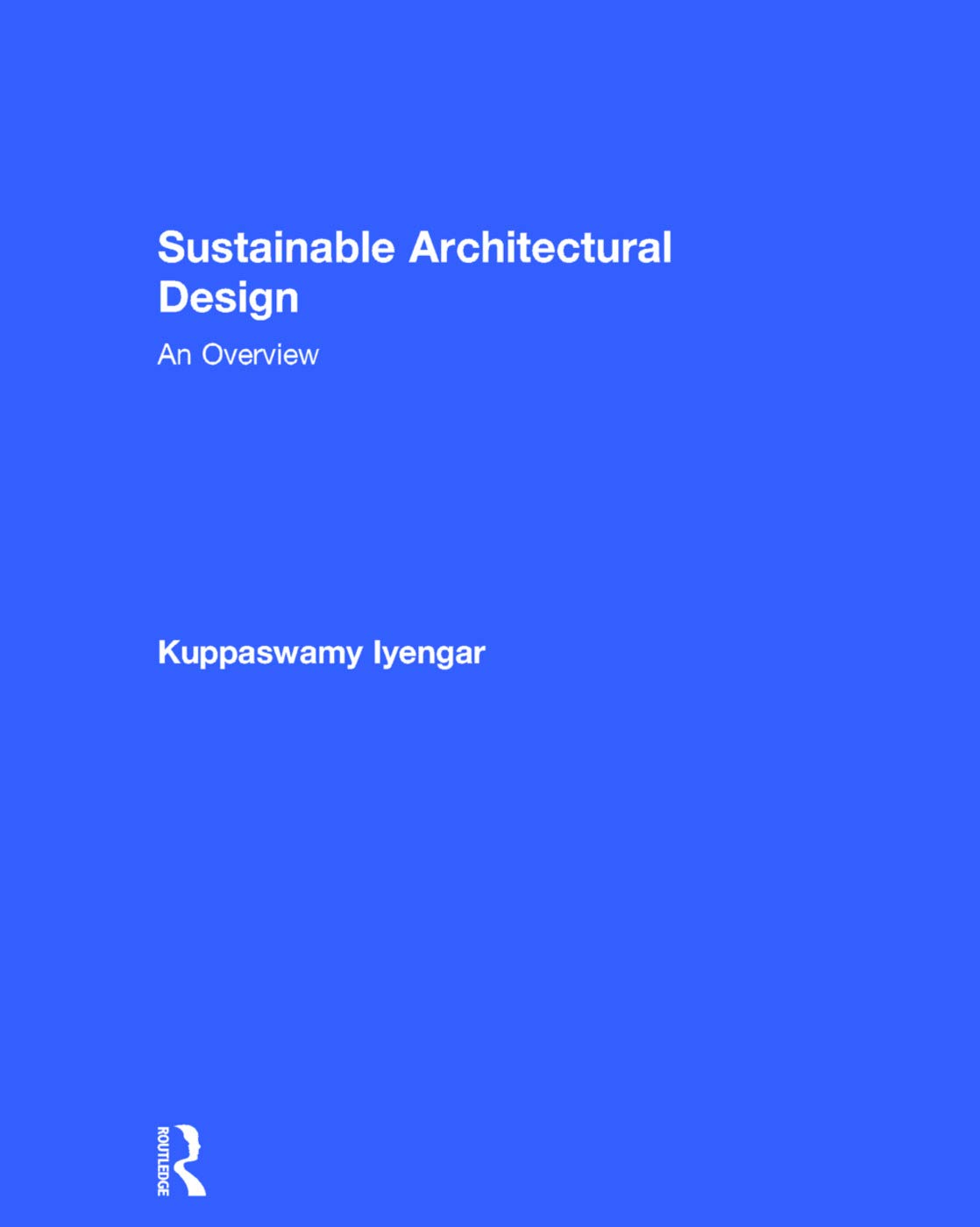
Sustainable Architectural Design: An Overview by Kuppaswamy Iyengar – A Comprehensive Guide to Eco-Friendly Building Des
Inclusive of all applicable taxes. FREE shipping on all orders.
Available Offers
- 🚚Free Delivery — Free shipping on all orders
- 💵Cash on Delivery — Pay when your order arrives
- ↩️15-Day Easy Returns — Hassle-free return policy
- 🔒Cash on Delivery — Pay safely when your order arrives
Check Delivery
Product Description
Introduction
Sustainable architecture is no longer a niche ideal—it is a necessity in today’s world of climate change and resource scarcity. For Indian students, architects, and design professionals seeking a comprehensive yet accessible guide, Sustainable Architectural Design: An Overview by Kuppaswamy Iyengar offers a clear pathway. Published by Routledge, this hardbound volume bridges theory and practice, helping readers create buildings that are environmentally responsible, energy-efficient, and economically viable. Whether you are planning a green home in Bengaluru or a commercial complex in Mumbai, this book equips you with the foundational knowledge to design for a better future.
Book Overview
This book is a structured journey through the entire sustainable design process—from initial concepts to final evaluation. Kuppaswamy Iyengar, an expert in the field, presents a step-by-step approach that integrates design thinking with cutting-edge technology. The narrative moves logically: starting with sustainability theory, then exploring site analysis and energy use, followed by building systems, and concluding with real-world case studies. Each chapter is richly illustrated with charts, tables, drawings, and photographs, making complex ideas easy to grasp. The book also covers global assessment systems like BREEAM, CASBEE, and GBTool, giving Indian readers an international perspective on green building certification.
Key Highlights
- Holistic design framework that connects theory, technology, and practice for effective sustainable building.
- Heavily illustrated with over 200 visuals—including diagrams, photographs, and case study examples—to aid comprehension.
- Focus on free energy systems such as solar passive design, daylighting, and natural ventilation, reducing reliance on fossil fuels.
- Diverse project typologies: small and large offices, single- and multi-family residences, hospitals, schools, restaurants, and warehouses.
- Comparative overview of international green rating systems like BREEAM, CASBEE, and GBTool, relevant for Indian professionals working on global projects.
Inside the Book
The book is divided into five major parts, each building on the previous one. Part I introduces sustainability principles and the ethical responsibility of designers. Part II delves into site selection, climate analysis, and energy-efficient urban planning. Part III covers building envelope, materials, and mechanical systems—including HVAC, lighting, and water conservation. Part IV presents real built examples, from a small clinic in Chennai to a large corporate campus in Hyderabad. Part V offers tools for evaluation and post-occupancy assessment, ensuring that sustainability is measured and improved over time. Every chapter includes a summary, key terms, and further resources for deeper study.
Key Topics
- Principles of sustainable design and ecological ethics
- Climate-responsive site planning and microclimate modification
- Passive solar heating, cooling, and daylighting strategies
- Energy-efficient building envelopes and low-impact materials
- Integration of renewable energy systems (solar, wind, biomass)
- Water harvesting, wastewater treatment, and landscape design
- Indoor environmental quality and occupant health
- Life-cycle assessment and carbon footprint analysis
- Green building rating systems: LEED, GRIHA, BREEAM, CASBEE, GBTool
- Case studies from India and around the world
Reader Benefits
- Gain a complete design methodology that can be applied immediately to academic projects or professional commissions.
- Learn to minimize fossil fuel use through passive and active strategies tailored to the Indian climate.
- Understand how to meet client needs while achieving sustainability goals—balancing cost, comfort, and environmental impact.
- Access a wealth of visual data that simplifies technical details like U-values, shading coefficients, and energy modeling.
- Prepare for green building certification exams with clear explanations of rating system criteria.
Learning Outcomes
By the end of this book, readers will be able to: (1) articulate the core principles of sustainable architecture and their relevance to India; (2) analyze a site’s climatic, topographical, and ecological features to inform design decisions; (3) select appropriate materials and building systems that reduce energy and water consumption; (4) evaluate design alternatives using life-cycle assessment and rating tools; and (5) present a coherent sustainable design proposal that integrates aesthetics, technology, and environmental stewardship.
Who Should Read
- Architecture and interior design students in Indian universities seeking a textbook that aligns with the National Education Policy’s focus on sustainability.
- Practicing architects and urban planners who want to update their knowledge and incorporate green strategies into everyday projects.
- Engineers and construction professionals involved in building services, HVAC, or structural design for green buildings.
- Faculty and researchers teaching sustainable design courses or conducting studies on low-energy architecture.
- Real estate developers and builders aiming to achieve higher star ratings under GRIHA or IGBC.
About the Author
Kuppaswamy Iyengar is a renowned architect and educator with decades of experience in sustainable design. He has taught at leading institutions in India and abroad, including the School of Planning and Architecture, New Delhi, and the University of Pennsylvania. His research focuses on energy-efficient building systems, passive solar architecture, and the integration of traditional Indian building wisdom with modern technology. Iyengar has consulted on numerous green building projects across India, from the Indian Institute of Management Ahmedabad to the Infosys campus in Mysore. His practical insights and academic rigor make this book an authoritative resource for the Indian context.
About the Publisher
Routledge is a global academic publisher known for its high-quality books in architecture, design, and the built environment. With a legacy spanning over 150 years, Routledge brings together leading scholars and practitioners to produce titles that shape the future of education and professional practice. This book is part of their commitment to advancing sustainable development goals through knowledge dissemination. For Indian readers, Routledge offers a trusted name in academic publishing, ensuring that the content meets international standards while remaining relevant to local challenges.
Conclusion
Sustainable Architectural Design: An Overview is more than a textbook—it is a blueprint for a greener built environment in India. Kuppaswamy Iyengar’s methodical approach, combined with abundant visuals and real-world case studies, makes this an indispensable resource for anyone serious about sustainable design. Whether you are a student preparing for a career in architecture or a professional seeking to upgrade your skills, this book will guide you from theory to practice, helping you create buildings that are not only beautiful but also kind to the planet. Order your hardcover copy from Bookshops.in today and take the first step toward designing a sustainable future.
Quick Summary
Sustainable Architectural Design: An Overview by Kuppaswamy Iyengar is a definitive guide for anyone seeking to understand and implement sustainable building practices. The book moves systematically from foundational theory to practical application, covering site analysis, energy systems, building technologies, and evaluation methods. It emphasizes the integration of free energy systems and technologies that minimize fossil fuel use, making it highly relevant for contemporary architecture. Each chapter includes clear overviews, technical details, summaries, and further resources. The book is richly illustrated with charts, tables, drawings, and photographs, and features case studies spanning offices, residences, hospitals, schools, and restaurants. This makes it an invaluable resource for architecture students, practicing architects, engineers, and sustainability professionals. Readers will learn to design buildings that are energy-efficient, environmentally responsible, and cost-effective. By purchasing from Bookshops.in, you get a genuine hardcover edition delivered across India, along with reliable customer service and competitive pricing.
Book Highlights
Book Specifications
| ISBN-13 | 9780415702348 |
| ISBN-10 | 0415702348 |
| Publisher | Routledge |
| Language | English |
| Dimensions | 23.5 x 1.91 x 29.21 cm |
| Weight | 1 kg 270 g |
| Category | Arts, Film & Photography › Architecture |
| Genre | Non-fiction |
| Original Language | English |
Frequently Asked Questions
What is Sustainable Architectural Design: An Overview about?
Who is the author of this book?
Is this book suitable for Indian readers?
What topics are covered in the book?
Does the book include illustrations?
What is the ISBN of this book?
Is this book available in hardcover?
What is the price of the book?
Can I use this book for my architecture course?
Does the book cover passive design strategies?
Are there case studies in the book?
Who is the publisher of this book?
What is the language of the book?
Readers Also Search For
Customers Also Bought

Art History
The Italian Renaissance in Art
Art History
Photovoltaic Design & Installation For Dummies | by Mayfield | ForDummies | by Mayfield | ForDummies | by Mayfield | ForDummies | by Mayfield | ForDummies | by Mayfield | ForDummies | by Mayfield | ForDummies | by Mayfield | ForDummies | by Mayfield | ForDummies | by Mayfield | ForDummies | by Mayfield | ForDummies | by Mayfield | ForDummies | by Mayfield | ForDummies | by Mayfield | ForDummies | by Mayfield | ForDummies | by Mayfield | ForDummies | by Mayfield | ForDummies | by Mayfield | ForDu
Art History
Designing School Systems for All Students (English, Robert J. Manley | Richard J. Hawkins)

Art History
Routledge Library Editions: Art and Culture in the Nineteenth Century
Art History
An Errant Design (English, S. H. Long)

Art History
Distributed System Design | by Jie Wu | CRC Press | by Jie Wu | CRC Press | by Jie Wu | CRC Press | by Jie Wu | CRC Press | by Jie Wu | CRC Press | by Jie Wu | CRC Press | by Jie Wu | CRC Press | by Jie Wu | CRC Press | by Jie Wu | CRC Press | by Jie Wu | CRC Press | by Jie Wu | CRC Press | by Jie Wu | CRC Press | by Jie Wu | CRC Press | by Jie Wu | CRC Press | by Jie Wu | CRC Press | by Jie Wu | CRC Press | by Jie Wu | CRC Press | by Jie Wu | CRC Press | by Jie Wu | CRC Press | by Jie Wu | CRC
Related Products
View All
Architecture
Literatur Und Buhn: Tamil Literature: 2 (Hanbuch Der Orientalistik - Abeilung - Indien, Vol 2/1)

Architecture
Handbook of Synagogue Architecture: 29 (Brown Judaic Studies)

Architecture
Houses, Cottages & Bungalows: A Selection of Representative Examples ... Edited by F. Chatterton. Illustrations and Plans, With Explanatory Text

Architecture
Sport and Architecture (Frontiers of Sport)
Architecture
Britain's New Towns: an Experiment in Living

Architecture