
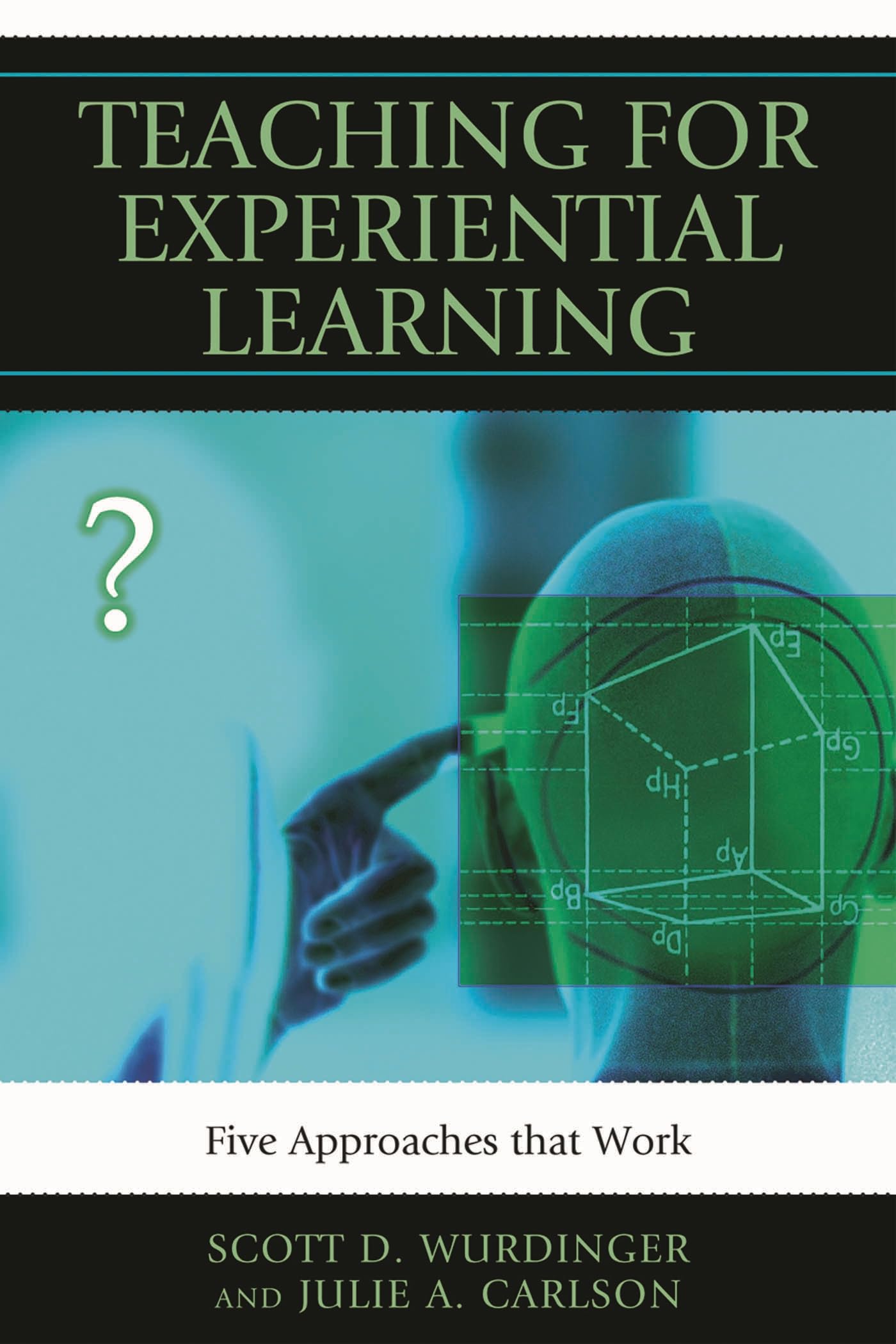
Teaching for Experiential Learning: Five Approaches That Work by Scott D. Wurdinger – A Comprehensive Guide for Educator
Inclusive of all applicable taxes. FREE shipping on all orders.
Available Offers
- 🚚Free Delivery — Free shipping on all orders
- 💵Cash on Delivery — Pay when your order arrives
- ↩️15-Day Easy Returns — Hassle-free return policy
- 🔒Cash on Delivery — Pay safely when your order arrives
Check Delivery
Product Description
Introduction
In an era where classrooms often struggle to keep students engaged, Teaching for Experiential Learning: Five Approaches That Work by Scott D. Wurdinger offers a refreshing and practical roadmap for educators. This hardcover edition from R & L Education is a must-have for teachers, trainers, and academic leaders across India who are eager to move beyond traditional lecture-based methods. The book presents five proven approaches that place students at the centre of their own learning journey, making education relevant, hands-on, and deeply motivating. Whether you teach in a school, college, or professional training setting, this guide will help you create dynamic environments where learners thrive.
Book Overview
This book is a comprehensive resource that reimagines the role of the educator from a dispenser of knowledge to a facilitator of experience. Wurdinger draws on decades of research and classroom practice to explain how experiential learning can transform educational outcomes. The five approaches—active learning, problem-based learning, project-based learning, service learning, and place-based education—are presented in a clear, consistent format that includes historical context, theoretical foundations, practical implementation strategies, and assessment tips. Each chapter is designed to be immediately applicable, helping Indian educators adapt these methods to their unique classroom realities, from urban schools to rural colleges.
Key Highlights
- Five proven approaches that are easy to understand and implement, even for busy teachers.
- Real-world examples and case studies that show how experiential learning works in diverse settings.
- Step-by-step guidance on designing lessons that encourage student problem-solving and critical thinking.
- Research-backed insights that connect theory to practice, making the book both credible and accessible.
- Practical resources including sample activities, assessment rubrics, and further reading lists.
Inside the Book
The book is structured to guide readers from foundational concepts to advanced applications. It begins by explaining why traditional education often fails to inspire today's learners, especially in a fast-changing world. Then, each of the five approaches is explored in depth. For example, the chapter on active learning covers techniques like think-pair-share and interactive lectures, while the project-based learning section details how to design long-term assignments that solve real problems. Service learning connects classroom content to community needs, and place-based education uses local environments—such as Indian villages, cities, or natural landscapes—as living laboratories. Every chapter includes a summary of key takeaways, making it easy to revisit core ideas.
Key Topics
- Active Learning: Strategies to keep students engaged through discussions, debates, and hands-on tasks.
- Problem-Based Learning: Using open-ended problems to develop analytical and collaborative skills.
- Project-Based Learning: Designing meaningful projects that require research, creativity, and presentation.
- Service Learning: Integrating community service with academic goals for holistic development.
- Place-Based Education: Leveraging local culture, geography, and resources to make learning relevant.
Reader Benefits
- Gain confidence to shift from teacher-centred to student-centred classrooms.
- Learn how to spark curiosity and intrinsic motivation in students.
- Discover assessment methods that measure deep understanding, not just memorisation.
- Access ready-to-use templates and lesson ideas that save planning time.
- Understand how experiential learning aligns with India's National Education Policy 2020 goals.
Learning Outcomes
By the end of this book, readers will be able to design and implement experiential learning activities across subjects. They will understand how to create safe, supportive environments where students take ownership of their learning. Educators will also develop skills to evaluate the effectiveness of these approaches and adapt them for different age groups and disciplines. Ultimately, the book empowers teachers to become lifelong learners themselves, modelling the curiosity they wish to instil in their students.
Who Should Read
- School teachers looking for innovative ways to engage students from primary to senior secondary.
- College and university faculty who want to make lectures more interactive and meaningful.
- Teacher trainers and B.Ed. students seeking modern pedagogical frameworks.
- Curriculum developers and educational policymakers aiming to reform classroom practices.
- Corporate trainers and workshop facilitators interested in experiential techniques.
About the Author
Scott D. Wurdinger is a respected educator and researcher with decades of experience in experiential learning. He has served as a professor and administrator at various institutions, focusing on how to make education more engaging and relevant. Wurdinger has authored multiple books and articles on the subject, and his work is widely cited in the field of educational innovation. His practical, no-nonsense writing style makes complex ideas accessible to all readers.
About the Publisher
R & L Education is a distinguished academic publisher known for producing high-quality resources for educators, administrators, and researchers. With a focus on practical scholarship, the publisher brings authoritative voices in education to a global audience. This hardcover edition reflects their commitment to durable, well-edited books that stand the test of time in classrooms and libraries.
Conclusion
Teaching for Experiential Learning: Five Approaches That Work is more than a book—it is a catalyst for change. For Indian educators who are passionate about making a difference, this volume offers the tools, inspiration, and confidence to transform teaching and learning. Order your hardcover copy today from Bookshops.in and take the first step toward creating classrooms where students don't just listen, but truly learn.
Quick Summary
Teaching for Experiential Learning: Five Approaches That Work by Scott D. Wurdinger is a practical guide for educators seeking to transform their classrooms into dynamic, student-centered learning environments. The book explores five overlapping experiential approaches—active learning, problem-based learning, project-based learning, service learning, and place-based education—each designed to engage students in solving real-world problems. Wurdinger provides clear, consistent chapters that cover the history, research, implementation strategies, and resources for each method. This book is ideal for teachers, curriculum developers, and education students who want to move beyond traditional lectures and inspire deeper learning. Readers will learn how to design lessons that are relevant, motivating, and hands-on, addressing the gap between school and life. By choosing Bookshops.in, Indian educators get a premium physical copy with fast delivery, secure payment, and excellent customer support. Whether you teach in a school, college, or training setting, this book equips you with proven tools to make learning truly experiential.
Book Highlights
Book Specifications
| ISBN-13 | 9781607093671 |
| ISBN-10 | 1607093677 |
| Publisher | Rowman & Littlefield Education |
| Language | English |
| Dimensions | 15.24 x 1.09 x 22.86 cm |
| Weight | 318 g |
| Category | Teaching & Education › Curriculum & Instruction |
| Genre | Education |
| Original Language | English |
Frequently Asked Questions
What is experiential learning?
Who is the author of this book?
What are the five approaches covered?
Is this book suitable for Indian teachers?
Does the book include research evidence?
Can I use these methods in higher education?
How is the book structured?
Is this a physical book or digital?
Does the book offer practical examples?
Will this help with student motivation?
What is place-based education?
Can I combine these approaches?
Is there a glossary or resource list?
Readers Also Search For
Customers Also Bought

State University of New York Press
The Hard Sell of Paradise: Hawai'i, Hollywood, Tourism (SUNY series, Horizons of Cinema)
Packt Publishing
Oracle Application Express 3.2 - The Essentials and More (English, Arie Geller | Matthew Lyon)
Packt Publishing
Keyshot 3D Rendering (English, Jei Lee Jo)

Taylor & Francis Ltd
Oppositional Voices (English, Kronitiris Tina)
Routledge
Ordinary People and Extra-Ordinary Protections (English, Judith L. Mitrani)

Fordham University Press
Charms That Soothe: Classical Music and the Narrative Film (Communications and Media Studies, 9)
Related Products
View All
R & L Education
Trimester Schedule that Works (English, Robert Brower | Colleen Moran | Todd Whitaker)

R & L Education
Global Issues in Education (English, Greg Wiggan | Ruth Ahn | Charles B. Hutchison)
R & L Education
Culturally Relevant Pedagogy (English, Dawn Abt-Perkins | Ruth Balf | Matthew Brown)
R & L Education
Threading the Concept (English, Debra Gordon Hedden)

R & L Education
Writing Instruction for Generation 2.0 (English, Gloria E. Jacobs)
R & L Education