
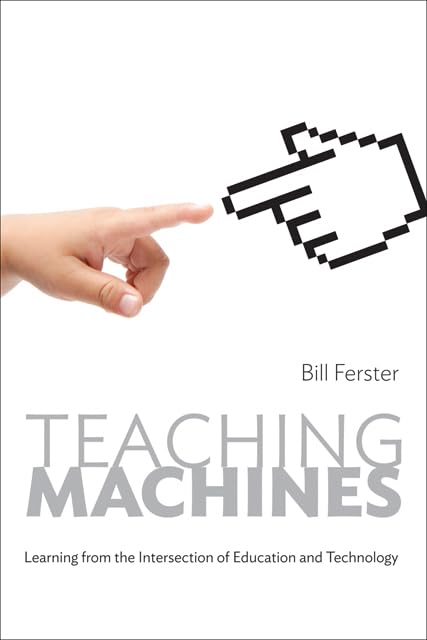
Teaching Machines: Learning from the Intersection of Education and Technology by Bill Ferster – A Critical History of Ed
Inclusive of all applicable taxes. FREE shipping on all orders.
Available Offers
- 🚚Free Delivery — Free shipping on all orders
- 💵Cash on Delivery — Pay when your order arrives
- ↩️15-Day Easy Returns — Hassle-free return policy
- 🔒Cash on Delivery — Pay safely when your order arrives
Check Delivery
Product Description
Introduction
In an age where classrooms are increasingly shaped by digital tools and online platforms, the promise of technology in education has never been louder. Yet, for all the hype surrounding smart classrooms and learning apps, the question remains: does technology truly make learning better, cheaper, or faster? Bill Ferster’s Teaching Machines: Learning from the Intersection of Education and Technology offers a thoughtful, historically grounded exploration of this very question. Published by Johns Hopkins University Press, this hardcover edition is a must-read for Indian educators, students, and policymakers who want to understand the real story behind educational technology—not as a futuristic fantasy, but as a centuries-old quest to improve teaching through machines.
Book Overview
Teaching Machines is not just another book about the latest gadgets or software. Instead, it takes a long view, tracing the evolution of instructional technology from colonial-era hornbooks and the Chautauqua movement to correspondence courses, B.F. Skinner’s teaching machines, and the modern frenzy around Massive Open Online Courses (MOOCs). Ferster weaves together the stories of visionaries and entrepreneurs who believed that machines could revolutionize learning, and he critically examines why so many of these promises have fallen short. The book is both a history lesson and a cautionary tale, offering valuable insights for anyone involved in education in India—a country where edtech is booming but outcomes remain uneven.
Key Highlights
- Historical Depth: Covers over 300 years of attempts to automate teaching, from simple devices to complex digital platforms.
- Balanced Perspective: Neither a cheerleader nor a cynic, Ferster presents both the successes and failures of educational technology.
- Human Stories: Profiles of inventors, educators, and entrepreneurs who shaped the field, including lesser-known figures.
- Critical Analysis: Explores why technology often fails to deliver on its grand promises in real classrooms.
- Relevance to India: Offers lessons for Indian educators navigating the rapid adoption of digital tools in schools and universities.
Inside the Book
The book is structured as a chronological journey, beginning with the earliest attempts to use technology for distance education. Ferster examines the hornbook—a wooden paddle with printed lessons—and the Chautauqua movement, which brought lectures and culture to rural America. He then moves through the rise of correspondence courses, the invention of teaching machines by B.F. Skinner, and the emergence of computer-based instruction. Each chapter reveals how the intersection of education and technology has been shaped by social, economic, and political forces. Ferster does not shy away from asking tough questions: Why do so many technological innovations fail to improve learning? What can we learn from past mistakes? The narrative is engaging, accessible, and packed with anecdotes that bring history to life.
Key Topics
- The history of educational technology from the 17th century to the present
- The role of entrepreneurs and visionaries in shaping edtech
- B.F. Skinner’s teaching machine and its influence
- The rise and fall of correspondence courses
- The promise and pitfalls of Massive Open Online Courses (MOOCs)
- Why technology often fails to transform education
- Lessons for modern educators and policymakers
Reader Benefits
By reading Teaching Machines, you will gain a deeper understanding of why educational technology has a mixed track record—and how to avoid repeating past mistakes. You will learn to critically evaluate new tools and platforms, rather than being swayed by marketing hype. The book also provides a rich historical context that will help you appreciate the challenges and opportunities of teaching with technology today. For Indian readers, this is especially valuable as the country invests heavily in digital education initiatives. Whether you are a teacher, a student, a parent, or a policymaker, this book will change the way you think about learning and machines.
Learning Outcomes
- Understand the historical roots of modern educational technology
- Identify the key factors that determine success or failure of edtech initiatives
- Critically assess new technological tools for teaching and learning
- Appreciate the human stories behind the machines
- Apply lessons from history to improve education in India
Who Should Read
This book is ideal for educators, school administrators, curriculum designers, and students of education. It is also highly relevant for policymakers, edtech entrepreneurs, and anyone interested in the intersection of technology and society. Indian readers, in particular, will find the historical perspective useful as they navigate the rapid digitization of classrooms across the country. Parents who want to understand the tools their children use at school will also benefit from Ferster’s clear and engaging writing.
About the Author
Bill Ferster is a scholar and researcher with a deep interest in educational technology. He has spent years studying how machines have been used to teach, and he brings both academic rigour and a storyteller’s flair to this book. Ferster’s work is informed by his experience in the field, making him a credible and compelling guide through the complex history of teaching machines.
About the Publisher
Johns Hopkins University Press is one of the oldest and most respected academic publishers in the world. Known for its rigorous editorial standards and commitment to scholarly excellence, the press has been publishing influential works since 1878. This hardcover edition reflects the quality and care that readers expect from Johns Hopkins.
Conclusion
Teaching Machines is a timely and thought-provoking book that challenges us to rethink the role of technology in education. It is not a manual for using the latest app, but a deep dive into the history of an idea—the idea that machines can teach. For Indian readers, this book offers a valuable perspective as the country embraces digital learning. By understanding the past, we can better shape the future of education. Order your copy today from Bookshops.in and join the conversation about what truly makes learning effective.
Quick Summary
Teaching Machines: Learning from the Intersection of Education and Technology by Bill Ferster is a compelling historical exploration of the enduring human quest to automate teaching. From the earliest use of the postal service for distance education to the modern frenzy over Massive Open Online Courses (MOOCs), Ferster traces the stories of entrepreneurs and visionaries who believed machines could make learning better, cheaper, and faster. The book critically examines why these promises have rarely been fully realized, offering a sobering yet fascinating look at the intersection of technology and education. This book is ideal for Indian educators, students of education and technology, policymakers, and edtech entrepreneurs who want to understand the historical roots of today's digital classroom debates. Readers will learn about the cyclical nature of edtech hype, the motivations of key historical figures, and the persistent gap between technological innovation and effective teaching practice. By buying from Bookshops.in, you receive an authentic hardcover edition from a trusted Indian bookstore, perfect for academic study or personal enrichment.
Book Highlights
Book Specifications
| ISBN-13 | 9781421415406 |
| ISBN-10 | 1421415402 |
| Publisher | Johns Hopkins Univ Pr |
| Language | English |
| Dimensions | 15.24 x 2.08 x 22.86 cm |
| Weight | 408 g |
| Category | Americas › United States |
| Genre | Nonfiction |
| Original Language | English |
Frequently Asked Questions
What is Teaching Machines about?
Who is the author of Teaching Machines?
Is this book relevant for Indian readers?
What is the ISBN-13 of this book?
What binding is available?
What is the price of Teaching Machines on Bookshops.in?
What is the book's rating?
Does this book cover MOOCs?
Is this a technical book?
Can I use this book for academic research?
Does the book discuss Indian education?
Why should I buy from Bookshops.in?
Readers Also Search For
Related Products
View All
History
The Information Revolution: Transforming the World Through Technology (World History)
History
Human Nature and the French Revolution: From the Enlightenment to the Napoleonic Code: 3 (Polygons: Cultural Diversities and Intersections, 3)
History
The Unmaking of Home in Contemporary Art (Cultural Spaces)

History
Handbook to Life in Medieval and Early Modern Japan | by William E. Deal | Oxford University Press | by William E. Deal | Oxford University Press | by William E. Deal | Oxford University Press | by William E. Deal | Oxford University Press | by William E. Deal | Oxford University Press | by William E. Deal | Oxford University Press | by William E. Deal | Oxford University Press | by William E. Deal | Oxford University Press | by William E. Deal | Oxford University Press | by William E. Deal | Ox

History
The Narrators of Barbarian History (A.D. 550-800) | by Walter Goffart | University of Notre Dame Press | by Walter Goffart | University of Notre Dame Press | by Walter Goffart | University of Notre Dame Press | by Walter Goffart | University of Notre Dame Press | by Walter Goffart | University of Notre Dame Press | by Walter Goffart | University of Notre Dame Press | by Walter Goffart | University of Notre Dame Press | by Walter Goffart | University of Notre Dame Press | by Walter Goffart | Univ
History