
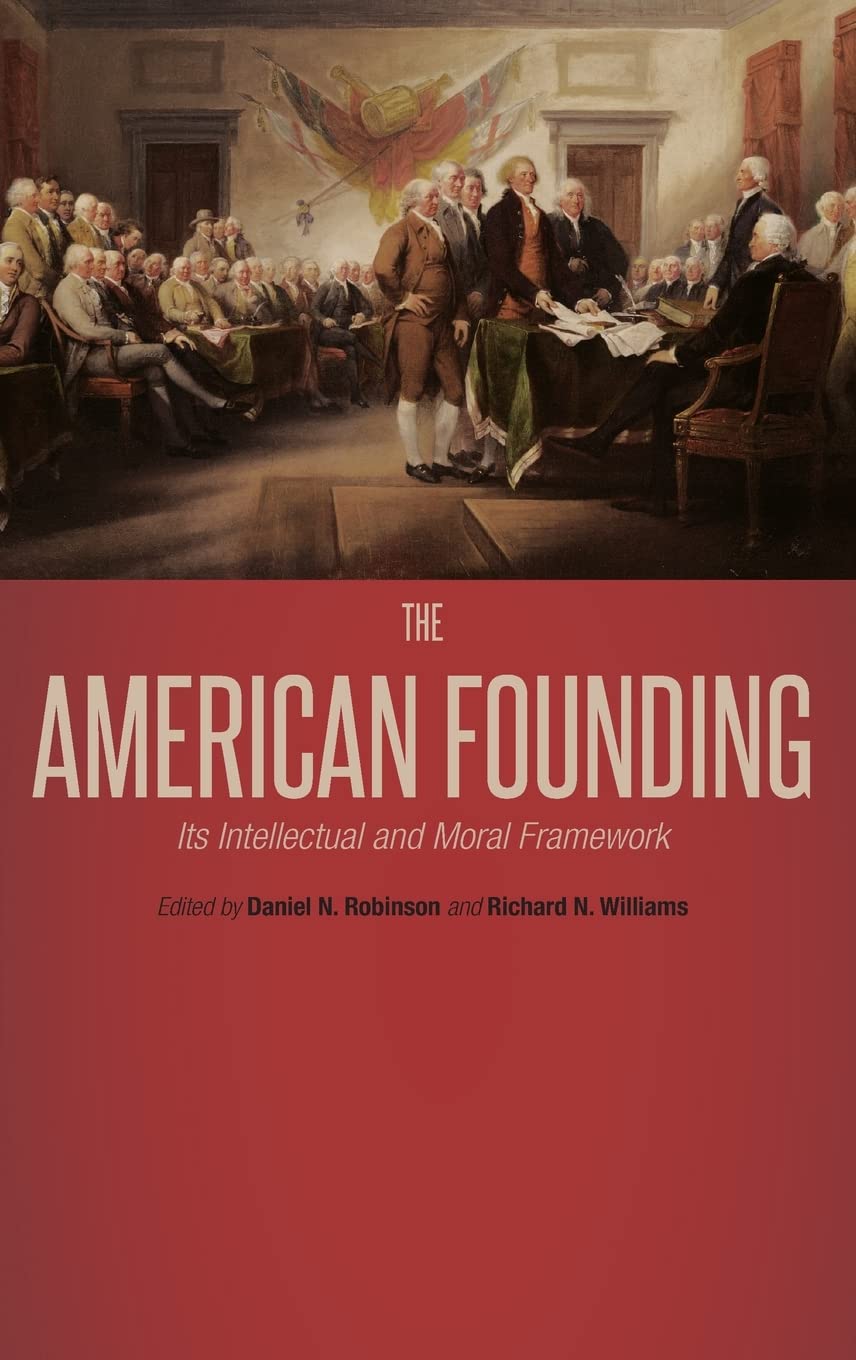
The American Founding: Its Intellectual and Moral Framework by Daniel N. Robinson – A Scholarly Analysis of the Founders
Inclusive of all applicable taxes. FREE shipping on all orders.
Available Offers
- 🚚Free Delivery — Free shipping on all orders
- 💵Cash on Delivery — Pay when your order arrives
- ↩️15-Day Easy Returns — Hassle-free return policy
- 🔒Cash on Delivery — Pay safely when your order arrives
Check Delivery
Product Description
Introduction
What were the intellectual foundations upon which the United States of America was built? In The American Founding: Its Intellectual and Moral Framework, distinguished scholar Daniel N. Robinson assembles a compelling collection of essays that delve deep into the philosophical, moral, and cultural bedrock of the American experiment. This hardcover volume, published by Continuum, is an essential resource for anyone seeking to understand not just the events of 1776, but the enduring ideas that shaped a nation and continue to influence democratic thought worldwide. For Indian students and scholars of political philosophy, history, and law, this book offers a rare opportunity to explore the universal principles of governance and human nature that transcend borders.
Book Overview
Rather than retelling the familiar narrative of the American Revolution, this work turns its gaze inward, examining the assumptions and convictions held by the Founding Fathers. Robinson and his contributors explore how figures like Jefferson, Madison, and Hamilton drew upon classical thinkers such as Aristotle and Cicero, as well as Judeo-Christian traditions, to craft a system of self-governance. The book investigates the Founders' views on civic life, human nature, private morality, aesthetics, education, and history. It reveals how they believed classical ideals could be revived in a modern republic, and how their constitutional charter aimed to be universal in its human aspirations. This is a conservative yet rigorous response to modern interpretations, grounding American ideals in a timeless moral framework.
Key Highlights
- Original Essays: A curated collection by leading thinkers in political philosophy and history, offering fresh perspectives on the Founding era.
- Classical Roots: In-depth analysis of the influence of Aristotle, Cicero, and natural law theory on American constitutional thought.
- Moral Dimensions: Exploration of the Judeo-Christian conception of human nature and its role in shaping civic virtue.
- Cultural Insights: Unique chapters on the symbolic role of architecture and the importance of education in the early republic.
- Universal Aspirations: How the Declaration of Independence and the Constitution aimed to articulate principles applicable to all humanity.
Inside the Book
Readers will find meticulously researched chapters that address the Founders' assumptions about political institutions and private morality. The book examines why the Framers believed that only a virtuous citizenry could sustain a republic, and how they sought to balance liberty with order. It also delves into the aesthetic and educational ideals that informed the design of public buildings and the curriculum of early American schools. Through these explorations, the volume provides a comprehensive understanding of the intellectual architecture behind the American founding.
Key Topics
- Natural law and its application to republican government
- The influence of Greek and Roman political thought on the Founders
- Judeo-Christian ethics and the concept of human dignity
- The role of education in cultivating civic virtue
- Architecture as a reflection of republican ideals
- The moral prerequisites for self-governance
- Historical consciousness and the lessons of failed republics
Reader Benefits
This book empowers readers to move beyond simplistic narratives of the American Revolution. It provides a nuanced understanding of the philosophical debates that shaped the Constitution, making it invaluable for those studying comparative politics, constitutional law, or the history of ideas. Indian readers will find striking parallels between the Founders' concerns about diversity, federalism, and moral foundations and similar challenges in India's own democratic journey. The book also enriches one's appreciation of how classical Western philosophy was adapted to modern conditions, offering lessons for any society striving for liberty and justice.
Learning Outcomes
After engaging with this volume, readers will be able to: articulate the key intellectual influences on the American Founding; analyze the Founders' assumptions about human nature and civic virtue; evaluate the role of natural law in constitutional design; discuss the importance of education and aesthetics in republican thought; and critically compare the American experiment with other democratic traditions, including India's. This knowledge is essential for students of political science, history, law, and philosophy.
Who Should Read
- Students and scholars of political philosophy, American history, and constitutional law
- Lawyers and judges interested in the intellectual origins of legal principles
- Educators seeking a deeper resource for teaching about democracy and governance
- General readers with a passion for ideas and the history of liberty
- Indian readers curious about the philosophical parallels between the American and Indian constitutional experiences
About the Author
Daniel N. Robinson was a distinguished professor of philosophy and psychology, known for his expertise in the history of ideas and moral philosophy. He taught at Georgetown University and the University of Oxford, and authored numerous works on the intellectual foundations of Western civilization. His scholarship bridges the gap between classical thought and modern political questions, making him an ideal editor for this volume.
About the Publisher
Continuum is a respected academic imprint known for publishing rigorous works in philosophy, history, and religious studies. With a focus on scholarly excellence, Continuum books are widely used in universities and research institutions around the world. This hardcover edition ensures durability and a premium reading experience for serious students of history and ideas.
Conclusion
The American Founding: Its Intellectual and Moral Framework is more than a historical study—it is a meditation on the enduring principles that make self-government possible. By exploring the Founders' deepest convictions about human nature, morality, and education, Daniel N. Robinson and his contributors offer a roadmap for understanding the American experiment in its full intellectual context. This book is a must-have for any serious library, especially for those in India who value the global conversation about democracy, liberty, and the common good. Order your hardcover copy today from Bookshops.in and add a timeless work to your collection.
Quick Summary
The American Founding: Its Intellectual and Moral Framework, edited by Daniel N. Robinson, is a scholarly collection that delves into the philosophical and ethical foundations upon which the United States was built. Rather than recounting historical events, the book examines the core beliefs of the Founding Fathers regarding human nature, civic virtue, political institutions, and the role of education. Drawing from classical thinkers like Aristotle and Cicero, as well as Judeo-Christian traditions, the contributors explore how natural law, morality, and aesthetics shaped the new republic. This volume is ideal for Indian students and academics in political science, history, law, and philosophy who seek a deeper understanding of Western political thought. Readers will gain insight into the Founders' assumptions about self-governance and the intellectual tools they used to design a lasting constitutional order. By purchasing from Bookshops.in, you support a trusted Indian bookstore that offers quality academic titles with reliable delivery and competitive pricing. This hardcover edition is a valuable addition to any serious library.
Book Highlights
Book Specifications
| ISBN-13 | 9781441140708 |
| ISBN-10 | 1441140700 |
| Publisher | Continuum Publishing Corporation |
| Language | English |
| Dimensions | 15.6 x 1.09 x 23.39 cm |
| Weight | 386 g |
| Category | Political Science › Political History |
| Genre | Non-fiction |
| Reading Age | Adult |
| Original Language | English |
Frequently Asked Questions
What is the main theme of The American Founding?
Who is the author of this book?
Is this book suitable for Indian readers?
What topics does the book cover?
Does the book include contributions from multiple authors?
Is this a historical or philosophical work?
What is the ISBN for this book?
What language is the book in?
Is this a hardcover or paperback?
What is the price of the book?
Can I use this book for my university coursework?
Does the book discuss the influence of Aristotle and Cicero?
Readers Also Search For
Customers Also Bought

Hyperion Books
THE EXILED QUEEN by Cinda Williams Chima
American Psychological Association (APA)
Mindfulness-Based Interventions for Trauma and Its Consequences (Concise Guides on Trauma Care, 4)
Fordham University Press
Charms That Soothe: Classical Music and the Narrative Film (Communications and Media Studies, 9)

State University of New York Press
The Hard Sell of Paradise: Hawai'i, Hollywood, Tourism (SUNY series, Horizons of Cinema)
Rowman & Littlefield Publishers
Developmental Education Preparation: How Faculty Preparation in Higher Education Can Lead to Student Success
CRC Press
Handbook of Laboratory Animal Science, Volume I: Essential Principles and Practices: 01: 1
Related Products
View All
Continuum
Selfhood and Sacrifice | by Andrew O'Shea | Continuum | by Andrew O'Shea | Continuum | by Andrew O'Shea | Continuum | by Andrew O'Shea | Continuum | by Andrew O'Shea | Continuum | by Andrew O'Shea | Continuum | by Andrew O'Shea | Continuum | by Andrew O'Shea | Continuum | by Andrew O'Shea | Continuum | by Andrew O'Shea | Continuum | by Andrew O'Shea | Continuum | by Andrew O'Shea | Continuum | by Andrew O'Shea | Continuum | by Andrew O'Shea | Continuum | by Andrew O'Shea | Continuum | by Andrew

Continuum
Stairway to Heaven | by Peter Levenda | Continuum | by Peter Levenda | Continuum | by Peter Levenda | Continuum | by Peter Levenda | Continuum | by Peter Levenda | Continuum | by Peter Levenda | Continuum | by Peter Levenda | Continuum | by Peter Levenda | Continuum | by Peter Levenda | Continuum | by Peter Levenda | Continuum | by Peter Levenda | Continuum | by Peter Levenda | Continuum | by Peter Levenda | Continuum | by Peter Levenda | Continuum | by Peter Levenda | Continuum | by Peter Leven

Continuum
Seguridad: Crime, Police Power, and Democracy in Argentina
Continuum
The Improv Handbook (English, Tom Salinsky | Deborah Frances-White)
Continuum
The Citizenship Teacher's Handbook (English, Kate Brown | Stephen Fairbrass)
Continuum