
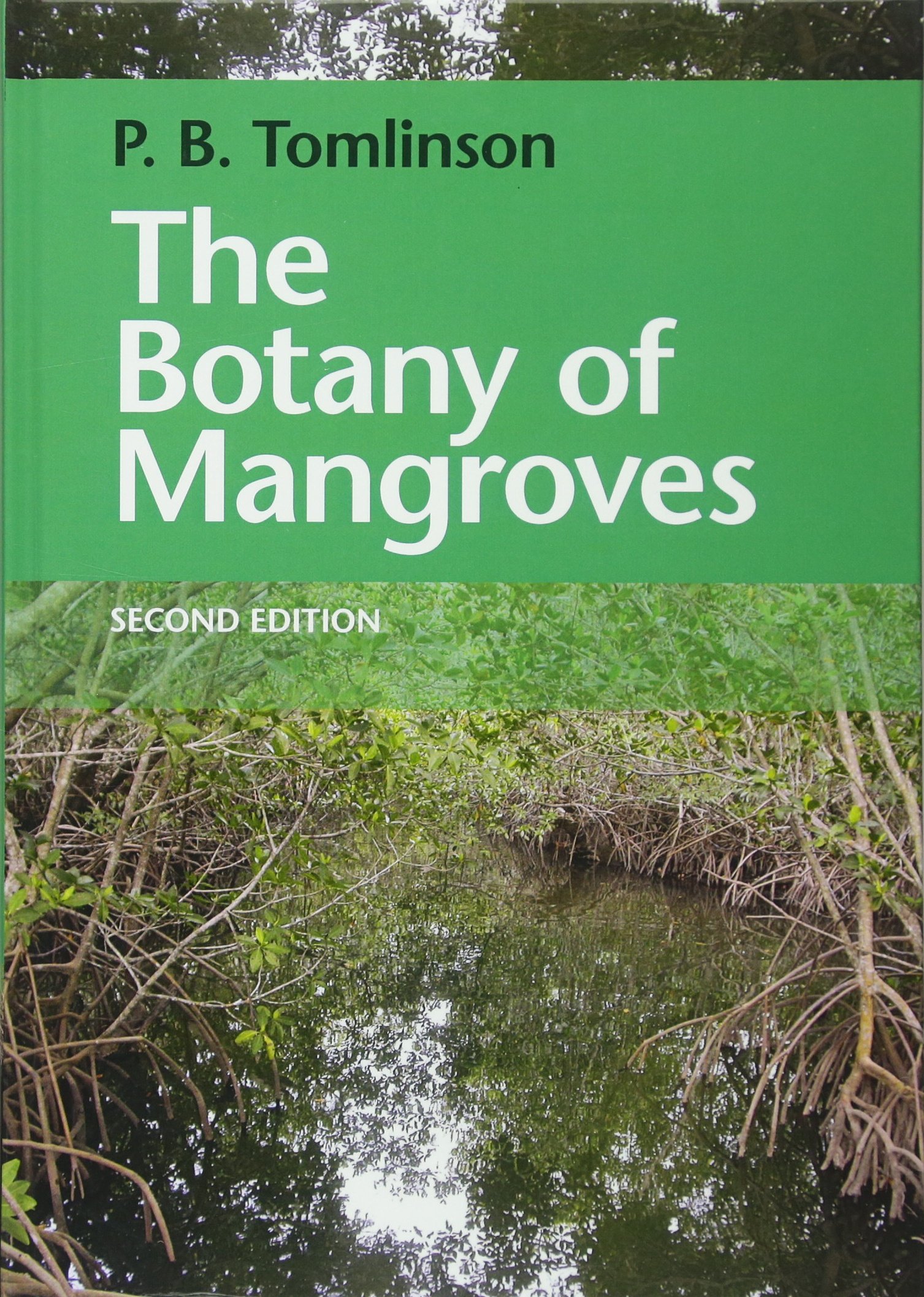
The Botany of Mangroves by P. Barry Tomlinson – A Definitive Reference on Mangrove Plant Communities, Taxonomy, and Ecol
Inclusive of all applicable taxes. FREE shipping on all orders.
Available Offers
- 🚚Free Delivery — Free shipping on all orders
- 💵Cash on Delivery — Pay when your order arrives
- ↩️15-Day Easy Returns — Hassle-free return policy
- 🔒Cash on Delivery — Pay safely when your order arrives
Check Delivery
Product Description
Introduction
Mangroves are among the most remarkable and resilient plant communities on Earth, thriving at the dynamic boundary between land and sea. In India, these coastal forests line the Sundarbans, the Andaman and Nicobar Islands, and the western coast, playing a critical role in protecting shorelines, supporting biodiversity, and sustaining local livelihoods. The Botany of Mangroves by P. Barry Tomlinson is the definitive scientific reference for understanding these unique ecosystems. This hardcover edition, published by Cambridge University Press, offers an authoritative and updated account of mangrove biology, making it an essential resource for students, researchers, and environmental professionals across India.
Book Overview
This comprehensive volume provides a thorough introduction to mangrove plants, covering their taxonomy, anatomy, physiology, reproduction, and ecological significance. Fully revised to incorporate the latest research from the past two decades, the book includes newly documented taxa, fresh insights into vivipary (the unique seed germination strategy of mangroves), and an evolutionary perspective on mangrove species. Richly illustrated with colour photographs and detailed diagrams, the text bridges the gap between pure botany and applied ecology. It also explores the socio-economic value of mangroves as sources of timber, food, and coastal protection, while addressing the pressing threats of pollution, deforestation, and climate change-induced sea level rise.
Key Highlights
- Updated content: Reflects two decades of new research, including newly described mangrove species and revised taxonomic classifications.
- Rich visual aids: Features a full set of colour illustrations, anatomical diagrams, and habitat photographs that bring mangrove diversity to life.
- Interdisciplinary approach: Integrates botany, ecology, zoology, and environmental science for a holistic understanding.
- Indian relevance: Covers mangrove species found in Indian coastal ecosystems, including the Sundarbans, Godavari delta, and Kerala backwaters.
- Authoritative source: Written by a world-renowned botanist and published by Cambridge University Press, a trusted academic publisher.
Inside the Book
Readers will find detailed chapters on mangrove morphology, including root adaptations like pneumatophores and prop roots, leaf structure for salt excretion, and reproductive biology with an emphasis on vivipary. The book systematically describes over 70 mangrove species across families such as Rhizophoraceae, Avicenniaceae, and Combretaceae. It also includes keys for identification, distribution maps, and discussions on mangrove-associated flora and fauna. Each chapter is supported by extensive references, making it a valuable tool for advanced study and field research.
Key Topics
- Taxonomy and global distribution of mangrove species
- Anatomical and physiological adaptations to saline, waterlogged conditions
- Reproductive strategies: vivipary, cryptovivipary, and seed dispersal
- Evolutionary history and biogeography of mangroves
- Ecological roles: carbon sequestration, shoreline stabilization, and nursery habitats
- Human impacts: deforestation, aquaculture, pollution, and climate change
- Conservation and sustainable management practices
Reader Benefits
- Gain a deep, scientific understanding of mangrove biology from a single authoritative source.
- Access the latest research findings in a well-organized, accessible format.
- Enhance field identification skills with detailed descriptions and illustrations.
- Apply knowledge to real-world conservation and restoration projects in India and beyond.
- Prepare for competitive exams, academic assignments, or professional fieldwork with confidence.
Learning Outcomes
After reading this book, you will be able to identify major mangrove species and their key adaptations, explain the ecological and economic importance of mangrove ecosystems, analyze the evolutionary relationships among mangrove lineages, and critically evaluate the threats facing mangroves and the strategies for their conservation. The book equips you with both foundational knowledge and advanced insights suitable for undergraduate and postgraduate courses in botany, ecology, environmental science, and marine biology.
Who Should Read
This book is ideal for botany and ecology students at Indian universities, researchers studying coastal ecosystems, environmental consultants and NGO workers involved in mangrove restoration, forest officers and coastal zone managers, and anyone with a serious interest in tropical plant biology. It is also a valuable reference for wildlife biologists, ornithologists, and ichthyologists who study mangrove-associated fauna.
About the Author
P. Barry Tomlinson is a distinguished botanist and Professor Emeritus at Harvard University, with a career spanning over five decades. He is widely recognized for his pioneering work on the anatomy, morphology, and evolution of tropical plants, especially mangroves and palms. His meticulous research has shaped modern understanding of plant adaptation to extreme environments, and he has authored several seminal texts in botany. The Botany of Mangroves remains his most celebrated work, now in a fully updated second edition.
About the Publisher
Cambridge University Press is one of the world's oldest and most respected academic publishers, with a history dating back to 1534. Known for rigorous peer review and high editorial standards, Cambridge University Press publishes authoritative works across all scientific disciplines. This hardcover edition reflects their commitment to producing durable, high-quality reference books that serve the global academic community, including Indian institutions and libraries.
Conclusion
For Indian students, researchers, and environmental professionals, The Botany of Mangroves is an indispensable guide to one of the planet's most vital yet threatened ecosystems. Whether you are studying the Sundarbans, assessing coastal biodiversity, or planning a restoration project, this book provides the scientific foundation you need. Order your hardcover copy from Bookshops.in today and add a classic reference to your library.
Quick Summary
The Botany of Mangroves by P. Barry Tomlinson is a definitive reference on mangrove plant communities, thoroughly updated to reflect the latest two decades of research. This hardcover edition covers the taxonomy, habitat-specific features, reproduction, and socio-economic value of mangroves, which are vital tropical ecosystems found in the intertidal zone. Readers will learn about newly documented taxa, the unique process of vivipary, and the evolutionary history of mangrove species. The book also addresses pressing conservation issues such as pollution, clearance, and climate change-induced sea level rise. It is an essential resource for Indian students pursuing botany, ecology, or environmental science, as well as researchers and conservation professionals. With detailed illustrations and clear explanations, it serves both as a textbook and a field reference. By purchasing from Bookshops.in, customers receive a genuine Cambridge University Press edition with fast delivery across India, making it a reliable choice for academic and professional needs.
Book Highlights
Book Specifications
| ISBN-13 | 9781107080676 |
| ISBN-10 | 1107080673 |
| Publisher | Cambridge University Press |
| Language | English |
| Dimensions | 17.63 x 2.46 x 25.6 cm |
| Weight | 1 kg 50 g |
| Category | Biology & Life Sciences › Biology |
| Genre | Nonfiction |
| Original Language | English |
Frequently Asked Questions
What is The Botany of Mangroves about?
Who is the author of this book?
Is this book suitable for Indian students?
Does the book cover mangrove species found in India?
What is new in this edition?
Is this book a field guide?
What is vivipary in mangroves?
Does the book discuss conservation?
What is the language of the book?
Is this book available in paperback?
What is the ISBN of this book?
Can I use this book for research?
Does the book include illustrations?
Why should I buy from Bookshops.in?
Readers Also Search For
Customers Also Bought

Mathematics
Stereotype Spaces and Algebras: 73 (De Gruyter Expositions in Mathematics, 73)

Mathematics
Semigroups in Algebra, Geometry and Analysis: 20 (De Gruyter Expositions in Mathematics, 20)

Mathematics
Geometry from the Pacific Rim: Proceedings of the Pacific Rim Geometry Conference held at National University of Singapore, Republic of Singapore, ... 1994 (De Gruyter Proceedings in Mathematics)

Mathematics
First International Tainan-Moscow Algebra Workshop: Proceedings of the International Conference held at National Cheng Kung University Tainan, Taiwan, ... 1994 (De Gruyter Proceedings in Mathematics)

Mathematics
Differential Geometry - Proceedings of the VIII International Colloquium (English, Jesus A. Alvarez Lopez | Eduardo Garcia-Rio)

Mathematics
Mathematical Theory of Optimal Processes (Classics of Soviet Mathematics)
Related Products
View All
Biology
Evolution: What the Fossils Say and Why It Matters by Donald R. Prothero
Biology
From Taxonomy to Phylogenetics – Life and Work of Willi Hennig

Biology
The Marine Biology of the South China Sea

Biology
Genetics Meets Metabolomics: from Experiment to Systems Biology

Biology
The Elements of Natural or Experimental Philosophy: 2

Biology