
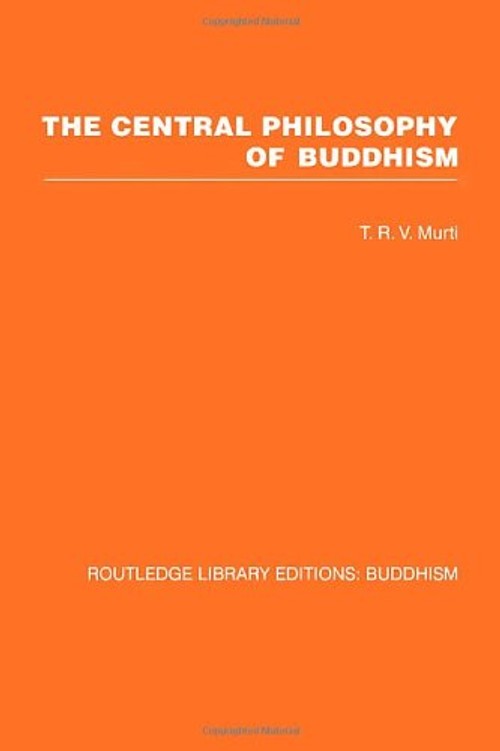
The Central Philosophy of Buddhism: A Study of the Madhyamika System by T R V Murti – A Classic Work on Indian Philosoph
Inclusive of all applicable taxes. FREE shipping on all orders.
Available Offers
- 🚚Free Delivery — Free shipping on all orders
- 💵Cash on Delivery — Pay when your order arrives
- ↩️15-Day Easy Returns — Hassle-free return policy
- 🔒Cash on Delivery — Pay safely when your order arrives
Check Delivery
Product Description
Introduction
The Central Philosophy of Buddhism: A Study of the Madhyamika System by T. R. V. Murti is a landmark work that delves into the heart of Buddhist philosophy. Originally published in 1955, this book remains an indispensable resource for scholars, students, and anyone seeking a profound understanding of the Madhyamika school—the philosophy of the Middle Way. Murti’s rigorous analysis places the Madhyamika system not only within the Buddhist tradition but also in dialogue with Western philosophical thought, making it a truly cross-cultural exploration of dialectics and absolutism.
Book Overview
This volume is a comprehensive study of the Madhyamika philosophy, which Murti argues sparked a revolution within Buddhism and, by extension, the entire landscape of Indian philosophy. The book is structured into three distinct parts: the historical development of the Madhyamika, a critical exposition of its core tenets—including its unique dialectical method and conception of the Absolute—and a comparative study with Western dialectical systems such as those of Kant, Hegel, and Bradley. Murti also examines the different forms of absolutism, contrasting Madhyamika with Vijnanavada and Vedanta.
Key Highlights
- Pioneering Scholarship: One of the first comprehensive works to present the Madhyamika system as a coherent philosophical tradition.
- Three-Part Structure: Historical, expository, and comparative sections offer a holistic understanding.
- Dialectical Analysis: A deep dive into the Madhyamika dialectic, showing how it deconstructs all views to reveal the ultimate truth.
- Cross-Philosophical Dialogue: Compares the Madhyamika with Western thinkers like Kant, Hegel, and Bradley, highlighting universal philosophical concerns.
- Routledge Edition: A durable hardcover edition from a renowned academic publisher, ideal for serious study.
Inside the Book
The book opens with a historical survey tracing the origins of the Madhyamika from early Buddhism through the works of Nagarjuna and his commentators. The second part is the heart of the work: a detailed exposition of the Madhyamika philosophy, including its critique of causality, self-nature (svabhava), and the four-cornered negation (catuskoti). Murti explains how the dialectic leads to the realization of the Absolute, which is not a thing but a dynamic, non-dual reality. The final part offers a comparative study, showing how the Madhyamika anticipates and critiques later Western idealist systems.
Key Topics
- Origins and development of the Madhyamika school
- The structure of the Madhyamika dialectic
- The concept of Sunyata (Emptiness) and the Absolute
- Ethics and religion within the Madhyamika framework
- Comparative absolutism: Madhyamika, Vijnanavada, and Vedanta
- Dialectical parallels with Kant, Hegel, and Bradley
Reader Benefits
Readers will gain a clear, scholarly understanding of one of Buddhism’s most profound philosophical systems. This book helps bridge the gap between Eastern and Western thought, offering tools for critical thinking and a deeper appreciation of non-dual philosophies. It is an excellent resource for academic research, self-study, or classroom use, providing a solid foundation for further exploration of Buddhist philosophy and comparative philosophy.
Learning Outcomes
- Understand the historical context and evolution of the Madhyamika system
- Master the key concepts of Sunyata, the Middle Way, and the dialectical method
- Analyze the Madhyamika critique of other Indian philosophical schools
- Compare and contrast Eastern and Western dialectical traditions
- Develop a nuanced perspective on absolutism and its various forms
Who Should Read
This book is ideal for advanced undergraduate and postgraduate students of philosophy, religious studies, and Indology. It is also highly recommended for scholars of Buddhism, comparative philosophy, and anyone with a serious interest in the Madhyamika tradition. Teachers and researchers will find it a valuable reference, while lay readers with a background in philosophy will appreciate its depth and clarity.
About the Author
T. R. V. Murti (1902–1986) was a distinguished Indian philosopher and scholar of Buddhism and Indian philosophy. He served as a professor at Banaras Hindu University and later at the University of Mysore. Murti is best known for his work on the Madhyamika system, and his scholarship has been widely acclaimed for its clarity, depth, and comparative approach. His other notable works include studies on Vedanta and the philosophy of language.
About the Publisher
Routledge is a globally respected academic publisher, known for its extensive catalogue of works in the humanities and social sciences. This hardcover edition ensures longevity and quality, making it a worthy addition to any serious library. Routledge’s commitment to rigorous scholarship is evident in the production of this classic text.
Conclusion
The Central Philosophy of Buddhism remains an essential text for anyone seeking to understand the Madhyamika system and its place in world philosophy. T. R. V. Murti’s masterful synthesis of history, dialectics, and comparative analysis makes this book a timeless guide to the Middle Way. Whether you are a student, a teacher, or a seeker of philosophical truth, this volume offers a rich, rewarding journey into the heart of Buddhist thought.
Quick Summary
The Central Philosophy of Buddhism: A Study of the Madhyamika System by T R V Murti is a classic scholarly work that provides a comprehensive analysis of the Madhyamika philosophy, which the author argues revolutionized Buddhism and Indian thought. Originally published in 1955, this book is divided into three parts: the historical development of Madhyamika, a critical exposition of its dialectical method and conception of the Absolute, and a comparative study with Western dialectical systems such as those of Kant, Hegel, and Bradley. Readers will gain a deep understanding of key concepts like Sunyata (emptiness) and the Middle Way, as well as the ethical and religious dimensions of the system. This book is ideal for students, researchers, and philosophy enthusiasts seeking a thorough exploration of one of Buddhism's most influential philosophical traditions. By purchasing from Bookshops.in, you receive a high-quality hardcover edition from Routledge, a trusted academic publisher, with reliable delivery across India.
Book Highlights
Book Specifications
| ISBN-13 | 9780415461184 |
| ISBN-10 | 0415461189 |
| Publisher | Routledge |
| Language | English |
| Dimensions | 16.3 x 2.7 x 23.8 cm |
| Weight | 740 g |
| Country | India |
| Category | Encyclopaedias & Reference Works › Religion |
| Genre | Philosophy |
| Reading Age | 18+ |
| Original Language | English |
Frequently Asked Questions
What is the Madhyamika system?
Who is T R V Murti?
What is the main argument of this book?
Is this book suitable for beginners?
Does the book compare Madhyamika with Western philosophy?
What is Sunyata?
How is the book structured?
Is this book still relevant today?
Does the book cover Buddhist ethics?
What is the ISBN for this book?
Is this a hardcover edition?
Can I use this book for academic research?
Does the book include a bibliography?
Where can I buy this book in India?
Readers Also Search For
Customers Also Bought

Related Products
View All
Reference
Discourses of the Developing World: Researching Properties, Problems, and Potentials of the Developing World (Cultural Discourse Studies Series)
![Buy Language in the Context of Use: Discourse and Cognitive Approaches to Language: 37 (Cognitive Linguistics Research [CLR], 37) — BookShops.in](/book-covers/language-in-the-context-of-use-english-andrea-tyler-or-yiyoung-kim-or-mari-takad-img-0.jpg)
Reference
Language in the Context of Use: Discourse and Cognitive Approaches to Language: 37 (Cognitive Linguistics Research [CLR], 37)
Reference
Elements Of Fractional Distillation
Reference
Oxford Handbook of the Septuagint by Law Salvesen – Biblical Studies
Reference
Retellings: The Bible in Literature, Music, Art and Film

Reference