
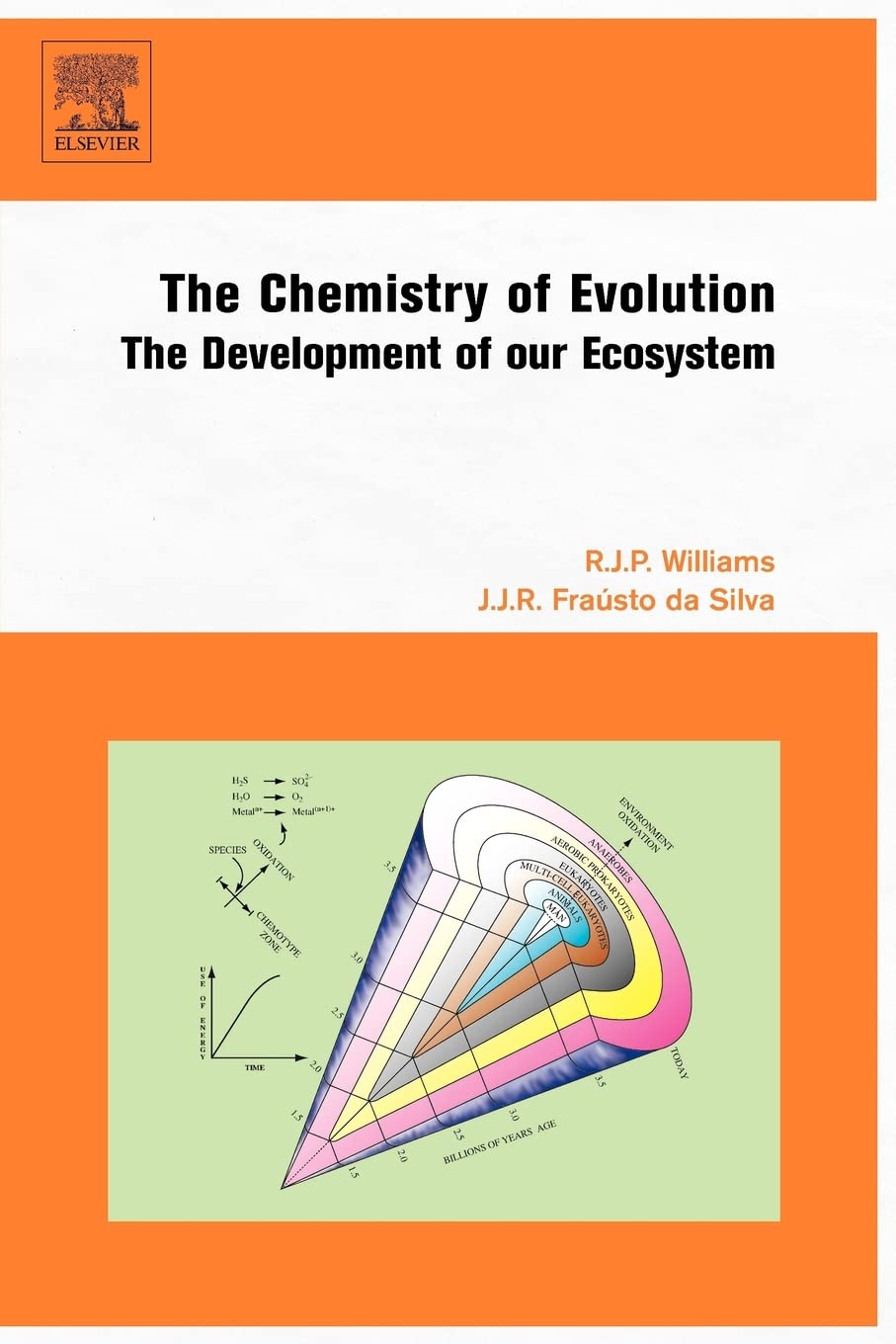
The Chemistry of Evolution: The Development of our Ecosystem by R. J. P. Williams – A Deep Dive into the Chemical Founda
Inclusive of all applicable taxes. FREE shipping on all orders.
Available Offers
- 🚚Free Delivery — Free shipping on all orders
- 💵Cash on Delivery — Pay when your order arrives
- ↩️15-Day Easy Returns — Hassle-free return policy
- 🔒Cash on Delivery — Pay safely when your order arrives
Check Delivery
Product Description
Introduction
The Chemistry of Evolution: The Development of our Ecosystem by R. J. P. Williams is a groundbreaking exploration of how chemical principles have shaped the living world around us. Published by Elsevier Science, this hardbound volume bridges the gap between chemistry and biology, offering Indian students and researchers a deep understanding of the molecular foundations that drive evolutionary processes. For anyone passionate about the natural sciences, this book serves as an essential guide to the intricate chemical dance that has built our planet’s ecosystems over billions of years.
Book Overview
This meticulously researched work takes readers on a journey from the earliest chemical reactions on Earth to the complex, interconnected ecosystems we see today. Williams masterfully explains how elements like carbon, oxygen, nitrogen, and metals have influenced the development of life at every level—from single-celled organisms to advanced multicellular life. The book emphasizes that evolution is not just a biological phenomenon but a chemical one, where the availability and reactivity of elements have dictated the pathways of life. With a focus on the interplay between inorganic chemistry and organic life, this volume provides a fresh perspective on the history of our planet.
Key Highlights
- Interdisciplinary Approach: Combines chemistry, geology, and biology to present a unified theory of ecosystem development.
- Chemical Timeline: Traces the evolution of Earth’s atmosphere, oceans, and crust alongside the emergence of life.
- Metal Ions in Biology: Detailed analysis of how metal ions like iron, copper, and zinc have driven enzymatic evolution.
- Ecosystem Dynamics: Explains how chemical cycles (carbon, nitrogen, sulfur) have shaped ecological balance over geological time.
- Original Research: Includes Williams’s own findings on the role of elements in cellular evolution.
Inside the Book
The book is structured to guide readers from fundamental concepts to advanced topics. Early chapters cover the chemical composition of the primitive Earth, the formation of organic molecules, and the origins of life. Mid-sections delve into the evolution of cells, the rise of photosynthesis, and the development of complex metabolic pathways. Later chapters examine the impact of changing atmospheric chemistry, the emergence of multicellular organisms, and the human influence on modern ecosystems. Each chapter is supported by clear diagrams, tables of elemental data, and references to seminal studies, making complex ideas accessible.
Key Topics
- The chemical evolution of Earth’s early atmosphere and oceans
- Role of transition metals in the origin of life
- Biogeochemical cycles and their evolution
- Coordination chemistry in biological systems
- Evolution of photosynthesis and respiration
- Chemical signaling in cellular communication
- Human impact on global chemical cycles
Reader Benefits
Indian readers, especially those preparing for competitive exams like CSIR-NET, GATE, or JAM in chemistry or life sciences, will find this book invaluable. It provides a holistic understanding of how chemical principles underpin biological evolution—a topic often overlooked in standard textbooks. The clear, logical flow helps students connect disparate subjects, while the depth of content satisfies advanced researchers. Additionally, the hardcover format ensures durability for years of reference.
Learning Outcomes
- Understand the chemical constraints that have guided evolutionary pathways
- Analyze how elemental abundance and reactivity have shaped biodiversity
- Evaluate the role of inorganic chemistry in the development of enzymes and metabolic networks
- Critically assess the impact of human activities on Earth’s chemical equilibrium
- Apply chemical principles to interpret paleontological and geological evidence
Who Should Read
This book is ideal for undergraduate and postgraduate students in chemistry, biochemistry, geology, and environmental science. It is also a must-read for researchers in evolutionary biology, astrobiology, and geochemistry. Indian educators looking to enrich their curriculum with a systems-level perspective will find it a valuable resource. Even curious general readers with a strong science background will appreciate the accessible yet rigorous treatment of the subject.
About the Author
R. J. P. Williams is a distinguished chemist and Emeritus Professor at the University of Oxford. With a career spanning over five decades, Williams is renowned for his pioneering work on the role of metal ions in biological systems. He has authored numerous influential papers and books, receiving accolades such as the Royal Society’s Davy Medal. His interdisciplinary vision has inspired generations of scientists to explore the chemical foundations of life.
About the Publisher
Elsevier Science is a world-leading academic publisher based in the Netherlands, known for its high-quality scientific, technical, and medical content. With a legacy of over 140 years, Elsevier publishes cutting-edge research and reference works that advance knowledge across disciplines. Their commitment to rigorous peer review and editorial excellence makes this book a trusted source for scholars worldwide.
Conclusion
The Chemistry of Evolution: The Development of our Ecosystem is a unique and thought-provoking work that redefines how we understand life’s history. By placing chemistry at the center of evolutionary theory, R. J. P. Williams offers readers a powerful lens to view the natural world. Whether you are a student, teacher, or researcher, this hardcover edition from Elsevier Science deserves a place on your shelf. Order your copy from Bookshops.in today and embark on a journey through the chemical roots of our planet’s magnificent biodiversity.
Quick Summary
The Chemistry of Evolution: The Development of our Ecosystem by R. J. P. Williams is a groundbreaking interdisciplinary work that explains the chemical principles underlying the evolution of life and the formation of Earth's ecosystem. The book delves into how chemical elements, from metals to nonmetals, have driven biological and environmental changes over billions of years. It connects inorganic chemistry, biochemistry, and ecology to present a unified view of life's history. Readers will learn about biogeochemical cycles, the coevolution of organisms and their environment, and the chemical constraints that shaped evolutionary pathways. This book is ideal for advanced students, researchers, and educators in chemistry, biology, environmental science, and related fields. It offers a unique perspective that bridges multiple scientific domains. By purchasing from Bookshops.in, Indian readers receive a genuine hardcover copy from a trusted online bookstore, ensuring quality and timely delivery. Whether for academic study or personal enrichment, this book provides deep insights into the chemical fabric of our world.
Book Highlights
Book Specifications
| ISBN-13 | 9780444521552 |
| ISBN-10 | 0444521550 |
| Publisher | Elsevier Science |
| Language | English |
| Dimensions | 17.73 x 2.03 x 23.93 cm |
| Weight | 215 g |
| Country | United Kingdom |
| Category | Mechanical Engineering › Material Science & Engineering |
| Genre | Science |
| Original Language | English |
Frequently Asked Questions
What is The Chemistry of Evolution about?
Who is the author of this book?
Is this book suitable for Indian students?
What is the ISBN?
Is this book available in hardcover?
What is the price in India?
Does the book cover the origin of life?
What disciplines does this book integrate?
Can this be used as a textbook?
Is there a digital edition available?
What is the reading age?
Why buy from Bookshops.in?
Readers Also Search For
Related Products
View All
Science & Mathematics
Elements of Pelagos Biology: With Focus on the Mediterranean Sea
Science & Mathematics
Mathematical Theory of Optimal Processes (Classics of Soviet Mathematics)
Science & Mathematics
Cambridge IGCSE and O Level Additional Mathematics by Val Hanrahan – Textbook for 0606/4037

Science & Mathematics
Theorie der algebraischen Gleichungen: 9 (Gschens Lehrbcherei/ Gruppe I: Reine Und Angewandte Mathematik)

Science & Mathematics
Algebra (De Gruyter Lehrbuch)
Science & Mathematics