
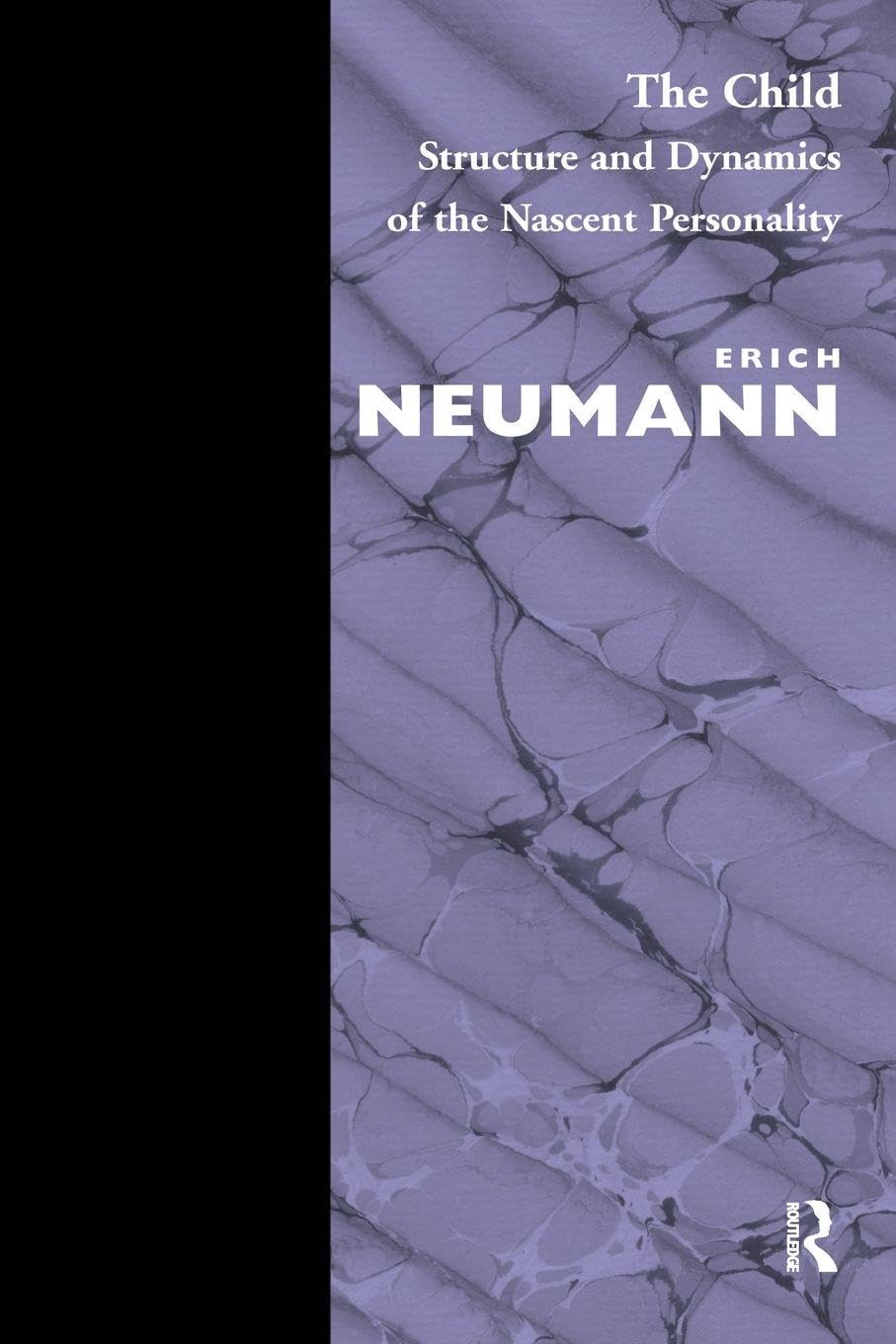
The Child: Structure and Dynamics of the Nascent Personality by Erich Neumann – A Groundbreaking Jungian Study of Early
Inclusive of all applicable taxes. FREE shipping on all orders.
Available Offers
- 🚚Free Delivery — Free shipping on all orders
- 💵Cash on Delivery — Pay when your order arrives
- ↩️15-Day Easy Returns — Hassle-free return policy
- 🔒Cash on Delivery — Pay safely when your order arrives
Check Delivery
Product Description
Introduction
Erich Neumann’s The Child: Structure and Dynamics of the Nascent Personality is a profound exploration of the earliest stages of human psychological development. Building on the foundations laid in his earlier work The Origins and History of Consciousness, Neumann here turns his attention to the ontogenetic unfolding of the individual psyche. This hardcover edition, published by Routledge, offers readers a deep dive into the archetypal patterns that shape the child’s emerging ego, selfhood, and relationship with the world. For students of analytical psychology, educators, and anyone interested in the roots of human consciousness, this book is an indispensable resource.
Book Overview
In this carefully argued work, Neumann traces the journey from the primal mother–child bond to the formation of a distinct ego-Self axis. He examines how the child’s body, its sense of Self, and its encounters with the ‘thou’ contribute to the birth of individuality. The narrative moves fluidly from the matriarchal phase of participation mystique to the patriarchal stage where the ego achieves a centered, solar-like stability. This is not merely a theoretical treatise; it is a map of the psyche’s earliest geography, written with Neumann’s characteristic depth and clarity.
Key Highlights
- Original hardcover edition from Routledge, a trusted academic publisher
- Continues the groundbreaking ideas from The Origins and History of Consciousness
- Focuses on the archetypal dynamics of infancy and early childhood
- Explores the transition from symbiosis to individuation
- Essential for understanding Jungian developmental psychology
Inside the Book
The book is structured to guide the reader through the sequential stages of psychic birth. Neumann begins with the pre-egoic state of the child in the maternal uroboros, then examines the emergence of the ego through bodily experience and the encounter with the Self. He discusses the role of the ‘thou’—the other—in shaping consciousness, and culminates with the establishment of a stable ego-Self relationship. Each chapter builds on the last, creating a coherent narrative of psychological growth.
Key Topics
- Primal relationship of child and mother
- Emergence of the ego from the unconscious
- The child’s relationship to its own body
- Archetypal dynamics of the Self
- Participation mystique and the matriarchate
- Transition to the patriarchate and ego-centration
- The ‘thou’ and being-in-the-world
Reader Benefits
Readers will gain a nuanced understanding of how the earliest experiences shape personality. Neumann’s insights help illuminate the psychological foundations of creativity, neurosis, and spiritual development. For therapists, this book offers a framework for working with early trauma and attachment issues. For parents and educators, it provides a deeper appreciation of the child’s inner world.
Learning Outcomes
- Understand the archetypal patterns underlying infant development
- Recognize the stages of ego formation from a Jungian perspective
- Analyze the role of the mother-child dyad in psychic structure
- Differentiate between matriarchal and patriarchal phases of consciousness
- Apply Neumann’s concepts to clinical or educational contexts
Who Should Read
This book is ideal for students and scholars of analytical psychology, depth psychology, and developmental theory. It is also highly relevant for practicing psychotherapists, child psychologists, and educators seeking a richer understanding of early childhood. Anyone interested in the spiritual and symbolic dimensions of human growth will find Neumann’s work illuminating.
About the Author
Erich Neumann (1905–1960) was a German-born Israeli psychologist and one of Carl Jung’s most gifted students. He is widely regarded as a pioneer in the field of analytical psychology, especially for his work on the development of consciousness and the archetypal stages of life. His books, including The Origins and History of Consciousness and The Great Mother, remain foundational texts in Jungian studies.
About the Publisher
Routledge is a leading global academic publisher known for its extensive catalogue in the humanities and social sciences. With a history dating back to the 19th century, Routledge continues to publish authoritative works in psychology, philosophy, and cultural studies. This hardcover edition reflects their commitment to producing high-quality, durable books for scholars and serious readers.
Conclusion
The Child: Structure and Dynamics of the Nascent Personality is a masterful work that bridges mythology, psychology, and developmental science. Neumann’s deep understanding of the psyche offers readers a rare opportunity to witness the dawn of individuality from within. Whether you are a seasoned analyst or a curious student, this book will enrich your perspective on what it means to become a self. Add this essential volume to your library today and journey to the very origins of human consciousness.
Quick Summary
The Child: Structure and Dynamics of the Nascent Personality by Erich Neumann is a profound exploration of the earliest stages of human psychological development, rooted in Jungian analytical psychology. Building on his earlier work, The Origins and History of Consciousness, Neumann delves into the primal mother-child relationship, the emergence of the ego-Self constellation, and the child’s evolving sense of body, self, and the world. The book traces the psychological journey from the matriarchal to the patriarchal phase, offering deep insights into how individual consciousness mirrors the collective psychic history of humanity. This hardcover edition from Routledge is essential for students, clinicians, and scholars of depth psychology, particularly those interested in infant development, archetypal patterns, and the structure of the nascent personality. Readers will gain a nuanced understanding of how early relationships shape individuality and consciousness. By purchasing from Bookshops.in, Indian readers receive a premium, authentic imported edition with reliable delivery and customer support, making it a valuable addition to any academic or personal library.
Book Highlights
Book Specifications
| ISBN-13 | 9780946439423 |
| ISBN-10 | 0946439427 |
| Publisher | Routledge |
| Language | English |
| Dimensions | 15.24 x 1.17 x 22.86 cm |
| Weight | 324 g |
| Country | India |
| Category | Society & Social Sciences |
| Genre | Psychology |
| Original Language | German |
Frequently Asked Questions
What is The Child: Structure and Dynamics of the Nascent Personality about?
Who is the author of The Child?
Is this book part of a series?
What is the ISBN for this book?
Who should read this book?
Does this book cover modern parenting advice?
What is the price of this book on Bookshops.in?
Is the book suitable for beginners in psychology?
What are the key themes explored in The Child?
What language is the book written in?
Is this book available in digital format?
What makes this book unique among Jungian texts?
Readers Also Search For
Customers Also Bought
Sociology
Imagination Beyond Nation: Latin American Popular Culture: 349 (Pitt Latin American Series)

Sociology
Boomer Volunteer Engagement: Facilitator's Tool Kit

Sociology
Making a Success of Marriage: Planning for Happily Ever After

Sociology
Causal Mediation Analysis (Analytical Methods for Social Research)

Sociology
Marriage and the Moral Imagination (New Departures in Anthropology)

Sociology
Social Change, Resistance and Social Practices: 19 (Studies in Critical Social Sciences, 19)
Related Products
View All
Society & Social Sciences
Oxford Studies in Epistemology, Volume 3 | by Tamar Szabo Gendler | John Hawthorne | OUP UK | by Tamar Szabo Gendler | John Hawthorne | OUP UK | by Tamar Szabo Gendler | John Hawthorne | OUP UK | by Tamar Szabo Gendler | John Hawthorne | OUP UK | by Tamar Szabo Gendler | John Hawthorne | OUP UK | by Tamar Szabo Gendler | John Hawthorne | OUP UK | by Tamar Szabo Gendler | John Hawthorne | OUP UK | by Tamar Szabo Gendler | John Hawthorne | OUP UK | by Tamar Szabo Gendler | John Hawthorne | OUP UK
Society & Social Sciences
Sidgwick's Ethics and Victorian Moral Philosophy | by J. B. Schneewind | Jerome B. Schneewind | OUP Oxford | by J. B. Schneewind | Jerome B. Schneewind | OUP Oxford | by J. B. Schneewind | Jerome B. Schneewind | OUP Oxford | by J. B. Schneewind | Jerome B. Schneewind | OUP Oxford | by J. B. Schneewind | Jerome B. Schneewind | OUP Oxford | by J. B. Schneewind | Jerome B. Schneewind | OUP Oxford | by J. B. Schneewind | Jerome B. Schneewind | OUP Oxford | by J. B. Schneewind | Jerome B. Schneewind
Society & Social Sciences
Cognitive Phenomenology | by Tim Bayne | Michelle Montague | OUP UK | by Tim Bayne | Michelle Montague | OUP UK | by Tim Bayne | Michelle Montague | OUP UK | by Tim Bayne | Michelle Montague | OUP UK | by Tim Bayne | Michelle Montague | OUP UK | by Tim Bayne | Michelle Montague | OUP UK | by Tim Bayne | Michelle Montague | OUP UK | by Tim Bayne | Michelle Montague | OUP UK | by Tim Bayne | Michelle Montague | OUP UK | by Tim Bayne | Michelle Montague | OUP UK | by Tim Bayne | Michelle Montague |
Society & Social Sciences
Alasdair MacIntyre on Practical Philosophy | by Kelvin Knight | Peter Wicks | University of Notre Dame Press | by Kelvin Knight | Peter Wicks | University of Notre Dame Press | by Kelvin Knight | Peter Wicks | University of Notre Dame Press | by Kelvin Knight | Peter Wicks | University of Notre Dame Press | by Kelvin Knight | Peter Wicks | University of Notre Dame Press | by Kelvin Knight | Peter Wicks | University of Notre Dame Press | by Kelvin Knight | Peter Wicks | University of Notre Dame P
Society & Social Sciences
Philosophical Historicism and the Betrayal of First Philosophy | by Carl Page | Penn State University Press | by Carl Page | Penn State University Press | by Carl Page | Penn State University Press | by Carl Page | Penn State University Press | by Carl Page | Penn State University Press | by Carl Page | Penn State University Press | by Carl Page | Penn State University Press | by Carl Page | Penn State University Press | by Carl Page | Penn State University Press | by Carl Page | Penn State Univ
Society & Social Sciences