
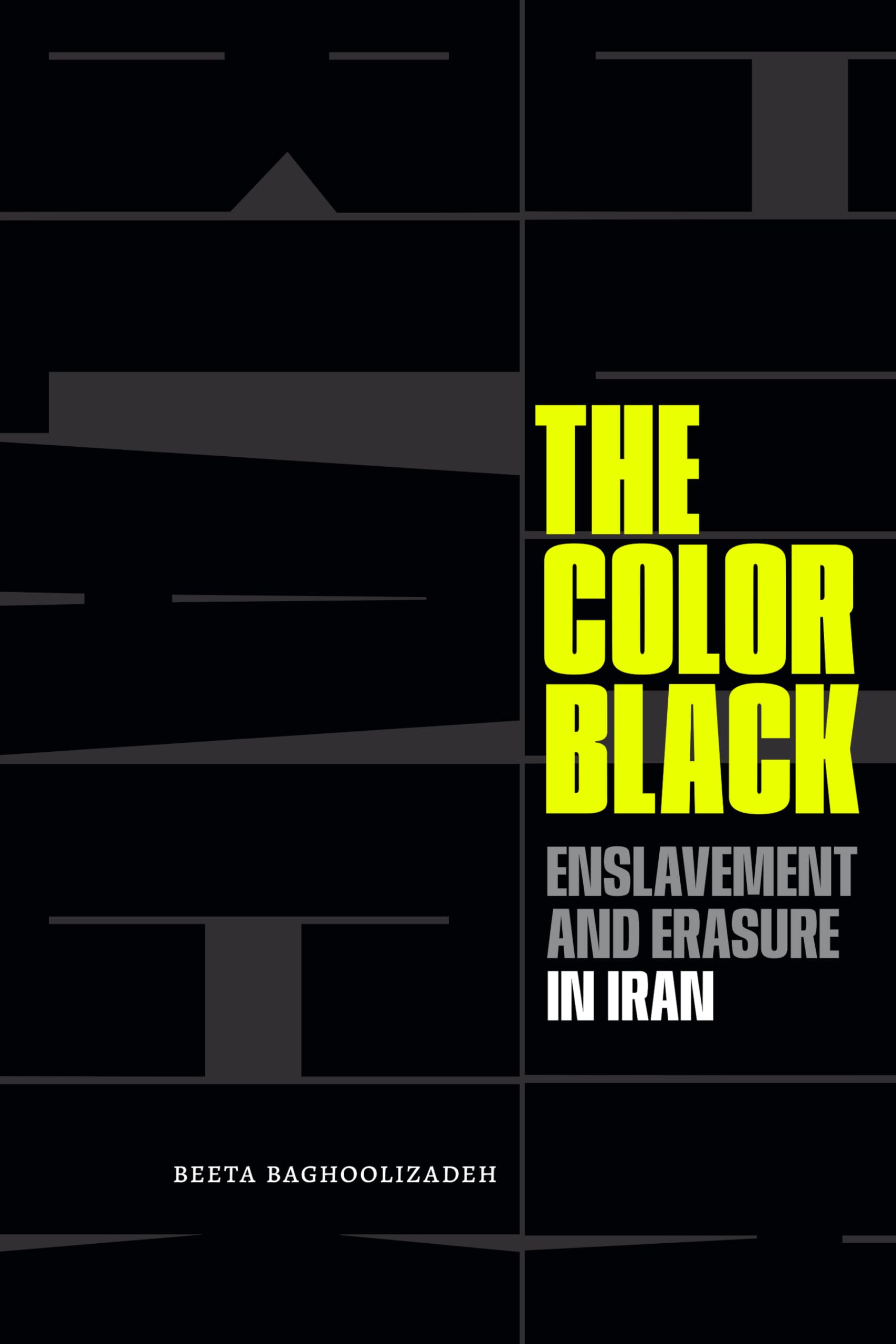
The Color Black: Enslavement and Erasure in Iran by Beeta Baghoolizadeh – A Critical Examination of Race and Memory in M
Inclusive of all applicable taxes. FREE shipping on all orders.
Available Offers
- 🚚Free Delivery — Free shipping on all orders
- 💵Cash on Delivery — Pay when your order arrives
- ↩️15-Day Easy Returns — Hassle-free return policy
- 🔒Cash on Delivery — Pay safely when your order arrives
Check Delivery
Product Description
Introduction
The Color Black: Enslavement and Erasure in Iran by Beeta Baghoolizadeh is a groundbreaking work that uncovers a hidden chapter of history. Published by Duke University Press, this hardcover volume delves into the complex legacy of slavery and racial erasure in Iran, offering a vital perspective for students, scholars, and general readers interested in race, history, and social justice. For Indian readers familiar with caste and colour hierarchies, this book provides a powerful comparative lens.
Book Overview
This meticulously researched book traces the twin processes of enslavement and erasure of Black people in Iran during the nineteenth and twentieth centuries. Baghoolizadeh shows how geopolitical shifts and technological changes made enslaved East Africans uniquely visible in wealthy Iranian households, intertwining Blackness, Africanness, and servitude. After slavery officially ended in 1929, a national campaign of erasure led to collective amnesia about this history—a silence that persists today. The author draws on photographs, architecture, theatre, circus acts, newspapers, and films to reveal how visibility and invisibility shaped discussions around abolition and race.
Key Highlights
- Original research: Uses rare visual and archival sources from nineteenth- and twentieth-century Iran.
- Interdisciplinary approach: Combines history, visual culture, performance studies, and critical race theory.
- Reveals hidden histories: Documents the lived experiences of enslaved East Africans and their descendants.
- Explores erasure: Analyses how abolition was implemented through deliberate forgetting and national amnesia.
- Relevant to Indian readers: Offers parallels with colourism, caste, and erased histories in South Asia.
Inside the Book
The book is organised around key themes: the visual economy of slavery in Qajar-era Iran, the role of photography in making Blackness hypervisible, the theatrical and circus performances that exoticised African bodies, and the post-abolition campaigns that erased Black Iranian identity. Each chapter weaves together textual analysis with rich visual evidence, making complex ideas accessible. Baghoolizadeh also examines how architecture and domestic spaces reinforced racial hierarchies, and how cinema and print media perpetuated stereotypes even after abolition.
Key Topics
- Enslavement of East Africans in Iran (1800s–1929)
- Visual culture and the politics of visibility
- Abolition and its aftermath in the Middle East
- Race, Blackness, and Iranian identity
- Collective amnesia and historical erasure
- Gender, domestic labour, and servitude
- Photography, theatre, and film as tools of racialisation
- Comparative perspectives on race and caste
Reader Benefits
Reading The Color Black will deepen your understanding of how race is constructed and forgotten. You will gain critical tools to analyse visual culture, question official histories, and connect Iranian experiences with global patterns of racialisation. The book challenges readers to confront uncomfortable truths about privilege, memory, and justice—lessons that resonate strongly in the Indian context.
Learning Outcomes
- Understand the historical roots of anti-Black racism in Iran.
- Analyse how visual media shape racial perceptions.
- Critique processes of historical erasure and collective memory.
- Compare Iranian slavery with other global systems of bondage.
- Develop skills in interdisciplinary historical research.
Who Should Read
This book is ideal for university students and scholars in history, Middle Eastern studies, African diaspora studies, race and ethnicity, and visual culture. It is also highly recommended for Indian readers interested in comparative race studies, social justice activists, journalists, and anyone seeking to understand the global dimensions of colourism and erasure. General readers with a curiosity about hidden histories will find it both eye-opening and accessible.
About the Author
Beeta Baghoolizadeh is a historian of race, slavery, and visual culture in Iran and the Middle East. Her research focuses on the intersections of race, gender, and representation, and she has published widely in academic journals. She is committed to recovering marginalized histories and making them accessible to broader audiences.
About the Publisher
Duke University Press is a leading academic publisher known for its rigorous scholarship in the humanities and social sciences. It has a strong track record of publishing works on critical race theory, postcolonial studies, and global histories of enslavement. This hardcover edition reflects the press’s commitment to high-quality production and lasting impact.
Conclusion
The Color Black: Enslavement and Erasure in Iran is an essential addition to any library. It illuminates a forgotten past and challenges us to rethink race, memory, and justice today. For Indian readers, it offers a valuable mirror to examine our own histories of colour and caste. Order your copy from Bookshops.in and add this transformative work to your collection.
Quick Summary
The Color Black: Enslavement and Erasure in Iran by Beeta Baghoolizadeh is a pathbreaking academic work that uncovers the dual processes of enslavement and erasure of Black people in Iran from the 19th century onward. The book reveals how enslaved East Africans were made hypervisible through photography and their roles in wealthy Iranian households, only to be systematically forgotten after abolition in 1929. Baghoolizadeh argues that this erasure was a deliberate national project, creating a collective amnesia that persists today. Readers will learn about the intersections of race, class, and visual culture in a non-Western context, and how memory shapes national identity. This book is ideal for students, scholars, and general readers interested in Iranian history, slavery studies, the African diaspora, and racial justice. By purchasing from Bookshops.in, Indian readers gain access to a premium hardcover edition of this essential scholarly work, delivered with trusted service.
Book Highlights
Book Specifications
| ISBN-13 | 9781478030249 |
| ISBN-10 | 1478030240 |
| Publisher | Duke University Press |
| Language | English |
| Dimensions | 15.5 x 2.3 x 22.9 cm |
| Weight | 390 g |
| Category | World › Civilization & Culture |
| Genre | History |
| Original Language | English |
Frequently Asked Questions
What is The Color Black about?
Who is the author?
What time period does the book cover?
Does the book discuss photography?
When was slavery abolished in Iran?
Is this book academic or popular?
What makes this book unique?
Does the book address contemporary racism?
Is the book available in India?
What is the ISBN?
Does the book include photographs?
What language is the book in?
Why should I buy this book?
Readers Also Search For
Related Products
View All
History
The Information Revolution: Transforming the World Through Technology (World History)
History
Human Nature and the French Revolution: From the Enlightenment to the Napoleonic Code: 3 (Polygons: Cultural Diversities and Intersections, 3)
History
The Unmaking of Home in Contemporary Art (Cultural Spaces)

History
Handbook to Life in Medieval and Early Modern Japan | by William E. Deal | Oxford University Press | by William E. Deal | Oxford University Press | by William E. Deal | Oxford University Press | by William E. Deal | Oxford University Press | by William E. Deal | Oxford University Press | by William E. Deal | Oxford University Press | by William E. Deal | Oxford University Press | by William E. Deal | Oxford University Press | by William E. Deal | Oxford University Press | by William E. Deal | Ox

History
The Narrators of Barbarian History (A.D. 550-800) | by Walter Goffart | University of Notre Dame Press | by Walter Goffart | University of Notre Dame Press | by Walter Goffart | University of Notre Dame Press | by Walter Goffart | University of Notre Dame Press | by Walter Goffart | University of Notre Dame Press | by Walter Goffart | University of Notre Dame Press | by Walter Goffart | University of Notre Dame Press | by Walter Goffart | University of Notre Dame Press | by Walter Goffart | Univ

History