
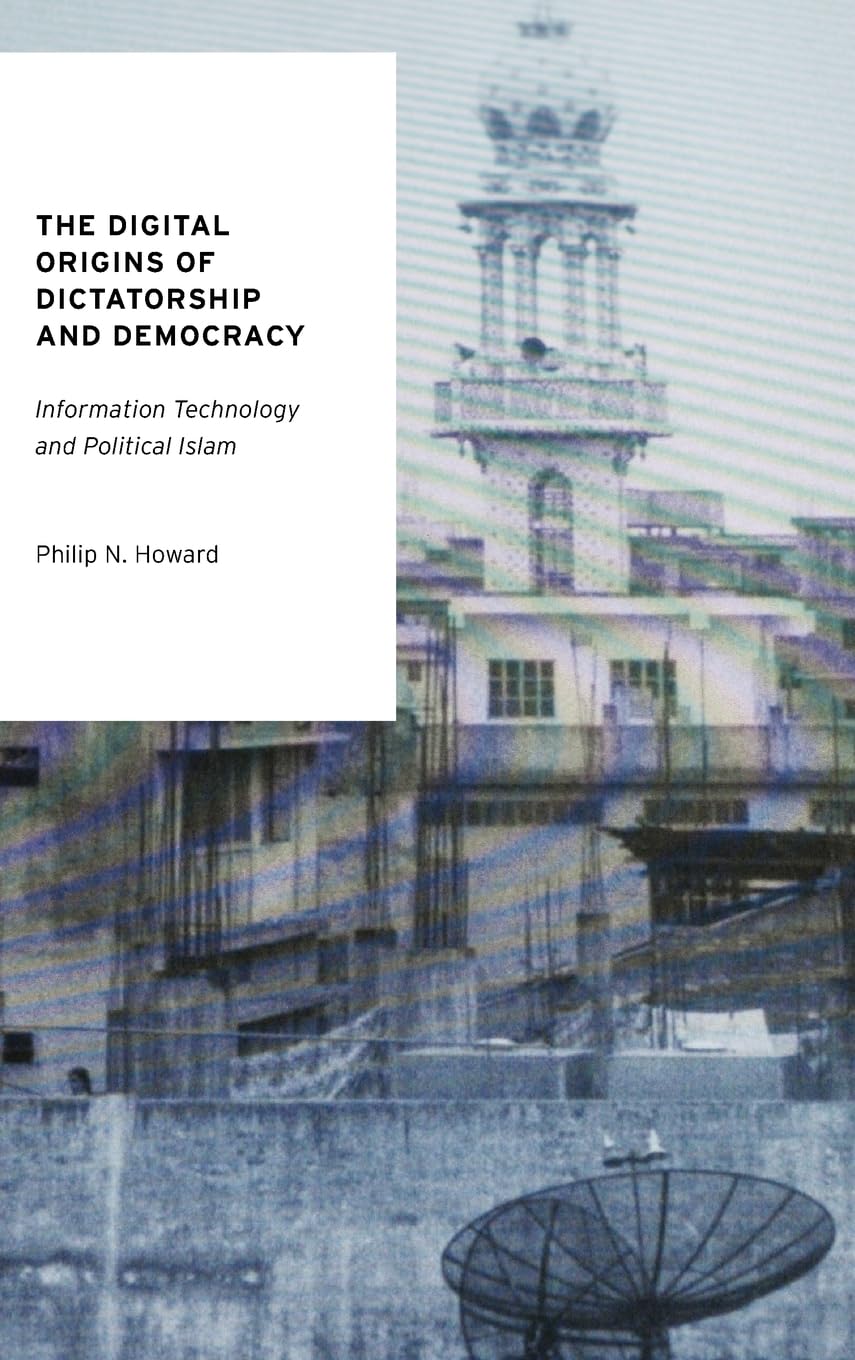
The Digital Origins of Dictatorship and Democracy: Information Technology and Political Islam by Philip N. Howard
Inclusive of all applicable taxes. FREE shipping on all orders.
Available Offers
- 🚚Free Delivery — Free shipping on all orders
- 💵Cash on Delivery — Pay when your order arrives
- ↩️15-Day Easy Returns — Hassle-free return policy
- 🔒Cash on Delivery — Pay safely when your order arrives
Check Delivery
Product Description
Introduction
In an age where every click, tweet, and message shapes the political landscape, understanding the intersection of technology and governance has never been more critical. The Digital Origins of Dictatorship and Democracy: Information Technology and Political Islam by Philip N. Howard offers a groundbreaking exploration of how digital tools are redefining power, dissent, and democracy in Muslim-majority nations. For Indian readers, students, and policy enthusiasts, this book provides a compelling lens to examine how information technology influences political change across the developing world, including parallels with India’s own digital revolution.
Book Overview
Published by Oxford University Press, this hardcover volume delves into the paradox faced by political leaders in developing countries: while information and communication technologies fuel economic growth, they also erode traditional power structures. Howard, a leading scholar in information science and political communication, argues that in nations where political parties are banned or tightly controlled, the internet becomes the only viable space for democratic discourse. Focusing on countries with large Muslim populations, he reveals how mobile phones and online platforms empower civil society to build independent communication networks—free from state manipulation and religious elite control. The book is a rigorous yet accessible analysis of how technology is reshaping the political identity of a new generation, particularly young Muslims who forge transnational identities online.
Key Highlights
- Original Research: Based on extensive fieldwork and data analysis across multiple Muslim-majority countries, offering fresh insights into the role of digital media in political transitions.
- Timely Relevance: Explores real-world examples of how regimes use technology for surveillance while activists leverage it for mobilization, a dynamic visible in India and globally.
- Balanced Perspective: Avoids techno-utopian or dystopian extremes, presenting a nuanced view of how digital tools both enable democracy and reinforce authoritarian control.
- Transnational Focus: Examines how young Muslims build a global identity online, influencing local politics and challenging traditional authority.
Inside the Book
The book is structured to guide readers from foundational concepts to complex case studies. Early chapters establish the theoretical framework linking information technology to political change. Subsequent sections dissect specific countries—including Egypt, Iran, and Indonesia—showing how digital infrastructure became a battleground for democracy activists and state censors. Howard also analyzes the role of mobile phones in coordinating protests, the use of social media for civic education, and the ways authoritarian regimes adapt to control digital spaces. Each chapter is rich with empirical evidence, making abstract ideas tangible for students and professionals alike.
Key Topics
- Digital Authoritarianism: How governments use technology to monitor dissent and consolidate power.
- Information Infrastructure: The role of mobile networks and internet connectivity in building independent civil society.
- Political Islam Online: How religious identity is negotiated and expressed through digital platforms.
- Democratic Transitions: Case studies of technology-driven movements for political reform.
- Youth and Activism: The generational shift in political engagement via digital tools.
- Surveillance and Control: The double-edged sword of technology in the hands of both citizens and states.
Reader Benefits
- Deepen Your Understanding: Gain a comprehensive grasp of how technology influences politics in non-Western contexts, including South Asia.
- Critical Thinking: Develop analytical skills to evaluate the impact of digital media on democracy and authoritarianism.
- Practical Insights: Learn from real-world examples that can inform policy, journalism, or academic research.
- Global Perspective: Broaden your worldview by studying political dynamics in Muslim-majority nations, relevant to India’s diverse society.
Learning Outcomes
By reading this book, you will be able to: identify the key mechanisms through which information technology empowers democratic movements; analyze the strategies authoritarian regimes use to control digital spaces; evaluate the role of transnational identities in shaping local politics; apply theoretical frameworks to contemporary case studies in India and abroad; and critically assess the ethical implications of technology in governance.
Who Should Read
This book is ideal for students of political science, sociology, communication studies, and information technology. It is equally valuable for journalists covering technology and politics, policy makers in digital governance, activists working on freedom of expression, and general readers curious about how the internet is reshaping democracy. Indian readers will find striking parallels with the country’s own digital identity debates and the use of mobile technology in rural mobilization.
About the Author
Philip N. Howard is a professor of information science and international affairs at the University of Washington. A renowned scholar, he has authored several influential works on the political uses of digital media, including Pax Technica and Castells and the Media. His research spans over 40 countries, focusing on how information technology affects governance, activism, and social change. Howard’s work is widely cited in academic and policy circles, making him a leading voice on the intersection of technology and democracy.
About the Publisher
Oxford University Press (OUP) is a globally respected academic publisher with a legacy of over 500 years. Known for rigorous peer review and scholarly excellence, OUP produces works that shape research, education, and policy worldwide. This book reflects OUP’s commitment to publishing cutting-edge analysis on pressing global issues, making it a trusted source for students, researchers, and professionals.
Conclusion
The Digital Origins of Dictatorship and Democracy is an essential read for anyone seeking to understand the complex relationship between technology and political power. Philip N. Howard masterfully combines theory and evidence to reveal how digital tools are both a threat to authoritarian regimes and a tool for their survival. For Indian readers, this book offers valuable lessons on the promises and perils of our own digital age. Order your copy today from Bookshops.in and join the conversation on the future of democracy in a connected world.
Quick Summary
The Digital Origins of Dictatorship and Democracy by Philip N. Howard is a groundbreaking study that examines how information and communication technologies (ICTs) influence political change in Muslim-majority countries. Howard argues that while digital tools like the internet and mobile phones can boost economic growth, they also threaten existing power structures by providing new platforms for political discourse and organization. In countries where political parties are banned, the internet becomes the only space for democratic debate. Meanwhile, authoritarian regimes use the same technologies for surveillance and control. The book explores how young Muslims develop political identities online, including a transnational Muslim identity, and how civil society leverages digital infrastructure to challenge state authority. Through comparative case studies, Howard reveals the paradoxical role of technology in both enabling democracy and reinforcing dictatorship. This book is essential for students of political science, communication studies, and international relations, as well as for policy makers and anyone interested in the future of democracy in the digital age. By purchasing from Bookshops.in, Indian readers get a premium physical copy delivered to their doorstep, supporting local book culture.
Book Highlights
Book Specifications
| ISBN-13 | 9780199736416 |
| ISBN-10 | 0199736413 |
| Publisher | OUP USA |
| Language | English |
| Dimensions | 15.24 x 2.06 x 22.86 cm |
| Weight | 567 g |
| Country | India |
| Category | Words, Language & Grammar › Communication |
| Genre | Non-fiction |
| Original Language | English |
Frequently Asked Questions
What is the main argument of this book?
Who is the target audience for this book?
Does the book focus on a specific country?
Is this book relevant to understanding the Arab Spring?
What makes this book different from other books on technology and politics?
Does the book discuss social media platforms?
Is the book accessible to non-academic readers?
Who is Philip N. Howard?
Does the book offer policy recommendations?
Is this book available in paperback?
What is the price of the book?
Where can I buy this book in India?
Does the book include case studies?
Readers Also Search For
Customers Also Bought
Related Products
View All
Reference
Discourses of the Developing World: Researching Properties, Problems, and Potentials of the Developing World (Cultural Discourse Studies Series)
![Buy Language in the Context of Use: Discourse and Cognitive Approaches to Language: 37 (Cognitive Linguistics Research [CLR], 37) — BookShops.in](/book-covers/language-in-the-context-of-use-english-andrea-tyler-or-yiyoung-kim-or-mari-takad-img-0.jpg)
Reference
Language in the Context of Use: Discourse and Cognitive Approaches to Language: 37 (Cognitive Linguistics Research [CLR], 37)
Reference
Elements Of Fractional Distillation
Reference
Oxford Handbook of the Septuagint by Law Salvesen – Biblical Studies

Reference
Retellings: The Bible in Literature, Music, Art and Film

Reference