
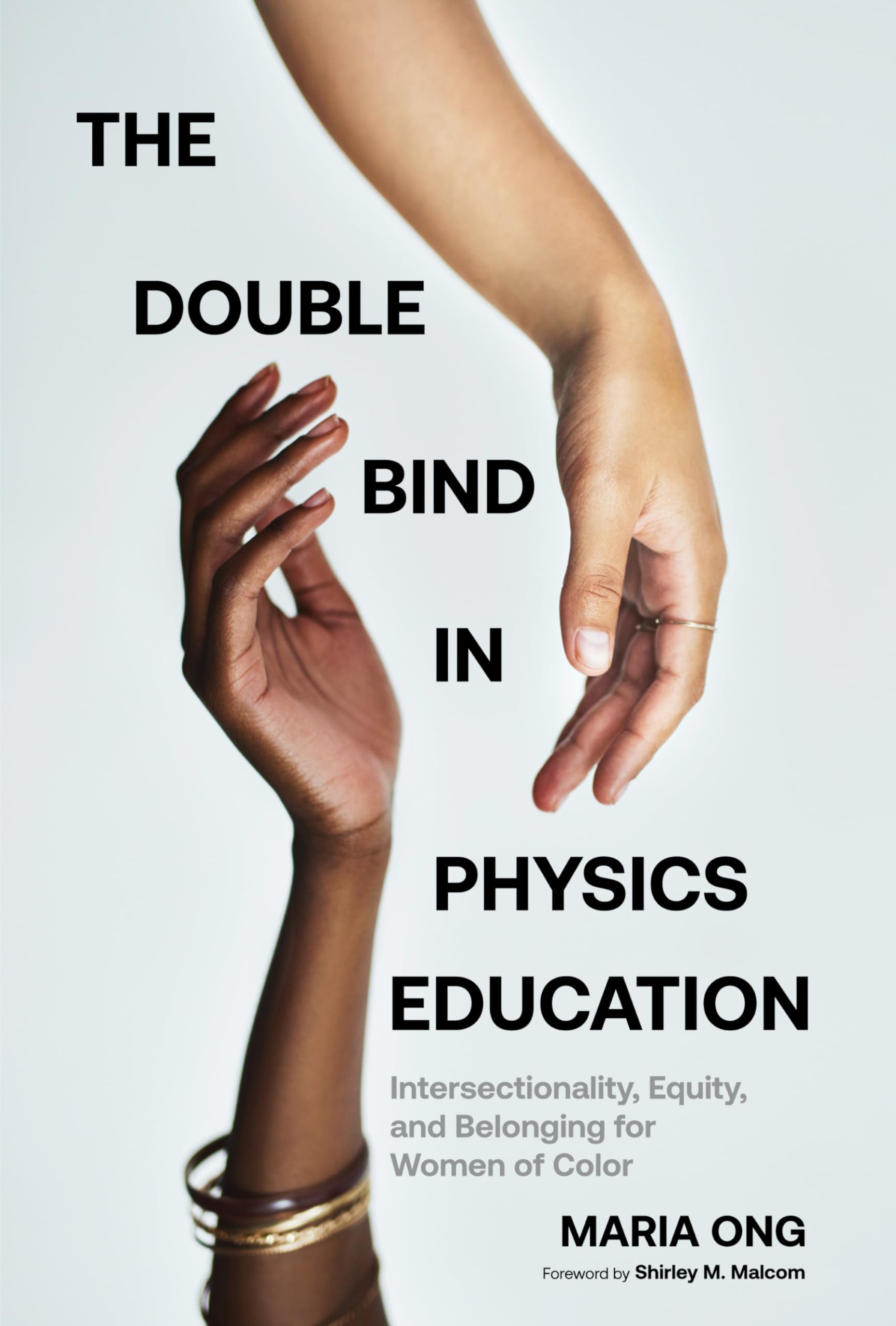
The Double Bind in Physics Education: Intersectionality, Equity, and Belonging for Women of Color by Maria Ong – A Compr
Inclusive of all applicable taxes. FREE shipping on all orders.
Available Offers
- 🚚Free Delivery — Free shipping on all orders
- 💵Cash on Delivery — Pay when your order arrives
- ↩️15-Day Easy Returns — Hassle-free return policy
- 🔒Cash on Delivery — Pay safely when your order arrives
Check Delivery
Product Description
Introduction
In Indian classrooms and laboratories, the question of who gets to study physics—and who stays—is more urgent than ever. The Double Bind in Physics Education: Intersectionality, Equity, and Belonging for Women of Color by Maria Ong offers a powerful, research-backed exploration of the systemic barriers that push talented women of color out of STEM fields. For educators, policymakers, and students in India's growing science ecosystem, this book provides critical insights into creating truly inclusive learning environments.
Book Overview
Drawing on 25 years of longitudinal research, social scientist Maria Ong follows ten women of color as they navigate an undergraduate physics program at a large research university. Through candid interviews with the students, their instructors, mentors, and peers, Ong reveals how the double bind of racism and sexism shapes academic opportunities, career choices, and personal identities. The book makes a compelling case for far-reaching reforms in higher education, moving beyond superficial diversity initiatives to address deep-rooted inequities in science and mathematics education.
Key Highlights
- Longitudinal depth: A quarter-century of data tracking real students from admission through career paths.
- Intersectional lens: Examines how race and gender discrimination combine to create unique challenges.
- Voices from the field: Firsthand accounts from women of color, their mentors, and peers bring the statistics to life.
- Actionable insights: Concrete recommendations for educators, administrators, and policymakers to foster belonging.
- Global relevance: While set in the US, the findings resonate powerfully with India's own struggles with caste, gender, and regional disparities in STEM.
Inside the Book
The book is structured around the journeys of ten women, each chapter peeling back layers of institutional culture, microaggressions, and resilience. Ong examines how physics departments—often seen as meritocratic—actually reproduce inequalities through unwritten rules, implicit bias, and lack of mentorship. Readers will encounter stories of students who switched majors, left academia, or persisted against all odds, revealing the emotional and intellectual costs of navigating a field that was not designed for them.
Key Topics
- Intersectionality in STEM education
- Gender and racial bias in physics classrooms
- The role of mentorship and peer networks
- Institutional change vs. individual resilience
- Identity and belonging in science
- Retention strategies for underrepresented groups
- Implicit bias in grading and evaluation
- Curriculum reform for inclusive pedagogy
Reader Benefits
This book equips Indian educators, students, and administrators with a nuanced understanding of why diversity efforts often fail and what actually works. You will learn to recognize the subtle ways exclusion operates in academic settings, gain tools to support women of color in physics and other STEM fields, and understand how intersectional identities shape learning experiences. For students, the narratives offer validation and a roadmap for navigating challenging environments.
Learning Outcomes
- Identify the structural and cultural factors driving attrition among women of color in STEM.
- Analyze how intersectionality affects academic belonging and performance.
- Evaluate current diversity initiatives and their limitations.
- Design inclusive teaching and mentoring practices.
- Develop strategies to retain underrepresented students in physics and mathematics.
Who Should Read
This book is essential reading for physics and STEM educators at Indian universities and colleges, academic administrators, policy researchers, and students of education, sociology, and gender studies. It is also deeply valuable for women of color pursuing careers in science, as well as allies seeking to create more equitable classrooms and laboratories. Anyone invested in India's National Education Policy goals of equity and inclusion will find this work indispensable.
About the Author
Maria Ong is a social scientist and researcher specializing in equity, diversity, and inclusion in STEM education. With decades of experience studying the experiences of women and people of color in science, she has published extensively on intersectionality and institutional change. Her work has influenced policy and practice at universities and research organizations across the United States.
About the Publisher
Harvard Education Press is a leading academic publisher known for rigorous, accessible books on education policy, practice, and reform. Their titles shape conversations on equity, teaching, and learning worldwide, making complex research available to educators, scholars, and the public.
Conclusion
The Double Bind in Physics Education is not just a study—it is a call to action. For India, where STEM enrollment hides deep disparities of caste, class, and gender, this book offers both a mirror and a map. By understanding the double bind, we can begin to untangle it, creating physics classrooms where every student can belong and thrive. Order your hardcover copy from Bookshops.in today and join the movement for truly inclusive science education.
Quick Summary
In 'The Double Bind in Physics Education: Intersectionality, Equity, and Belonging for Women of Color', social scientist Maria Ong presents a groundbreaking longitudinal study that follows ten women of color through their undergraduate physics journey at a large research university. Over 25 years, Ong conducted candid interviews with the women, their instructors, mentors, and peers to uncover the systemic barriers that drive many women of color away from STEM fields. The book reveals how the double bind of race and gender creates unique challenges, and why diversity efforts often fail without fundamental institutional change. Readers will gain a deep understanding of intersectionality in science education, the importance of belonging, and actionable strategies for creating inclusive academic environments. This book is essential for educators, policymakers, and students in India who are committed to equity in STEM. By purchasing from Bookshops.in, you support a trusted Indian bookstore that delivers authentic, high-quality physical books across the country.
Book Highlights
Book Specifications
| ISBN-13 | 9781682537831 |
| ISBN-10 | 1682537838 |
| Publisher | Harvard Educational Publishing Group |
| Language | English |
| Dimensions | 15.52 x 1.5 x 22.96 cm |
| Weight | 386 g |
| Country | India |
| Category | Society & Social Sciences › Education |
| Genre | Non-fiction |
| Original Language | English |
Frequently Asked Questions
What is 'The Double Bind in Physics Education' about?
Who is the author of this book?
Is this book relevant for Indian readers?
What is the main argument of the book?
How long did the study take?
What does 'double bind' mean?
Who is the publisher of this book?
Is this book suitable for undergraduate students?
Does the book offer solutions?
How many participants were studied?
What methods were used in the research?
Can this book help Indian educators?
Is the book based on quantitative or qualitative data?
Where can I buy this book in India?
Readers Also Search For
Customers Also Bought
Sociology
Imagination Beyond Nation: Latin American Popular Culture: 349 (Pitt Latin American Series)
Sociology
Boomer Volunteer Engagement: Facilitator's Tool Kit

Sociology
Making a Success of Marriage: Planning for Happily Ever After

Sociology
Causal Mediation Analysis (Analytical Methods for Social Research)

Sociology
Marriage and the Moral Imagination (New Departures in Anthropology)

Sociology
Social Change, Resistance and Social Practices: 19 (Studies in Critical Social Sciences, 19)
Related Products
View All
Education
Working with Families and Community Agencies to Support Students with Special Needs: A Practical Guide for Every Teacher
Education
Preparation for Critical Instruction: How to Explain Subject Matter While Teaching All Learners to Think, Read, and Write Critically
Education
EARLY LITERACY MATERIALS SELECTOR (ELMS),(PB)
Education
Changing Suburbs, Changing Students: Helping School Leaders Face the Challenges
Education
Post-secondary Education in Qatar: Employer Demand, Student Choice, and Options for Policy

Education