
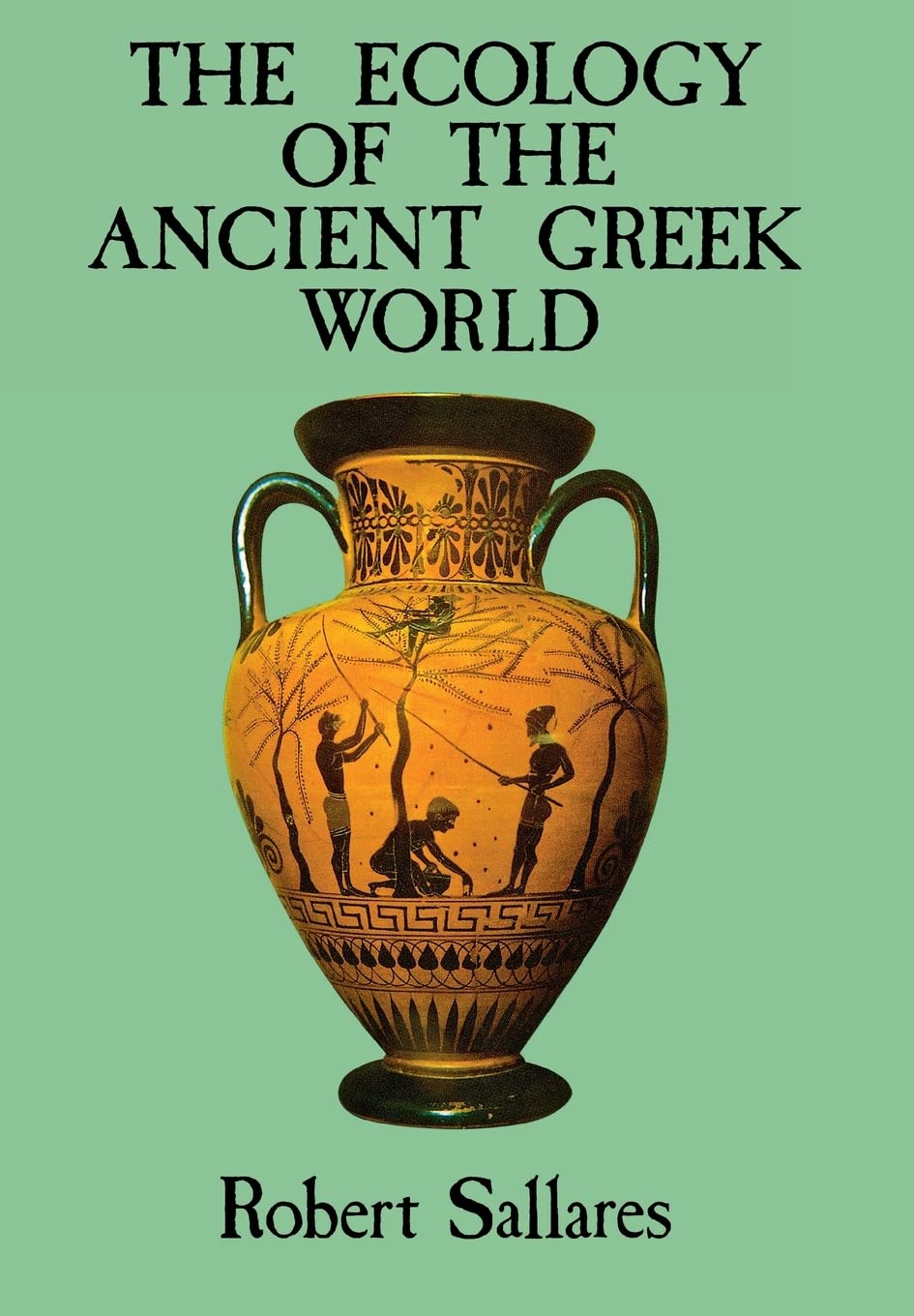
Ecology of the Ancient Greek World: A Pioneering Study in Historical Population Biology and Environmental History by Rob
Inclusive of all applicable taxes. FREE shipping on all orders.
Available Offers
- 🚚Free Delivery — Free shipping on all orders
- 💵Cash on Delivery — Pay when your order arrives
- ↩️15-Day Easy Returns — Hassle-free return policy
- 🔒Cash on Delivery — Pay safely when your order arrives
Check Delivery
Product Description
Introduction
In the vast and often fragmented landscape of classical studies, few works dare to bridge the chasm between the humanities and the natural sciences with the audacity and precision found in Robert Sallares’ Ecology of the Ancient Greek World. Published by Cornell University Press, this hardbound volume is not merely another history of Greece; it is a bold, interdisciplinary inquiry into the biological and environmental forces that shaped the rise, flourishing, and decline of one of the most influential civilizations in human history. For Indian readers, especially students of history, ecology, and environmental science, this book offers a unique lens through which to understand how human societies and their natural surroundings have always been locked in a dynamic, often fragile, dance.
Book Overview
Ecology of the Ancient Greek World is a pioneering work in historical population biology. Rather than treating ancient Greek history as a sequence of wars, philosophies, and political upheavals, Sallares places the natural environment—its climate, soils, diseases, and living organisms—at the very centre of the narrative. The book argues that the distribution and abundance of plants, animals, and humans cannot be understood without a deep appreciation of the ecological constraints and opportunities that defined the Mediterranean world. Drawing on modern ecological theory, demographic models, and archaeological evidence, Sallares constructs a new framework for understanding how population dynamics, agriculture, and disease ecology interacted to produce the patterns of settlement, migration, and cultural change that we recognise as ancient Greek history.
Key Highlights
- Interdisciplinary Approach: Merges classical philology, archaeology, palaeobotany, and population biology to create a holistic view of ancient life.
- Original Thesis on Population: Proposes a novel model linking human demography directly to the carrying capacity of the land, challenging conventional historical narratives.
- Disease and History: Devotes significant attention to the role of infectious diseases, such as malaria, in shaping settlement patterns and political outcomes.
- Agricultural Systems: Examines the ecological logic behind Greek farming practices, including crop rotation, animal husbandry, and land use.
- Climate and Soil: Analyses how microclimates and soil degradation influenced the rise of city-states and the expansion of colonies.
Inside the Book
The book is structured around a series of thematic investigations rather than a strict chronological timeline. Sallares begins by laying out the theoretical tools of historical ecology, then moves into detailed case studies of specific regions, such as Attica and the Peloponnese. He examines the evidence for ancient forests, the domestication of plants and animals, and the impact of human activity on the landscape over centuries. A particularly fascinating chapter deals with the ecology of ancient diseases, using modern epidemiological models to reconstruct the prevalence of malaria, tuberculosis, and other pathogens. The author also explores the relationship between population density and resource availability, arguing that ecological limits were a constant, often unacknowledged, driver of political and social change.
Key Topics
- Historical population biology and demographic modelling
- Agricultural ecology in the ancient Mediterranean
- Disease ecology and the impact of malaria on Greek society
- Land degradation, deforestation, and soil erosion
- The relationship between climate variability and settlement patterns
- Animal husbandry and the ecology of pastoralism
- Nutrition, diet, and the biological basis of ancient health
- The ecological underpinnings of Greek colonization and trade
Reader Benefits
For Indian students and scholars, this book offers a powerful comparative framework. The ecological challenges faced by ancient Greek communities—monsoon variability, soil exhaustion, water management, and disease—resonate deeply with the environmental history of the Indian subcontinent. By reading Sallares, one gains not only a deeper understanding of Greece but also a methodological toolkit for studying any pre-industrial society’s relationship with nature. The book encourages critical thinking about how environmental factors have shaped human destiny, a perspective often missing from traditional history curricula. Additionally, the rigorous use of scientific data makes this an excellent resource for those interested in the growing field of environmental history.
Learning Outcomes
- Understand the principles of historical population biology and its application to classical studies.
- Analyse the role of ecological factors in the development of ancient Greek civilisation.
- Evaluate the evidence for disease, climate change, and land use in the ancient world.
- Develop a comparative perspective on human-environment interactions across cultures.
- Critique traditional historical narratives that ignore biological and ecological constraints.
Who Should Read
This book is ideal for advanced undergraduate and postgraduate students in history, classical studies, archaeology, anthropology, and environmental science. It will also appeal to scholars of ancient history who wish to incorporate ecological perspectives into their work. For Indian readers with an interest in the deep history of human societies and their environments, Ecology of the Ancient Greek World provides a rigorous yet accessible entry point into a fascinating and often overlooked dimension of the classical past.
About the Author
Robert Sallares is a historian and biologist whose research spans the boundaries between the natural sciences and the humanities. He has held academic positions at leading institutions in Europe and is recognised as a pioneer in the field of historical population biology. His work is distinguished by its meticulous use of scientific evidence to address long-standing historical questions, and he continues to influence a new generation of scholars interested in the ecological dimensions of ancient societies.
About the Publisher
Cornell University Press, based in Ithaca, New York, is one of the oldest and most respected academic publishers in the United States. With a distinguished list in classical studies, history, and the life sciences, the press is known for producing scholarly works of the highest standard. This hardcover edition reflects the press’s commitment to quality, featuring durable binding and archival-grade paper suitable for long-term use in libraries and personal collections.
Conclusion
Ecology of the Ancient Greek World is a landmark study that redefines how we understand the ancient past. By placing the natural world at the heart of historical inquiry, Robert Sallares challenges readers to think beyond texts and monuments, and to see the living, breathing environment as a central actor in the human story. For Indian readers, this book is not just a window into Greece—it is a mirror reflecting the universal truth that all civilisations, ancient and modern, are ultimately children of their ecology. A must-have for any serious student of history or environmental science.
Quick Summary
'Ecology of the Ancient Greek World' by Robert Sallares is a groundbreaking work that establishes the field of historical population biology within the context of classical Greece. The book provides the first comprehensive ecological history of the ancient Greek world, proposing a novel model to understand the dynamic relationship between human populations and the land they inhabited. Sallares meticulously examines the distribution and abundance of living organisms—from crops and livestock to wild flora and fauna—offering insights into how environmental factors shaped Greek civilization. This interdisciplinary study draws on archaeology, history, biology, and geography to reconstruct ancient ecosystems and their changes over time. The book is ideal for Indian students and scholars of classical history, ecology, environmental science, and anthropology. Readers will learn how population dynamics influenced agricultural practices, land use, and resource management in antiquity. The hardcover edition from Cornell University Press is a durable addition to any academic library. By purchasing from Bookshops.in, Indian readers gain access to a carefully curated selection of international academic titles with prompt delivery and support.
Book Highlights
Book Specifications
| ISBN-13 | 9780801426155 |
| ISBN-10 | 0801426154 |
| Publisher | Cornell Univ Pr |
| Language | English |
| Dimensions | 15.54 x 3.96 x 23.5 cm |
| Weight | 1 kg 110 g |
| Category | Biology & Life Sciences › Biology |
| Genre | Non-fiction |
| Original Language | English |
Frequently Asked Questions
What is 'Ecology of the Ancient Greek World' about?
Who is the author of this book?
Is this book suitable for Indian students?
What makes this book unique?
Does the book include maps or illustrations?
Which publisher released this book?
What is the ISBN of this book?
Is this book part of a series?
What topics does the book cover?
Can I use this book for my PhD research?
Is the book written in English?
What is the price of this book?
Why should I buy from Bookshops.in?
Readers Also Search For
Customers Also Bought
Mathematics
Stereotype Spaces and Algebras: 73 (De Gruyter Expositions in Mathematics, 73)

Mathematics
Semigroups in Algebra, Geometry and Analysis: 20 (De Gruyter Expositions in Mathematics, 20)

Mathematics
Geometry from the Pacific Rim: Proceedings of the Pacific Rim Geometry Conference held at National University of Singapore, Republic of Singapore, ... 1994 (De Gruyter Proceedings in Mathematics)

Mathematics
First International Tainan-Moscow Algebra Workshop: Proceedings of the International Conference held at National Cheng Kung University Tainan, Taiwan, ... 1994 (De Gruyter Proceedings in Mathematics)

Mathematics
Differential Geometry - Proceedings of the VIII International Colloquium (English, Jesus A. Alvarez Lopez | Eduardo Garcia-Rio)

Mathematics
Mathematical Theory of Optimal Processes (Classics of Soviet Mathematics)
Related Products
View All
Biology
Evolution: What the Fossils Say and Why It Matters by Donald R. Prothero
Biology
From Taxonomy to Phylogenetics – Life and Work of Willi Hennig
Biology
The Marine Biology of the South China Sea

Biology
Genetics Meets Metabolomics: from Experiment to Systems Biology
Biology
The Elements of Natural or Experimental Philosophy: 2

Biology