
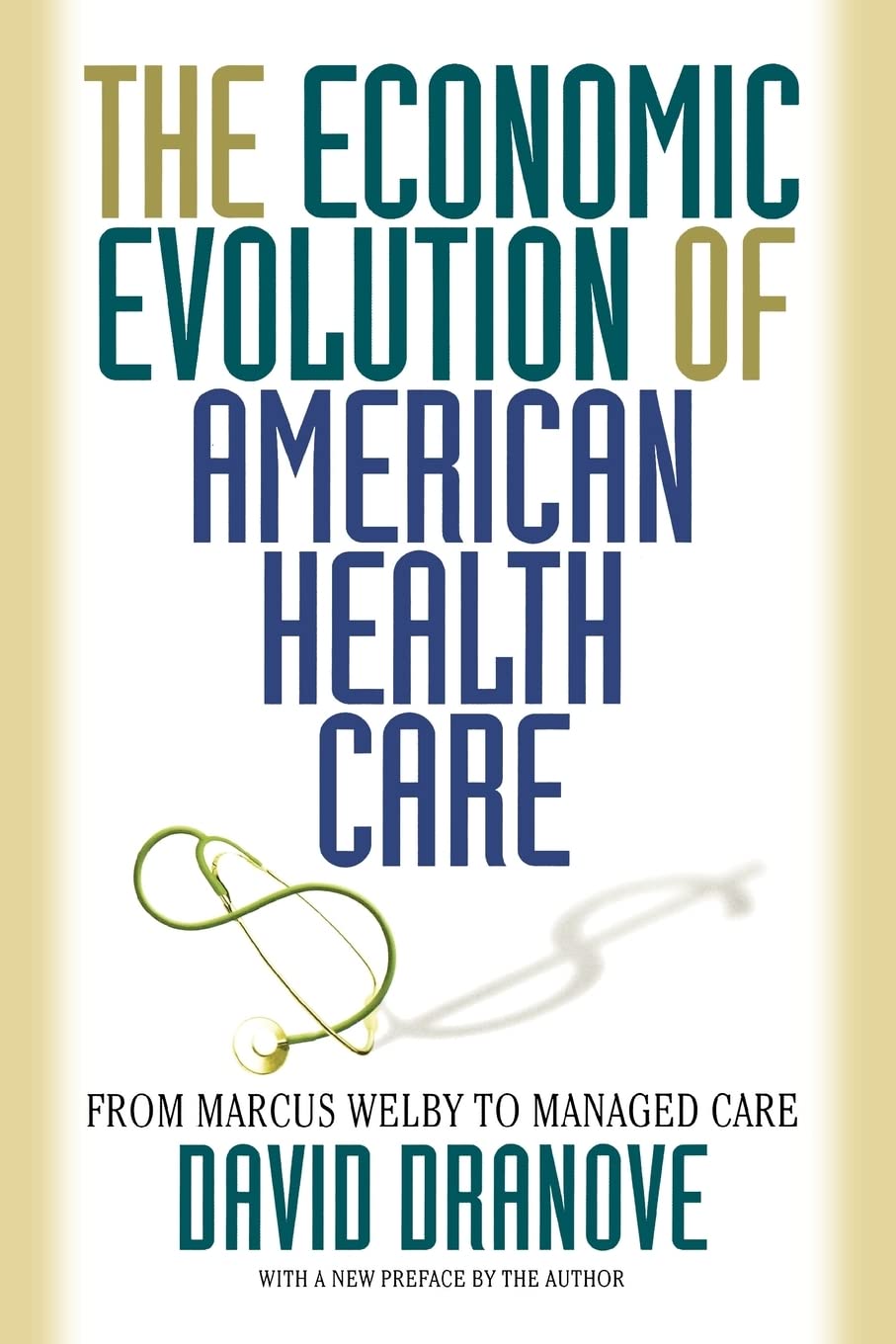
The Economic Evolution of American Health Care: From Marcus Welby to Managed Care by David Dranove – A Deep Dive into He
Inclusive of all applicable taxes. FREE shipping on all orders.
Available Offers
- 🚚Free Delivery — Free shipping on all orders
- 💵Cash on Delivery — Pay when your order arrives
- ↩️15-Day Easy Returns — Hassle-free return policy
- 🔒Cash on Delivery — Pay safely when your order arrives
Check Delivery
Product Description
Introduction
For decades, the American health care system has been a subject of intense debate, transformation, and, at times, public disillusionment. In The Economic Evolution of American Health Care: From Marcus Welby to Managed Care, renowned health care economist David Dranove offers a compelling and lucid account of how the U.S. health care industry shifted from a world of independent, trusted family doctors to the complex, corporate-driven landscape of managed care. This hardcover edition from Princeton University Press is an essential read for anyone seeking to understand the economic forces that have reshaped medicine and the doctor-patient relationship.
Book Overview
This book traces the dramatic arc of American health care from the 1960s—when the ideal of the compassionate, autonomous physician, epitomized by the fictional Marcus Welby, reigned supreme—to the rise of health maintenance organizations (HMOs), insurance giants, and cost-containment strategies. Dranove combines rigorous economic analysis with historical narrative to explain why the system evolved as it did, what was gained and lost along the way, and what lessons can be applied to future reforms. The book is neither a dry textbook nor a polemic; it is a balanced, insightful exploration of incentives, regulations, and market dynamics that have made American health care both a marvel and a challenge.
Key Highlights
- Economic Lens: Offers a unique perspective by applying economic principles to understand health care delivery, pricing, and insurance.
- Historical Journey: Chronicles the transition from fee-for-service medicine to managed care, using real-world examples and data.
- Policy Relevance: Provides timely recommendations for reforming managed care while preserving its benefits.
- Patient-Centric: Helps readers make informed decisions about their own health care choices in a bewildering system.
- Accessible Writing: Dranove avoids unnecessary jargon, making complex concepts understandable for non-economists.
Inside the Book
The narrative begins with the golden age of the solo practitioner, where trust and personal relationships defined care. Dranove then dissects the economic pressures—rising costs, insurance expansions, and technological advances—that led to the birth of managed care. He examines the rise of HMOs, the backlash against gatekeeping, the role of employers and government programs, and the unintended consequences of cost-control measures. Later chapters address the current state of health care, including the persistence of high costs and uneven quality, and offer pragmatic advice for patients navigating the system. The book concludes with a thoughtful discussion of possible futures for American health care.
Key Topics
- The economics of the doctor-patient relationship
- Historical evolution of health insurance in the U.S.
- Rise and fall of managed care organizations
- Role of government regulation and market competition
- Moral hazard, adverse selection, and information asymmetry
- Quality measurement and patient empowerment
- Lessons for health care reform in other countries
Reader Benefits
By reading this book, you will gain a deeper appreciation of why your health care experience feels the way it does. You will learn to identify the economic incentives that drive doctors, hospitals, and insurers, enabling you to ask better questions and make more informed choices. Students and professionals will find a solid foundation in health economics without needing a background in mathematics. Policy enthusiasts will appreciate the evidence-based critique of managed care and the practical suggestions for improvement.
Learning Outcomes
- Understand the economic rationale behind the shift from fee-for-service to managed care.
- Analyze the trade-offs between cost control, quality, and access in health care systems.
- Evaluate the strengths and weaknesses of different health care delivery models.
- Apply economic concepts like incentives, efficiency, and equity to real-world health issues.
- Develop a framework for assessing health care policies and reforms.
Who Should Read
This book is ideal for students of economics, public health, health administration, and political science. It is also highly relevant for health care professionals, policymakers, and anyone who has ever felt frustrated by the complexity of the health care system. Indian readers, in particular, will find valuable parallels as India’s own health care sector undergoes rapid changes, with the rise of corporate hospitals, insurance schemes, and digital health initiatives. The economic principles discussed are universally applicable.
About the Author
David Dranove is a distinguished professor of health industry management at Northwestern University’s Kellogg School of Management. He is a leading authority on health care economics, competition, and regulation. His research has been published in top academic journals, and he has advised government agencies and health care organizations. Dranove’s ability to translate complex economic theory into accessible prose makes him a trusted guide through the labyrinth of American health care.
About the Publisher
Princeton University Press is an independent academic publisher with a global reputation for excellence. Since its founding in 1905, it has published works that shape scholarship and public discourse across disciplines, including economics, history, and the sciences. This hardcover edition reflects the Press’s commitment to producing durable, beautifully bound books that stand the test of time.
Conclusion
The Economic Evolution of American Health Care is more than a history lesson—it is a toolkit for understanding one of the most important and perplexing sectors of modern life. Whether you are a student, a professional, or a concerned patient, David Dranove’s insights will change the way you think about health care. Order your hardcover copy from Bookshops.in today and embark on a journey through the economics of healing.
Quick Summary
The Economic Evolution of American Health Care: From Marcus Welby to Managed Care by David Dranove is a landmark work that traces the dramatic transformation of the US healthcare system over four decades. Dranove, a leading health economist, uses the iconic figure of Marcus Welby—the trusted family doctor of 1960s television—as a starting point to explore how the rise of managed care, insurance companies, and cost-control mechanisms reshaped medicine. The book delves into the economic forces behind these changes, examining how they affected the doctor-patient relationship, patient trust, and the overall quality of care. Written in an accessible yet rigorous style, it is ideal for Indian students, researchers, and professionals in health economics, public policy, and public health. Readers will gain a deep understanding of healthcare markets, insurance dynamics, and the trade-offs between cost and quality. Dranove also offers thoughtful policy recommendations to rebuild patient confidence. By purchasing from Bookshops.in, you get a genuine hardcover edition at a competitive price, delivered across India with reliable service.
Book Highlights
Book Specifications
| ISBN-13 | 9780691102535 |
| ISBN-10 | 0691102538 |
| Publisher | Princeton University Press |
| Language | English |
| Dimensions | 15.24 x 1.45 x 22.86 cm |
| Weight | 312 g |
| Category | Special Topics › History |
| Genre | Nonfiction |
| Reading Age | Adult |
| Original Language | English |
Frequently Asked Questions
What is this book about?
Who is David Dranove?
Is this book suitable for Indian readers?
Do I need an economics background to read this book?
What time period does the book cover?
Does the book offer policy recommendations?
How is this book different from other healthcare books?
Is this book a textbook?
What is managed care?
Why did the author focus on Marcus Welby?
Can this book help me understand Indian healthcare?
What are the main themes of the book?
Is the book heavily academic?
Does the book include data and statistics?
Where can I buy this book in India?
Readers Also Search For
Related Products
View All
History
The Information Revolution: Transforming the World Through Technology (World History)

History
Human Nature and the French Revolution: From the Enlightenment to the Napoleonic Code: 3 (Polygons: Cultural Diversities and Intersections, 3)

History
The Unmaking of Home in Contemporary Art (Cultural Spaces)

History
Handbook to Life in Medieval and Early Modern Japan | by William E. Deal | Oxford University Press | by William E. Deal | Oxford University Press | by William E. Deal | Oxford University Press | by William E. Deal | Oxford University Press | by William E. Deal | Oxford University Press | by William E. Deal | Oxford University Press | by William E. Deal | Oxford University Press | by William E. Deal | Oxford University Press | by William E. Deal | Oxford University Press | by William E. Deal | Ox

History
The Narrators of Barbarian History (A.D. 550-800) | by Walter Goffart | University of Notre Dame Press | by Walter Goffart | University of Notre Dame Press | by Walter Goffart | University of Notre Dame Press | by Walter Goffart | University of Notre Dame Press | by Walter Goffart | University of Notre Dame Press | by Walter Goffart | University of Notre Dame Press | by Walter Goffart | University of Notre Dame Press | by Walter Goffart | University of Notre Dame Press | by Walter Goffart | Univ

History