
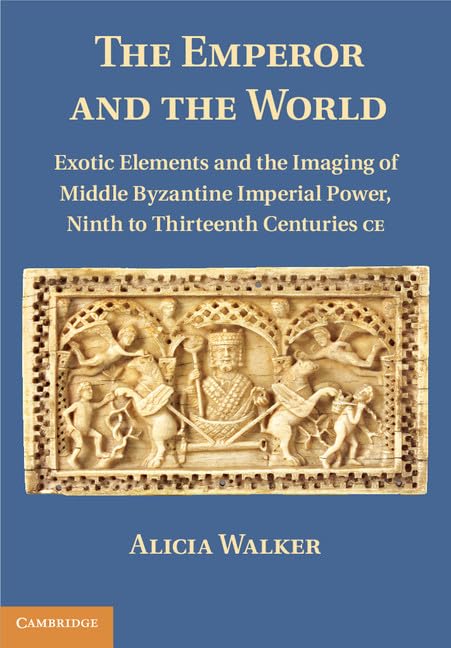
The Emperor and the World: Exotic Elements and the Imaging of Middle Byzantine Imperial Power, Ninth to Thirteenth Centu
Inclusive of all applicable taxes. FREE shipping on all orders.
Available Offers
- 🚚Free Delivery — Free shipping on all orders
- 💵Cash on Delivery — Pay when your order arrives
- ↩️15-Day Easy Returns — Hassle-free return policy
- 🔒Cash on Delivery — Pay safely when your order arrives
Check Delivery
Product Description
Introduction
In the vast tapestry of Byzantine history, imperial art is often seen as rigid and unchanging. The Emperor and the World: Exotic Elements and the Imaging of Middle Byzantine Imperial Power, Ninth to Thirteenth Centuries C.E. by Alicia Walker shatters this perception. This meticulously researched volume reveals how Byzantine emperors actively embraced foreign artistic traditions—from Sasanian, Chinese, and Islamic cultures—to project power and legitimacy. For Indian students and scholars of history, art, and political symbolism, this book offers a fascinating lens into cross-cultural exchange in the medieval world.
Book Overview
Spanning the ninth to the thirteenth centuries, this hardbound edition from Cambridge University Press examines how Middle Byzantine imperial imagery was far from static. Alicia Walker demonstrates that Byzantine rulers deliberately incorporated exotic styles and forms into their visual vocabulary. Through a close analysis of significant objects, monuments, and ceremonial practices, the book shows how art, architecture, texts, and rituals worked together to shape imperial authority. It challenges conventional narratives and opens new pathways for understanding how empires borrow and adapt from their neighbours.
Key Highlights
- Groundbreaking perspective: Moves beyond the stereotype of Byzantine art as isolated and unchanging.
- Cross-cultural focus: Explores influences from Sasanian, Chinese, and Islamic worlds.
- Integrated analysis: Combines art, architecture, historical texts, and ritual practices.
- Richly documented: Based on primary sources and material evidence from a 350-year period.
- Authoritative publisher: Published by Cambridge University Press, a hallmark of academic excellence.
Inside the Book
Readers will journey through detailed case studies of imperial objects, from luxurious silks and ivories to monumental architecture. Walker examines how Byzantine emperors used exotic motifs—such as Chinese dragons and Islamic arabesques—to craft an image of universal dominion. The book also delves into ceremonial protocols and literary works, revealing how every element of imperial display was carefully orchestrated. It is a treasure trove for anyone interested in the visual language of power.
Key Topics
- Byzantine imperial iconography and its evolution
- Cross-cultural artistic exchange in the medieval period
- The role of exotic elements in political propaganda
- Comparative analysis of Sasanian, Chinese, and Islamic art
- Integration of texts, rituals, and images in imperial self-fashioning
Reader Benefits
- Deepen your understanding of Byzantine history beyond textbooks.
- Gain fresh insights into how empires manage cultural diversity.
- Enhance your research with a model for interdisciplinary study.
- Appreciate global connections in pre-modern art and politics.
- Strengthen your academic writing with evidence-based arguments.
Learning Outcomes
After reading this book, you will be able to: critically analyse Byzantine imperial imagery as dynamic and adaptive; identify foreign artistic influences in medieval Mediterranean art; connect material culture to political ideology; evaluate the role of cross-cultural interaction in shaping identities; and apply these insights to broader studies of empire and visual culture.
Who Should Read
This book is ideal for postgraduate students and researchers in art history, Byzantine studies, medieval history, and political symbolism. It is also highly valuable for Indian scholars interested in comparative imperial cultures, as well as curators, museum professionals, and anyone fascinated by how art serves power. General readers with a passion for history will find it accessible yet rigorous.
About the Author
Alicia Walker is a distinguished art historian specialising in Byzantine and medieval visual culture. Her research focuses on cross-cultural exchange and the politics of artistic production. She has published extensively on imperial imagery and is recognised for her innovative approach to material culture. Her work bridges art history, archaeology, and textual analysis, making her a leading voice in the field.
About the Publisher
Cambridge University Press is one of the world's oldest and most respected academic publishers. With a legacy of over four centuries, it is renowned for producing authoritative works in the humanities and social sciences. This book upholds that tradition, offering rigorous scholarship and exceptional production quality. For Indian readers, it represents a reliable source for cutting-edge research.
Conclusion
The Emperor and the World is more than a study of Byzantine art—it is a powerful exploration of how empires use visual culture to navigate a globalised world. Alicia Walker’s work is essential reading for anyone seeking to understand the dynamic interplay between power, art, and cross-cultural influence. Add this thought-provoking volume to your collection and see Byzantine history in a completely new light.
Quick Summary
The Emperor and the World by Alicia Walker offers a groundbreaking reinterpretation of Byzantine imperial art from the 9th to 13th centuries. Far from being a closed, unchanging system, Byzantine visual culture actively borrowed and adapted exotic motifs from the Sasanian, Chinese, and Islamic worlds. Through detailed analysis of mosaics, ivories, textiles, and manuscripts, Walker shows how emperors used these foreign elements to bolster their authority, project cosmopolitan sophistication, and navigate diplomatic relationships. This book is ideal for Indian students and scholars of medieval history, art history, and global cultural exchange. It challenges Eurocentric narratives and places Byzantium within a broader Asian and Mediterranean context. Readers will gain fresh insights into how art functions as a tool of power and identity. By purchasing from Bookshops.in, you support a trusted Indian bookstore that curates premium academic titles for the Indian market.
Book Highlights
Book Specifications
| ISBN-13 | 9781107004771 |
| ISBN-10 | 1107004772 |
| Publisher | Cambridge University Press |
| Language | English |
| Dimensions | 18.42 x 1.91 x 26.04 cm |
| Weight | 760 g |
| Category | Humanities › Art History |
| Genre | Art History, Medieval History |
| Reading Age | Adult |
| Original Language | English |
Frequently Asked Questions
What is the main argument of The Emperor and the World?
Who is Alicia Walker?
What time period does the book cover?
Is this book suitable for undergraduate students?
Does the book include illustrations?
What makes this book different from other Byzantine art books?
Which foreign cultures are discussed?
What types of art objects are analyzed?
Is this a hardcover edition?
Can I use this book for my PhD research?
Does the book discuss Byzantine diplomacy?
Is the book available in India?
What is the price in INR?
Readers Also Search For
Customers Also Bought
Art History
The Italian Renaissance in Art

Art History
Photovoltaic Design & Installation For Dummies | by Mayfield | ForDummies | by Mayfield | ForDummies | by Mayfield | ForDummies | by Mayfield | ForDummies | by Mayfield | ForDummies | by Mayfield | ForDummies | by Mayfield | ForDummies | by Mayfield | ForDummies | by Mayfield | ForDummies | by Mayfield | ForDummies | by Mayfield | ForDummies | by Mayfield | ForDummies | by Mayfield | ForDummies | by Mayfield | ForDummies | by Mayfield | ForDummies | by Mayfield | ForDummies | by Mayfield | ForDu
Art History
Designing School Systems for All Students (English, Robert J. Manley | Richard J. Hawkins)
Art History
Routledge Library Editions: Art and Culture in the Nineteenth Century
Art History
An Errant Design (English, S. H. Long)
Art History
Distributed System Design | by Jie Wu | CRC Press | by Jie Wu | CRC Press | by Jie Wu | CRC Press | by Jie Wu | CRC Press | by Jie Wu | CRC Press | by Jie Wu | CRC Press | by Jie Wu | CRC Press | by Jie Wu | CRC Press | by Jie Wu | CRC Press | by Jie Wu | CRC Press | by Jie Wu | CRC Press | by Jie Wu | CRC Press | by Jie Wu | CRC Press | by Jie Wu | CRC Press | by Jie Wu | CRC Press | by Jie Wu | CRC Press | by Jie Wu | CRC Press | by Jie Wu | CRC Press | by Jie Wu | CRC Press | by Jie Wu | CRC
Related Products
View AllArt History
Distributed System Design | by Jie Wu | CRC Press | by Jie Wu | CRC Press | by Jie Wu | CRC Press | by Jie Wu | CRC Press | by Jie Wu | CRC Press | by Jie Wu | CRC Press | by Jie Wu | CRC Press | by Jie Wu | CRC Press | by Jie Wu | CRC Press | by Jie Wu | CRC Press | by Jie Wu | CRC Press | by Jie Wu | CRC Press | by Jie Wu | CRC Press | by Jie Wu | CRC Press | by Jie Wu | CRC Press | by Jie Wu | CRC Press | by Jie Wu | CRC Press | by Jie Wu | CRC Press | by Jie Wu | CRC Press | by Jie Wu | CRC
Art History
The Italian Renaissance in Art
Art History
Photovoltaic Design & Installation For Dummies | by Mayfield | ForDummies | by Mayfield | ForDummies | by Mayfield | ForDummies | by Mayfield | ForDummies | by Mayfield | ForDummies | by Mayfield | ForDummies | by Mayfield | ForDummies | by Mayfield | ForDummies | by Mayfield | ForDummies | by Mayfield | ForDummies | by Mayfield | ForDummies | by Mayfield | ForDummies | by Mayfield | ForDummies | by Mayfield | ForDummies | by Mayfield | ForDummies | by Mayfield | ForDummies | by Mayfield | ForDu
Art History
Designing School Systems for All Students (English, Robert J. Manley | Richard J. Hawkins)
Art History
Routledge Library Editions: Art and Culture in the Nineteenth Century
Art History