
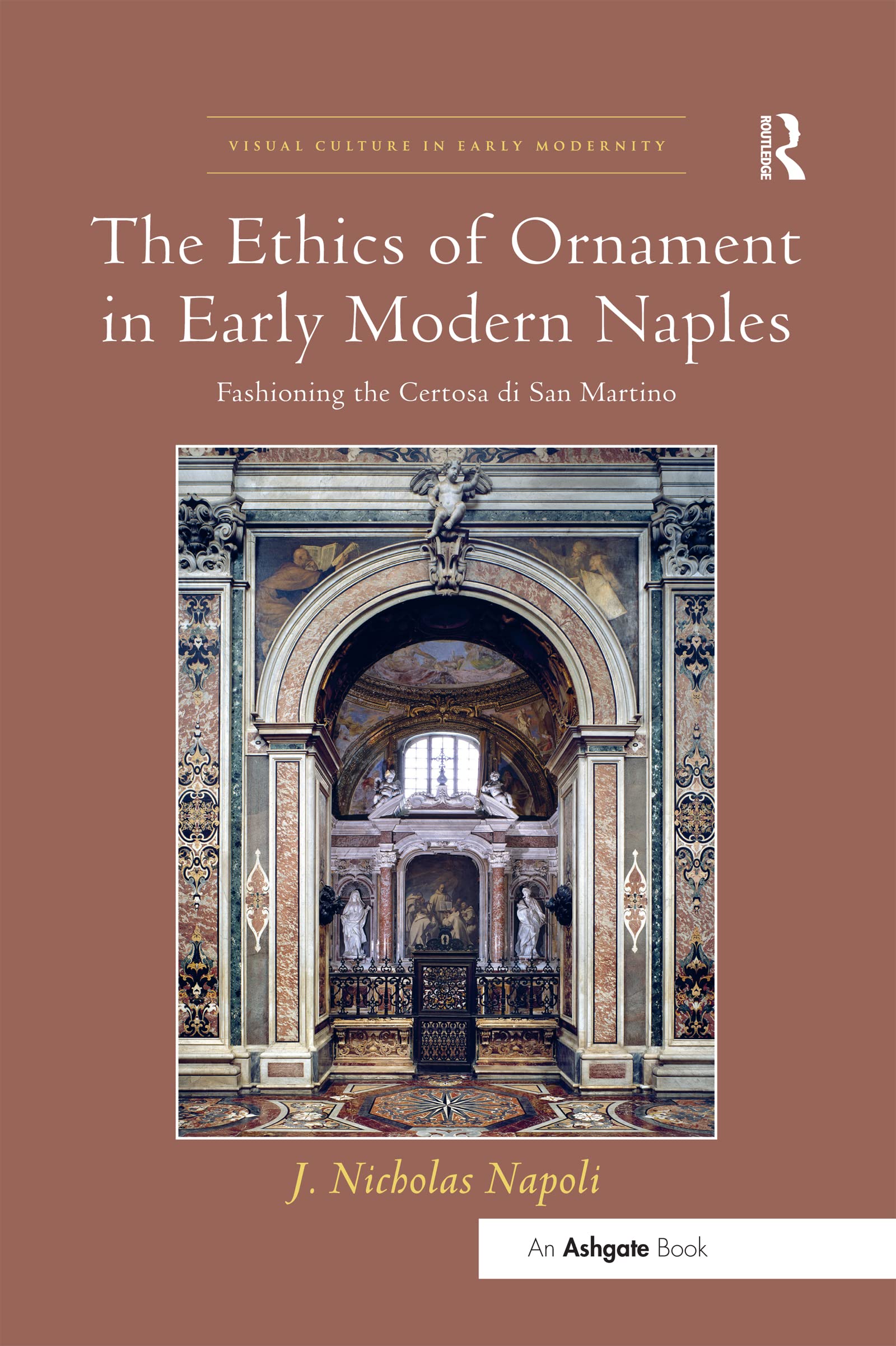
The Ethics of Ornament in Early Modern Naples: Fashioning the Certosa Di San Martino by J. Nicholas Napoli – Art, Religi
Inclusive of all applicable taxes. FREE shipping on all orders.
Available Offers
- 🚚Free Delivery — Free shipping on all orders
- 💵Cash on Delivery — Pay when your order arrives
- ↩️15-Day Easy Returns — Hassle-free return policy
- 🔒Cash on Delivery — Pay safely when your order arrives
Check Delivery
Product Description
Introduction
The Ethics of Ornament in Early Modern Naples: Fashioning the Certosa Di San Martino by J. Nicholas Napoli offers a groundbreaking exploration of one of the most intriguing paradoxes in art history: how a monastic order devoted to poverty and simplicity could produce such an extravagantly decorated church. This hardcover volume from Routledge is an essential read for students and scholars of art history, religious studies, and early modern European culture.
Book Overview
Set against the vibrant backdrop of early modern Naples, this study delves into the decorative campaigns at the Certosa di San Martino, a Carthusian monastery whose church became a dazzling masterpiece of marble, painting, and sculpture between the 1580s and the mid-18th century. Napoli examines the moral and ethical tensions that arose when the monks’ austere ideals clashed with their desire for ornate beauty. Through meticulous archival research, the book reveals how these conflicts were resolved in the context of Naples’ unique social, economic, and religious landscape.
Key Highlights
- Original archival research: Draws on previously unexplored documents from the Certosa di San Martino’s decorative campaigns.
- Ethical framework: Analyzes the moral dilemmas surrounding luxury and ornament in a religious setting.
- Interdisciplinary approach: Bridges art history, economic history, and religious studies.
- Focus on practice: Explores the expectations of both monks and artists regarding payment, labor, and artistic integrity.
Inside the Book
Napoli navigates the rich testimony left by the monks and artists, offering insights into the ethical and economic foundations of artistic production. The book examines how the Certosa’s decoration was not merely an aesthetic choice but a negotiation of values—where beauty, faith, and commerce intersected. Readers will encounter detailed analyses of contracts, payment records, and correspondence that bring the past to life.
Key Topics
- The Carthusian order’s vow of poverty versus the splendor of San Martino.
- The role of ornament in Counter-Reformation spirituality.
- Artistic patronage and labor relations in early modern Naples.
- The political and religious culture of Naples under Spanish rule.
- How material culture reflects ethical choices.
Reader Benefits
- Gain a deeper understanding of the moral complexities behind artistic creation.
- Learn how archival documents can reveal hidden histories of art and faith.
- Explore a lesser-known but pivotal chapter of Italian art history.
- Develop critical thinking about the relationship between wealth, religion, and aesthetics.
Learning Outcomes
By reading this book, you will be able to: articulate the ethical debates surrounding ornament in religious contexts; analyze primary sources from early modern Italy; connect local Neapolitan history to broader European trends; and evaluate how economic realities shape artistic expression.
Who Should Read
This book is ideal for postgraduate students and researchers in art history, early modern history, religious studies, and Italian studies. It also appeals to museum professionals, curators, and anyone fascinated by the intersection of spirituality and visual culture.
About the Author
J. Nicholas Napoli is a respected scholar of early modern European art and architecture. His research focuses on the social and economic dimensions of artistic production in Italy, with a special emphasis on Naples. He has published widely on patronage, ornament, and the ethics of decoration.
About the Publisher
Routledge is a leading global academic publisher known for its high-quality books in the humanities and social sciences. With a legacy of scholarly excellence, Routledge brings rigorous research to readers worldwide.
Conclusion
The Ethics of Ornament in Early Modern Naples is a compelling study that challenges conventional narratives about art and religion. It invites readers to reconsider the moral weight of beauty and the compromises that shape our cultural heritage. Order your copy today from Bookshops.in and delve into this fascinating world.
Quick Summary
The Ethics of Ornament in Early Modern Naples: Fashioning the Certosa Di San Martino by J. Nicholas Napoli is a scholarly exploration of a striking paradox: how did the Carthusian monks, who swore an oath of poverty, commission one of the most lavishly decorated churches in early modern Italy? The book delves into the archival records of the Certosa di San Martino’s decorative campaigns from 1580 to 1757, revealing the negotiations between monks, artists, and patrons. Readers will learn how ornament was not merely aesthetic but a means of negotiating religious identity, social status, and moral values in Counter-Reformation Naples. This book is ideal for graduate students, art historians, and anyone fascinated by the intersection of faith and visual culture. By choosing Bookshops.in, Indian readers gain access to a premium hardcover edition with reliable delivery and competitive pricing, supporting local scholarship and collection building.
Book Highlights
Book Specifications
| ISBN-13 | 9780367433222 |
| ISBN-10 | 0367433222 |
| Publisher | Routledge |
| Language | English |
| Dimensions | 17.53 x 2.29 x 24.89 cm |
| Weight | 998 g |
| Country | India |
| Category | Humanities › Art History |
| Genre | Art History |
| Reading Age | Adult |
| Original Language | English |
Frequently Asked Questions
What is the main theme of The Ethics of Ornament in Early Modern Naples?
Who is the author of this book?
Which monastery does the book focus on?
What time period does the book cover?
Is this book suitable for Indian readers?
What kind of sources does the author use?
Does the book include illustrations?
Is this a hardcover or paperback edition?
What is the ISBN-13 of this book?
Does the book discuss other religious orders?
What makes this book different from other art history books?
Is the book written in technical language?
Where can I buy this book in India?
Does the book cover the artists involved?
Readers Also Search For
Customers Also Bought
Art History
The Italian Renaissance in Art

Art History
Photovoltaic Design & Installation For Dummies | by Mayfield | ForDummies | by Mayfield | ForDummies | by Mayfield | ForDummies | by Mayfield | ForDummies | by Mayfield | ForDummies | by Mayfield | ForDummies | by Mayfield | ForDummies | by Mayfield | ForDummies | by Mayfield | ForDummies | by Mayfield | ForDummies | by Mayfield | ForDummies | by Mayfield | ForDummies | by Mayfield | ForDummies | by Mayfield | ForDummies | by Mayfield | ForDummies | by Mayfield | ForDummies | by Mayfield | ForDu
Art History
Designing School Systems for All Students (English, Robert J. Manley | Richard J. Hawkins)

Art History
Routledge Library Editions: Art and Culture in the Nineteenth Century
Art History
An Errant Design (English, S. H. Long)

Art History
Distributed System Design | by Jie Wu | CRC Press | by Jie Wu | CRC Press | by Jie Wu | CRC Press | by Jie Wu | CRC Press | by Jie Wu | CRC Press | by Jie Wu | CRC Press | by Jie Wu | CRC Press | by Jie Wu | CRC Press | by Jie Wu | CRC Press | by Jie Wu | CRC Press | by Jie Wu | CRC Press | by Jie Wu | CRC Press | by Jie Wu | CRC Press | by Jie Wu | CRC Press | by Jie Wu | CRC Press | by Jie Wu | CRC Press | by Jie Wu | CRC Press | by Jie Wu | CRC Press | by Jie Wu | CRC Press | by Jie Wu | CRC
Related Products
View AllArt History
Distributed System Design | by Jie Wu | CRC Press | by Jie Wu | CRC Press | by Jie Wu | CRC Press | by Jie Wu | CRC Press | by Jie Wu | CRC Press | by Jie Wu | CRC Press | by Jie Wu | CRC Press | by Jie Wu | CRC Press | by Jie Wu | CRC Press | by Jie Wu | CRC Press | by Jie Wu | CRC Press | by Jie Wu | CRC Press | by Jie Wu | CRC Press | by Jie Wu | CRC Press | by Jie Wu | CRC Press | by Jie Wu | CRC Press | by Jie Wu | CRC Press | by Jie Wu | CRC Press | by Jie Wu | CRC Press | by Jie Wu | CRC
Art History
The Italian Renaissance in Art
Art History
Photovoltaic Design & Installation For Dummies | by Mayfield | ForDummies | by Mayfield | ForDummies | by Mayfield | ForDummies | by Mayfield | ForDummies | by Mayfield | ForDummies | by Mayfield | ForDummies | by Mayfield | ForDummies | by Mayfield | ForDummies | by Mayfield | ForDummies | by Mayfield | ForDummies | by Mayfield | ForDummies | by Mayfield | ForDummies | by Mayfield | ForDummies | by Mayfield | ForDummies | by Mayfield | ForDummies | by Mayfield | ForDummies | by Mayfield | ForDu
Art History
Designing School Systems for All Students (English, Robert J. Manley | Richard J. Hawkins)
Art History
Routledge Library Editions: Art and Culture in the Nineteenth Century
Art History