
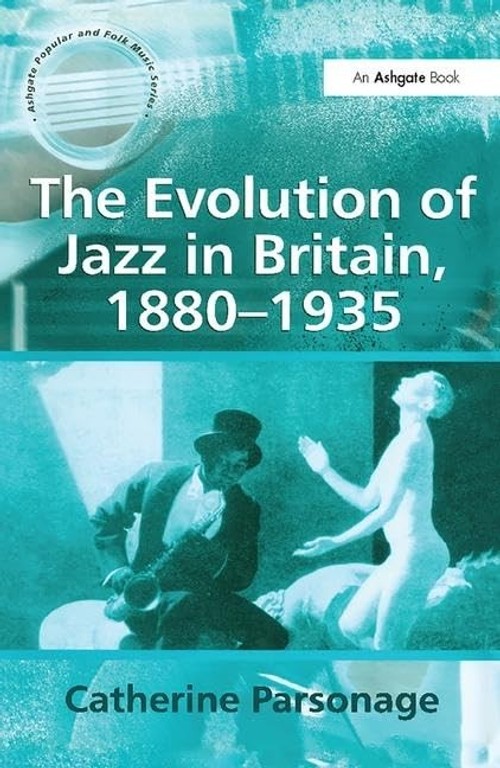
The Evolution of Jazz in Britain, 1880–1935 by Catherine Parsonage – A Scholarly Exploration of Early Jazz in the UK
Inclusive of all applicable taxes. FREE shipping on all orders.
Available Offers
- 🚚Free Delivery — Free shipping on all orders
- 💵Cash on Delivery — Pay when your order arrives
- ↩️15-Day Easy Returns — Hassle-free return policy
- 🔒Cash on Delivery — Pay safely when your order arrives
Check Delivery
Product Description
Introduction
Dive into the fascinating story of how jazz crossed the Atlantic and found a uniquely British voice. The Evolution of Jazz in Britain, 1880–1935 offers a meticulously researched journey through the early decades of jazz in the United Kingdom, from its roots in minstrel shows and black musical theatre to its transformation into a symbol of both high culture and subversive rebellion. This hardcover edition by Routledge is an essential read for music students, cultural historians, and anyone curious about the transatlantic currents that shaped modern music.
Book Overview
Author Catherine Parsonage (writing as Tackley) challenges the common assumption that British jazz was simply a pale reflection of American jazz. Instead, she reveals a complex, parallel world where jazz thrived in two distinct spheres: the respectable, institutionalised concert halls and the daring, underground nightclubs. Through careful analysis of early British criticism, racial stereotyping, and the socio-cultural climate of the late 19th and early 20th centuries, this book demonstrates how Britain’s unique environment—its class system, its imperial connections, and its own musical traditions—shaped a jazz scene that was distinctly its own. The narrative spans from the earliest ragtime influences in the 1880s to the vibrant dance-band era of the 1930s, providing a comprehensive view of jazz’s formative years in Britain.
Key Highlights
- Original Research: Based on extensive archival work, including rare periodicals, sheet music, and personal accounts from the era.
- Cultural Context: Explores how minstrelsy, blackface performance, and racial stereotypes influenced early British perceptions of jazz.
- Parallel Worlds: Uncovers the coexistence of ‘respectable’ jazz in ballrooms and concert halls with ‘subversive’ jazz in clubs and pubs.
- Critical Analysis: Features close readings of early European jazz criticism, revealing how British writers shaped public opinion.
- Musical Antecedents: Traces jazz’s lineage through black musical theatre, brass bands, and popular song forms in Britain.
Inside the Book
Readers will find a well-organised structure that moves chronologically and thematically. The opening chapters set the stage by examining musical life in late-Victorian and Edwardian Britain, highlighting the role of touring American minstrel troupes. Subsequent sections delve into the arrival of ragtime, the First World War’s impact on musical tastes, and the explosive popularity of jazz in the 1920s. The book also includes detailed discussions of key figures—both well-known and obscure—who shaped British jazz, as well as a fascinating look at how the BBC and the gramophone industry mediated jazz for British audiences. Musical notation examples and illustrations of period advertisements enrich the text, making it both scholarly and accessible.
Key Topics
- The cultural and musical antecedents of jazz in Britain (minstrel shows, black musical theatre, brass bands)
- Racial stereotyping and the image of jazz in British media
- The institutionalisation of jazz: from dance halls to concert platforms
- The underground jazz scene: nightclubs, speakeasies, and subversive spaces
- Early British jazz criticism and its influence on public perception
- The transatlantic exchange: how British jazz differed from American jazz
- The role of technology (records, radio) in spreading jazz across Britain
Reader Benefits
This book offers a fresh perspective for anyone who thinks they already know the story of jazz. By focusing on Britain rather than America, it fills a significant gap in music history. Students will appreciate the rigorous scholarship, while general readers will enjoy the vivid storytelling and surprising anecdotes. The hardcover binding ensures durability for repeated reference, and the clear prose makes complex ideas accessible. Whether you are a musician, a historian, or simply a jazz enthusiast, this volume will deepen your understanding of how music travels, adapts, and transforms in new cultural settings.
Learning Outcomes
- Understand the distinct trajectory of jazz development in Britain versus the United States.
- Analyse the impact of race, class, and cultural institutions on the reception of jazz.
- Identify key figures, venues, and events that shaped early British jazz.
- Critically evaluate primary sources such as early criticism, advertisements, and personal letters.
- Trace the evolution of jazz from its pre-ragtime roots to the swing era in a British context.
Who Should Read
This book is ideal for undergraduate and postgraduate students of musicology, cultural studies, and British history. It will also appeal to jazz musicians and aficionados who want to explore a lesser-known chapter of jazz history. Teachers and lecturers seeking a comprehensive text on early European jazz will find it invaluable. Additionally, readers interested in the sociology of music—how art forms are shaped by migration, prejudice, and commercial forces—will discover rich material here. No prior knowledge of music theory is required, though a basic familiarity with jazz terminology will enhance the experience.
About the Author
Catherine Parsonage (also known as Catherine Tackley) is a respected musicologist and historian specialising in jazz and popular music. She has held academic positions at several UK universities and has published extensively on the cultural history of jazz in Europe. Her research combines meticulous archival work with a keen sensitivity to the social and racial dynamics of music. The Evolution of Jazz in Britain, 1880–1935 is widely regarded as a landmark study in the field, earning praise for its depth and originality.
About the Publisher
Routledge is a leading global academic publisher, known for its extensive catalogue of books in the humanities and social sciences. With a history dating back to the 19th century, Routledge is committed to producing high-quality scholarly works that advance knowledge and understanding. This hardcover edition reflects the publisher’s dedication to durable, well-designed books that stand the test of time—both in content and craftsmanship.
Conclusion
The Evolution of Jazz in Britain, 1880–1935 is more than a music history book—it is a cultural biography of an art form finding its feet in a new world. By illuminating the unique British path of jazz, Catherine Parsonage offers readers a richer, more nuanced understanding of global music history. Whether you are a student, a scholar, or a lover of jazz, this book deserves a place on your shelf. Order your copy today from Bookshops.in and discover the story of jazz as you have never heard it before.
Quick Summary
The Evolution of Jazz in Britain, 1880–1935 by Catherine Parsonage is a groundbreaking academic study that redefines the history of jazz in the United Kingdom. Moving beyond the common narrative that British jazz was simply a copy of American jazz, Parsonage reveals how minstrel shows, black musical theatre, and deep-seated racial stereotypes shaped a distinct British jazz culture. The book meticulously traces the journey from early ragtime and syncopated music to the parallel worlds of institutional jazz (in concert halls and universities) and subversive jazz (in underground clubs and dance halls) by the end of the 1920s. Readers will learn how image and race influenced the reception of jazz, how British musicians adapted American styles, and how jazz became a site of cultural contestation. This book is ideal for musicology students, cultural historians, and jazz enthusiasts who want a deeper understanding of jazz's global journey. By purchasing from Bookshops.in, Indian readers gain access to a premium hardcover edition of this essential scholarly work, delivered with reliable service across India.
Book Highlights
Book Specifications
| ISBN-13 | 9780754650768 |
| ISBN-10 | 0754650766 |
| Publisher | Routledge |
| Language | English |
| Dimensions | 16.23 x 2.41 x 23.83 cm |
| Weight | 612 g |
| Country | India |
| Category | Performing Arts › Music |
| Genre | Non-fiction |
| Original Language | English |
Frequently Asked Questions
What is the main focus of this book?
Who is the author?
Is this book suitable for Indian readers?
Does the book cover American jazz?
What time period does the book cover?
Is this a textbook?
Is the book illustrated?
What is the binding?
Can I use this book for my PhD research?
Does the book discuss Indian jazz?
What is the price of the book?
Is this book available in paperback?
What is the publisher?
How is this book different from other jazz histories?
Readers Also Search For
Customers Also Bought
Art History
The Italian Renaissance in Art

Art History
Photovoltaic Design & Installation For Dummies | by Mayfield | ForDummies | by Mayfield | ForDummies | by Mayfield | ForDummies | by Mayfield | ForDummies | by Mayfield | ForDummies | by Mayfield | ForDummies | by Mayfield | ForDummies | by Mayfield | ForDummies | by Mayfield | ForDummies | by Mayfield | ForDummies | by Mayfield | ForDummies | by Mayfield | ForDummies | by Mayfield | ForDummies | by Mayfield | ForDummies | by Mayfield | ForDummies | by Mayfield | ForDummies | by Mayfield | ForDu
Art History
Designing School Systems for All Students (English, Robert J. Manley | Richard J. Hawkins)

Art History
Routledge Library Editions: Art and Culture in the Nineteenth Century

Art History
An Errant Design (English, S. H. Long)

Art History
Distributed System Design | by Jie Wu | CRC Press | by Jie Wu | CRC Press | by Jie Wu | CRC Press | by Jie Wu | CRC Press | by Jie Wu | CRC Press | by Jie Wu | CRC Press | by Jie Wu | CRC Press | by Jie Wu | CRC Press | by Jie Wu | CRC Press | by Jie Wu | CRC Press | by Jie Wu | CRC Press | by Jie Wu | CRC Press | by Jie Wu | CRC Press | by Jie Wu | CRC Press | by Jie Wu | CRC Press | by Jie Wu | CRC Press | by Jie Wu | CRC Press | by Jie Wu | CRC Press | by Jie Wu | CRC Press | by Jie Wu | CRC
Related Products
View All
Music
The Cambridge Companion to Michael Tippett by Kenneth Gloag – Music Analysis

Music
Making Light: Haydn, Musical Camp, and the Long Shadow of German Idealism
Music
Music and the Crises of the Modern Subject by Michael L. Klein – Music Theory & Criticism
Music
Opera and Drama in Eighteenth-Century London: The King's Theatre, Garrick and the Business of Perfor

Music
Music in Theory and Practice Volume 1 | by Bruce Benward | Marilyn Saker | McGraw-Hill Companies | by Bruce Benward | Marilyn Saker | McGraw-Hill Companies | by Bruce Benward | Marilyn Saker | McGraw-Hill Companies | by Bruce Benward | Marilyn Saker | McGraw-Hill Companies | by Bruce Benward | Marilyn Saker | McGraw-Hill Companies | by Bruce Benward | Marilyn Saker | McGraw-Hill Companies | by Bruce Benward | Marilyn Saker | McGraw-Hill Companies | by Bruce Benward | Marilyn Saker | McGraw-Hill

Music