
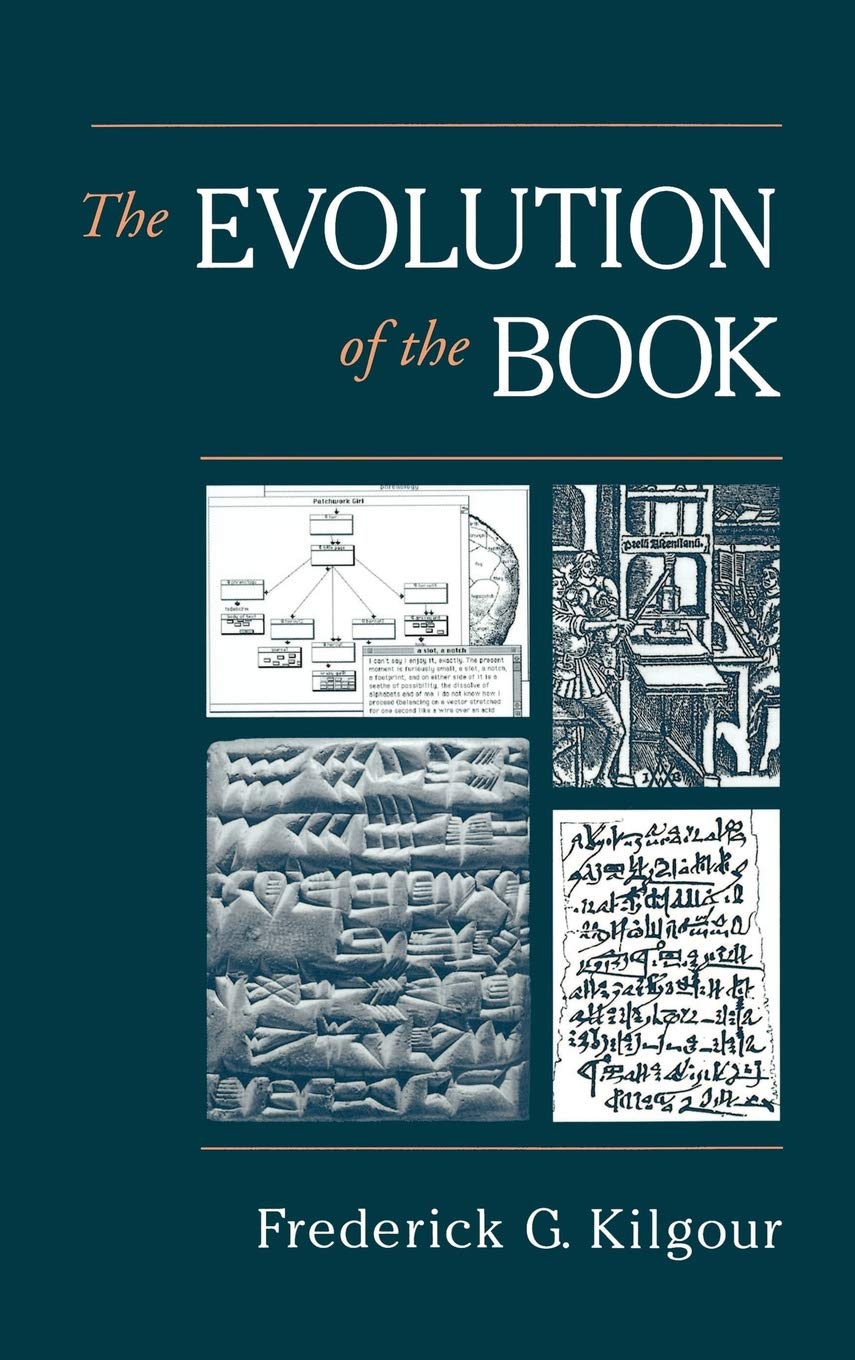
Evolution of the Book: A Definitive History of Writing, Printing, and the Digital Future by Frederick G. Kilgour
Inclusive of all applicable taxes. FREE shipping on all orders.
Available Offers
- 🚚Free Delivery — Free shipping on all orders
- 💵Cash on Delivery — Pay when your order arrives
- ↩️15-Day Easy Returns — Hassle-free return policy
- 🔒Cash on Delivery — Pay safely when your order arrives
Check Delivery
Product Description
Introduction
In an age where information flows at the speed of light, understanding the origins and transformation of the physical book has never been more relevant. Frederick G. Kilgour’s Evolution of the Book offers a masterful journey through the centuries, tracing how written records evolved from clay tablets to the printed codex that shaped civilizations. Published by the prestigious Oxford University Press, this hardcover volume is an indispensable companion for students, bibliophiles, and anyone curious about the enduring power of the printed word. Whether you are a history enthusiast, a library science student, or a lover of fine books, Kilgour’s work provides a rich, scholarly yet accessible narrative that connects the past to the present.
Book Overview
Evolution of the Book is a concise but comprehensive history of the book in all its physical forms. Kilgour begins with the invention of writing in ancient Mesopotamia and Egypt, moves through the development of papyrus scrolls and parchment codices, and explores the revolutionary impact of print technology in Asia and Europe. The narrative then traces the industrialisation of book production during the 19th and 20th centuries, culminating in the modern era of mass publishing. Written with the precision of a seasoned historian and the passion of a lifelong bibliophile, this book is both a tribute to the printed object and a thoughtful reflection on its future. It is not merely a chronology but a deep exploration of how books have preserved knowledge, spread ideas, and shaped human culture.
Key Highlights
- Authoritative Scholarship: Frederick G. Kilgour was a towering figure in library science and a founding father of the Online Computer Library Center (OCLC), bringing unparalleled expertise to the subject.
- Global Perspective: The book covers developments across civilizations, including the role of Indian, Chinese, and Islamic cultures in the evolution of writing and printing.
- Rich Historical Context: Each chapter situates the book within its social, economic, and technological milieu, making the story engaging for non-specialists.
- Concise Yet Comprehensive: Despite its modest length, the book covers over five millennia of history with clarity and depth.
- Physical Quality: Oxford University Press’s hardcover edition features acid-free paper and a sturdy binding, ensuring longevity for repeated reading and reference.
Inside the Book
The volume is organised into twelve chapters, each focusing on a pivotal phase in the book’s evolution. Early chapters examine the origins of writing systems, the transition from scroll to codex, and the rise of monastic scriptoria. Middle chapters explore the invention of movable type in China and Korea, Gutenberg’s press in Europe, and the subsequent spread of printing across the continent. Later chapters analyse the mechanisation of papermaking and binding, the emergence of publishing houses, and the role of libraries as custodians of knowledge. The final chapter offers a thoughtful look at the late twentieth-century shifts in book production and distribution, without venturing into digital speculation. Appendices include a timeline of key inventions and a select bibliography for further reading.
Key Topics
- Origins of Writing: From cuneiform to hieroglyphs, and the birth of the alphabet.
- The Codex Revolution: How the bound book replaced the scroll and why it mattered.
- Printing in Asia: Early innovations in woodblock printing and movable type in China and Korea.
- Gutenberg and the Printing Press: The technology that changed the world.
- Industrialisation of Book Production: Steam presses, machine-made paper, and the rise of mass literacy.
- Libraries and Preservation: The role of institutions in safeguarding written heritage.
- Twentieth-Century Publishing: The growth of paperback editions, book clubs, and global distribution networks.
Reader Benefits
- Deepen Your Understanding: Gain a nuanced appreciation of how the book has been a driver of intellectual and cultural change.
- Enhance Academic Knowledge: Ideal for coursework in history, library science, publishing, and media studies.
- Inspire Curiosity: Discover little-known facts about the material history of reading and writing.
- Build a Reference Library: A well-researched, authoritative text that serves as a reliable source for essays and projects.
- Enjoy Elegant Prose: Kilgour writes in a clear, engaging style that makes complex historical developments accessible to all readers.
Learning Outcomes
- Understand the Timeline: Trace the major milestones in the physical evolution of books from antiquity to the late twentieth century.
- Analyse Technological Impact: Evaluate how innovations in materials and machinery transformed the production and dissemination of knowledge.
- Appreciate Cultural Variations: Recognise the contributions of different regions and civilisations to book history.
- Contextualise Modern Publishing: Identify the historical roots of contemporary printing and distribution practices.
- Develop Critical Thinking: Reflect on the relationship between technological change and societal progress through the lens of book history.
Who Should Read
- Students and Academics: Especially those pursuing degrees in history, literature, library science, publishing, or communication studies.
- Bibliophiles and Collectors: Anyone with a passion for rare books, antique bindings, or the history of printing.
- Librarians and Archivists: Professionals seeking a deeper understanding of the objects they preserve and manage.
- General Readers: Curious minds who enjoy well-researched non-fiction that tells a compelling story.
- Teachers and Educators: Those looking for a reliable, single-volume resource to support classroom instruction.
About the Author
Frederick G. Kilgour (1914–2006) was a distinguished librarian, historian, and information scientist. He served as the librarian of the Yale Medical Library and was the founding president of the Online Computer Library Center (OCLC), which revolutionised global library cooperation through shared cataloguing. Kilgour authored numerous scholarly articles and books on library science and book history. His deep expertise in both the physical and organisational aspects of libraries gave him a unique vantage point from which to write this history. Evolution of the Book is considered one of his most accessible and enduring works, reflecting a lifetime of dedication to the written word.
About the Publisher
Oxford University Press (OUP) is the world’s largest university press, with a history dating back to 1586. Renowned for its rigorous editorial standards and scholarly excellence, OUP publishes works across all academic disciplines. This hardcover edition of Evolution of the Book is a testament to OUP’s commitment to producing durable, beautifully crafted books that stand the test of time. For Indian readers, OUP’s titles are widely available through Bookshops.in and are trusted by students, researchers, and institutions across the country.
Conclusion
Evolution of the Book is more than a history—it is a celebration of the object that has been central to human learning and imagination for millennia. Frederick G. Kilgour’s erudition and clarity make this volume a joy to read, while Oxford University Press’s production quality ensures it will remain a treasured part of your library for years to come. Whether you are studying the past or simply love books for their own sake, this work offers a profound and rewarding perspective on the enduring legacy of the printed page. Order your copy today from Bookshops.in and embark on a journey through the history of human knowledge.
Quick Summary
'Evolution of the Book' by Frederick G. Kilgour is a masterful, concise history that traces the book from its earliest origins in ancient writing systems to the dawn of the digital age. Kilgour, a highly respected figure in library science, brings a lifetime of knowledge to this narrative, exploring how the book has been shaped by technological, cultural, and social forces. Readers will journey from clay tablets and papyrus scrolls to the codex, the Gutenberg printing press, and finally to the electronic revolution that is transforming reading today. This book is ideal for Indian students of library science, history, and publishing, as well as for bibliophiles who want to understand the object they love. It offers a balanced perspective on print and digital media, making it a timely read for anyone curious about the future of the book. By purchasing from Bookshops.in, you receive a premium hardcover edition from Oxford University Press, ensuring a durable and elegant addition to your library. This is not just a history; it is a tribute to the enduring power of the written word.
Book Highlights
Book Specifications
| ISBN-13 | 9780195118599 |
| ISBN-10 | 0195118596 |
| Publisher | OUP USA |
| Language | English |
| Dimensions | 16.15 x 1.83 x 23.62 cm |
| Weight | 499 g |
| Category | Business & Economics › Industries |
| Genre | Nonfiction |
| Original Language | English |
Frequently Asked Questions
What is 'Evolution of the Book' about?
Who is the author of this book?
Is this book suitable for Indian students?
Does the book cover digital books?
Is this a hardcover or paperback?
What is the ISBN of this book?
Which publisher released this book?
Can I use this book for academic research?
Does the book include illustrations?
What is the reading level?
Is this book available in Indian bookstores?
What is the price in India?
Does the book cover the history of Indian manuscripts?
Readers Also Search For
Customers Also Bought

Entrepreneurship
Chinese Economic Revolution (English, Linda Grove)
Entrepreneurship
Engines of Innovation: The Entrepreneurial University in the Twenty-First Century by Holden Thorp
Entrepreneurship
Invention to Innovation (English, PhD Marshall Larry | Jenna Daroczy)

Entrepreneurship
Database Management Systems by Raghu Ramakrishnan – DBMS Textbook

Entrepreneurship
Decision-making for Technology Executives by Harold A. Linstone
Entrepreneurship
The Business Innovation Audit (English, William Tate)
Related Products
View All
Business & Economics
OECD institutional investors statistics 2019

Business & Economics
Philosophical Frameworks for Understanding Information Systems

Business & Economics
OECD Insurance Statistics 2019

Business & Economics
The Political Economy of West African Agriculture: 36 (Cambridge Studies in Social and Cultural Anthropology, Series Number 36)

Business & Economics
A History of Shopping (Studies in Social History)

Business & Economics