
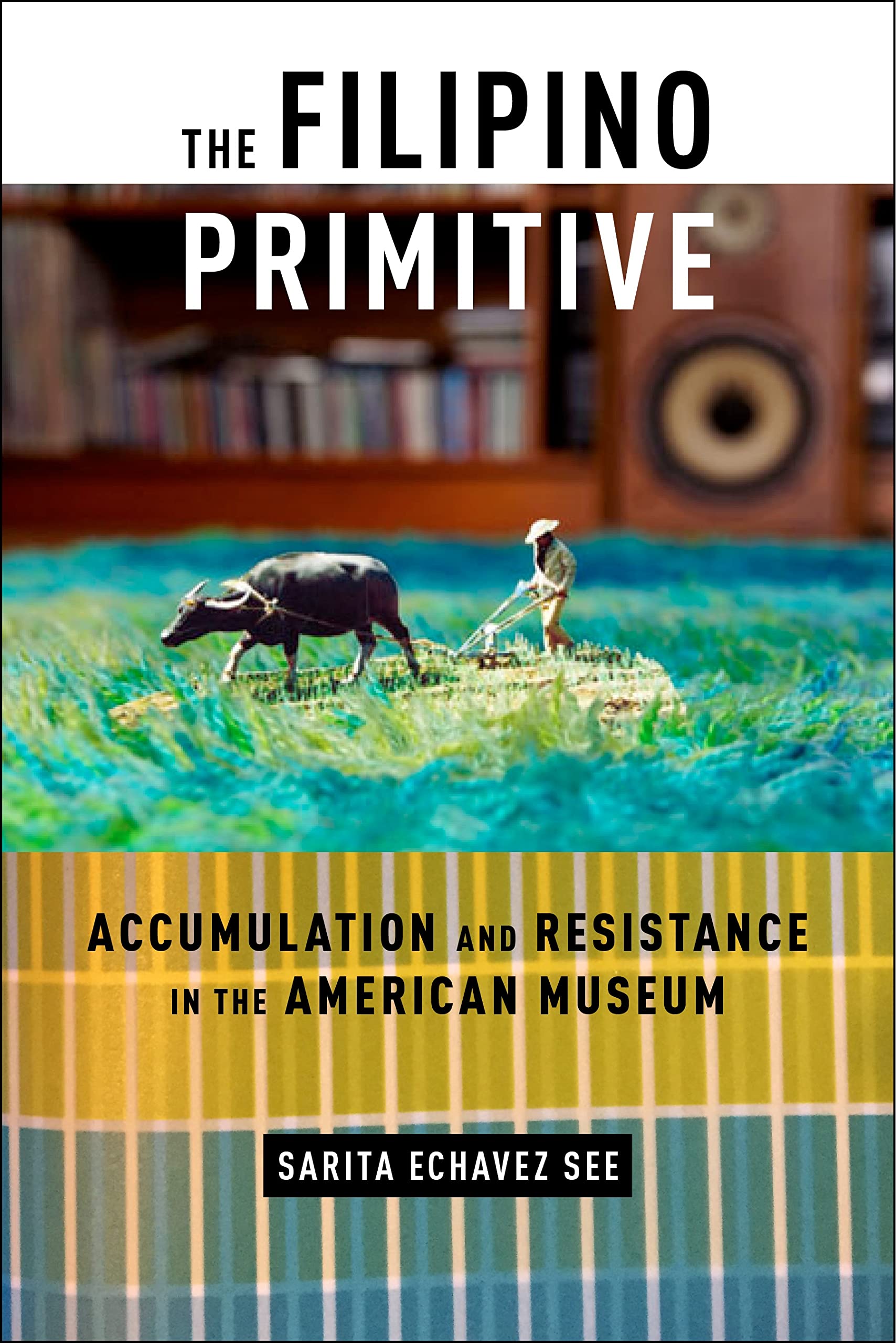
The Filipino Primitive: Accumulation and Resistance in the American Museum by Sarita Echavez See – A Critical Study of C
Inclusive of all applicable taxes. FREE shipping on all orders.
Available Offers
- 🚚Free Delivery — Free shipping on all orders
- 💵Cash on Delivery — Pay when your order arrives
- ↩️15-Day Easy Returns — Hassle-free return policy
- 🔒Cash on Delivery — Pay safely when your order arrives
Check Delivery
Product Description
Introduction
The Filipino Primitive: Accumulation and Resistance in the American Museum by Sarita Echavez See is a groundbreaking work that reexamines the role of museums in shaping colonial and racial knowledge. This hardcover volume from New York University Press offers a critical lens on how stolen artifacts from the Philippines were systematically collected and displayed in American institutions, serving as tools for capitalist, colonial, and racial accumulation. For Indian readers and students interested in postcolonial studies, museum studies, or Southeast Asian history, this book provides a powerful framework to understand the intersection of knowledge, power, and resistance.
Book Overview
Sarita See builds on Karl Marx’s concept of “primitive accumulation” to argue that museums are not neutral repositories of culture but active sites where knowledge is accumulated alongside material wealth. By focusing on Philippine collections at the University of Michigan Natural History Museum and the Frank Murphy Memorial Museum, See demonstrates how these exhibits allegorize and actualize the extraction of Filipino labor and resources. The book challenges readers to see museums as instruments of imperial knowledge production, where objects are preserved not for education alone but to legitimize colonial narratives. This original analysis is essential for understanding how visual culture contributes to systemic inequalities.
Key Highlights
- Original Thesis: Extends Marx’s economic concept to the realm of knowledge and visual culture, showing how museums accumulate colonial artifacts to build American hegemony.
- Case Studies: In-depth examination of Philippine collections in two Michigan museums, revealing hidden histories of extraction and display.
- Interdisciplinary Approach: Bridges postcolonial theory, critical museum studies, and Filipino diaspora studies for a rich, multifaceted analysis.
- Resistance Narratives: Highlights how Filipino communities and scholars have resisted this accumulation, offering counter-narratives of agency and survival.
Inside the Book
The book is structured to guide readers through the historical and theoretical underpinnings of museum accumulation. Early chapters outline the concept of primitive accumulation in the American context, followed by detailed explorations of specific museum collections. See uses archival research, visual analysis, and cultural criticism to unpack how objects like tools, textiles, and religious artifacts were stripped of their original meanings and repurposed as evidence of Filipino primitiveness. Later chapters focus on acts of resistance—from Filipino intellectuals to contemporary activists—who challenge these narratives and reclaim their heritage. The book is richly illustrated with photographs and diagrams that bring the analysis to life.
Key Topics
- Primitive Accumulation and Knowledge: How colonial theft of artifacts parallels economic exploitation.
- American Imperialism in the Philippines: The historical context of U.S. colonization and its lasting impact on museum collections.
- Museum as Archive: The role of natural history and memorial museums in shaping racial hierarchies.
- Cultural Resistance: Strategies used by Filipinos to contest and reframe museum narratives.
- Visual Culture and Power: How display techniques reinforce capitalist, colonial, and racial logics.
Reader Benefits
This book empowers readers to critically engage with museum spaces, whether in India or abroad. For students of history, anthropology, or art, it offers a model for analyzing how institutions construct knowledge. Scholars will appreciate the rigorous theoretical framework that connects economic theory with cultural studies. Activist readers will find inspiration in the stories of resistance that show how communities can reclaim stolen narratives. The book also provides a comparative lens for Indian readers to reflect on similar processes of colonial accumulation in South Asian museums.
Learning Outcomes
- Understand the concept of primitive accumulation as it applies to knowledge and culture, not just economics.
- Analyze how American museums used Filipino artifacts to justify colonial rule and racial stereotypes.
- Identify acts of resistance that challenge dominant museum narratives and decolonize visual culture.
- Apply critical frameworks to examine other colonial and postcolonial museum contexts, including in India.
- Develop skills in visual analysis and archival research through the book’s case studies.
Who Should Read
The Filipino Primitive is ideal for postgraduate students and researchers in postcolonial studies, museum studies, Southeast Asian history, and cultural anthropology. It is also a valuable resource for museum professionals seeking to decolonize their practices. Indian readers interested in comparative colonialisms, especially those studying the British Empire’s impact on Indian museum collections, will find parallel insights. General readers passionate about social justice and the politics of display will also be drawn to this accessible yet profound work.
About the Author
Sarita Echavez See is a professor of Media and Cultural Studies at the University of California, Riverside. Her research focuses on Filipino diaspora, colonial visual culture, and the politics of knowledge production. She has written extensively on race, empire, and representation, and her work bridges Asian American studies with critical theory. The Filipino Primitive is a culmination of years of archival research and community engagement, reflecting her commitment to uncovering hidden histories and amplifying marginalized voices.
About the Publisher
New York University Press is a leading academic publisher based in New York City, known for its rigorous scholarship in the humanities and social sciences. It has a strong track record of publishing works that challenge conventional wisdom and address pressing social issues. This hardcover edition reflects the press’s commitment to high-quality production and durable binding, making it a lasting addition to any library.
Conclusion
The Filipino Primitive: Accumulation and Resistance in the American Museum is an essential read for anyone seeking to understand the deep connections between museums, colonialism, and knowledge. Sarita Echavez See’s incisive analysis reveals how stolen artifacts continue to shape power dynamics, while also celebrating the resilience of those who resist. For Indian students and scholars, this book offers a powerful toolkit to critically examine their own museum heritage and imagine decolonized futures. Order your hardcover copy from Bookshops.in today and join the conversation on reclaiming cultural narratives.
Quick Summary
The Filipino Primitive by Sarita Echavez See is a groundbreaking academic work that rethinks Karl Marx's concept of primitive accumulation through the lens of American museums. See argues that the accumulation of Philippine artifacts in institutions like the University of Michigan Natural History Museum and the Frank Murphy Memorial Museum is not merely economic but also a project of colonial knowledge production. The book traces how stolen objects are preserved, displayed, and categorized to reinforce capitalist, racial, and imperial hierarchies. At the same time, it highlights moments of resistance embedded in these collections, showing how material culture can challenge dominant narratives. Written for scholars, curators, and students of postcolonial studies, anthropology, and art history, this hardcover edition from New York University Press offers a critical perspective on museum practices worldwide. Indian readers will find parallels with colonial museum legacies in South Asia. By purchasing from Bookshops.in, you support an independent Indian bookstore committed to delivering quality academic titles with reliable service.
Book Highlights
Book Specifications
| ISBN-13 | 9781479825059 |
| ISBN-10 | 1479825050 |
| Publisher | New York University Press |
| Language | English |
| Dimensions | 15.24 x 1.57 x 22.86 cm |
| Weight | 381 g |
| Category | Humanities › Art History |
| Genre | Academic / Postcolonial Studies |
| Original Language | English |
Frequently Asked Questions
What is The Filipino Primitive about?
Who is the author Sarita Echavez See?
Is this book suitable for Indian readers?
What is the format of this book?
Does the book discuss repatriation of artifacts?
Which publisher released this book?
What is the ISBN?
What is the price in India?
What is the rating of this book?
What topics does the book cover?
Is this book part of a series?
Can I use this book for my PhD research?
How is this book different from other museum studies books?
Readers Also Search For
Customers Also Bought
Art History
The Italian Renaissance in Art
Art History
Photovoltaic Design & Installation For Dummies | by Mayfield | ForDummies | by Mayfield | ForDummies | by Mayfield | ForDummies | by Mayfield | ForDummies | by Mayfield | ForDummies | by Mayfield | ForDummies | by Mayfield | ForDummies | by Mayfield | ForDummies | by Mayfield | ForDummies | by Mayfield | ForDummies | by Mayfield | ForDummies | by Mayfield | ForDummies | by Mayfield | ForDummies | by Mayfield | ForDummies | by Mayfield | ForDummies | by Mayfield | ForDummies | by Mayfield | ForDu
Art History
Designing School Systems for All Students (English, Robert J. Manley | Richard J. Hawkins)
Art History
Routledge Library Editions: Art and Culture in the Nineteenth Century

Art History
An Errant Design (English, S. H. Long)
Art History
Distributed System Design | by Jie Wu | CRC Press | by Jie Wu | CRC Press | by Jie Wu | CRC Press | by Jie Wu | CRC Press | by Jie Wu | CRC Press | by Jie Wu | CRC Press | by Jie Wu | CRC Press | by Jie Wu | CRC Press | by Jie Wu | CRC Press | by Jie Wu | CRC Press | by Jie Wu | CRC Press | by Jie Wu | CRC Press | by Jie Wu | CRC Press | by Jie Wu | CRC Press | by Jie Wu | CRC Press | by Jie Wu | CRC Press | by Jie Wu | CRC Press | by Jie Wu | CRC Press | by Jie Wu | CRC Press | by Jie Wu | CRC
Related Products
View AllArt History
Distributed System Design | by Jie Wu | CRC Press | by Jie Wu | CRC Press | by Jie Wu | CRC Press | by Jie Wu | CRC Press | by Jie Wu | CRC Press | by Jie Wu | CRC Press | by Jie Wu | CRC Press | by Jie Wu | CRC Press | by Jie Wu | CRC Press | by Jie Wu | CRC Press | by Jie Wu | CRC Press | by Jie Wu | CRC Press | by Jie Wu | CRC Press | by Jie Wu | CRC Press | by Jie Wu | CRC Press | by Jie Wu | CRC Press | by Jie Wu | CRC Press | by Jie Wu | CRC Press | by Jie Wu | CRC Press | by Jie Wu | CRC
Art History
The Italian Renaissance in Art
Art History
Photovoltaic Design & Installation For Dummies | by Mayfield | ForDummies | by Mayfield | ForDummies | by Mayfield | ForDummies | by Mayfield | ForDummies | by Mayfield | ForDummies | by Mayfield | ForDummies | by Mayfield | ForDummies | by Mayfield | ForDummies | by Mayfield | ForDummies | by Mayfield | ForDummies | by Mayfield | ForDummies | by Mayfield | ForDummies | by Mayfield | ForDummies | by Mayfield | ForDummies | by Mayfield | ForDummies | by Mayfield | ForDummies | by Mayfield | ForDu
Art History
Designing School Systems for All Students (English, Robert J. Manley | Richard J. Hawkins)
Art History
Routledge Library Editions: Art and Culture in the Nineteenth Century
Art History