
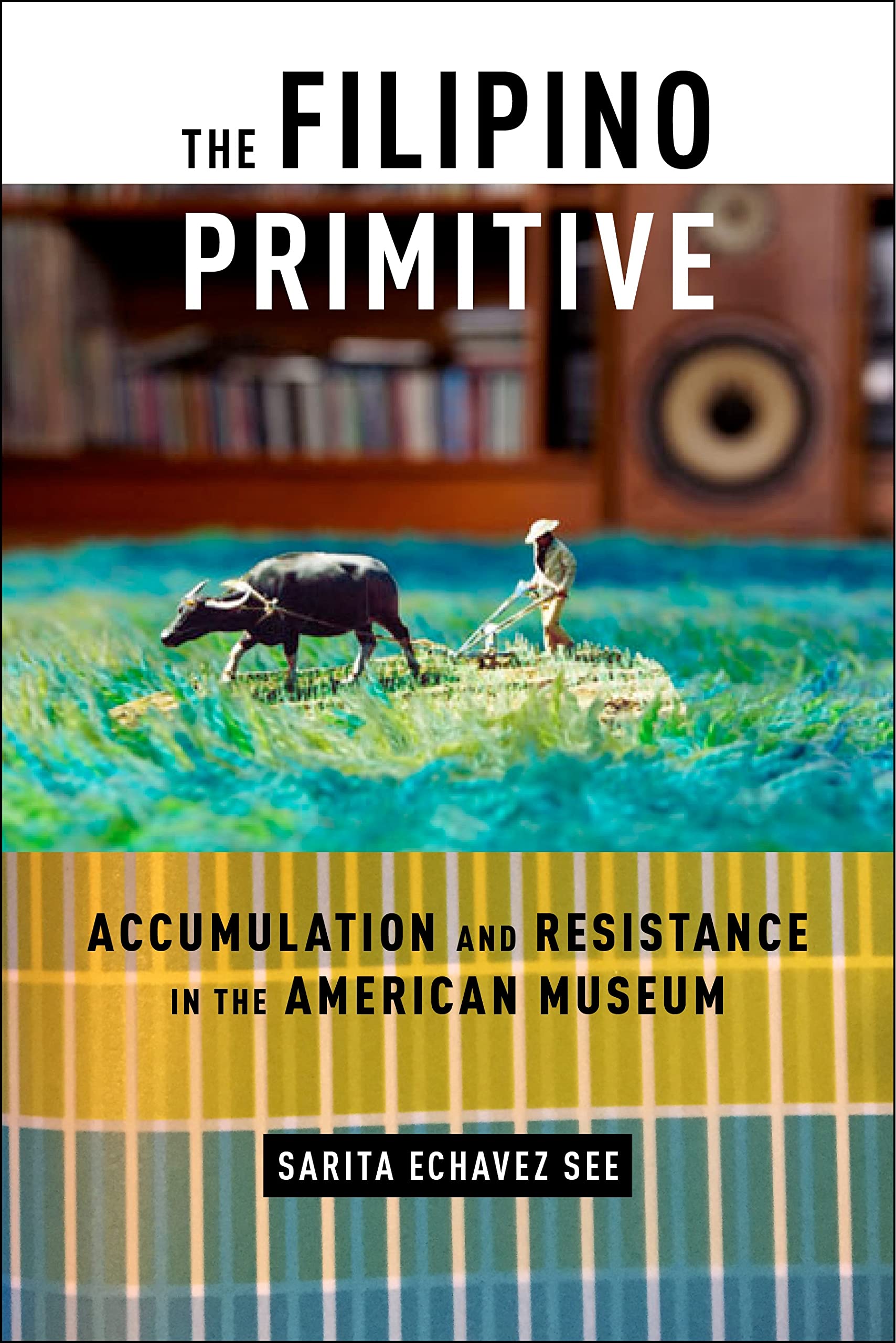
The Filipino Primitive: Accumulation and Resistance in the American Museum by Sarita Echavez See – A Postcolonial Study
Inclusive of all applicable taxes. FREE shipping on all orders.
Available Offers
- 🚚Free Delivery — Free shipping on all orders
- 💵Cash on Delivery — Pay when your order arrives
- ↩️15-Day Easy Returns — Hassle-free return policy
- 🔒Cash on Delivery — Pay safely when your order arrives
Check Delivery
Product Description
Introduction
The Filipino Primitive: Accumulation and Resistance in the American Museum by Sarita Echavez See is a groundbreaking work that reexamines the role of museums in shaping imperial knowledge. This hardcover volume, published by New York University Press, offers a critical analysis of how stolen artifacts and colonial collections underpin American cultural and intellectual dominance. For Indian readers and students of postcolonial studies, this book provides a powerful lens to understand the intersections of capitalism, colonialism, and race in the global museum landscape.
Book Overview
Sarita Echavez See takes Karl Marx’s concept of “primitive accumulation”—traditionally understood as an economic process of land acquisition and labor extraction—and expands it into the realm of knowledge production. She argues that American museums, particularly those housing Philippine collections, serve as sites where capitalist, colonial, and racial forces converge. Through detailed case studies of the University of Michigan Natural History Museum and the Frank Murphy Memorial Museum in Michigan, See demonstrates how these institutions preserve stolen objects as evidence of imperial superiority, while simultaneously erasing the violence of their acquisition. The book challenges readers to see museums not as neutral repositories of culture, but as active agents in the ongoing project of primitive accumulation.
Key Highlights
- Original Theoretical Framework: Extends Marx’s primitive accumulation to include knowledge and visual culture, offering a fresh perspective on museum studies.
- Philippine-Centered Analysis: Focuses on Filipino artifacts and labor, highlighting a rarely examined aspect of American colonialism in Asia.
- Critical Museum Studies: Reveals how natural history and memorial museums function as allegories of imperial power.
- Interdisciplinary Approach: Blends postcolonial theory, art history, anthropology, and political economy for a rich, multifaceted argument.
Inside the Book
The book is divided into chapters that systematically unpack the concept of primitive accumulation in museum contexts. See examines the University of Michigan Natural History Museum’s Philippine collections, showing how they were assembled through theft and coercion during the American colonial period. She then turns to the Frank Murphy Memorial Museum, which commemorates a former American governor-general of the Philippines, to illustrate how museums memorialize colonizers while silencing indigenous resistance. The text is interspersed with photographs of artifacts and museum displays, grounding theoretical arguments in material evidence. See also draws on archival records, government documents, and Filipino oral histories to reconstruct the stories behind the objects.
Key Topics
- Primitive Accumulation and Knowledge: How museums collect and curate to legitimize colonial hierarchies.
- Visual Culture and Imperialism: The role of display techniques in reinforcing racial and cultural stereotypes.
- Filipino Labor and Resistance: The extraction of Filipino labor in American colonies and its connection to museum collections.
- Decolonizing Museums: Strategies for repatriation and rethinking curatorial practices.
- American Empire in Asia: The Philippines as a case study for broader patterns of U.S. imperialism.
Reader Benefits
Readers will gain a deep understanding of how museums are not passive storehouses but active participants in global power structures. The book equips students and scholars with critical tools to analyze visual culture, from museum exhibits to archival photographs. It also offers practical insights for those working in cultural heritage, anthropology, or postcolonial activism, encouraging a more ethical approach to collection and display. For Indian readers, the parallels to British colonial museums and the ongoing debates about repatriation of Indian artifacts make this book particularly relevant.
Learning Outcomes
- Understand the concept of primitive accumulation as applied to knowledge and culture.
- Analyze the relationship between museum collections and colonial violence.
- Critically evaluate the visual rhetoric of natural history and memorial museums.
- Connect Philippine colonial history to global patterns of imperialism.
- Develop strategies for decolonizing museum practices in contemporary contexts.
Who Should Read
The Filipino Primitive is essential reading for students and scholars of postcolonial studies, museum studies, art history, anthropology, and Asian American studies. It is also highly valuable for curators, archivists, and cultural policy makers seeking to understand the ethical dimensions of their work. Indian readers interested in comparative colonialism, particularly the legacies of British and American empires, will find this book illuminating. Additionally, activists and community organizers working on repatriation and cultural sovereignty will benefit from See’s rigorous analysis.
About the Author
Sarita Echavez See is a professor of Media and Cultural Studies at the University of California, Riverside. Her research focuses on the intersections of race, colonialism, and visual culture, with a particular emphasis on Filipino and Filipino American experiences. She is also the author of The Decolonized Eye: Filipino American Art and Performance. Her work has been widely published in journals such as American Quarterly and Journal of Asian American Studies. See is known for her accessible yet theoretically sophisticated writing, making complex ideas available to a broad academic audience.
About the Publisher
New York University Press (NYU Press) is a leading academic publisher based in New York City. Founded in 1916, it publishes over 100 books annually in the humanities and social sciences. NYU Press is renowned for its strong lists in critical theory, American studies, and cultural history. This hardcover edition reflects the press’s commitment to high-quality scholarship and durable production, ensuring that the book remains a valuable resource for years to come.
Conclusion
The Filipino Primitive: Accumulation and Resistance in the American Museum is a vital contribution to the study of imperialism, knowledge production, and visual culture. Sarita Echavez See’s incisive analysis forces us to confront the uncomfortable truths behind museum displays and challenges us to imagine a more equitable future for cultural heritage. For Indian readers, this book offers a powerful framework to examine our own colonial pasts and the ongoing struggles over stolen artifacts. Order your hardcover copy today from Bookshops.in and join the critical conversation about museums, power, and resistance.
Quick Summary
The Filipino Primitive: Accumulation and Resistance in the American Museum by Sarita Echavez See is a groundbreaking work that reimagines Karl Marx's concept of primitive accumulation as a project of knowledge accumulation. The book focuses on Philippine artifacts housed in American museums, particularly the University of Michigan Natural History Museum and the Frank Murphy Memorial Museum. See argues that these collections are not neutral repositories but are deeply entangled with capitalist, colonial, and racial forces. Through meticulous analysis of visual culture and material objects, she reveals how museums preserve stolen artifacts and produce colonial knowledge. The book also highlights forms of resistance from colonized peoples, including efforts to reclaim cultural heritage. This is essential reading for students and scholars of postcolonial studies, museum studies, cultural anthropology, and critical theory. Indian readers will find parallels with colonial museum practices in South Asia. By purchasing from Bookshops.in, you get an authentic hardcover edition with fast delivery across India.
Book Highlights
Book Specifications
| ISBN-13 | 9781479842667 |
| ISBN-10 | 1479842664 |
| Publisher | New York University Press |
| Language | English |
| Dimensions | 15.24 x 1.91 x 22.86 cm |
| Weight | 544 g |
| Category | Arts, Film & Photography › Theory & Criticism |
| Genre | Nonfiction |
| Reading Age | Adult |
| Original Language | English |
Frequently Asked Questions
What is The Filipino Primitive about?
Who is Sarita Echavez See?
What does 'primitive accumulation' mean in this book?
Which museums are discussed?
Is this book only about the Philippines?
What is the main argument of the book?
How does the book address resistance?
What disciplines does this book relate to?
Is this book suitable for Indian readers?
What is the price in India?
Does the book include illustrations?
What is the ISBN?
Why buy from Bookshops.in?
Readers Also Search For
Customers Also Bought
Art History
The Italian Renaissance in Art
Art History
Photovoltaic Design & Installation For Dummies | by Mayfield | ForDummies | by Mayfield | ForDummies | by Mayfield | ForDummies | by Mayfield | ForDummies | by Mayfield | ForDummies | by Mayfield | ForDummies | by Mayfield | ForDummies | by Mayfield | ForDummies | by Mayfield | ForDummies | by Mayfield | ForDummies | by Mayfield | ForDummies | by Mayfield | ForDummies | by Mayfield | ForDummies | by Mayfield | ForDummies | by Mayfield | ForDummies | by Mayfield | ForDummies | by Mayfield | ForDu
Art History
Designing School Systems for All Students (English, Robert J. Manley | Richard J. Hawkins)
Art History
Routledge Library Editions: Art and Culture in the Nineteenth Century
Art History
An Errant Design (English, S. H. Long)
Art History
Distributed System Design | by Jie Wu | CRC Press | by Jie Wu | CRC Press | by Jie Wu | CRC Press | by Jie Wu | CRC Press | by Jie Wu | CRC Press | by Jie Wu | CRC Press | by Jie Wu | CRC Press | by Jie Wu | CRC Press | by Jie Wu | CRC Press | by Jie Wu | CRC Press | by Jie Wu | CRC Press | by Jie Wu | CRC Press | by Jie Wu | CRC Press | by Jie Wu | CRC Press | by Jie Wu | CRC Press | by Jie Wu | CRC Press | by Jie Wu | CRC Press | by Jie Wu | CRC Press | by Jie Wu | CRC Press | by Jie Wu | CRC
Related Products
View All
Arts, Film & Photography
Stars of '90s Dance Pop: 29 Hitmakers Discuss Their Careers by James Arena

Arts, Film & Photography
Edgar Heap of Birds by Bill Anthes – Native American Art Study

Arts, Film & Photography
Movement, Text, Performance (Elements in Contemporary Performance Texts)
Arts, Film & Photography
Analyzing Art, Culture, and Design in the Digital Age (English, Gianluca Mura)
Arts, Film & Photography
From The Inside: A Backdrop to the Music of My Life
Arts, Film & Photography