
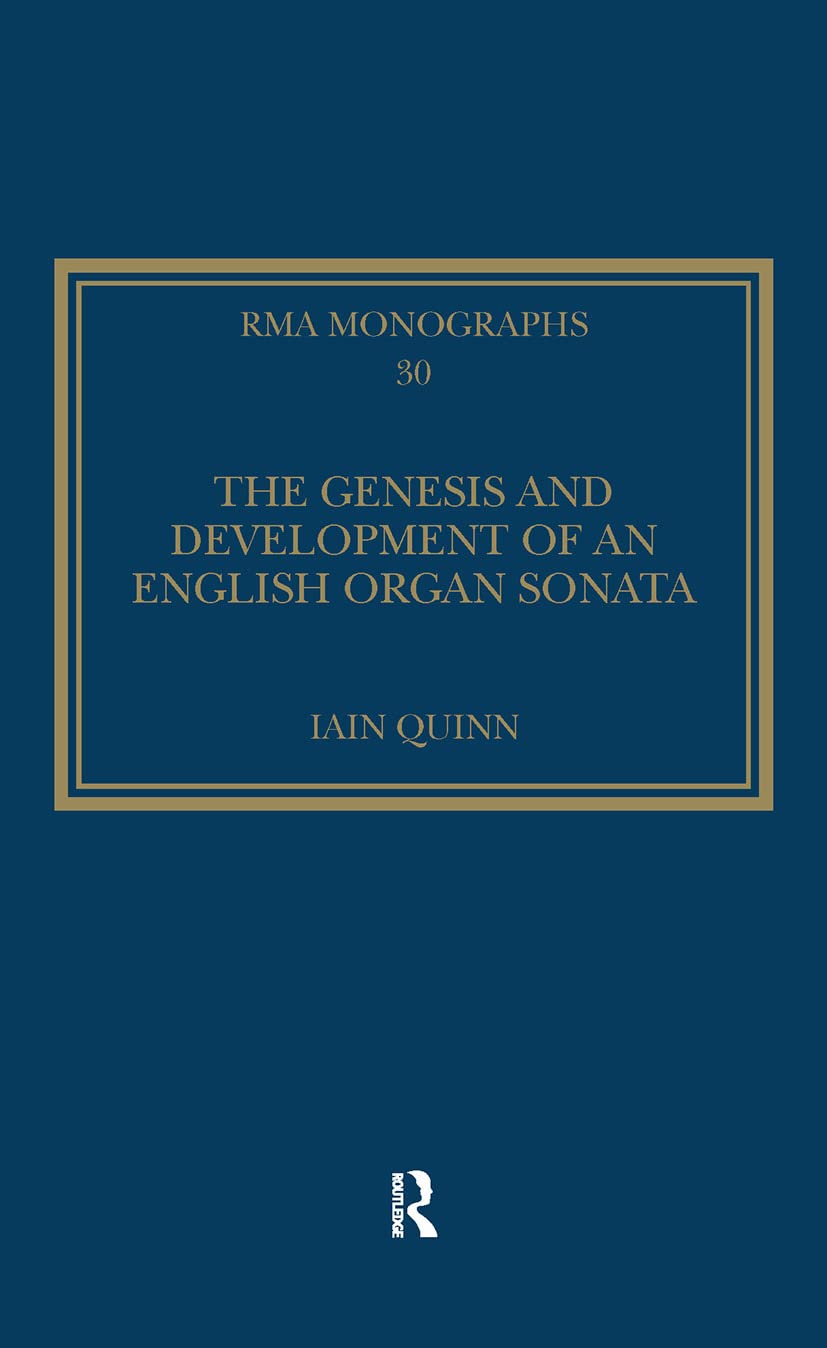
The Genesis and Development of an English Organ Sonata: A Scholarly Study by Iain Quinn on the Evolution of Organ Music
Inclusive of all applicable taxes. FREE shipping on all orders.
Available Offers
- 🚚Free Delivery — Free shipping on all orders
- 💵Cash on Delivery — Pay when your order arrives
- ↩️15-Day Easy Returns — Hassle-free return policy
- 🔒Cash on Delivery — Pay safely when your order arrives
Check Delivery
Product Description
Introduction
The Genesis and Development of an English Organ Sonata by Iain Quinn is a scholarly yet accessible exploration of how the English organ sonata tradition emerged and evolved from the mid-nineteenth century. This hardcover volume from Routledge offers music students, organists, and historians a deep dive into the cultural, pedagogical, and compositional forces that shaped a unique repertoire. For Indian readers passionate about Western classical music and organ literature, this book provides a rare window into a tradition that influenced church music and concert performance worldwide.
Book Overview
This study traces the organ sonata from its earliest roots in the 1850s, when composers like W. T. Best and William Spark began writing works that elevated the instrument beyond liturgical use. Quinn examines how the expansion of organ capabilities—new stops, manuals, and mechanical innovations—inspired a generation of organist-composers to rethink what the repertoire could achieve. The book situates the English organ sonata within a broader European context, showing how Mendelssohn's pedagogical influence and the veneration of Bach, Mozart, and Beethoven shaped a conservative yet creative tradition. It also explores the impact of William Crotch's lectures, which encouraged composers to blend classical ideals with contemporary expression.
Key Highlights
- Original scholarship: First comprehensive study of the English organ sonata's genesis and development.
- Pedagogical lineage: Traces teaching traditions from Mendelssohn to later British organist-composers.
- Cultural context: Examines how conservatism and reverence for classical masters shaped compositional choices.
- Portfolio sonatas: Analyzes multi-movement works where each section showcases contrasting styles.
- Instrumental evolution: Connects organ design advances to new compositional possibilities.
Inside the Book
Quinn structures the narrative around key turning points: the legacy of the keyboard sonata in Britain, the role of cathedral and concert organists as composers, and the tension between tradition and innovation. He delves into specific sonatas by figures like Charles Villiers Stanford, Edward Elgar, and later twentieth-century composers, showing how each work reflects its era. The book includes musical examples, archival references, and discussions of performance practice, making it valuable for both scholars and performers. Chapters also address the reception of these works in England and abroad, including their influence on Indian organ music during the colonial period.
Key Topics
- Origins of the English organ sonata in the 1850s
- Influence of Mendelssohn and German Romanticism
- William Crotch's lectures and the culture of musical conservatism
- Veneration of Bach, Mozart, and Beethoven in organ composition
- Portfolio sonatas and the art of stylistic contrast
- Organ design innovations and their impact on repertoire
- Role of cathedral organists in shaping a national tradition
Reader Benefits
This book helps readers understand why English organ sonatas sound the way they do—balancing classical form with Romantic expression. For organists, it offers historical insights that can inform interpretation and registration choices. Music students gain a clear framework for analyzing sonata form in organ works, while historians appreciate the detailed cultural narrative. Indian readers, especially those studying Western music in conservatories or universities, will find the book a valuable resource for connecting European organ traditions to global music history.
Learning Outcomes
- Identify the key composers and works that defined the English organ sonata.
- Understand how pedagogical lineages from Mendelssohn shaped British organ music.
- Analyze the influence of classical masters (Bach, Mozart, Beethoven) on nineteenth-century organ composition.
- Recognize the role of instrument technology in enabling new compositional approaches.
- Evaluate the cultural forces—including conservatism and nationalism—that influenced repertoire development.
Who Should Read
This book is ideal for organists, musicologists, and students of Western classical music history. It is also highly relevant for Indian readers training in church music, cathedral organ playing, or pursuing advanced degrees in music. Scholars of nineteenth-century British culture, as well as performers looking to deepen their understanding of the organ sonata repertoire, will find this work indispensable. The clear writing makes it accessible even to those new to organ literature.
About the Author
Iain Quinn is a respected musicologist and organist with expertise in nineteenth-century British organ music. He has published extensively on the intersection of performance practice, composition, and cultural history. His academic work combines rigorous archival research with practical insights drawn from his own experience as a performer. Quinn's scholarship is widely cited in studies of English organ repertoire, and he brings a musician's sensibility to historical analysis.
About the Publisher
Routledge is a leading academic publisher known for its high-quality music and humanities titles. Part of the Taylor & Francis group, Routledge produces works that set standards in musicology, performance studies, and cultural history. This hardcover edition reflects their commitment to durable, authoritative reference volumes suitable for libraries, universities, and serious collectors.
Conclusion
The Genesis and Development of an English Organ Sonata is an essential addition to any music library. Iain Quinn's meticulous research and engaging narrative illuminate a repertoire that has long deserved deeper study. For Indian music enthusiasts and scholars, this book opens a door to understanding how organ music evolved in dialogue with European classical traditions. Order your copy from Bookshops.in today and enrich your understanding of this fascinating chapter in music history.
Quick Summary
The Genesis and Development of an English Organ Sonata by Iain Quinn is a meticulously researched academic work that delves into the origins and evolution of the English organ sonata tradition, beginning in the 1850s with composers such as W. T. Best and William Spark. The book examines how the expansion of the organ's capabilities opened new creative avenues for organist-composers, who sought to elevate the repertoire by drawing on Classical ideals and pedagogical influences. A significant focus is placed on the legacy of William Crotch's lectures and the impact of Mendelssohn's teaching, which fostered a culture of conservatism that shaped the direction of organ composition. This volume is ideal for musicology students, organ performers, and scholars of British music history, offering deep insights into a niche but important genre. Readers will gain a comprehensive understanding of the historical, cultural, and musical factors that contributed to the development of the English organ sonata. By purchasing from Bookshops.in, Indian customers receive a premium hardcover edition from Routledge, ensuring a durable addition to any academic or personal library.
Book Highlights
Book Specifications
| ISBN-13 | 9781138203822 |
| ISBN-10 | 1138203823 |
| Publisher | Routledge |
| Language | English |
| Dimensions | 15.24 x 1.27 x 24.13 cm |
| Weight | 345 g |
| Category | Performing Arts › Music |
| Genre | Music History |
| Reading Age | Adult |
| Original Language | English |
Frequently Asked Questions
What is the main subject of this book?
Who is the author of this book?
Which composers are discussed in the book?
What period does the book cover?
Is this book suitable for beginners in organ music?
Does the book include musical examples?
What makes this book unique?
What is the binding of this book?
Can I use this book for academic research?
How does this book relate to organ pedagogy?
What is the role of William Crotch in the book?
Is the book available in Indian bookstores?
What language is the book written in?
Does the book cover modern organ music?
Readers Also Search For
Customers Also Bought
Art History
The Italian Renaissance in Art
Art History
Photovoltaic Design & Installation For Dummies | by Mayfield | ForDummies | by Mayfield | ForDummies | by Mayfield | ForDummies | by Mayfield | ForDummies | by Mayfield | ForDummies | by Mayfield | ForDummies | by Mayfield | ForDummies | by Mayfield | ForDummies | by Mayfield | ForDummies | by Mayfield | ForDummies | by Mayfield | ForDummies | by Mayfield | ForDummies | by Mayfield | ForDummies | by Mayfield | ForDummies | by Mayfield | ForDummies | by Mayfield | ForDummies | by Mayfield | ForDu
Art History
Designing School Systems for All Students (English, Robert J. Manley | Richard J. Hawkins)
Art History
Routledge Library Editions: Art and Culture in the Nineteenth Century
Art History
An Errant Design (English, S. H. Long)
Art History
Distributed System Design | by Jie Wu | CRC Press | by Jie Wu | CRC Press | by Jie Wu | CRC Press | by Jie Wu | CRC Press | by Jie Wu | CRC Press | by Jie Wu | CRC Press | by Jie Wu | CRC Press | by Jie Wu | CRC Press | by Jie Wu | CRC Press | by Jie Wu | CRC Press | by Jie Wu | CRC Press | by Jie Wu | CRC Press | by Jie Wu | CRC Press | by Jie Wu | CRC Press | by Jie Wu | CRC Press | by Jie Wu | CRC Press | by Jie Wu | CRC Press | by Jie Wu | CRC Press | by Jie Wu | CRC Press | by Jie Wu | CRC
Related Products
View All
Music
The Cambridge Companion to Michael Tippett by Kenneth Gloag – Music Analysis
Music
Making Light: Haydn, Musical Camp, and the Long Shadow of German Idealism
Music
Music and the Crises of the Modern Subject by Michael L. Klein – Music Theory & Criticism
Music
Opera and Drama in Eighteenth-Century London: The King's Theatre, Garrick and the Business of Perfor
Music
Music in Theory and Practice Volume 1 | by Bruce Benward | Marilyn Saker | McGraw-Hill Companies | by Bruce Benward | Marilyn Saker | McGraw-Hill Companies | by Bruce Benward | Marilyn Saker | McGraw-Hill Companies | by Bruce Benward | Marilyn Saker | McGraw-Hill Companies | by Bruce Benward | Marilyn Saker | McGraw-Hill Companies | by Bruce Benward | Marilyn Saker | McGraw-Hill Companies | by Bruce Benward | Marilyn Saker | McGraw-Hill Companies | by Bruce Benward | Marilyn Saker | McGraw-Hill
Music