
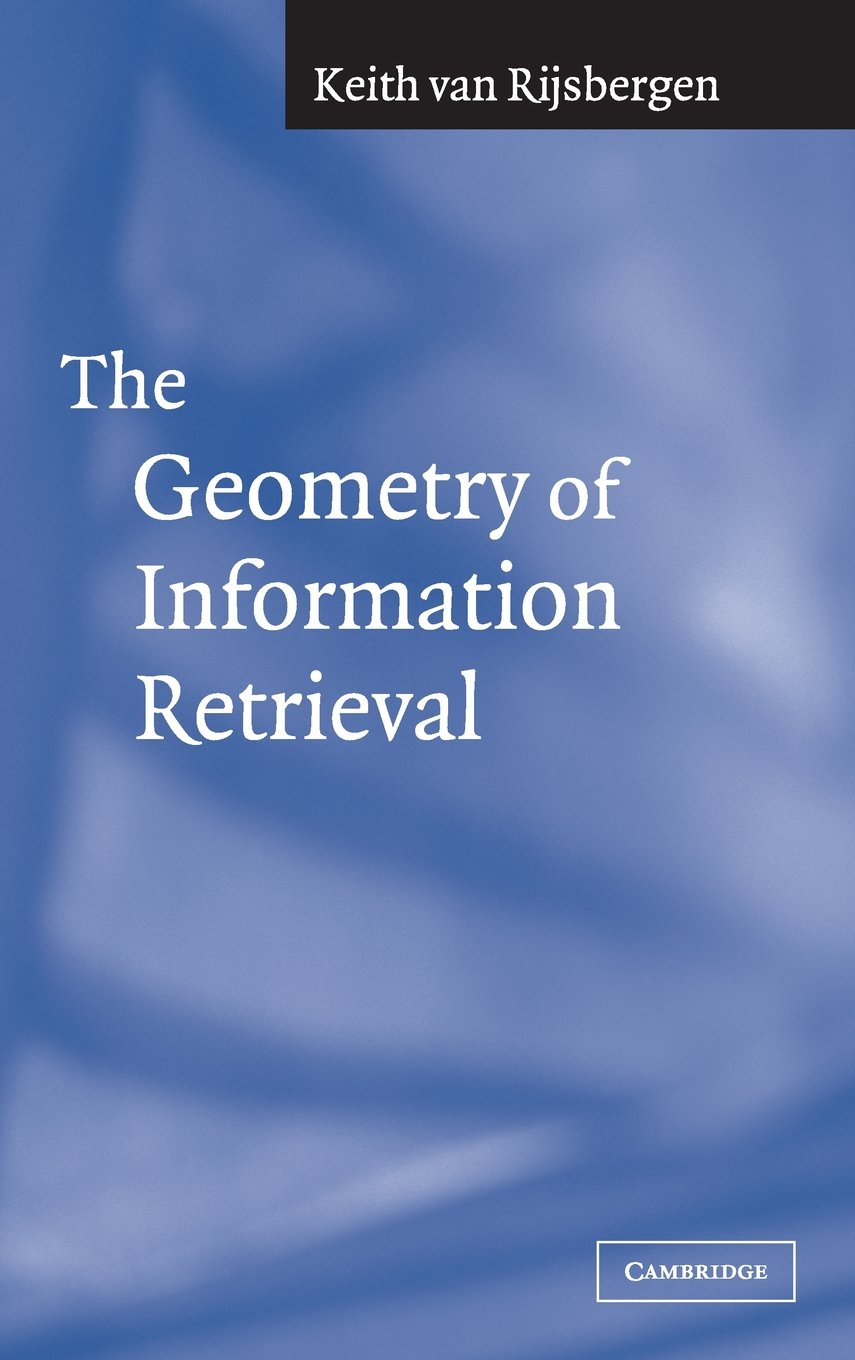
The Geometry of Information Retrieval by C. J. Van Rijsbergen – A Quantum-Theoretic Approach to IR Models
Inclusive of all applicable taxes. FREE shipping on all orders.
Available Offers
- 🚚Free Delivery — Free shipping on all orders
- 💵Cash on Delivery — Pay when your order arrives
- ↩️15-Day Easy Returns — Hassle-free return policy
- 🔒Cash on Delivery — Pay safely when your order arrives
Check Delivery
Product Description
Introduction
In the rapidly evolving world of information retrieval (IR), where algorithms sift through vast oceans of data to bring us relevant results, a deep theoretical foundation is essential. The Geometry of Information Retrieval by C. J. Van Rijsbergen offers a paradigm-shifting perspective that unifies logical, probabilistic, and vector space models under a single, elegant framework inspired by quantum mechanics. This is not just another textbook—it is a groundbreaking work that reimagines how we think about search, relevance, and meaning. Published by Cambridge University Press, this hardcover edition is a must-have for serious students, researchers, and professionals in India and beyond.
Book Overview
This book presents a novel approach to information retrieval by drawing direct analogies between the mathematical structures of quantum mechanics and the core problems of IR. Van Rijsbergen shows how concepts like superposition, interference, and measurement can be mapped onto retrieval tasks such as relevance feedback, pseudo-relevance feedback, and ostensive retrieval. The result is a cohesive theoretical model that not only explains existing IR techniques but also opens doors to new algorithms and insights. The book is self-contained, with appendices covering essential physics and mathematics, making it accessible to readers from diverse backgrounds.
Key Highlights
- Unified Framework: Bridges logical, probabilistic, and vector space models using quantum-inspired geometry.
- Original Research: Contains much new material developed by a leading authority in the field.
- Practical Relevance: Directly applies quantum concepts to real IR problems like feedback and retrieval.
- Self-Contained: Includes appendices on physics and mathematics for beginners.
- Bibliographic Guidance: Each chapter ends with curated references for further reading.
Inside the Book
The journey begins with a review of classical IR models and their limitations. Van Rijsbergen then introduces the geometric language of Hilbert spaces, showing how documents and queries can be represented as vectors in a complex space. Key quantum concepts—such as probability amplitudes, observables, and entanglement—are explained in the context of IR. The book explores how these ideas lead to new methods for measuring relevance, ranking documents, and handling user interactions. The final chapters examine connections to quantum computing, hinting at future possibilities. Appendices provide a crash course in linear algebra, probability, and quantum mechanics.
Key Topics
- Hilbert space representations for documents and queries
- Quantum probability and its role in relevance
- Superposition and interference in retrieval models
- Pseudo-relevance feedback and relevance feedback
- Ostensive retrieval and user interaction
- Logical and probabilistic IR revisited
- Quantum computing and information retrieval
Reader Benefits
By reading this book, you will gain a deep, intuitive understanding of why certain retrieval algorithms work and how they can be improved. You will learn to think about information not as static data but as a dynamic, probabilistic entity. The geometric perspective simplifies complex ideas, making them easier to teach, learn, and apply. For Indian students preparing for research or industry roles in AI, NLP, or data science, this book provides a competitive edge by introducing cutting-edge theory rarely covered in standard curricula. Professionals will find new tools to tackle challenging problems in search, recommendation, and knowledge discovery.
Learning Outcomes
- Understand the mathematical foundations of modern information retrieval.
- Apply quantum-inspired models to improve search and feedback systems.
- Analyze and compare different IR frameworks using a unified language.
- Design novel retrieval algorithms based on geometric principles.
- Evaluate the potential of quantum computing for future IR systems.
Who Should Read
This book is ideal for researchers and postgraduate students in information retrieval, artificial intelligence, natural language processing, and computational linguistics. It is also valuable for professionals working in search engine development, data science, and machine learning. Undergraduate students with a strong background in mathematics or computer science will find it challenging but rewarding. Anyone curious about the deep connections between physics and information science will be captivated by this unique perspective.
About the Author
C. J. Van Rijsbergen is a distinguished figure in information retrieval, known for his seminal work on probabilistic models and evaluation metrics. With decades of research experience, he has shaped the field through his theoretical contributions and leadership. His clear, insightful writing makes complex ideas accessible, and his passion for the subject shines through every chapter. This book represents the culmination of his lifelong quest to find a deeper unity in the science of information.
About the Publisher
Cambridge University Press is one of the world's oldest and most respected academic publishers, known for producing high-quality scholarly works. With a commitment to excellence and innovation, Cambridge ensures that this book meets the highest standards of accuracy, production, and design. The hardcover binding ensures durability for years of study and reference.
Conclusion
The Geometry of Information Retrieval is a landmark book that redefines how we understand and practice information retrieval. By merging the mathematical elegance of quantum theory with the practical challenges of search, C. J. Van Rijsbergen offers a fresh, powerful toolkit for the next generation of researchers and engineers. Whether you are a student in an Indian university, a researcher pushing the boundaries of AI, or a professional building the next great search engine, this book will expand your horizons and inspire new ideas. Order your copy from Bookshops.in today and embark on a journey into the geometry of meaning.
Quick Summary
The Geometry of Information Retrieval by C. J. Van Rijsbergen presents a groundbreaking unification of the three major models of information retrieval—logical, probabilistic, and vector space—using the mathematical language of quantum mechanics. The author, a leading figure in IR, demonstrates how concepts such as Hilbert spaces, quantum probability, and superposition can be applied to classic IR problems like relevance feedback, pseudo-relevance feedback, and ostensive retrieval. The book also explores the implications of quantum computing for future retrieval systems. Written for advanced students and researchers, it includes appendices on physics and mathematics to ensure self-containment. Readers will gain a deep theoretical understanding that bridges computer science, mathematics, and physics. By purchasing from Bookshops.in, Indian customers receive a genuine hardcover copy with reliable delivery and excellent customer service, making it a valuable addition to any academic library.
Book Highlights
Book Specifications
| ISBN-13 | 9780521838054 |
| ISBN-10 | 0521838053 |
| Publisher | Cambridge University Press |
| Language | English |
| Dimensions | 15.24 x 1.91 x 23.5 cm |
| Weight | 390 g |
| Country | India |
| Category | Mathematics › Geometry |
| Genre | Science & Mathematics |
| Original Language | English |
Frequently Asked Questions
What is the main idea of The Geometry of Information Retrieval?
Who is the author C. J. Van Rijsbergen?
Do I need a background in quantum mechanics to read this book?
Is this book suitable for Indian university courses?
What topics are covered in the book?
How is this book different from standard IR textbooks?
Does the book include practical examples?
Who should not read this book?
Can I use this book for self-study?
What is the price of the book on Bookshops.in?
Does the book discuss neural network or deep learning IR models?
What is the ISBN of this book?
Why buy from Bookshops.in?
Readers Also Search For
Customers Also Bought
Mathematics
Stereotype Spaces and Algebras: 73 (De Gruyter Expositions in Mathematics, 73)
Mathematics
Semigroups in Algebra, Geometry and Analysis: 20 (De Gruyter Expositions in Mathematics, 20)
Mathematics
Geometry from the Pacific Rim: Proceedings of the Pacific Rim Geometry Conference held at National University of Singapore, Republic of Singapore, ... 1994 (De Gruyter Proceedings in Mathematics)
Mathematics
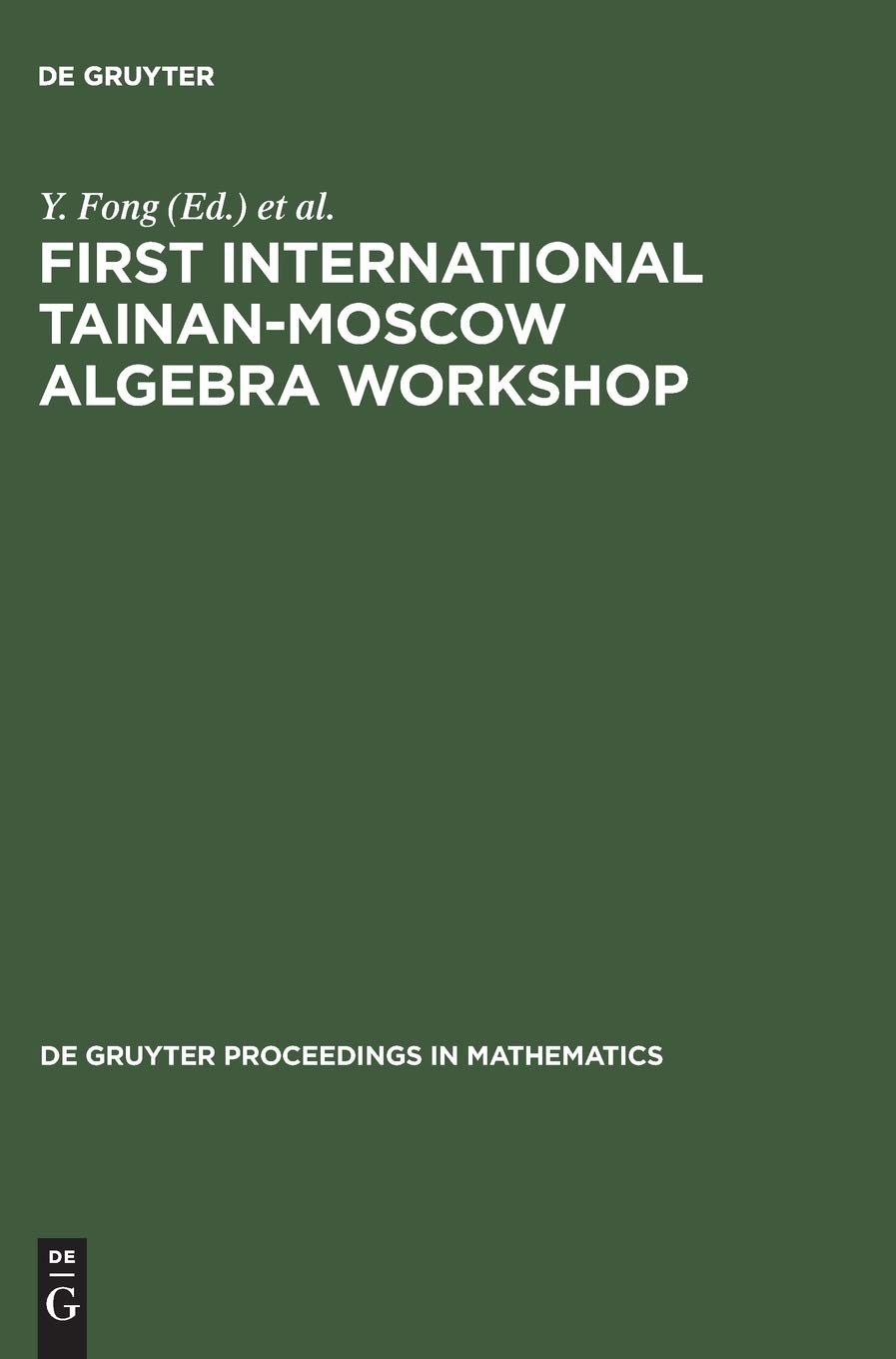
First International Tainan-Moscow Algebra Workshop: Proceedings of the International Conference held at National Cheng Kung University Tainan, Taiwan, ... 1994 (De Gruyter Proceedings in Mathematics)

Mathematics
Differential Geometry - Proceedings of the VIII International Colloquium (English, Jesus A. Alvarez Lopez | Eduardo Garcia-Rio)
Mathematics
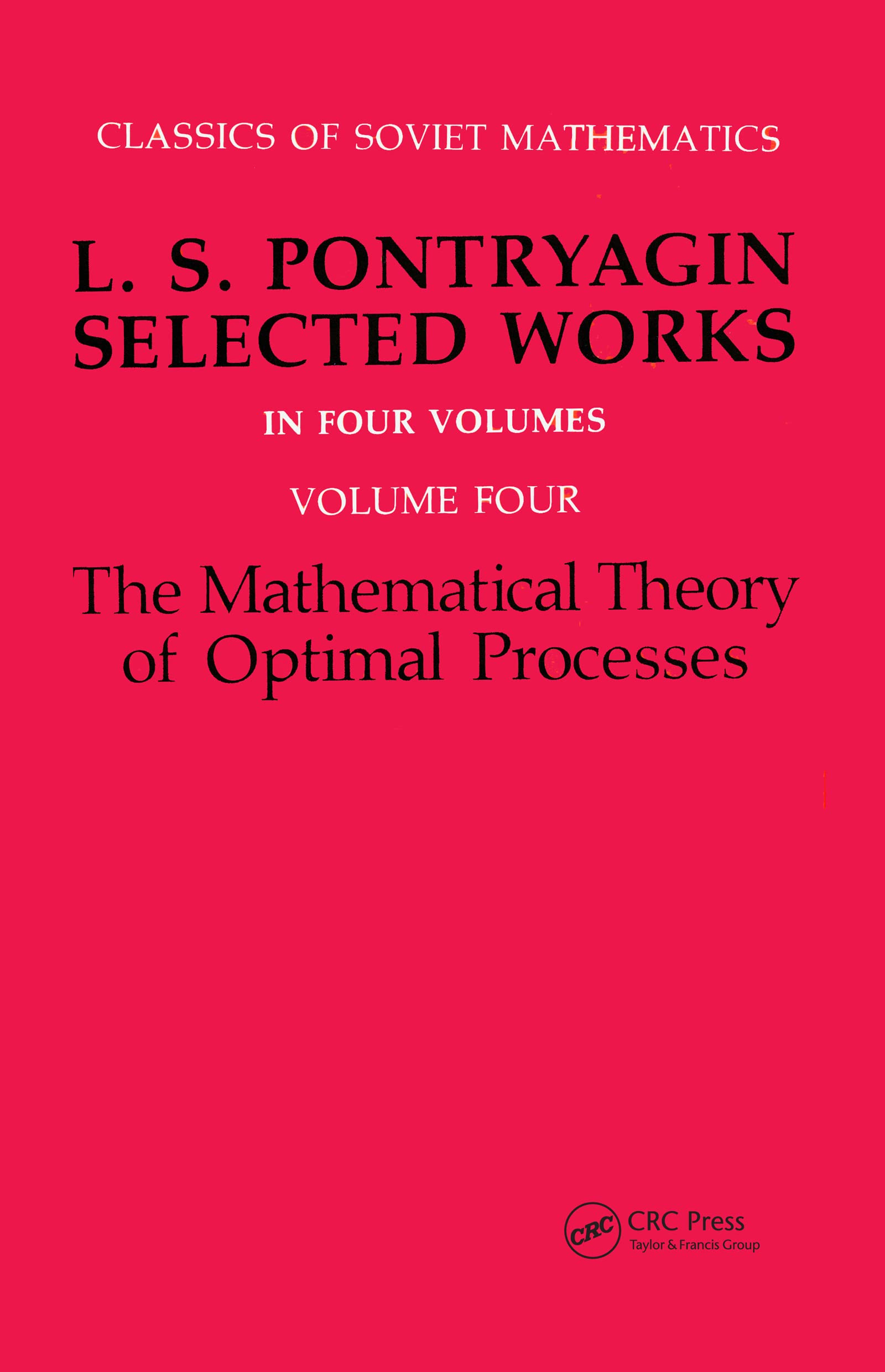
Mathematical Theory of Optimal Processes (Classics of Soviet Mathematics)
Related Products
View AllMathematics
Mathematical Theory of Optimal Processes (Classics of Soviet Mathematics)
Mathematics
Stereotype Spaces and Algebras: 73 (De Gruyter Expositions in Mathematics, 73)
Mathematics
Semigroups in Algebra, Geometry and Analysis: 20 (De Gruyter Expositions in Mathematics, 20)
Mathematics
Geometry from the Pacific Rim: Proceedings of the Pacific Rim Geometry Conference held at National University of Singapore, Republic of Singapore, ... 1994 (De Gruyter Proceedings in Mathematics)
Mathematics
First International Tainan-Moscow Algebra Workshop: Proceedings of the International Conference held at National Cheng Kung University Tainan, Taiwan, ... 1994 (De Gruyter Proceedings in Mathematics)
Mathematics