
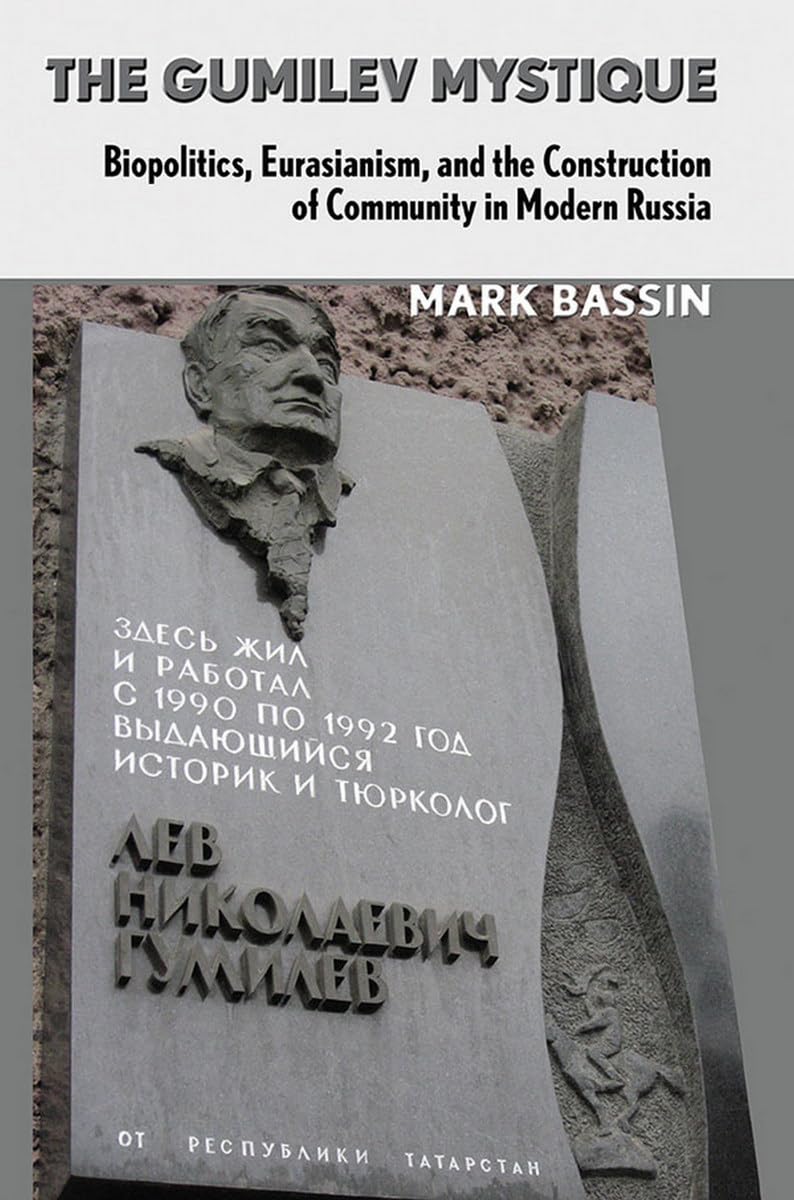
The Gumilev Mystique: Biopolitics, Eurasianism, and the Construction of Community in Modern Russia by Mark Bassin – A Cr
Inclusive of all applicable taxes. FREE shipping on all orders.
Available Offers
- 🚚Free Delivery — Free shipping on all orders
- 💵Cash on Delivery — Pay when your order arrives
- ↩️15-Day Easy Returns — Hassle-free return policy
- 🔒Cash on Delivery — Pay safely when your order arrives
Check Delivery
Product Description
Introduction
For students, scholars, and general readers fascinated by modern Russian intellectual history, The Gumilev Mystique: Biopolitics, Eurasianism, and the Construction of Community in Modern Russia by Mark Bassin offers a penetrating exploration of one of the most controversial and influential figures in post-Soviet thought. This hardcover volume from Cornell University Press unravels the complex legacy of Lev Gumilev, whose ideas on ethnicity, nationhood, and Eurasian identity continue to shape political and cultural debates in Russia and beyond. Whether you are a postgraduate researcher in political science, a history enthusiast, or a curious reader seeking to understand the ideological currents of contemporary Russia, this book provides an indispensable guide.
Book Overview
Lev Nikolaevich Gumilev (1912–1992) was a historian, ethnographer, and geographer whose life was marked by tragedy—the son of two of Russia's greatest poets, he spent thirteen years in Stalinist prison camps. Yet from the margins of Soviet academia, his writings on ethnogenesis and Eurasianism emerged after perestroika to capture the public imagination. Mark Bassin’s study examines how Gumilev’s highly controversial and often contradictory ideas—about Russian history, ethnicity, and interethnic relations—were transformed into a cult-like following. The book dissects the 'Gumilev mystique,' showing how his theories became a tool for constructing new forms of community and identity in post-Soviet Russia, earning comparisons to Einstein and Marx. This is not a biography but a critical analysis of how a marginal intellectual became a national phenomenon.
Key Highlights
- First comprehensive English-language study of Lev Gumilev’s life, works, and posthumous influence in Russia and the former Soviet Union.
- Interdisciplinary approach blending intellectual history, political theory, and cultural studies to decode Gumilev’s biopolitics and Eurasianist vision.
- Explores the construction of community through Gumilev’s concept of 'passionarity' and his theories on ethnic groups as biological and social organisms.
- Critical examination of how Gumilev’s ideas were adopted by Russian nationalists, state institutions, and even pop culture—from textbooks to television.
- Rich contextual analysis situating Gumilev within the broader currents of Soviet and post-Soviet thought, including comparisons with Western theorists.
Inside the Book
The volume is organized into thematic chapters that trace Gumilev’s intellectual journey and his impact. Bassin begins with a biographical sketch of Gumilev’s harrowing life under Stalin, then moves to his core theories: ethnogenesis, the role of the 'super-ethnos,' and his controversial views on the Mongol-Tatar yoke. The middle sections examine how Gumilev’s Eurasianism—a geopolitical doctrine positioning Russia as a unique civilization between Europe and Asia—was revived in the 1990s. Later chapters analyse the reception of his ideas in academic circles, among political elites, and in popular culture, including his adoption by the Russian Orthodox Church and far-right movements. The book concludes with a reflection on the dangers and attractions of Gumilev’s biopolitical vision for modern Russia.
Key Topics
- Biopolitics and ethnicity – Gumilev’s controversial claim that ethnic groups are natural, biological entities driven by 'passionarity' (a kind of vital energy).
- Eurasianism as ideology – How Gumilev’s vision of Russia as a distinct Eurasian civilization challenges Western-centric models of history.
- Post-Soviet identity politics – The role of Gumilev’s ideas in constructing a new Russian national identity after the collapse of the USSR.
- Memory and trauma – The impact of Gumilev’s Gulag experience on his worldview and his later canonization as a martyr-intellectual.
- Intellectual cults – The phenomenon of how a marginalized scholar became a revered figure with millions of book sales in Russia.
Reader Benefits
By engaging with this book, readers gain a deep understanding of a pivotal yet underexplored figure in modern Russian thought. Bassin’s clear, scholarly yet accessible prose unpacks complex theories without oversimplification, making the material approachable for non-specialists. The book also equips readers with critical tools to analyse how intellectual ideas are appropriated for political ends—a lesson relevant far beyond Russia. For Indian readers interested in comparative studies of nationalism, post-colonial identity, or the politics of history, this volume offers rich parallels and contrasts with South Asian contexts. Additionally, the extensive bibliography and footnotes provide a gateway for further research.
Learning Outcomes
- Understand the core concepts of Gumilev’s theory of ethnogenesis and passionarity.
- Analyse the relationship between biopolitics and the construction of national communities.
- Critically evaluate the role of intellectuals in shaping post-Soviet political culture.
- Identify the key debates surrounding Eurasianism and its contemporary relevance.
- Develop a nuanced perspective on how historical trauma can fuel ideological movements.
Who Should Read
This book is ideal for postgraduate students and academics in Russian studies, history, political science, sociology, and cultural anthropology. It is also highly recommended for journalists, policy analysts, and general readers with a serious interest in modern Russia, nationalism, or the history of ideas. Indian readers studying comparative nationalism, post-colonial theory, or the politics of identity in multi-ethnic societies will find the book particularly valuable. The text assumes no prior knowledge of Gumilev but does require a willingness to engage with theoretical arguments. Undergraduate students with a strong background in modern European history will also benefit.
About the Author
Mark Bassin is a distinguished scholar of Russian and European intellectual history. He is a professor at the Södertörn University in Sweden and has held positions at the University of Birmingham and the University of Wisconsin–Madison. His research focuses on the intersection of geography, nationalism, and political thought in Russia and Germany. Bassin is the author of numerous articles and books, including Imperial Visions: Nationalist Imagination and Geographical Expansion in the Russian Far East, 1840–1865. His work is known for its meticulous archival research and theoretical sophistication, making him one of the leading authorities on Eurasianism and Russian national identity.
About the Publisher
Cornell University Press, founded in 1869, is one of the oldest and most respected academic publishers in the United States. Based at Cornell University in Ithaca, New York, the press is renowned for its rigorous editorial standards and its contributions to scholarship in the humanities, social sciences, and natural sciences. It has a strong tradition of publishing works on Russian and Eurasian studies, with titles that combine academic depth with accessibility. This hardcover edition reflects the press’s commitment to producing durable, beautifully bound books that are a pleasure to own and read.
Conclusion
The Gumilev Mystique is more than a study of one man’s ideas—it is a window into the soul of post-Soviet Russia. Mark Bassin’s masterful analysis reveals how a former Gulag prisoner became a national icon, and how his biopolitical theories continue to influence everything from Kremlin policy to popular culture. For anyone seeking to understand the ideological forces shaping Russia today, this book is essential reading. Order your hardcover copy from Bookshops.in and delve into the fascinating, troubling, and enduring legacy of Lev Gumilev.
Quick Summary
Mark Bassin's 'The Gumilev Mystique: Biopolitics, Eurasianism, and the Construction of Community in Modern Russia' is a critical scholarly examination of the extraordinary post-Soviet revival of Lev Nikolaevich Gumilev, the son of Russia's greatest poets who spent thirteen years in Stalinist camps. The book delves into Gumilev's highly controversial theories on ethnicity, ethnogenesis, and Eurasianism, showing how they have been embraced by Russian nationalists and intellectuals since perestroika. Bassin explains the biopolitical dimensions of Gumilev's thought, which sees ethnic communities as organic, passion-driven entities shaped by their environment. Readers will learn how Gumilev's ideas—despite their contradictions—have become a powerful force in constructing a new Russian national identity and geopolitical orientation. This book is ideal for students and scholars of Russian history, political science, and nationalism studies. By purchasing from Bookshops.in, Indian readers gain access to a premium hardcover academic work that is both intellectually rigorous and timely for understanding contemporary Russia.
Book Highlights
Book Specifications
| ISBN-13 | 9781501702716 |
| ISBN-10 | 1501702718 |
| Publisher | Cornell Univ Pr |
| Language | English |
| Dimensions | 15.24 x 2.69 x 22.86 cm |
| Weight | 544 g |
| Category | Social Sciences › Geography |
| Genre | Non-fiction |
| Reading Age | Adult |
| Original Language | English |
Frequently Asked Questions
Who is Lev Gumilev?
What is 'The Gumilev Mystique' about?
Is this book suitable for undergraduate students?
What is Eurasianism?
Does the book cover Gumilev's time in prison camps?
How does the book relate to contemporary Russia?
Is this a critical or sympathetic biography?
What academic disciplines does this book cover?
Are there any other books on Gumilev?
What is biopolitics in this context?
Can I use this book for a research paper?
Is the book translated from Russian?
Does the book include illustrations or maps?
Why is the book called 'The Gumilev Mystique'?
Readers Also Search For
Customers Also Bought
Springer
Ermittlung Der Billigsten Betriebskraft Für Fabriken | by Karl Urbahn | Ernst Reutlinger | Springer | by Karl Urbahn | Ernst Reutlinger | Springer | by Karl Urbahn | Ernst Reutlinger | Springer | by Karl Urbahn | Ernst Reutlinger | Springer | by Karl Urbahn | Ernst Reutlinger | Springer | by Karl Urbahn | Ernst Reutlinger | Springer | by Karl Urbahn | Ernst Reutlinger | Springer | by Karl Urbahn | Ernst Reutlinger | Springer | by Karl Urbahn | Ernst Reutlinger | Springer | by Karl Urbahn | Ernst
de Gruyter
Vol. 5 (English, Paul Newman | Robert D. Botne)

Routledge
Performance Practice (English, Roland Jackson)

Scholastic Press
Threatened (English, Schrefer, Eliot)
Springer
Historische Studien Und Skizzen Zu Natur- Und Heilwissenschaft | by Georg Stricker | Springer | by Georg Stricker | Springer | by Georg Stricker | Springer | by Georg Stricker | Springer | by Georg Stricker | Springer | by Georg Stricker | Springer | by Georg Stricker | Springer | by Georg Stricker | Springer | by Georg Stricker | Springer | by Georg Stricker | Springer | by Georg Stricker | Springer | by Georg Stricker | Springer | by Georg Stricker | Springer | by Georg Stricker | Springer | b

Cambridge University Press
Children of the Queen's Revels (English, Lucy Munro)
Related Products
View All
Cornell University Press
Love's Wounds | by Cynthia N. Nazarian | Cornell University Press | by Cynthia N. Nazarian | Cornell University Press | by Cynthia N. Nazarian | Cornell University Press | by Cynthia N. Nazarian | Cornell University Press | by Cynthia N. Nazarian | Cornell University Press | by Cynthia N. Nazarian | Cornell University Press | by Cynthia N. Nazarian | Cornell University Press | by Cynthia N. Nazarian | Cornell University Press | by Cynthia N. Nazarian | Cornell University Press | by Cynthia N. Na
Cornell University Press
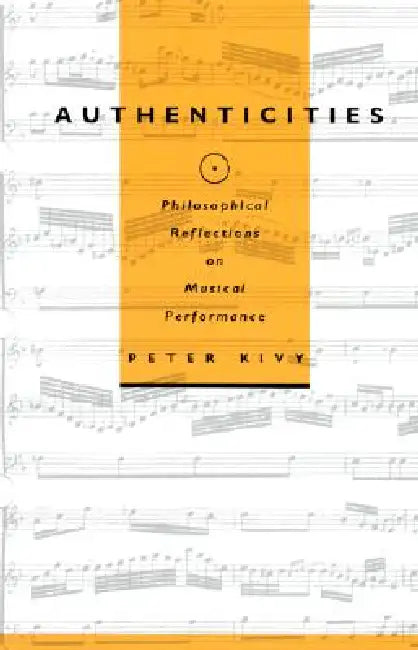
Authenticities (English, Peter Kivy)

Cornell University Press
Orderly Change (English, David M. Andrews)
Cornell University Press
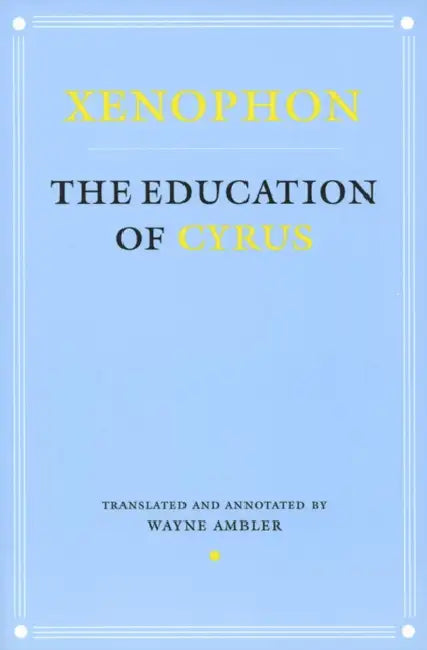
Education of Cyrus (English, Xenophon | Wayne Ambler)

Cornell University Press
Racism and Justice (English, Gertrude Ezorsky)

Cornell University Press