
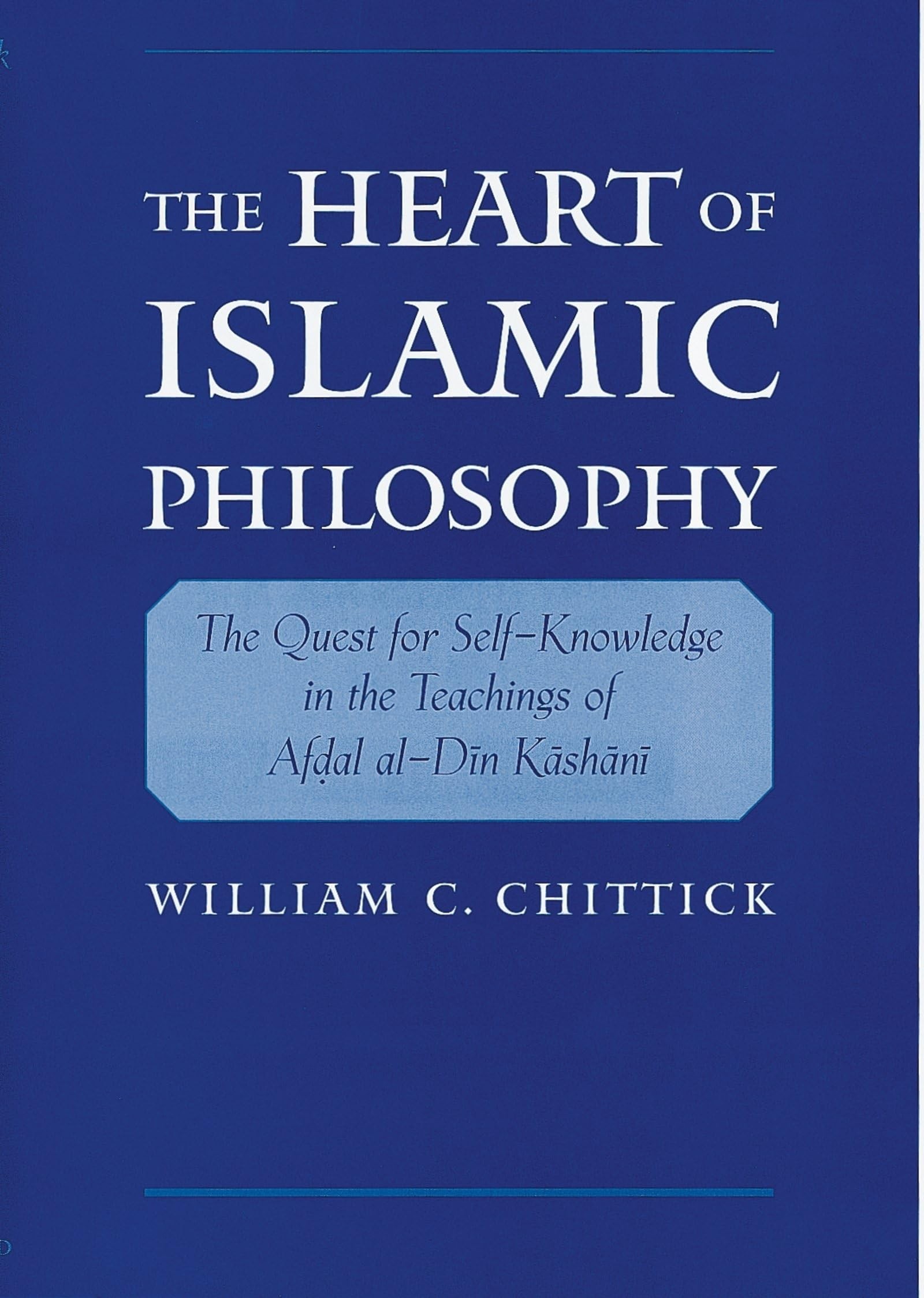
The Heart of Islamic Philosophy: The Quest for Self-Knowledge in the Teachings of Afdal al-Din Kashani by William C. Chi
Inclusive of all applicable taxes. FREE shipping on all orders.
Available Offers
- 🚚Free Delivery — Free shipping on all orders
- 💵Cash on Delivery — Pay when your order arrives
- ↩️15-Day Easy Returns — Hassle-free return policy
- 🔒Cash on Delivery — Pay safely when your order arrives
Check Delivery
Product Description
Introduction
Islamic philosophy, often perceived as a dense and inaccessible discipline, finds a rare and welcoming guide in the works of Afdal al-Din Kashani. In The Heart of Islamic Philosophy: The Quest for Self-Knowledge in the Teachings of Afdal al-Din Kashani, renowned scholar William C. Chittick opens a door to this profound tradition for the modern reader. This hardcover volume, published by Oxford University Press, is not merely a study of a medieval thinker; it is an invitation to explore the very purpose of human existence through the lens of self-knowledge. For Indian students and seekers of wisdom, this book offers a bridge between classical Islamic thought and the universal questions of identity, consciousness, and reality.
Book Overview
This work introduces Afdal al-Din Kashani, a thirteenth-century Persian philosopher who deliberately wrote for beginners rather than advanced scholars. Unlike his contemporaries Averroes and Ibn al-Arabi, Kashani focused on clarity and accessibility, making complex philosophical arguments understandable to those without a formal background in philosophy. Chittick uses Kashani’s writings as a springboard to illuminate the core issues of Islamic philosophy—the nature of the soul, the pursuit of ethical perfection, and the transformative power of knowledge. The book argues that philosophy, for Kashani, was not an academic exercise but a practical path to awakening from forgetfulness and striving toward the perfection of existence.
Key Highlights
- Accessible Introduction: Breaks down complex Islamic philosophical concepts for readers new to the field.
- Focus on Self-Knowledge: Centers on Kashani’s core teaching that knowing oneself is the key to knowing the divine.
- Original Thinker: Brings to light a philosopher largely unknown outside the Persian world, enriching the global philosophical canon.
- Practical Philosophy: Emphasizes philosophy as a transformative practice, not just abstract theory.
- Scholarly Authority: Written by William C. Chittick, a leading authority on Islamic mysticism and philosophy.
Inside the Book
The volume is structured around Kashani’s own pedagogical approach. Chittick presents key passages from Kashani’s works, including his famous Letter on Knowledge and his treatises on the soul, accompanied by clear explanations and contextual analysis. Readers will find detailed discussions on the hierarchy of knowledge, the relationship between reason and intuition, and the stages of spiritual development. The book also explores Kashani’s critique of blind imitation and his call for direct, personal verification of philosophical truths. Each chapter builds on the previous, guiding the reader from basic principles to deeper metaphysical insights.
Key Topics
- The nature of the human soul and its journey toward perfection
- Self-knowledge as the foundation of all knowledge
- The distinction between true philosophy and mere dialectic
- Ethics and the cultivation of virtuous character
- The role of intention and awareness in daily life
- Islamic responses to questions of being, essence, and existence
Reader Benefits
This book offers Indian readers a unique opportunity to engage with a non-Western philosophical tradition on its own terms. It demystifies terms like hikmah (wisdom) and irfan (gnosis), showing their relevance to contemporary life. Students of philosophy will gain a fresh perspective on perennial questions, while those interested in spirituality will find practical guidance for self-reflection. The book also serves as a corrective to the common misconception that Islamic philosophy ended with Averroes, revealing a vibrant tradition that continued to evolve in the Persian world. By reading this work, you will develop a deeper appreciation for the diversity of philosophical thought and its power to transform lives.
Learning Outcomes
- Understand the central role of self-knowledge in Islamic philosophy
- Identify the key arguments of Afdal al-Din Kashani and his place in the tradition
- Analyze the relationship between philosophy, ethics, and spiritual practice
- Critically engage with primary texts from a medieval Islamic thinker
- Apply philosophical insights to personal growth and self-awareness
Who Should Read
This book is ideal for undergraduate and postgraduate students of philosophy, religious studies, and Islamic studies in Indian universities. It is equally valuable for general readers with an interest in comparative philosophy, spirituality, or Persian literature. Teachers looking for a clear, engaging text to introduce Islamic philosophy to their students will find this an indispensable resource. Anyone who has ever wondered about the purpose of life and the nature of the self will benefit from Kashani’s timeless wisdom, presented here with Chittick’s characteristic clarity.
About the Author
William C. Chittick is a professor of religious studies at Stony Brook University and one of the world’s foremost scholars of Islamic mysticism and philosophy. He has authored numerous seminal works, including The Sufi Path of Love and The Self-Disclosure of God. His translations and commentaries have made the works of Ibn al-Arabi, Rumi, and other Islamic thinkers accessible to a global audience. Chittick’s deep engagement with primary sources and his ability to communicate complex ideas in plain language make him the perfect guide for this journey into Kashani’s thought.
About the Publisher
Oxford University Press (OUP) is a prestigious academic publisher with a long history of producing authoritative works in philosophy, theology, and area studies. This hardcover edition reflects OUP’s commitment to quality scholarship and durable production, ensuring that it will be a lasting addition to your library. The book is printed in clear type on high-quality paper, making it comfortable for extended reading and study.
Conclusion
The Heart of Islamic Philosophy is more than a book—it is an invitation to a transformative intellectual and spiritual journey. By introducing the work of Afdal al-Din Kashani, William C. Chittick has given us a key to unlock the treasures of a philosophical tradition that remains remarkably relevant today. Whether you are a student, a teacher, or a seeker after truth, this volume will challenge you to think deeply about who you are and what you can become. Order your copy from Bookshops.in today and begin your quest for self-knowledge.
Quick Summary
The Heart of Islamic Philosophy by William C. Chittick introduces the works of Afdal al-Din Kashani, a medieval Persian philosopher who wrote for beginners. Unlike many complex Islamic texts, Kashani’s teachings are clear and insightful, making them ideal for Indian students and readers new to philosophy. Chittick, a leading scholar, explains how Kashani viewed philosophy as a tool to awaken people from forgetfulness and guide them toward the perfection of existence. This book covers key principles of Islamic thought, including self-knowledge, the soul, and spiritual growth, while situating Kashani among thinkers like Averroes and Ibn al-Arabi. Readers will gain a deep understanding of how philosophy can transform one’s life. Published by Oxford University Press, this hardcover edition is a valuable addition to any library. Buy from Bookshops.in to receive a genuine, well-packaged copy delivered to your doorstep across India.
Book Highlights
Book Specifications
| ISBN-13 | 9780195139136 |
| ISBN-10 | 0195139135 |
| Publisher | OUP USA |
| Language | English |
| Dimensions | 16.87 x 2.87 x 23.83 cm |
| Weight | 726 g |
| Category | Religious Groups Studies › Islamic |
| Genre | Non-fiction |
| Reading Age | Adult |
| Original Language | English |
Frequently Asked Questions
What is The Heart of Islamic Philosophy about?
Who is Afdal al-Din Kashani?
Who is the author of this book?
Is this book suitable for beginners?
What makes this book different from other Islamic philosophy books?
What language is the book in?
What is the ISBN of this book?
What is the price of this book?
Does the book cover other philosophers like Averroes?
What is the main theme of the book?
Is this book available in hardcover?
Why should I buy from Bookshops.in?
Readers Also Search For
Customers Also Bought

Sociology
Imagination Beyond Nation: Latin American Popular Culture: 349 (Pitt Latin American Series)

Sociology
Boomer Volunteer Engagement: Facilitator's Tool Kit

Sociology
Making a Success of Marriage: Planning for Happily Ever After

Sociology
Causal Mediation Analysis (Analytical Methods for Social Research)

Sociology
Marriage and the Moral Imagination (New Departures in Anthropology)

Sociology
Social Change, Resistance and Social Practices: 19 (Studies in Critical Social Sciences, 19)
Related Products
View All
Society & Social Sciences
Oxford Studies in Epistemology, Volume 3 | by Tamar Szabo Gendler | John Hawthorne | OUP UK | by Tamar Szabo Gendler | John Hawthorne | OUP UK | by Tamar Szabo Gendler | John Hawthorne | OUP UK | by Tamar Szabo Gendler | John Hawthorne | OUP UK | by Tamar Szabo Gendler | John Hawthorne | OUP UK | by Tamar Szabo Gendler | John Hawthorne | OUP UK | by Tamar Szabo Gendler | John Hawthorne | OUP UK | by Tamar Szabo Gendler | John Hawthorne | OUP UK | by Tamar Szabo Gendler | John Hawthorne | OUP UK

Society & Social Sciences
Sidgwick's Ethics and Victorian Moral Philosophy | by J. B. Schneewind | Jerome B. Schneewind | OUP Oxford | by J. B. Schneewind | Jerome B. Schneewind | OUP Oxford | by J. B. Schneewind | Jerome B. Schneewind | OUP Oxford | by J. B. Schneewind | Jerome B. Schneewind | OUP Oxford | by J. B. Schneewind | Jerome B. Schneewind | OUP Oxford | by J. B. Schneewind | Jerome B. Schneewind | OUP Oxford | by J. B. Schneewind | Jerome B. Schneewind | OUP Oxford | by J. B. Schneewind | Jerome B. Schneewind

Society & Social Sciences
Cognitive Phenomenology | by Tim Bayne | Michelle Montague | OUP UK | by Tim Bayne | Michelle Montague | OUP UK | by Tim Bayne | Michelle Montague | OUP UK | by Tim Bayne | Michelle Montague | OUP UK | by Tim Bayne | Michelle Montague | OUP UK | by Tim Bayne | Michelle Montague | OUP UK | by Tim Bayne | Michelle Montague | OUP UK | by Tim Bayne | Michelle Montague | OUP UK | by Tim Bayne | Michelle Montague | OUP UK | by Tim Bayne | Michelle Montague | OUP UK | by Tim Bayne | Michelle Montague |

Society & Social Sciences
Alasdair MacIntyre on Practical Philosophy | by Kelvin Knight | Peter Wicks | University of Notre Dame Press | by Kelvin Knight | Peter Wicks | University of Notre Dame Press | by Kelvin Knight | Peter Wicks | University of Notre Dame Press | by Kelvin Knight | Peter Wicks | University of Notre Dame Press | by Kelvin Knight | Peter Wicks | University of Notre Dame Press | by Kelvin Knight | Peter Wicks | University of Notre Dame Press | by Kelvin Knight | Peter Wicks | University of Notre Dame P

Society & Social Sciences
Philosophical Historicism and the Betrayal of First Philosophy | by Carl Page | Penn State University Press | by Carl Page | Penn State University Press | by Carl Page | Penn State University Press | by Carl Page | Penn State University Press | by Carl Page | Penn State University Press | by Carl Page | Penn State University Press | by Carl Page | Penn State University Press | by Carl Page | Penn State University Press | by Carl Page | Penn State University Press | by Carl Page | Penn State Univ

Society & Social Sciences