
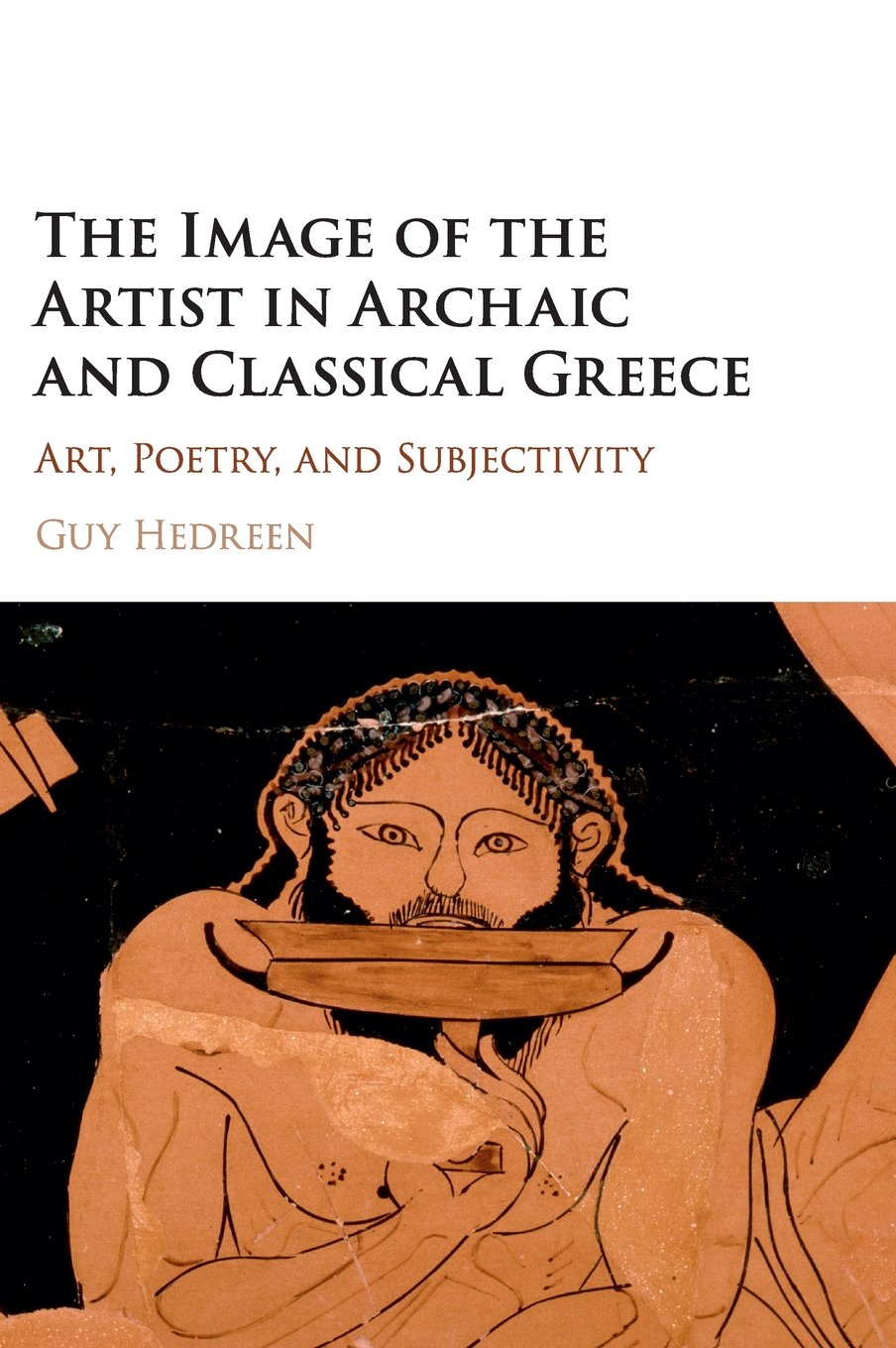
The Image of the Artist in Archaic and Classical Greece: Art, Poetry, and Subjectivity by Guy Hedreen – A Cambridge Univ
Inclusive of all applicable taxes. FREE shipping on all orders.
Available Offers
- 🚚Free Delivery — Free shipping on all orders
- 💵Cash on Delivery — Pay when your order arrives
- ↩️15-Day Easy Returns — Hassle-free return policy
- 🔒Cash on Delivery — Pay safely when your order arrives
Check Delivery
Product Description
Introduction
In the vast landscape of ancient Greek studies, the figure of the artist often remains shadowed by the brilliance of the works themselves. The Image of the Artist in Archaic and Classical Greece: Art, Poetry, and Subjectivity by Guy Hedreen is a compelling exploration that brings the ancient creator into sharp focus. This hardcover volume from Cambridge University Press invites readers to step beyond the marble and pottery to meet the minds and personalities that shaped some of the most enduring images of Western civilization. For Indian students and scholars of art history, classical literature, and cultural studies, this book offers a unique bridge between the visual and the verbal, revealing how the artist's self-awareness emerged in tandem with the poet's voice.
Book Overview
This meticulously researched work delves into the sixth and fifth centuries BCE, a period when Greek artists and poets began to consciously craft their own personas. Hedreen challenges the traditional view of ancient artists as mere craftsmen, arguing instead that they developed a sophisticated sense of subjectivity. Through a close reading of Athenian vase-paintings, lyric poetry, and sculptural works, the book traces how figures like the potter Euphronios and the poet Archilochos shaped a shared language of self-expression. The narrative moves from the workshop to the symposium, showing how artistic identity was performed, contested, and celebrated in the public and private spaces of the ancient Greek world.
Key Highlights
- Original Synthesis: A rare integration of art history and literary criticism, examining how visual and poetic self-representation influenced each other.
- Focus on Subjectivity: Explores the ancient roots of the idea of the artist as a unique, self-aware individual—a concept often thought to be modern.
- Mythological Prototypes: Uncovers how artists and poets modelled themselves on cunning figures like Odysseus and the artisan-god Hephaistos, embracing traits of cleverness and physical imperfection.
- Case Studies: In-depth analysis of key works by Kleitias, Euphronios, and other Archaic vase-painters, alongside the poetry of Hipponax and Sappho.
- Social Marginality: Examines the recurring theme of the artist as an outsider—lame, low-born, or wandering—yet possessing superior technical skill and narrative power.
Inside the Book
The book is structured into thematic chapters that move from the earliest expressions of artistic identity to the more refined self-consciousness of the Classical period. Hedreen begins with the figure of Odysseus as a prototype for the clever narrator, then turns to the god Hephaistos as a model for the physically flawed yet supremely skilled maker. Later chapters focus on the revolutionary work of Euphronios, whose signed vases reveal a deliberate construction of personal style. The final sections explore how lyric poets and vase-painters together developed a vocabulary for describing the creative process, including metaphors of weaving, forging, and singing. Each chapter is supported by detailed descriptions of artefacts, many of which are illustrated in the book, helping readers visualize the evidence.
Key Topics
- The emergence of artistic subjectivity in Archaic Greece
- Parallels between poetic and visual self-fashioning
- Odysseus as a narrative archetype for artists
- Hephaistos and the trope of the disabled craftsman
- Euphronios and the signature culture of Athenian vase-painting
- The social status of artists in ancient Greek society
- Fiction, rhetoric, and technical mastery in art and poetry
- Comparative analysis of lyric poetry and painted imagery
Reader Benefits
- Deepen Understanding: Gain a nuanced perspective on how ancient Greeks viewed creativity and the creative person.
- Interdisciplinary Insight: Perfect for those studying art history, classical literature, archaeology, or cultural theory.
- Critical Thinking: Learn to read both texts and images as forms of self-expression, not just records of the past.
- Scholarly Reference: A valuable resource for research papers, dissertations, or teaching preparation.
- Cultural Context: Appreciate the roots of Western ideas about the artist, which continue to influence modern art and literature.
Learning Outcomes
- Identify key examples of artistic self-representation in Archaic and Classical Greek art.
- Analyze how poets and painters used mythological figures to construct their own personas.
- Understand the social and cultural factors that shaped the artist's identity in ancient Greece.
- Evaluate the relationship between visual art and poetry as parallel modes of subjective expression.
- Critically assess the concept of the 'artist' as a historically contingent idea.
Who Should Read
This book is ideal for advanced undergraduate and postgraduate students of classical studies, art history, and comparative literature. It will also appeal to scholars of ancient Greek culture, museum professionals, and anyone with a serious interest in the history of artistic identity. Indian readers engaged in the study of classical traditions—whether Western or cross-cultural—will find the exploration of selfhood and craftsmanship especially thought-provoking. The book assumes some familiarity with ancient Greek history, but Hedreen's clear prose makes it accessible to dedicated readers willing to engage with complex ideas.
About the Author
Guy Hedreen is a distinguished professor of art history at Williams College, USA, and a leading authority on Greek vase-painting and the intersection of art and literature. His previous works have reshaped how scholars understand the narrative functions of Greek pottery. Hedreen's research combines meticulous archaeological knowledge with sophisticated literary theory, making him a unique voice in classical studies. His passion for uncovering the human side of ancient artists shines through every page of this book.
About the Publisher
Cambridge University Press is one of the oldest and most respected academic publishers in the world, with a legacy spanning nearly five centuries. Known for its rigorous editorial standards and commitment to scholarly excellence, Cambridge publishes works that set the benchmark in fields ranging from classics to science. This hardcover edition reflects the press's dedication to producing durable, beautifully crafted books that are as valuable on the shelf as they are in the mind.
Conclusion
The Image of the Artist in Archaic and Classical Greece is more than a scholarly study—it is a journey into the very origins of artistic self-awareness. By showing how ancient potters, painters, and poets thought of themselves as creators, Guy Hedreen gives us a new lens through which to view the art of the past. For anyone seeking to understand not just what the Greeks made, but who they thought they were, this book is an indispensable companion. Whether you are a student in Delhi, a researcher in Mumbai, or a curious reader in Chennai, this volume will enrich your understanding of the enduring dialogue between art and identity.
Quick Summary
The Image of the Artist in Archaic and Classical Greece by Guy Hedreen is a groundbreaking scholarly work that delves into the origins of artistic subjectivity in ancient Greek culture. Focusing on Athenian vase-painting of the sixth century BCE and lyric poetry, Hedreen argues that the self-aware persona of the artist first emerged in visual art—particularly through the work of Euphronios—before being fully explored by poets. The book examines how poets like Archilochos and Hipponax modeled their narrative voices on the cunning Homeric hero Odysseus, while vase-painters looked to the lame but resourceful god Hephaistos as a prototype. Hedreen traces a widespread conception of the artist as socially marginal, sometimes physically imperfect, yet rhetorically clever and technically peerless. This is an essential read for Indian students and scholars of classical art, literature, and cultural studies. By purchasing from Bookshops.in, you get an authentic hardcover edition delivered across India, backed by reliable service and competitive pricing.
Book Highlights
Book Specifications
| ISBN-13 | 9781107118256 |
| ISBN-10 | 1107118255 |
| Publisher | Cambridge University Press |
| Language | English |
| Dimensions | 18.42 x 2.54 x 25.4 cm |
| Weight | 1 kg 30 g |
| Country | India |
| Category | Humanities › Art History |
| Genre | Non-fiction |
| Reading Age | Adult |
| Original Language | English |
Frequently Asked Questions
What is the main topic of this book?
Who is the author?
Which time period does the book cover?
Is this book suitable for Indian students?
Does the book include illustrations?
What makes this book unique?
Is it a hardcover edition?
Can I use this for my PhD research?
What is the publication date?
Who is the publisher?
Does it cover Greek poetry?
What is the price in India?
Is the book available on Bookshops.in?
What is the ISBN?
Does it discuss any specific vase painter?
Readers Also Search For
Customers Also Bought
Art History
The Italian Renaissance in Art

Art History
Photovoltaic Design & Installation For Dummies | by Mayfield | ForDummies | by Mayfield | ForDummies | by Mayfield | ForDummies | by Mayfield | ForDummies | by Mayfield | ForDummies | by Mayfield | ForDummies | by Mayfield | ForDummies | by Mayfield | ForDummies | by Mayfield | ForDummies | by Mayfield | ForDummies | by Mayfield | ForDummies | by Mayfield | ForDummies | by Mayfield | ForDummies | by Mayfield | ForDummies | by Mayfield | ForDummies | by Mayfield | ForDummies | by Mayfield | ForDu
Art History
Designing School Systems for All Students (English, Robert J. Manley | Richard J. Hawkins)

Art History
Routledge Library Editions: Art and Culture in the Nineteenth Century
Art History
An Errant Design (English, S. H. Long)
Art History
Distributed System Design | by Jie Wu | CRC Press | by Jie Wu | CRC Press | by Jie Wu | CRC Press | by Jie Wu | CRC Press | by Jie Wu | CRC Press | by Jie Wu | CRC Press | by Jie Wu | CRC Press | by Jie Wu | CRC Press | by Jie Wu | CRC Press | by Jie Wu | CRC Press | by Jie Wu | CRC Press | by Jie Wu | CRC Press | by Jie Wu | CRC Press | by Jie Wu | CRC Press | by Jie Wu | CRC Press | by Jie Wu | CRC Press | by Jie Wu | CRC Press | by Jie Wu | CRC Press | by Jie Wu | CRC Press | by Jie Wu | CRC
Related Products
View AllArt History
Distributed System Design | by Jie Wu | CRC Press | by Jie Wu | CRC Press | by Jie Wu | CRC Press | by Jie Wu | CRC Press | by Jie Wu | CRC Press | by Jie Wu | CRC Press | by Jie Wu | CRC Press | by Jie Wu | CRC Press | by Jie Wu | CRC Press | by Jie Wu | CRC Press | by Jie Wu | CRC Press | by Jie Wu | CRC Press | by Jie Wu | CRC Press | by Jie Wu | CRC Press | by Jie Wu | CRC Press | by Jie Wu | CRC Press | by Jie Wu | CRC Press | by Jie Wu | CRC Press | by Jie Wu | CRC Press | by Jie Wu | CRC
Art History
The Italian Renaissance in Art
Art History
Photovoltaic Design & Installation For Dummies | by Mayfield | ForDummies | by Mayfield | ForDummies | by Mayfield | ForDummies | by Mayfield | ForDummies | by Mayfield | ForDummies | by Mayfield | ForDummies | by Mayfield | ForDummies | by Mayfield | ForDummies | by Mayfield | ForDummies | by Mayfield | ForDummies | by Mayfield | ForDummies | by Mayfield | ForDummies | by Mayfield | ForDummies | by Mayfield | ForDummies | by Mayfield | ForDummies | by Mayfield | ForDummies | by Mayfield | ForDu
Art History
Designing School Systems for All Students (English, Robert J. Manley | Richard J. Hawkins)
Art History
Routledge Library Editions: Art and Culture in the Nineteenth Century
Art History