
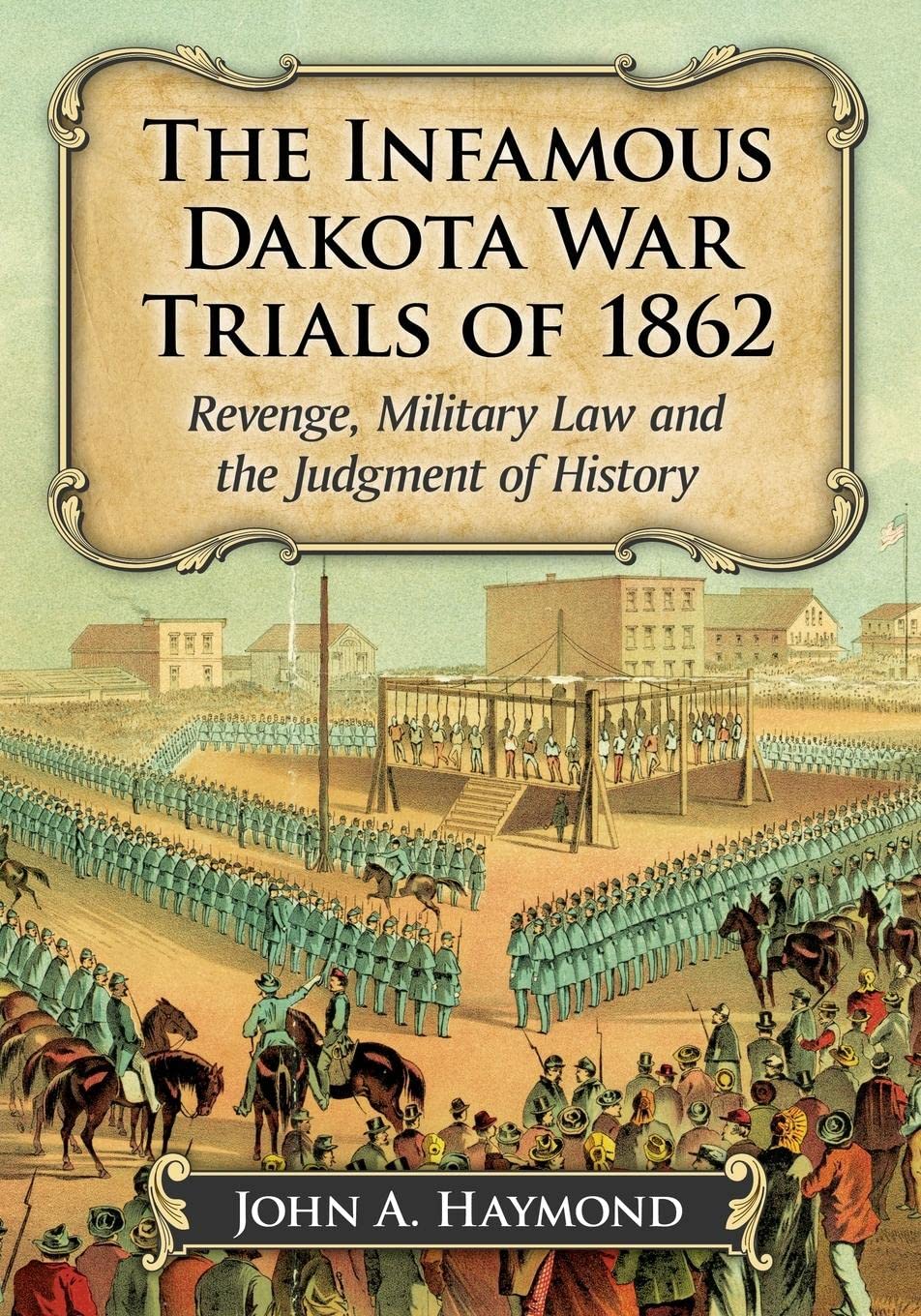
The Infamous Dakota War Trials of 1862: Revenge, Military Law and the Judgment of History by John A. Haymond – A Deep Di
Inclusive of all applicable taxes. FREE shipping on all orders.
Available Offers
- 🚚Free Delivery — Free shipping on all orders
- 💵Cash on Delivery — Pay when your order arrives
- ↩️15-Day Easy Returns — Hassle-free return policy
- 🔒Cash on Delivery — Pay safely when your order arrives
Check Delivery
Product Description
Introduction
The Infamous Dakota War Trials of 1862: Revenge, Military Law and the Judgment of History by John A. Haymond offers a gripping and meticulously researched account of one of the most controversial episodes in American military jurisprudence. Set against the backdrop of the bloodiest Indian conflict of the 19th century, this hardcover volume delves into the swift and deeply flawed trials that followed the U.S.–Dakota War. For Indian readers, students of law, history enthusiasts, and anyone interested in the intersection of justice, culture, and power, this book provides a compelling lens through which to examine how legal systems can be weaponized in times of conflict.
Book Overview
In the summer of 1862, southwestern Minnesota erupted in violence as the Dakota people rose against settlers and government forces. After the war ended, a hastily assembled military commission of five army officers tried 391 Dakota men for murder and massacre. In just 36 days, 303 were sentenced to death. On December 26, 1862, 38 men were hanged simultaneously on a single gallows—the largest mass execution in American history. Haymond argues that this event was less a judicial proceeding and more an act of revenge. The book explores the war’s causes, the conduct of the trials under 19th-century military law, and the enduring debate over cultural bias in lawful warfare.
Key Highlights
- Original perspective: Examines the trials through the lens of 19th-century military law rather than modern moral judgments.
- Historical depth: Traces the war’s origins, including broken treaties, land dispossession, and government corruption.
- Critical analysis: Challenges the conventional narrative of the trials as fair, revealing procedural shortcuts and political pressure.
- Relevance today: Connects the Dakota War trials to contemporary debates about military tribunals, cultural bias, and the rule of law.
Inside the Book
The book is structured to guide readers through the chaos of war, the legal machinery of revenge, and the long shadow cast by these events. Haymond reconstructs the trial transcripts, examines the testimony of witnesses, and interrogates the role of General Henry Sibley and President Abraham Lincoln. He also addresses the claims of widespread atrocities committed by Dakota warriors, the modern controversy over whether the trials violated the laws of war, and how historians have shaped—and sometimes distorted—the memory of these events. The narrative is both scholarly and accessible, making complex legal principles understandable for general readers.
Key Topics
- The causes and immediate aftermath of the U.S.–Dakota War of 1862
- The structure and conduct of military commissions in the 19th century
- The role of executive clemency and political intervention in capital cases
- Cultural misunderstandings and the concept of lawful warfare across civilizations
- The historiography of the Dakota War and its impact on Native American policy
Reader Benefits
This book offers a rare opportunity to understand a pivotal moment in legal history through a critical, evidence-based lens. Readers will gain insight into how military law functioned under extreme pressure, and how the line between justice and vengeance can blur. For law students, it provides a case study in due process and the dangers of expedited trials. For history buffs, it uncovers a lesser-known chapter that resonates with contemporary issues of race, sovereignty, and state power. The book also encourages readers to question official narratives and consider how history is written by the victors.
Learning Outcomes
- Understand the legal framework of 19th-century military commissions and their differences from civilian courts.
- Analyze the ethical dilemmas faced by officers tasked with judging defeated enemies.
- Evaluate the impact of cultural prejudice on legal proceedings and historical memory.
- Critically assess primary sources, including trial records and executive correspondence.
- Connect historical events to modern debates about military justice and indigenous rights.
Who Should Read
This book is ideal for law students, legal historians, military history enthusiasts, and scholars of Native American studies. It will also appeal to general readers interested in true crime, American history, or the philosophy of justice. Indian readers, in particular, will find parallels in colonial legal systems and the ways in which law has been used to subjugate indigenous populations worldwide. The book’s rigorous yet engaging style makes it suitable for undergraduate courses, book clubs, and personal enrichment.
About the Author
John A. Haymond is an independent historian and author with a deep expertise in American military and legal history. He has written extensively on the U.S.–Dakota War and the complexities of military justice. Haymond’s work is characterized by meticulous archival research and a balanced approach that gives voice to multiple perspectives. His previous publications have been praised for their clarity and critical insight. He lives and works in the United States, where he continues to explore the intersections of law, war, and memory.
About the Publisher
McFarland & Company is a respected academic publisher based in the United States, known for its extensive catalog of works in history, military studies, law, and popular culture. With a commitment to publishing original scholarship that challenges mainstream narratives, McFarland has earned a reputation for quality and intellectual rigor. This hardcover edition reflects the publisher’s dedication to producing durable, well-edited books that serve both scholars and avid readers.
Conclusion
The Infamous Dakota War Trials of 1862 is more than a historical account—it is a cautionary tale about the fragility of justice in times of fear and anger. John A. Haymond’s thorough examination of the trials, their legal underpinnings, and their lasting legacy offers invaluable lessons for anyone concerned with the rule of law. By revisiting this dark chapter, readers are reminded that the pursuit of justice must always be tempered by fairness, even—and especially—when the stakes are highest. This book is a vital addition to the library of any serious student of history, law, or human rights.
Quick Summary
The Infamous Dakota War Trials of 1862 by John A. Haymond is a meticulously researched historical work that dissects the military trials following the deadliest Indian war of the 19th century. In the summer of 1862, the U.S.-Dakota War erupted in Minnesota, leading to a hastily convened military commission that tried 391 Dakota men for murder and massacre. In just 36 days, 303 were sentenced to death, and 38 were hanged on a single gallows on December 26, 1862—an event now widely seen as an act of revenge. Haymond examines these trials from the perspective of 19th century military law, offering fresh insight into the legal procedures, the role of President Lincoln, and the enduring debate over justice versus vengeance. This book is ideal for students of American Indian history, legal historians, and anyone interested in the complexities of wartime justice. By purchasing from Bookshops.in, you support a premium Indian bookstore committed to bringing authoritative historical works to discerning readers.
Book Highlights
Book Specifications
| ISBN-13 | 9781476665108 |
| ISBN-10 | 1476665109 |
| Publisher | McFarland & Co Inc |
| Language | English |
| Dimensions | 17.78 x 1.4 x 25.4 cm |
| Weight | 485 g |
| Country | India |
| Category | Americas › United States |
| Genre | History |
| Reading Age | Adult |
| Original Language | English |
Frequently Asked Questions
What is the main subject of The Infamous Dakota War Trials of 1862?
Who is the author of this book?
How many Dakota men were sentenced to death?
How many were actually executed?
Is this book only about the trials or also about the war?
What perspective does the author take?
Does the book discuss President Lincoln's role?
Is this book suitable for Indian readers?
What makes this book different from other accounts?
Does the book include primary sources?
What is the publication date?
What is the binding type?
What is the price on Bookshops.in?
Can I find this book in Indian bookstores?
Readers Also Search For
Related Products
View All
History
The Information Revolution: Transforming the World Through Technology (World History)
History
Human Nature and the French Revolution: From the Enlightenment to the Napoleonic Code: 3 (Polygons: Cultural Diversities and Intersections, 3)
History
The Unmaking of Home in Contemporary Art (Cultural Spaces)

History
Handbook to Life in Medieval and Early Modern Japan | by William E. Deal | Oxford University Press | by William E. Deal | Oxford University Press | by William E. Deal | Oxford University Press | by William E. Deal | Oxford University Press | by William E. Deal | Oxford University Press | by William E. Deal | Oxford University Press | by William E. Deal | Oxford University Press | by William E. Deal | Oxford University Press | by William E. Deal | Oxford University Press | by William E. Deal | Ox

History
The Narrators of Barbarian History (A.D. 550-800) | by Walter Goffart | University of Notre Dame Press | by Walter Goffart | University of Notre Dame Press | by Walter Goffart | University of Notre Dame Press | by Walter Goffart | University of Notre Dame Press | by Walter Goffart | University of Notre Dame Press | by Walter Goffart | University of Notre Dame Press | by Walter Goffart | University of Notre Dame Press | by Walter Goffart | University of Notre Dame Press | by Walter Goffart | Univ
History