
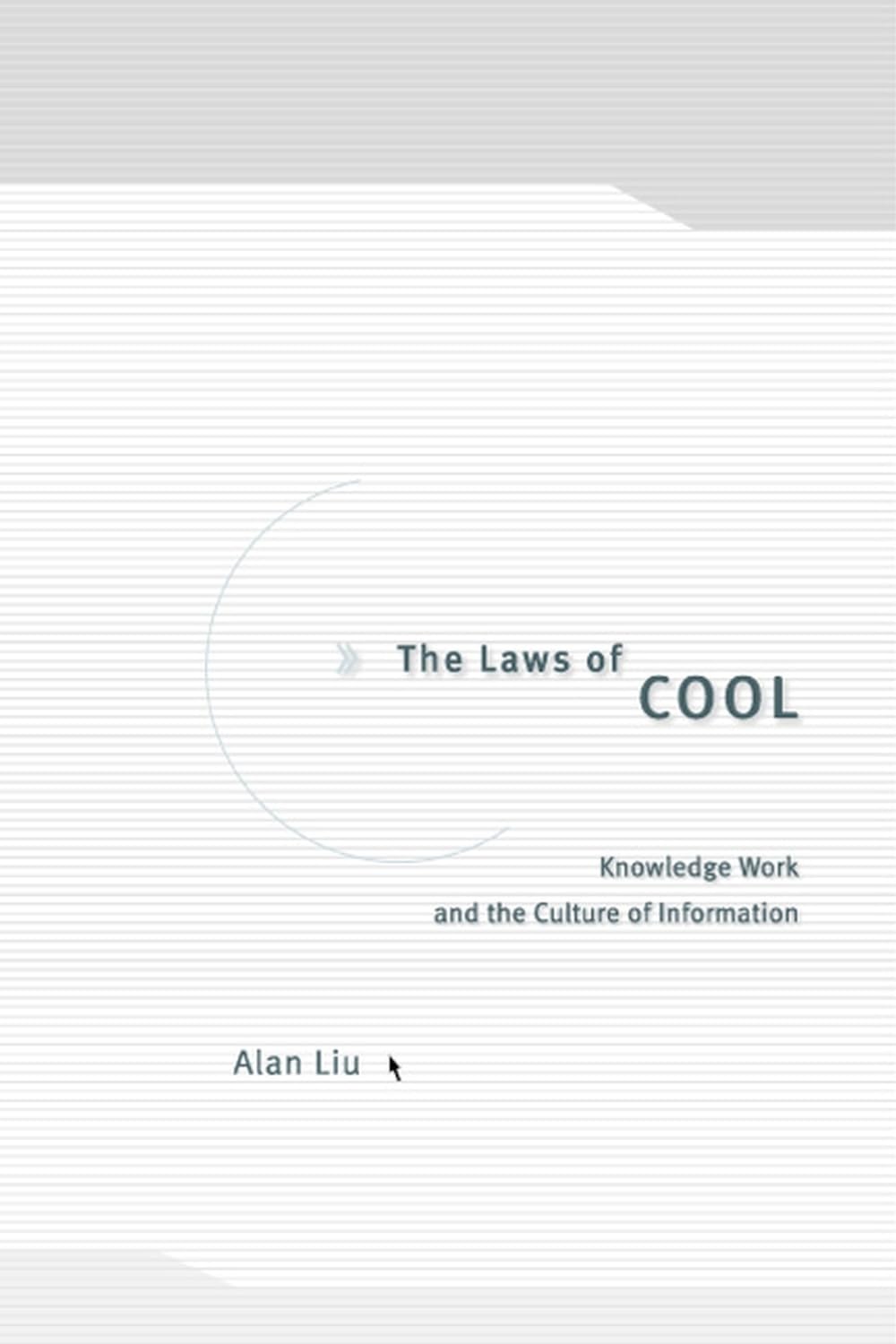
The Laws of Cool: Knowledge Work and the Culture of Information by Alan Liu – A Critical Study of Digital Culture and th
Inclusive of all applicable taxes. FREE shipping on all orders.
Available Offers
- 🚚Free Delivery — Free shipping on all orders
- 💵Cash on Delivery — Pay when your order arrives
- ↩️15-Day Easy Returns — Hassle-free return policy
- 🔒Cash on Delivery — Pay safely when your order arrives
Check Delivery
Product Description
Introduction
In an age where information technology drives almost every aspect of our lives, the concept of 'cool' has become a powerful yet often overlooked force in shaping how we work, create, and think. The Laws of Cool: Knowledge Work and the Culture of Information by Alan Liu offers a provocative and deeply insightful exploration of the intersection between knowledge work, digital culture, and the aesthetics of cool. This book is not just a critique of the information age; it is a call to understand how the humanities and arts can reclaim a meaningful role in a world dominated by business paradigms and data-driven efficiency.
Book Overview
Alan Liu’s The Laws of Cool is a landmark work that examines the rise of knowledge work—the dominant business model of our time—and its profound implications for culture, education, and creativity. Liu argues that the culture of information technology has created a new kind of 'cool,' one that is defined by detachment, style, and a certain ironic distance. This coolness, he suggests, is both a symptom and a strategy for navigating the pressures of the knowledge economy. The book delves into how digital tools and networks have transformed the very nature of knowledge, turning it into a commodity while simultaneously opening up new possibilities for artistic and intellectual expression. Through a blend of literary criticism, cultural theory, and media studies, Liu challenges readers to rethink the relationship between technology, work, and the human spirit.
Key Highlights
- A groundbreaking analysis of how 'cool' functions as a cultural and economic force in the information age.
- Explores the tension between the corporate logic of knowledge work and the creative, critical traditions of the humanities.
- Offers a unique perspective on the role of art, literature, and aesthetics in a world dominated by data and efficiency.
- Examines the history and evolution of information technology as both a tool of business and a medium for countercultural expression.
- Provides a rich, interdisciplinary approach that bridges the gap between technology studies and cultural criticism.
Inside the Book
The Laws of Cool is structured around a series of interconnected essays that move from the history of knowledge work to the aesthetics of digital culture. Liu begins by tracing the rise of the 'knowledge worker' from the industrial age to the present, showing how this figure embodies both liberation and constraint. He then turns to the culture of information technology, examining how interfaces, databases, and networks shape our perception of reality. Central to the book is the concept of 'cool'—a style of detachment and irony that Liu sees as a response to the relentless demands of the knowledge economy. In later chapters, he explores how literature, art, and music have engaged with these themes, offering examples from cyberpunk fiction, avant-garde art, and even the aesthetics of the web. The book concludes with a powerful argument for the importance of the humanities in fostering critical thinking and creativity in a tech-driven world.
Key Topics
- Knowledge work and the new economy: How business paradigms have reshaped the meaning of work and knowledge.
- The culture of information technology: The role of digital tools in shaping modern consciousness and social relations.
- The aesthetics of cool: How style, detachment, and irony function as survival strategies in a high-pressure work environment.
- The humanities vs. the corporate world: The tension between critical thinking and profit-driven efficiency.
- Art and literature in the digital age: How creative works reflect and resist the logic of information culture.
- Network culture and identity: The impact of connectivity on individuality and community.
Reader Benefits
- Gain a deeper understanding of the hidden cultural forces that shape your work and daily life in the digital age.
- Learn to critique the assumptions behind knowledge work and information technology from a humanities perspective.
- Discover new ways to think about creativity, art, and expression in a world dominated by data and algorithms.
- Develop a critical vocabulary for discussing the intersection of technology, culture, and power.
- Appreciate the value of the liberal arts in an increasingly vocational and technical education system.
Learning Outcomes
- Understand the historical evolution of knowledge work and its impact on society.
- Analyze the cultural logic of information technology and its aesthetic dimensions.
- Critically evaluate the role of 'cool' as a social and economic phenomenon.
- Connect literary and artistic movements to broader trends in technology and business.
- Articulate the importance of the humanities in shaping a more thoughtful and humane future.
Who Should Read
This book is ideal for students and scholars of cultural studies, media studies, literature, and sociology. It is also highly relevant for professionals in the tech industry, educators, and anyone interested in the deeper implications of the digital revolution. Indian readers, in particular, will find Liu’s analysis valuable as India’s knowledge economy continues to grow, and the tension between traditional learning and corporate efficiency becomes ever more pronounced. Whether you are a student of the humanities, a software engineer, or a policy maker, The Laws of Cool will challenge you to think differently about the world you inhabit.
About the Author
Alan Liu is a distinguished professor of English at the University of California, Santa Barbara, where he also directs the Literature and Culture program. He is a leading figure in the field of digital humanities and has written extensively on the intersection of literature, technology, and culture. His work is known for its depth, originality, and critical edge, making him a vital voice in contemporary debates about the future of knowledge and creativity.
About the Publisher
The University of Chicago Press is one of the most prestigious academic publishers in the world. Founded in 1890, it is renowned for its commitment to scholarly excellence and intellectual rigor. The press publishes a wide range of works in the humanities, social sciences, and natural sciences, and is celebrated for producing books that are both authoritative and accessible.
Conclusion
The Laws of Cool: Knowledge Work and the Culture of Information is an essential read for anyone seeking to understand the complex relationship between technology, work, and culture. Alan Liu’s brilliant analysis reveals how the aesthetics of cool have become a defining feature of our times, and why the humanities must play a central role in shaping a more reflective and humane digital future. This book is not just an academic study; it is a vital guide for navigating the pressures and possibilities of the information age. Order your copy today from Bookshops.in and embark on a journey that will transform the way you see the world.
Quick Summary
The Laws of Cool: Knowledge Work and the Culture of Information by Alan Liu is a seminal work that critically examines the rise of knowledge work as the dominant business paradigm and its profound influence on higher education and culture. Liu, a leading scholar in digital humanities, explores how information technology shapes not only the economy but also the very concept of 'cool' in modern society. The book challenges readers to consider what perspectives the humanities and arts can offer to a world driven by business and technology. Written in engaging yet rigorous prose, it delves into the cultural implications of digital tools, workplace practices, and the information age. This book is ideal for students of digital culture, media studies, and business, as well as professionals seeking a deeper understanding of the knowledge economy. By purchasing from Bookshops.in, Indian readers gain access to a premium hardcover edition that enriches their critical thinking about technology and society.
Book Highlights
Book Specifications
| ISBN-13 | 9780226486994 |
| ISBN-10 | 0226486990 |
| Publisher | Univ of Chicago Pr |
| Language | English |
| Dimensions | 22.81 x 15.39 x 3.12 cm |
| Weight | 748 g |
| Country | India |
| Category | Computers & Internet › Computer Science |
| Genre | Law |
| Original Language | English |
Frequently Asked Questions
What is The Laws of Cool about?
Who is the author of The Laws of Cool?
Is this book suitable for Indian readers?
What is the ISBN for The Laws of Cool?
What genre does this book belong to?
What is the price of this book on Bookshops.in?
Is this a hardcover edition?
Can I use this book for academic research?
What language is the book in?
Who is the publisher?
What are the main themes of the book?
Does the book discuss Indian context?
Why buy from Bookshops.in?
Readers Also Search For
Customers Also Bought
Computer Science
Spring 2.5 Aspect Oriented Programming (English, Massimiliano Dess� | Massimiliano Dessi)

Computer Science
Asterisk 1.4 - the Professional's Guide (English, Colman Carpenter | David Duffett | Nik Middleton)

Computer Science
Advances In Natural Language Processing: 4th International Conference, Estal 2004, Alicante, Spain, October 20-22, 2004. Proceedings: 3230 (Lecture Notes in Computer Science)
Computer Science
Multimedia, Communication and Computing Application: Proceedings of the 2014 International Conference on Multimedia, Communication and Computing ... 2014), Xiamen, China, October 16-17, 2014
Computer Science
Cases on Database Technologies and Applications (Cases on Information Technology Series)

Computer Science
ASP.Net 3.5 Social Networking (English, Andrew Siemer)
Related Products
View AllComputer Science
Spring 2.5 Aspect Oriented Programming (English, Massimiliano Dess� | Massimiliano Dessi)
Computer Science
Asterisk 1.4 - the Professional's Guide (English, Colman Carpenter | David Duffett | Nik Middleton)
Computer Science
Advances In Natural Language Processing: 4th International Conference, Estal 2004, Alicante, Spain, October 20-22, 2004. Proceedings: 3230 (Lecture Notes in Computer Science)
Computer Science
Multimedia, Communication and Computing Application: Proceedings of the 2014 International Conference on Multimedia, Communication and Computing ... 2014), Xiamen, China, October 16-17, 2014
Computer Science
Cases on Database Technologies and Applications (Cases on Information Technology Series)
Computer Science