
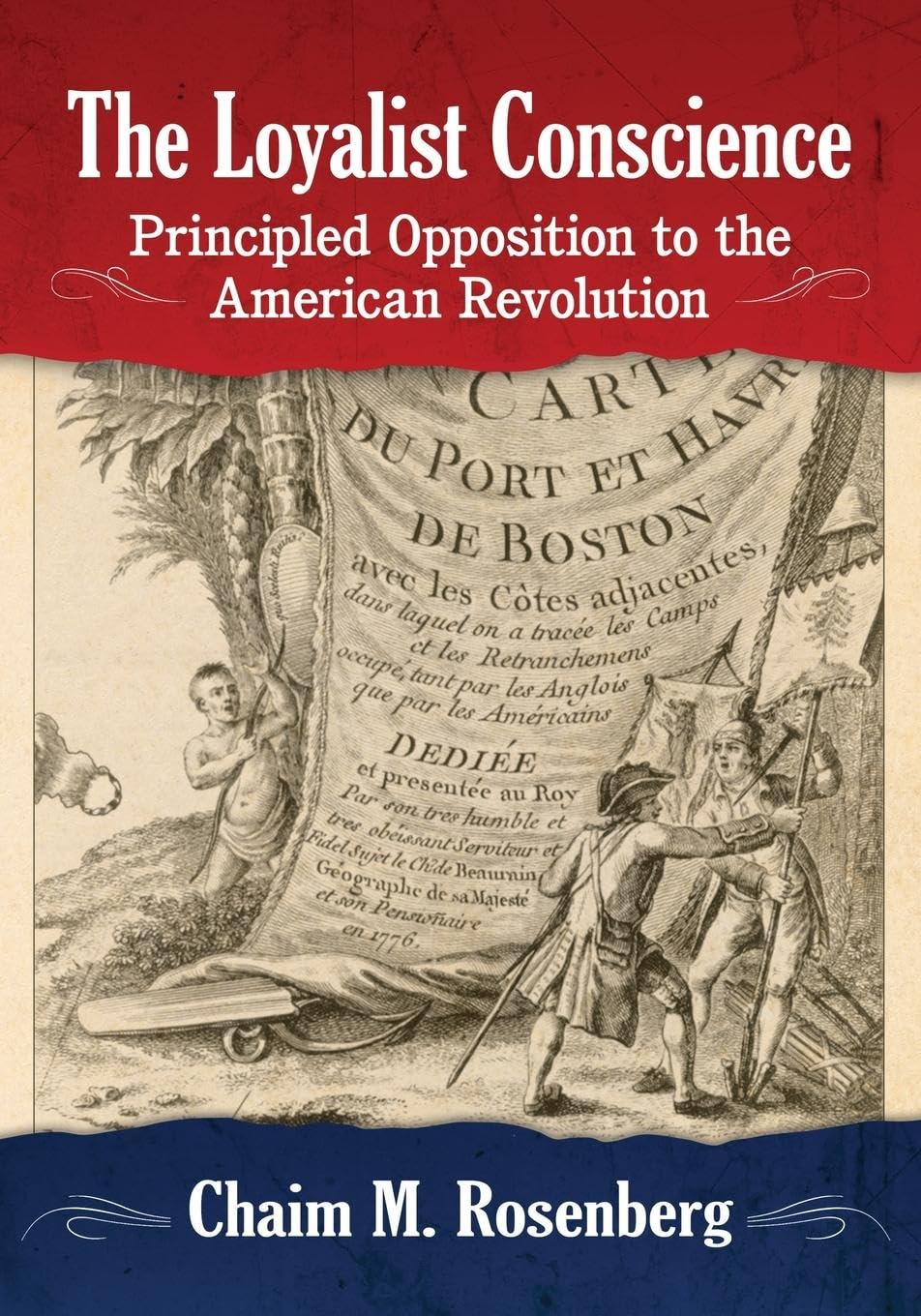
The Loyalist Conscience: Principled Opposition to the American Revolution by Chaim M. Rosenberg – A Deep Exploration of
Inclusive of all applicable taxes. FREE shipping on all orders.
Available Offers
- 🚚Free Delivery — Free shipping on all orders
- 💵Cash on Delivery — Pay when your order arrives
- ↩️15-Day Easy Returns — Hassle-free return policy
- 🔒Cash on Delivery — Pay safely when your order arrives
Check Delivery
Product Description
Introduction
History is often written by the victors, but what of those who dared to dissent? In The Loyalist Conscience: Principled Opposition to the American Revolution, Chaim M. Rosenberg unearths a forgotten narrative—the story of American colonists who, guided by loyalty, faith, and reason, opposed the War of Independence. This meticulously researched hardcover volume challenges conventional patriotic histories and offers Indian readers a profound exploration of dissent, democracy, and the price of principle.
Book Overview
Set against the backdrop of the American Revolution (1775–1783), this book examines the lives and motivations of the Loyalists—men and women who remained faithful to the British crown. Far from being mere traitors, these individuals included farmers, merchants, clergy, and intellectuals who believed that rebellion was both unlawful and destructive. Rosenberg documents their persecution: loss of livelihoods, forced exile, imprisonment, and confiscation of property. By the war's end, over 80,000 Loyalists fled their homeland, becoming refugees in Canada, Britain, and the Caribbean. This book is not just a history of losers; it is a meditation on conscience, civil liberties, and the fragile nature of justice in times of upheaval.
Key Highlights
- Original perspective: A rare, sympathetic portrayal of the Loyalist viewpoint in the American Revolution.
- Rich archival research: Draws on letters, diaries, court records, and newspapers from the 18th century.
- Human stories: Chronicles the personal tragedies of families torn apart by political allegiance.
- Global context: Connects the Loyalist diaspora to the founding of Canada and other British colonies.
Inside the Book
The narrative unfolds in three parts. Part One introduces the ideological roots of Loyalism—religious oaths, legal arguments, and economic interdependence with Britain. Part Two details the brutal crackdown during the war: mob violence, tar-and-featherings, and show trials. Part Three follows the Loyalist exodus, their resettlement in Nova Scotia, and the enduring legacy of their writings. Rosenberg includes appendices with primary documents, such as Loyalist petitions and pamphlets, allowing readers to engage directly with historical voices.
Key Topics
- Freedom of speech and its suppression during wartime
- The legal and moral arguments against revolution
- Loyalist demographics: who they were and why they chose the crown
- Violence, censorship, and the erosion of civil liberties
- The Loyalist diaspora and its impact on Canadian identity
- Comparative perspectives on dissent in revolutionary movements
Reader Benefits
This book equips readers with a nuanced understanding of a pivotal era. It challenges the binary of 'good patriots versus evil traitors' and encourages critical thinking about nationalism, loyalty, and justice. Indian readers, familiar with colonial history, will find parallels in the complex choices faced by subjects of empire. The book also enriches one's grasp of democratic principles—showing how easily they can be compromised in the name of liberty.
Learning Outcomes
After reading The Loyalist Conscience, you will be able to: articulate the Loyalist rationale for opposing the Revolution; analyze the role of censorship and propaganda in wartime; trace the global migration of Loyalist refugees; and evaluate the ethical dilemmas of civil disobedience versus lawful opposition. The book fosters historical empathy and a deeper appreciation for the costs of political change.
Who Should Read
- Students of American and colonial history
- Scholars of political science and ethics
- Indian readers interested in comparative revolutions and loyalism
- Lawyers and activists concerned with freedom of speech
- Anyone curious about the untold stories of the American Revolution
About the Author
Chaim M. Rosenberg is an independent historian and author with a focus on American colonial and revolutionary history. He has written extensively on the social and political dimensions of the 18th century, including works on Loyalists, immigration, and the transatlantic world. His research combines archival rigor with accessible storytelling, making complex histories engaging for general readers.
About the Publisher
McFarland & Company, based in North Carolina, USA, is a renowned independent academic publisher specializing in history, biography, and cultural studies. Known for its commitment to scholarly excellence, McFarland publishes works that illuminate overlooked aspects of the past. This hardcover edition reflects their high production standards—durable binding, quality paper, and archival-grade printing—ideal for libraries and serious readers.
Conclusion
The Loyalist Conscience is a vital corrective to one-sided histories. In an age where dissent is often vilified, this book reminds us that principled opposition is the bedrock of any democracy. For Indian readers, it offers a mirror to our own colonial past and a timeless lesson: that justice must be vigilant, even—and especially—in times of revolution. Add this compelling hardcover to your collection and discover the voices that history tried to silence.
Quick Summary
The Loyalist Conscience: Principled Opposition to the American Revolution by Chaim M. Rosenberg is a profound historical work that sheds light on the Americans who remained loyal to the British crown during the Revolutionary War. It reveals how these individuals were branded as traitors, losing their jobs, homes, and property, with 80,000 eventually forced into exile. The book challenges the narrative of a unified revolution, exploring the moral and political reasons behind their opposition. Ideal for Indian students and history enthusiasts, it provides a nuanced understanding of democracy, freedom of speech, and the costs of war. Readers will learn about the persecution of loyalists, the irony of a republic founded on liberty yet suppressing dissent, and the lasting impact of this diaspora. By purchasing from Bookshops.in, you get a premium hardcover edition that enriches any history collection.
Book Highlights
Book Specifications
| ISBN-13 | 9781476672458 |
| ISBN-10 | 1476672458 |
| Publisher | McFarland & Co Inc |
| Language | English |
| Dimensions | 17.78 x 1.17 x 25.4 cm |
| Weight | 431 g |
| Country | India |
| Category | Americas › United States |
| Genre | History |
| Original Language | English |
Frequently Asked Questions
What is The Loyalist Conscience about?
Who is the author?
Is this book suitable for Indian readers?
What format is this book?
Is this book for academic study?
Does it cover the entire Revolution?
What makes this book unique?
Can I buy this from Bookshops.in?
What is the rating?
What language is the book in?
Does it include primary sources?
Why should I read this?
Readers Also Search For
Related Products
View All
History
The Information Revolution: Transforming the World Through Technology (World History)

History
Human Nature and the French Revolution: From the Enlightenment to the Napoleonic Code: 3 (Polygons: Cultural Diversities and Intersections, 3)

History
The Unmaking of Home in Contemporary Art (Cultural Spaces)

History
Handbook to Life in Medieval and Early Modern Japan | by William E. Deal | Oxford University Press | by William E. Deal | Oxford University Press | by William E. Deal | Oxford University Press | by William E. Deal | Oxford University Press | by William E. Deal | Oxford University Press | by William E. Deal | Oxford University Press | by William E. Deal | Oxford University Press | by William E. Deal | Oxford University Press | by William E. Deal | Oxford University Press | by William E. Deal | Ox

History
The Narrators of Barbarian History (A.D. 550-800) | by Walter Goffart | University of Notre Dame Press | by Walter Goffart | University of Notre Dame Press | by Walter Goffart | University of Notre Dame Press | by Walter Goffart | University of Notre Dame Press | by Walter Goffart | University of Notre Dame Press | by Walter Goffart | University of Notre Dame Press | by Walter Goffart | University of Notre Dame Press | by Walter Goffart | University of Notre Dame Press | by Walter Goffart | Univ

History